Table of Contents >> Show >> Hide
- What Is a Sprained Wrist?
- Symptoms of a Sprained Wrist
- When It Might Be More Than a Sprain
- How a Sprained Wrist Is Diagnosed
- First Treatment Steps: What to Do Early
- Medical Treatments for a Wrist Sprain
- How Long Does Recovery Take?
- What Recovery Usually Looks Like Week by Week
- Tips for a Better Recovery
- Can a Sprained Wrist Heal on Its Own?
- Real-World Experiences With Wrist Sprain Recovery
- Final Thoughts
- SEO Tags
A sprained wrist sounds like one of those injuries people brush off with a brave face and a bag of frozen peas. Sometimes that works. Sometimes it really, really does not. A wrist sprain happens when the ligaments in the wrist stretch too far or tear, usually after a fall, a sports mishap, a gym slip, or one very overconfident attempt to catch yourself on the way down. The tricky part is that a wrist sprain can feel a lot like a fracture, tendon injury, or other wrist problem, so guessing your way through it is not the best long-term strategy.
The wrist is a small but hardworking joint. It helps you type, lift, grip, cook, drive, text, open jars, and perform the daily miracle of carrying too many grocery bags at once. When it is injured, even simple tasks suddenly become annoyingly dramatic. The good news is that many wrist sprains improve with the right early care, smart activity changes, and patience. The less fun news is that severe sprains can take much longer and may need formal treatment, imaging, or even surgery.
This guide breaks down the symptoms of a sprained wrist, treatment options, recovery timelines, and what the healing process often feels like in real life. If your wrist is currently starring in its own pain documentary, this is the article for you.
What Is a Sprained Wrist?
A sprained wrist is an injury to one or more ligaments in the wrist. Ligaments are strong bands of tissue that connect bones to other bones and help stabilize joints. When the wrist bends, twists, or absorbs force beyond what it can handle, those ligaments may stretch or tear. A classic cause is falling onto an outstretched hand, but a wrist sprain can also happen during contact sports, weight training, cycling, skating, or repetitive strain over time.
Not all wrist sprains are equal. Some are mild, involving overstretched ligaments with only tiny fiber damage. Others are moderate, with partial tearing and more noticeable instability. Severe sprains may involve a complete ligament tear and can affect how the wrist bones line up and move together. That difference matters because treatment and recovery time vary a lot depending on the grade of the injury.
Common Wrist Sprain Grades
Grade 1: Mild stretching of the ligament with pain and swelling, but no major instability.
Grade 2: Partial tear with more pain, bruising, swelling, and some loss of function.
Grade 3: Complete tear of a ligament, often with significant pain, weakness, and possible joint instability.
Symptoms of a Sprained Wrist
The most common symptom is pain, especially when you move the wrist, grip something, push off with your hand, or try to lift objects. But pain rarely arrives alone. Wrist sprain symptoms often include:
- Swelling around the wrist joint
- Bruising or discoloration
- Tenderness to touch
- Stiffness or reduced range of motion
- Weakness when gripping, pinching, or carrying
- A popping or tearing sensation at the time of injury
- Warmth around the injured area
Some people can still move the wrist after a sprain, but it hurts. Others feel as if the joint simply does not want to cooperate anymore. That said, symptoms alone do not always tell the whole story. A fracture, especially a scaphoid fracture on the thumb side of the wrist, can be mistaken for a sprain. If you have pain near the base of the thumb after a fall, do not assume it is “just a sprain” because your wrist will absolutely not appreciate that level of optimism.
When It Might Be More Than a Sprain
One of the biggest challenges with wrist injuries is overlap. Sprains, fractures, tendon injuries, cartilage problems, and nerve irritation can all create similar symptoms. You should get medical care sooner rather than later if you notice any of the following:
- Severe pain after a fall or direct trauma
- Visible deformity
- Inability to move the wrist, hand, or fingers normally
- Numbness, tingling, or changes in sensation
- Marked swelling that gets worse quickly
- Pain on the thumb side of the wrist that does not improve
- Persistent pain or swelling after several days of home care
If your hand looks crooked, your fingers are numb, or you cannot use the wrist at all, skip the wait-and-see approach. That is not the moment for internet bravery.
How a Sprained Wrist Is Diagnosed
A clinician usually starts with a physical exam and questions about how the injury happened. The story matters. A fall onto an outstretched hand, pain with gripping, and swelling after sports or exercise all point in helpful directions. During the exam, the provider may check tenderness, movement, grip strength, swelling, and whether the wrist feels stable.
X-rays are often ordered, even when a sprain seems likely. Why? Because broken bones, avulsion injuries, and certain alignment problems can hide behind “sprain-like” symptoms. If X-rays are normal but the pain remains suspicious, especially after trauma, more imaging such as MRI, CT, or ultrasound may be used to look for ligament injury or an occult fracture.
First Treatment Steps: What to Do Early
For many mild wrist sprains, early treatment focuses on pain control, swelling reduction, and protection of the joint while the ligament starts to heal. The old-school but still useful basics are rest, ice, compression, and elevation.
Rest
Stop the activity that triggered the pain and avoid motions that make symptoms worse. That does not mean turning into a statue. It means giving the injured tissue a better chance to calm down instead of asking it to perform through the pain like a reality show contestant.
Ice
Apply a cold pack for about 15 to 20 minutes at a time, several times a day during the first couple of days. Wrap the ice pack in a cloth rather than placing it directly on the skin.
Compression
A gentle elastic wrap or brace may help control swelling and provide support. It should feel snug, not circulation-endingly ambitious.
Elevation
Raise the wrist above heart level when possible, especially in the first 48 to 72 hours. This can help reduce swelling.
Splinting
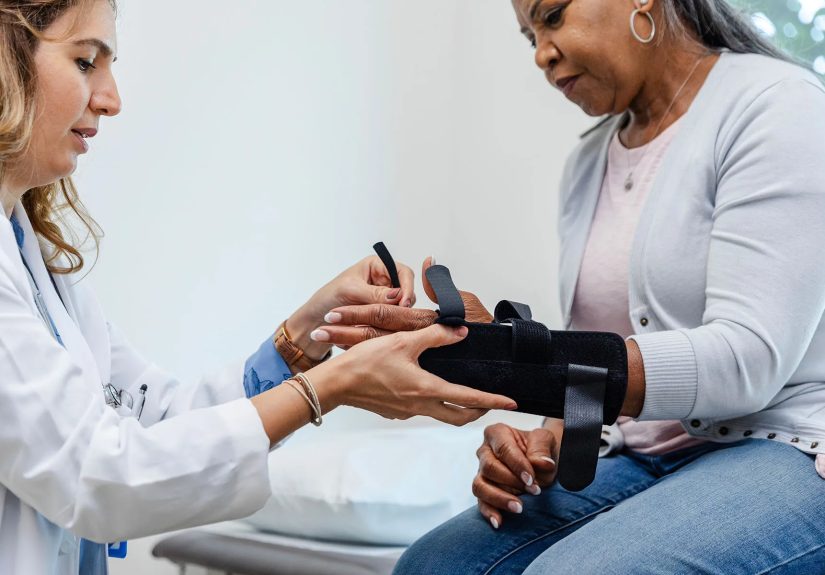
Many people benefit from a wrist splint for short-term protection. A splint can limit painful motion and reduce stress on the injured ligament while the wrist settles down.
Pain Relief
Over-the-counter pain relievers such as acetaminophen or nonsteroidal anti-inflammatory drugs may help, depending on your age, medical history, and whether your clinician says they are appropriate for you. Topical anti-inflammatory medication may also be discussed in some cases.
Medical Treatments for a Wrist Sprain
If the injury is moderate or severe, or if symptoms do not improve, medical treatment may go beyond basic home care.
Immobilization
Your clinician may recommend a more supportive brace, a splint, or occasionally a cast. This is especially common when there is concern about a more significant ligament injury or a fracture that is not obvious at first glance.
Physical or Occupational Therapy
Once the initial pain and swelling improve, therapy can help restore motion, strength, coordination, and grip. This phase matters more than many people realize. A wrist that feels “mostly better” but stays stiff or weak can continue to bother you during work, sports, or weight-bearing activities.
Advanced Imaging and Specialist Care
If symptoms persist, the wrist feels unstable, or certain ligaments are suspected to be injured, you may be referred to a hand surgeon, sports medicine physician, or orthopedist. MRI or CT imaging may help clarify what is actually injured.
Surgery
Surgery is not needed for most mild sprains, but it may be considered for severe ligament tears, instability, or injuries that fail conservative treatment. Surgical repair or reconstruction is usually followed by immobilization and structured rehabilitation. Recovery after surgery is much longer than the recovery for a simple mild sprain.
How Long Does Recovery Take?
This is the question everyone asks, usually right after asking, “Can I still text with my other hand?” Recovery depends on the severity of the injury, how quickly treatment started, whether there is a hidden fracture or major tear, and how demanding your daily activities are.
- Mild sprain: Often improves in 1 to 3 weeks, though full comfort may take a bit longer.
- Moderate sprain: Often takes 3 to 6 weeks, sometimes longer.
- Severe sprain: May take several months, especially if there is instability, extensive ligament damage, or surgery.
Even after the “official” healing window, the wrist can remain stiff, weak, or achy with certain motions. That does not always mean something is wrong, but it does mean recovery is not always a neat little calendar event. Ligaments heal more slowly than people would prefer. Very rude of them, honestly.
What Recovery Usually Looks Like Week by Week
First Few Days
Pain, swelling, and stiffness are usually at their worst. You may have trouble typing, opening doors, turning doorknobs, or lifting a mug without making a face.
Week 1 to 2
If the sprain is mild, swelling may start to improve and the wrist may feel more manageable in a splint. Everyday tasks become possible again, though not always comfortable.
Weeks 3 to 6
Moderate injuries often enter the rebuilding phase here. Motion starts to return, but strength may lag behind. This is when people often get impatient and do too much too soon.
Beyond 6 Weeks
If pain, instability, clicking, weakness, or swelling linger, a follow-up matters. Persistent symptoms can signal a deeper ligament problem, missed fracture, or another wrist condition that deserves a closer look.
Tips for a Better Recovery
- Do not rush back into push-ups, heavy lifting, racquet sports, or repetitive wrist loading too early.
- Use the splint or brace the way your clinician recommends, not only when you remember.
- Keep your fingers moving unless you were told otherwise, since this may help reduce stiffness.
- Start exercises only when pain and swelling are under better control.
- Pay attention to pain that keeps intensifying instead of steadily improving.
- Protect the wrist during high-risk activities if you are returning to sports.
Can a Sprained Wrist Heal on Its Own?
Many mild sprains do improve with home treatment and time. But “healing on its own” does not mean “ignore it completely.” If you return to full activity too soon, you may prolong recovery or make symptoms worse. More importantly, some injuries that seem minor at first are not minor at all. A missed fracture or an unstable ligament injury can create chronic pain, weakness, or even arthritis later on.
If the wrist is not clearly improving after a few days, or if anything feels off, getting it checked is a smart move, not an overreaction.
Real-World Experiences With Wrist Sprain Recovery
People recovering from a sprained wrist often describe the injury as deceptively small. From the outside, it may not look dramatic. There is no giant cast, no cinematic crutches, no obvious sign that daily life has become weirdly inconvenient. But then reality kicks in. Brushing your teeth becomes a coordination challenge. Pulling up jeans is suddenly a wrist workout. Opening a jar feels like a personal insult. Many people say the most surprising part is not the pain itself, but how often they use their wrist without ever noticing it until it hurts.
Office workers often report that typing and using a mouse become the first major frustrations. The wrist may tolerate light use for a few minutes, then start throbbing or tightening up. People who spend all day on a keyboard sometimes notice that recovery is faster when they take short breaks, adjust wrist position, and stop trying to power through discomfort. The “I will just finish one more task” mindset is famous for turning a decent recovery day into a regrettable evening.
Active people have a different complaint: boredom mixed with denial. Someone who lifts weights, plays tennis, boxes, cycles, skates, or does yoga may feel okay at rest but discover that the wrist is nowhere near ready for real load. Push-ups, planks, overhead lifting, gripping a barbell, and even downward dog can expose lingering weakness fast. A common experience is feeling 80% healed until the moment body weight goes through the hand. Then the wrist files a formal complaint.
Parents and caregivers often talk about how difficult recovery feels because rest is not really rest when you are carrying toddlers, hauling backpacks, cooking meals, or managing a hundred small household tasks. Even a mild sprain can drag on when the wrist never truly gets a break. In these cases, practical adjustments matter: using the other hand more, lifting differently, asking for help, and wearing a brace during higher-demand parts of the day.
Another shared experience is fear after the pain improves. People often wonder whether a little soreness means damage is coming back or whether movement is safe again. That uncertainty is normal. Recovery is rarely a perfectly straight line. Some mornings feel great, then one awkward twist opening a door brings the ache right back. Usually, the bigger pattern matters more than one random flare. If the wrist is gradually becoming stronger, less swollen, and easier to use over time, that is encouraging. If it keeps catching, clicking painfully, giving way, or staying swollen, that is a sign to follow up.
Many people also say the final stage of healing is the most mentally annoying. The dramatic pain is gone, but the wrist still does not feel fully trustworthy. Grip strength is not quite back. Weight-bearing still feels tentative. Certain angles still spark a warning twinge. This is where patience, therapy exercises, and gradual return to activity pay off. The goal is not just less pain. The goal is confidence, function, and a wrist that does not negotiate every task like a tiny union representative.
Final Thoughts
A sprained wrist can be mild and short-lived, or it can be a more serious ligament injury that needs closer attention. The smartest approach is to treat early symptoms seriously, protect the joint, and watch the recovery pattern closely. Pain, swelling, bruising, and stiffness are common, but numbness, deformity, severe weakness, or pain that refuses to improve deserve prompt evaluation.
With the right care, many people recover well and return to normal work, sports, and daily life. The key is not heroics. It is smart timing, accurate diagnosis, and a little respect for the very busy joint that helps you do almost everything with your hand.