Table of Contents >> Show >> Hide
- What Makes the Danish Attic Guest Room Look So Good?
- Start With the Bones: How to Make an Attic Room Feel Bigger
- Steal This Look: The Danish Attic Guest Room Recipe
- The Anchor: A simple, honest bed
- The Calm: White bedding + texture layering
- The Glow: Warm, soft lighting in two heights
- The Sidekick: A slim nightstand that doesn’t hog the scene
- The “Stay Awhile” Seat: One good chair (or a bench)
- The Quiet Work Corner: A petite desk that blends in
- The Storage Trick: Make the weird attic angles work for you
- The Windows: Minimal treatments + optional blackout
- The Finishing Touches: Tiny details that feel like hospitality
- 3 Layout Recipes for Real-World Attic Shapes
- Guest Room Comfort: The “They’ll Actually Sleep Well” Checklist
- Attic-Specific Mistakes to Avoid (So Your Room Looks Effortless)
- When You’re Remodeling: A Quick Reality Check (Safety + Comfort)
- of Real-Life Experience: Staying in a Danish-Style Attic Guest Room
- Final Takeaway
There’s a special kind of quiet that happens in a Danish attic: the roofline hugs the room, the light looks
like it took a deep breath, and everything feels intentionally “not trying too hard.” It’s the design version
of showing up to brunch in a plain white tee that somehow looks expensive.
If you want that spare and simple attic guest room vibecalm, bright, and weirdly
confidence-boosting for anyone who sleeps therethis guide breaks down the look into stealable pieces:
layout tricks for sloped ceilings, the best “quiet luxury” materials, guest-friendly upgrades, and a shopping
blueprint that works whether your budget is “Danish design store” or “IKEA plus a prayer.”
What Makes the Danish Attic Guest Room Look So Good?
“Spare and simple” doesn’t mean bare. It means every item has a job, a reason, and enough breathing room to
let the architecture shine. In a Danish attic guest room, you’ll usually see:
- Light-first choices: minimal window treatments, pale walls, and reflective surfaces that stretch daylight.
- Natural materials: light wood, linen, wool, paper shadestextures that feel warm without yelling for attention.
- Functional restraint: fewer pieces, better placement, and storage that stays politely out of the spotlight.
- Hygge energy: soft layers, warm lighting, and a “please exhale here” moodwithout turning the room into a candle store.
The magic is in the balance: clean lines plus comfort, minimal color plus maximum coziness. It’s practical,
but never coldlike a friendly person who also owns a label maker.
Start With the Bones: How to Make an Attic Room Feel Bigger
Attics come with quirks: sloped ceilings, low knee walls, odd corners, and the occasional beam that
threatens to turn guests into surprise chiropractors. The good news: those quirks are exactly what makes
attic rooms feel specialif you design with them instead of fighting them.
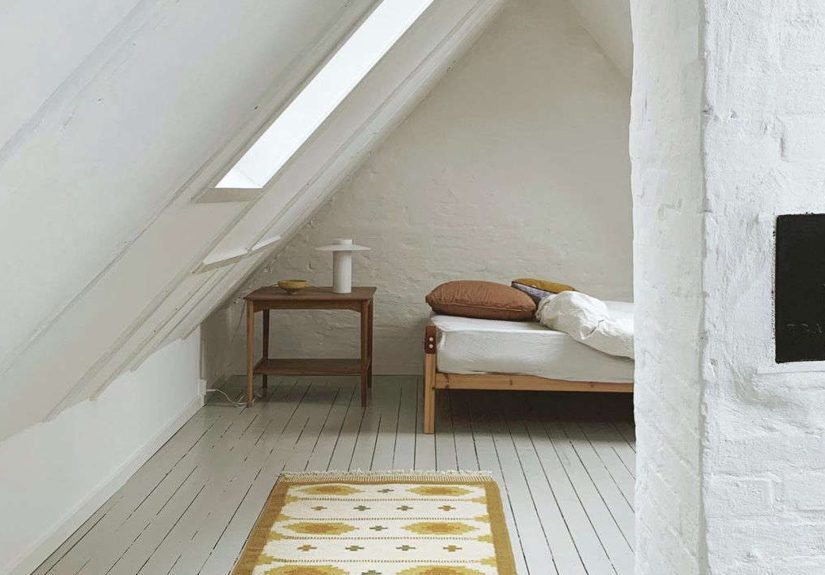
1) Put the bed where the roof is kindest
The easiest win: position the bed where you can sit up comfortablyusually near the highest point of the
ceiling. If the ceiling drops quickly, slide the bed under the slope so the headboard sits against the
taller wall and the foot tucks into the lower angle. It feels cozy on purpose, not cramped by accident.
2) Keep furniture low and visually light
Platform beds, slim nightstands, and airy chairs keep the room from feeling top-heavy. A tall dresser under
a sloped ceiling can look like it’s being punished. Choose pieces that “sit” comfortably in the space.
3) Paint smart: walls and ceiling as one calm envelope
In many attic rooms, painting the ceiling the same color as the walls (often a soft white or warm off-white)
makes angles feel intentional and cohesiveless “triangle panic,” more “architectural charm.”
4) Mirrors and glass are your secret daylight multipliers
A simple mirror opposite a window or near a skylight bounces light deeper into the room. Keep it minimal:
one well-placed mirror does more than five tiny ones that look like you’re starting a funhouse.
5) Comfort matters more in attics
Attics can run warmer in summer and cooler in winter. Before you go full design-mode, make sure the space is
comfortable and safeespecially if it’s a true bedroom. Think insulation, ventilation, and proper exits. The
design is the dessert; the building basics are the dinner.
Steal This Look: The Danish Attic Guest Room Recipe
Here’s the “spare and simple” formula you can copy without needing a Danish passport or an advanced degree
in calming neutrals.
The Anchor: A simple, honest bed
The classic move is a no-fuss wood bed framelight-toned, minimal profile, zero drama. A budget-friendly
example is a straightforward pine frame (the kind you can find at big retailers), styled with elevated linens
so it reads intentional, not temporary.
- Budget: a basic pine or birch frame with clean lines.
- Mid-tier: a simple oak platform bed, rounded corners, quality joinery.
- Splurge: Scandinavian modern classicsstill simple, just quietly perfect.
The Calm: White bedding + texture layering
This look lives and dies by texture. Keep the palette mostly neutralwhite, cream, sand, pale grayand use
materials to create depth: linen duvet, cotton percale sheets, a wool throw, maybe a chunky knit blanket at
the foot of the bed. The goal is “inviting,” not “hotel that forgot it’s allowed to have personality.”
- Base layer: crisp sheets (breathable cotton or percale).
- Middle layer: a linen duvet cover for relaxed, lived-in softness.
- Top layer: one throw that looks good and actually gets used.
- Pillows: two sleeping pillows + one textured accent pillow (just oneno pillow avalanche).
The Glow: Warm, soft lighting in two heights
Danish rooms rarely rely on one harsh overhead light. Aim for a layered setup:
a bedside lamp or sconce for reading, and a second soft light (floor lamp or small table lamp) to warm up the
corners. In a sloped-ceiling attic, wall sconces are especially smart because they free up nightstand space.
- Bedside lighting: sconce or small lamp with a warm bulb.
- Ambient lighting: a paper shade pendant or a small lamp near seating.
- Practical touch: easy-access switch placement and a spot for charging.
The Sidekick: A slim nightstand that doesn’t hog the scene
A small side table with one drawer is ideal: it hides clutter (chargers, lip balm, the mysterious hotel key
card your guest still carries for emotional support) while keeping the surface clean.
The “Stay Awhile” Seat: One good chair (or a bench)
This look often includes a sculptural chair with visible wood and woven texturesomething that feels
handcrafted, not mass-produced. If space allows, add a bench at the foot of the bed for bags, folded throws,
or the universal guest habit of placing clothes “not dirty, not clean, spiritually complicated.”
The Quiet Work Corner: A petite desk that blends in
Attic guest rooms in Scandinavia often pull double duty: nap zone, reading nook, and occasional workspace.
Choose a simple desk with slim legs and a calm finishnothing bulky. Pair it with one excellent chair and a
small task lamp. Done.
The Storage Trick: Make the weird attic angles work for you
Knee walls and low corners are perfect for hidden storagebuilt-ins, shallow cabinets, baskets, or
under-bed bins. If you’re renovating, knee-wall access doors can turn “dead space” into organized storage.
If you’re not renovating, use lidded baskets that look intentional.
- Easy win: baskets under a console or bench.
- Guest-friendly: a luggage rack so suitcases aren’t living on the floor.
- If remodeling: consider built-in knee-wall storage for a clean, custom look.
The Windows: Minimal treatments + optional blackout
To keep the Scandinavian vibe, go light on window coveringslinen shades, simple rollers, or sheer panels.
But be kind: if the attic has skylights, add a blackout option. “Wake up with the sun” is adorable until it’s
5:12 a.m. and your guest is plotting revenge.
The Finishing Touches: Tiny details that feel like hospitality
This is where the room stops being “pretty” and becomes genuinely guest-ready.
Keep it minimal, but thoughtful:
- A small tray for keys, jewelry, or pocket items.
- A carafe of water + glass (hotel energy, zero effort).
- Wi-Fi info written clearly (no one wants a 20-character password scavenger hunt).
- Two empty drawers and a few hangersspace is a love language.
- Extra blanket within reach (attics can be temperature drama queens).
- A short note with “how the house works” basics: lights, thermostat, bathroom details.
3 Layout Recipes for Real-World Attic Shapes
Recipe A: The classic A-frame squeeze
- Center the bed under the highest point (or where sitting up feels natural).
- Use wall sconces to avoid cramped nightstands.
- Put storage in the lowest zones: baskets, built-ins, or under-bed.
- Add one mirror to bounce lightkeep everything else calm.
Recipe B: The dormer “bonus nook”
- Place the bed on the long wall and use the dormer for a reading chair or small desk.
- Use a small rug to visually “zone” the nook.
- Keep window treatments minimal so the dormer becomes the star.
Recipe C: The long attic hallway room
- Create two zones: sleep at one end, seating/desk at the other.
- Use lighting to separate zones (a lamp in each area).
- Keep pathways clearattic corners are not the place for midnight toe injuries.
Guest Room Comfort: The “They’ll Actually Sleep Well” Checklist
A beautiful guest room is great. A guest room where people sleep deeply and wake up happy? That’s legend.
Focus on comfort basics that reputable home editors consistently agree matter most:
- Great pillows: offer two firmness options if you can.
- Breathable bedding: attics can get stuffychoose fabrics that help.
- Air flow: a small fan or clear instructions for heat/AC goes a long way.
- Soft landing: a rug beside the bed if floors are cold.
- Charging: outlet access or a simple charging station.
- Toiletry backup: a small basket of “just in case” items (toothpaste, floss, pain reliever).
- Nighttime navigation: a lamp that’s easy to reach so guests aren’t walking into roof slopes.
Attic-Specific Mistakes to Avoid (So Your Room Looks Effortless)
- Too much furniture: one chair is chic; three chairs is a waiting room.
- Heavy window treatments: they swallow the light that makes the room feel bigger.
- One overhead light only: it flattens the space and makes everything look tired.
- Clutter-as-decor: “spare and simple” needs empty space to work.
- Ignoring comfort: if the room is too hot/cold, guests won’t care how pretty the bench is.
When You’re Remodeling: A Quick Reality Check (Safety + Comfort)
If you’re converting an attic into a true guest bedroom, design and building basics need to hold hands.
Depending on your location, codes and requirements can vary, but common themes show up often:
safe access (stairs), adequate headroom, proper exits (including emergency egress), smoke alarms, and
moisture/temperature control through ventilation and insulation. If you’re unsure, check local rules and
consult a qualified proespecially before calling it a “bedroom” on a listing or permit.
The payoff is worth it: a well-insulated, properly ventilated attic space doesn’t just look sereneit feels
comfortable year-round. And comfort is the most Scandinavian flex of all.
of Real-Life Experience: Staying in a Danish-Style Attic Guest Room
The first thing you notice when you walk into an attic guest room done the Danish way is the soundor,
honestly, the lack of it. The room feels wrapped, like the roofline is a soft-shell jacket. Even if you’re
in a busy household, an attic room can feel slightly removed from the main orbit of noise. It’s the kind of
privacy that makes guests relax their shoulders without realizing they were tense in the first place.
Then there’s the light. In a good attic setup, daylight doesn’t just enter; it spreads. White walls and pale
ceilings act like a bounce house for sunshine (minus the ankle injuries). Morning light arrives gently,
and if there’s a skylight, it turns the bed into the coziest place to do absolutely nothing. The danger is
that guests may start saying things like “I could live like this,” which is sweet, until you realize they
mean “I could live like this… here… indefinitely.”
The textures do the heavy lifting. Linen sheets feel cooler when the attic warms up, and wool throws feel
like instant comfort when the temperature dips. It’s a quiet, sensory kind of luxuryno shiny headboard, no
dramatic accent wall, no “statement” chandelier that looks like it could also interrogate someone. Just
materials that get better the more you use them. A simple wood bed frame doesn’t try to impress you; it just
sits there, being solid, like a friend who always shows up on time.
The layout changes how you behave. A low chair by the window becomes a default reading spot. A bench at the
foot of the bed becomes a staging area for sweaters, books, and the daily ritual of pretending you’ll fold
things later. One good lamp makes nighttime feel safe and calmespecially when the ceiling slopes down and
you learn, quickly, that attic geometry does not care about your forehead.
What guests appreciate most, though, is how “thought-through” the room feels. A carafe of water means no
awkward midnight kitchen creeping. A note with the Wi-Fi password prevents the polite dance of “I’m so sorry
to ask…” A couple of empty drawers signals that you expected them, not that you found an empty room five
minutes before they arrived and tossed a pillow at the situation.
And that’s the real Danish lesson: simplicity isn’t the absence of effort. It’s effort that’s been edited
down to what actually matters. When you steal this look, you’re not just copying a styleyou’re building a
tiny experience. One where your guests sleep well, wake up gently, and leave thinking, “Wow. That room felt
like a deep breath.” Which is the highest compliment a spare and simple attic guest room can get.
Final Takeaway
To steal the look of a Danish attic guest room, aim for a calm palette, natural textures, low-profile
furniture, and layered warm lighting. Keep decor minimal, make storage invisible, and upgrade the small
comforts that guests actually notice. When the room feels bright, breathable, and quietly cared for, you’ve
nailed itno matter what you paid for the nightstand.