Table of Contents >> Show >> Hide
- What Studio KotoKoto Salt Cellars Are (and Why People Obsess Over Them)
- The “KotoKoto” Part: A Name That Sounds Like Dinner
- Meet the People Behind the Story
- Why a Salt Cellar Makes You Cook Better (Yes, Really)
- Design Details: What Makes a Great Salt Cellar (and How KotoKoto Fits the Brief)
- How to Use a Studio KotoKoto Salt Cellar Like You Know What You’re Doing
- Care and Cleaning: Keep the Porcelain Pretty and the Wood Happy
- How to Shop for a Studio KotoKoto Salt Cellar Today
- Why This Tiny Object Feels Bigger Than It Is
- of Real-Life Kitchen Experiences Inspired by Studio KotoKoto Salt Cellars
- Conclusion
A salt cellar is one of those tiny kitchen upgrades that feels suspiciously life-changinglike switching from a
wobbly pen to one that glides. Suddenly your hand just wants to season. And if you’re going to keep a
mound of magical white crystals within arm’s reach, it helps when the container is… frankly adorable.
That’s the charm of Studio KotoKoto salt cellars: functional ceramics with the soul of a small
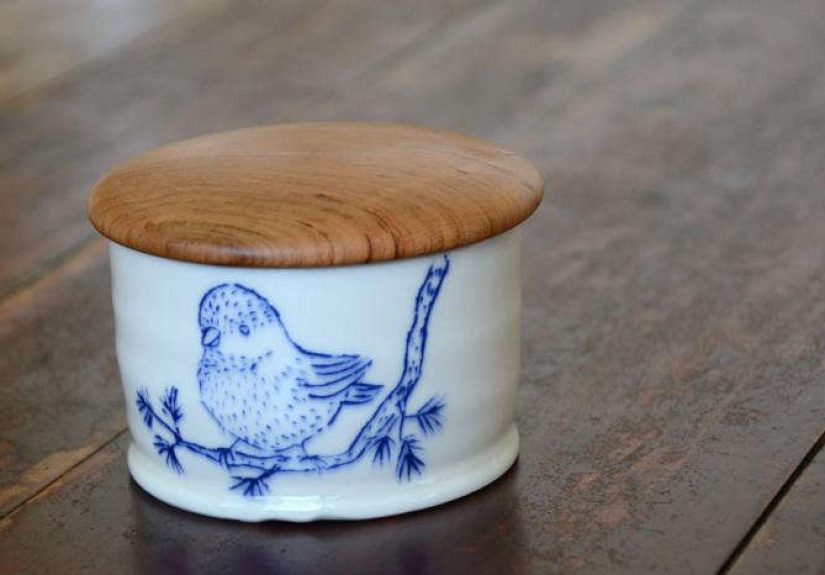
art object. The best versions are associated with acclaimed potter Ayumi Horieporcelain bodies
paired with hand-turned American cherry lids, often decorated with whimsical animal imagery connected to Maine.
They’re the kind of countertop companion that makes you feel like a calm, capable cook… even if you’re seasoning
boxed mac and cheese.
What Studio KotoKoto Salt Cellars Are (and Why People Obsess Over Them)
A salt cellar (sometimes called a salt pig, salt keeper, or salt box) is simply a container
designed for quick pinches of salt while cooking. The point isn’t fancy table serviceit’s speed, control, and
consistency. You keep it by the stove, flip a lid, pinch with your fingers, and season like you mean it.
Studio KotoKoto took that humble idea and treated it like a design brief: make something sturdy enough to live
beside heat and splatter, elegant enough to stay out permanently, and pleasing enough that you actually
use it. In the most-cited listing, the salt cellars were described as porcelain with a hand-turned
American cherry wood lid and priced at $150 at the time of publication. The collection is also
tied to a moment of transitionHorie returning to her home state of Maine after years in New York’s Hudson
Valleyand the imagery reflects that sense of place.
And because Studio KotoKoto was known for championing craftespecially Japanese ceramics and maker culturethese
salt cellars weren’t presented as mass-produced “kitchen storage.” They were positioned as daily-use objects
with meaning: functional, beautiful, and made by real hands.
The “KotoKoto” Part: A Name That Sounds Like Dinner
“Koto-koto” is a Japanese onomatopoeia often used for the gentle sound of simmeringsoft bubbling, patient
cooking, steady warmth. It’s a fitting vibe for a brand that curated everyday craft: not loud, not flashy, just
quietly excellent. It also perfectly describes what a great salt cellar does: it lives on your counter, doing
one small thing over and over, making meals better without demanding attention.
Bonus: it’s also the sound your brain makes when you realize how much you’ve been under-seasoning your food for
years.
Meet the People Behind the Story
Studio KotoKoto’s founders and the craft-curation mission
Studio KotoKoto was tied to a thoughtful maker-curation ethosconnecting people to traditional craft and
handmade objects. One of its founders, Ai Kanazawa, later created Entoten, an
online blog and shop focused on connecting cultures through traditional craft and sustainable practices. Today,
Entoten notes that Studio KotoKoto is closed and redirects visitors accordingly.
Ayumi Horie and the salt cellar as a serious form
Ayumi Horie is widely recognized for functional ceramics that blend references from folk tradition and popular
culture, and for building community around craft. In her own writing about salt cellars, she frames the form as
deceptively challenging: it’s not a cup or bowl you put to your lips, but a stationary object that sits by the
stove, waiting for your hand.
She also highlights something that sounds nerdy until you feel it: salt is hygroscopicit
attracts moistureand clay can be hygroscopic, too. In other words, a salt cellar is a tiny meeting point
between cooking and pottery: touch, texture, process, and patience.
The cherry wood lid collaboration
The famous Studio KotoKoto/Ayumi Horie versions emphasize contrast in the most subtle way: white salt against
white translucent porcelain, warmed by a cherry wood lid. Horie has explained that she worked with woodworker
Josh Vogel for the lids, valuing his craftsmanship and the grounded warmth that wood brings to a
daily object.
The design inspiration is wonderfully specific: they talked about creating something like a spool of
threadan object that’s commonplace and historically rich, just like salt. Once you see it, you can’t
unsee it: a tidy cylinder, a lid that feels good in the fingers, a quietly “made” presence.
Why a Salt Cellar Makes You Cook Better (Yes, Really)
Multiple major food publications have made the same argument, in different ways:
a salt cellar turns seasoning into a fast, repeatable habit. It keeps salt close, encourages tasting, and makes
it easy to add a little at a time. It’s not just convenienceit’s feedback.
Here’s what changes when you switch from shaker to cellar:
- Control: Pinches are naturally adjustable. A “two-finger pinch” and a “three-finger pinch”
feel different, which helps you learn your own seasoning instincts. - Speed: When salt is right there, you season at the right momentsduring prep, while sautéing,
after tastingnot as an afterthought. - Consistency: When you stick to one everyday salt (often a coarse kosher salt), your hand
learns the dose. That’s hard to replicate with a shaker that dumps unpredictably. - Less mess: A good lid protects from splatter and humidity, which helps prevent clumps and
keeps things cleaner.
In testing and recommendations, editors repeatedly favor designs that are easy to open one-handed, roomy enough
for fingers, and covered to protect the salt when you’re not actively seasoning. That’s exactly the territory
Studio KotoKoto salt cellars were built to live in.
Design Details: What Makes a Great Salt Cellar (and How KotoKoto Fits the Brief)
1) A lid you can operate mid-chaos
The best salt cellars let you open the lid with one hand while the other is busyholding a spoon, flipping a
tortilla, rescuing garlic from the brink of burning. Studio KotoKoto’s cherry lids are the opposite of fussy:
they’re meant to be handled, not admired from a distance like museum jewelry.
2) Enough weight to stay put
One reason cooks love ceramic salt containers: they don’t skid across the counter. Horie has specifically noted
that the walls on her salt cellars were made thicker than usual to increase stability and permanence. Translation:
you can pinch with confidence instead of chasing your salt like it’s a runaway hockey puck.
3) A finger-friendly opening
If the opening is too small, you’ll curse it. If it’s too big and uncovered, salt can clump and pick up kitchen
dust and splatter. Many reviewers prefer covered cellars with openings large enough for easy pinches, but not so
exposed that the salt feels “out in the weather.”
4) Materials that match the job
Porcelain is smooth, nonreactive, and easy to wipe. Wood is warm, light in the hand, and pleasant to grip.
Together, they create a tactile ritual: lift the silky lid, pinch the rough salt. Horie describes that sensory
contrast as part of the pleasureand it’s the kind of detail you only notice after the hundredth pinch.
5) A little story on the surface
The Maine animal imagery often associated with these salt cellars gives them personality without turning them
into cartoon props. It’s whimsical, yesbut still grown-up. Like wearing fun socks under a serious suit.
How to Use a Studio KotoKoto Salt Cellar Like You Know What You’re Doing
- Pick one everyday salt. Many test kitchens favor coarse kosher salt for pinching. Choose one
brand and stick with it so your hand learns the saltiness. - Put the cellar where your hand naturally reaches. Next to the stove or your main prep area is
ideal. If you have to open a cabinet, you won’t use it as often. (Humans are efficient in the laziest way.) - Season in layers. Salt early, taste, salt again. The cellar makes this easy, which is the
whole point. - Keep the lid closed between pinches. This helps protect against humidity and airborne kitchen
“stuff” (steam, grease, tiny mystery particles from your toaster). - Use clean hands. If you’re handling raw meat or messy ingredients, use a spoon, wash up, or
pinch with the “clean” hand. Food safety experts and culinary writers alike point out that handsand even the
cellar itselfshould be cleaned regularly.
Want a practical setup? Keep the Studio KotoKoto cellar for your everyday cooking salt, and use a tiny pinch
bowl for finishing salts (like flaky sea salt) at the table. That way, the countertop stays consistent while
your plating gets fancy when it wants to.
Care and Cleaning: Keep the Porcelain Pretty and the Wood Happy
Porcelain base
- Routine: Wipe with a damp cloth or wash with mild soap as needed, then dry thoroughly.
- Deep clean: If your cellar lives near splatter zones, a more thorough wash occasionally keeps
it fresh and prevents oily residue from building up.
Cherry wood lid
- Don’t soak it. Prolonged water exposure can warp or crack wood over time.
- Hand wash gently. Warm water, mild soap, quick rinse, and dry right away.
- Condition if it looks dry. Many kitchen wood-care guides recommend food-grade mineral oil for
wooden tools (rather than cooking oils that can turn rancid). A light coat now and then helps maintain the
finish and feel.
If you treat it like a cutting board’s classy cousinhand wash, dry, occasional oilit will age beautifully.
The lid may deepen in color over time, which is just wood’s way of telling you it’s been invited to dinner often.
How to Shop for a Studio KotoKoto Salt Cellar Today
Since Studio KotoKoto is closed, availability is not like ordering a standard kitchen gadget. If you find a
Studio KotoKoto/Ayumi Horie salt cellar, you’re more likely to encounter it through secondary markets,
collector-to-collector sales, or curated craft resellers.
Practical tips when you’re trying to verify you’ve found “the one”:
- Look for material details: porcelain body + hand-turned American cherry lid is a hallmark in
well-known listings. - Inspect fit: a well-made lid should feel intentionalsmooth movement, stable seating, no
wobble. - Check imagery: Maine animal motifs and a playful, clean line style are commonly associated
with Horie’s versions. - Consider it functional art: small variations are normal in handmade workand part of the
charm.
If you can’t find one (or can’t justify the price), don’t panic. The “secret” of the Studio KotoKoto salt cellar
isn’t only the brandit’s the design logic: covered, finger-friendly, stable, and satisfying to use. But if you
can get the real thing, it’s hard not to grin every time you lift that lid.
Why This Tiny Object Feels Bigger Than It Is
A salt cellar is a small stage for a daily ritual. And Studio KotoKoto’s approachcraft-forward, tactile,
quietly joyfulturns that ritual into something you actually notice. That’s rare in a kitchen full of things
designed to disappear.
The best compliment you can give a salt cellar isn’t “pretty.” It’s “I use it constantly.” Studio KotoKoto salt
cellars earn that compliment by doing two jobs at once: making seasoning easier and making the countertop feel
like a place where real cooking happens.
of Real-Life Kitchen Experiences Inspired by Studio KotoKoto Salt Cellars
Picture a weeknight kitchen: the kind with a cutting board that’s seen things, a playlist that’s doing its best,
and a cook who swears they’re making “something simple” while the sink silently fills with evidence to the
contrary. This is where a salt cellar shinesnot in a styled photo, but in the tiny moments where your hands
are busy and your brain is two steps ahead.
On Monday, someone starts onions in a pan. They reach for salt with the same motion they’d reach for a door
handle. Lid up, pinch, lid down. No rattling shaker, no pouring from a box like you’re feeding a horse. The salt
hits the onions early, pulling out moisture, waking up sweetness, and making the whole kitchen smell like “Yes,
we are doing dinner now.” The container stays putheavy enough that you don’t have to chase itso the movement
feels calm even if everything else isn’t.
On Tuesday, there’s a pot of beans or soup quietly simmering (very on-brand for “koto-koto”). A cook tastes,
pauses, and does the smallest adjustment: a half pinch. That’s the magicsalt cellars encourage micro-corrections
instead of dramatic “oops” moments. You season, taste, and repeat, building flavor like layering clothes: one
thoughtful addition at a time. The lid matters here, too. Steam happens. Humidity happens. A covered cellar keeps
salt from turning into a stubborn lump that makes you feel personally betrayed.
On Wednesday, someone makes a salad and discovers the underappreciated joy of finishing salt. They sprinkle a
flaky pinch over tomatoes and suddenly the salad tastes like it has a personality. The Studio KotoKoto-style
object on the counter becomes more than storageit becomes a reminder to season boldly enough to actually
taste food. It’s hard to explain, but easy to feel: when salt is accessible, you use it correctly.
On Thursday, it’s baking night. Cookies need a pinch of salt to sharpen sweetness. The cook reaches into the
cellar with clean hands, measures by feel, and smiles because the motion is oddly satisfyinglike clicking a
perfect pen or snapping a fresh set of sheets onto the bed. The porcelain cleans up easily after a messy day,
and the wood lid gets a quick wipe and dries like it’s done this a thousand times.
By Friday, the salt cellar has become part of the kitchen’s rhythm. Guests notice it. Someone inevitably asks,
“What is that little jar?” And the cooknow slightly smug, as is traditiongets to say, “That’s my salt cellar,”
like they’ve been doing it forever. The truth is, a good salt cellar doesn’t just store salt. It stores a habit:
tasting, adjusting, caring a little more. And if that habit comes wrapped in porcelain and cherry wood with a
hint of whimsy? Even better. Your food improves, your counter looks cooler, and your shaker can finally retire
from active duty.