Table of Contents >> Show >> Hide
- What “Talk Your Book” Means in This Case
- Future Proof 2024 in Plain English
- Why the 2024 Version Felt Bigger
- What the Episode Says About the Wealth Management Industry
- Who Should Actually Care About Future Proof 2024?
- The Secret Sauce: Return on Attention
- Composite Experience: What Future Proof 2024 Likely Felt Like on the Ground
- Final Take
Some podcast episodes sell a strategy. Some sell a product. And some, in the most entertaining possible way, sell an idea. “Talk Your Book: Future Proof 2024” lands squarely in that third camp. Instead of pitching a hardcover you stack on a coffee table and never read again, this episode effectively lets an event speak for itself. The result is a revealing look at how the wealth management industry wants to learn, connect, and do business in 2024.
At the center of the conversation is Future Proof 2024, the Huntington Beach festival-style gathering that has become one of the most talked-about events in wealth management. That matters because this is not just another advisor conference with gray carpeting, fluorescent lighting, and a panel titled something like Innovation in a Dynamic Paradigm that somehow says nothing for 47 minutes. Future Proof has positioned itself as the opposite of the stale ballroom formula. It is trying to turn industry networking into something more intentional, content into something more useful, and attendance into something that feels like a worthwhile investment of time rather than a professional endurance sport.
That is why “Talk Your Book: Future Proof 2024” works as a topic. It is really a story about modern finance media, modern events, and modern professional attention. The episode is nominally about updates to the 2024 event, but the bigger message is that the wealth business is changing its taste. Advisors no longer want to sit passively through salesy speeches and collect a badge lanyard as proof of suffering. They want efficient networking, practical insights, real technology demos, high-quality speakers, and an environment that makes conversations happen naturally.
What “Talk Your Book” Means in This Case
The phrase “talk your book” usually means speaking in favor of your own position. In markets, it can imply a bit of self-interest, a bit of conviction, and occasionally a bit of theatrical confidence. In this case, the phrase is almost perfect. Matt Middleton is not talking up a stock or a fund. He is talking up a conference platform, a format, and a thesis about how the finance industry should gather.
That thesis is simple: if you design the experience correctly, better conversations happen. And if better conversations happen, better business happens. The appeal of Future Proof 2024 is not just the beachfront setting, although let’s be honest, ocean air beats convention-center air every single time. The deeper appeal is that the event has been built around reducing friction. Less random wandering. Less awkward networking roulette. Less filler content. More purposeful interactions. More curated learning. More ways to meet the right people without spending half your day pretending to enjoy bad coffee near a sponsor booth.
From an SEO standpoint, this is what makes “Talk Your Book: Future Proof 2024” such a strong topic for readers interested in a wealth management conference, financial advisor networking event, fintech conference, or RIA industry trends. It combines media, strategy, event design, and technology in one package.
Future Proof 2024 in Plain English
Future Proof 2024 was not marketed as a standard conference. It was framed as a large-scale wealth festival built for financial advisors, wealth executives, asset managers, fintech companies, media, and other people shaping the future of the industry. That distinction matters. “Festival” sounds like branding at first, but in practice it signals something specific: multiple stages, live podcasts, entertainment, more movement, more off-stage interaction, and a broader mix of content and culture.
That broader mix is one reason the event keeps getting attention. Traditional finance gatherings often separate serious business from everything else, as if learning must happen in one room and human energy must wait politely outside. Future Proof flips that logic. It treats content, networking, technology, and atmosphere as parts of the same machine. You do not simply attend sessions. You move through an environment designed to keep your curiosity alive.
And in 2024, the event clearly scaled up. The program expanded. The physical footprint grew. The number of meetings increased. The agenda widened. The networking tools got more sophisticated. The music became part of the draw, not an afterthought. In short, Future Proof 2024 was trying to prove that the future of professional events belongs to experiences that understand how adults actually pay attention.
Why the 2024 Version Felt Bigger
More content, but not more clutter
One of the most notable updates for Future Proof 2024 was the larger content program. The event moved to five stages and over 100 sessions, giving attendees more ways to choose their own adventure. On paper, that sounds like more complexity. In practice, it suggests a more segmented and intentional agenda. Not everyone wants the same kind of session. A CEO, a fast-growing RIA leader, a startup founder, and a portfolio strategist may all be “in wealth management,” but they do not show up with the same questions.
The smartest event design acknowledges that reality. More stages can be a recipe for chaos, but they can also create better fit. A thoughtful conference does not ask thousands of people to sit through one average experience. It creates multiple strong experiences and lets relevance do the sorting.
Networking became a system, not a gamble
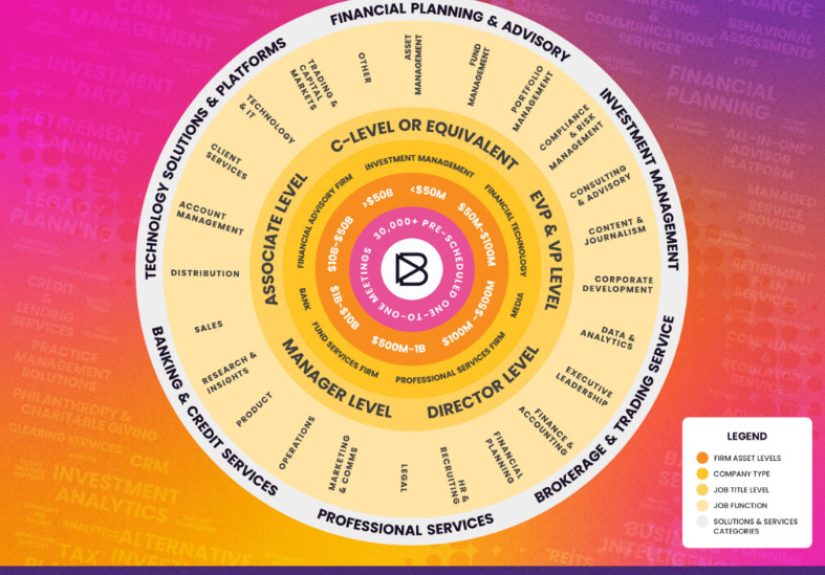
This may be the most important part of the whole Future Proof story. Breakthru Meetings were built to replace random hallway networking with pre-scheduled, double-opt-in meetings. That concept sounds almost suspiciously reasonable. Instead of wandering around hoping to “run into the right person,” attendees can participate in focused 15-minute meetings with people who actually want to meet them too.
That detail matters because most conference networking fails in exactly the same way most bad dating apps fail: too much randomness, too little fit, and not enough mutual intent. Breakthru tries to solve that problem by making meeting design part of the product.
Future Proof 2024 also pushed beyond one-to-one meetings. Breakthru Talks introduced small interactive roundtables, while Breakthru Experiences opened the door to curated group activities and skill-building sessions. That creates a fuller networking ecosystem. Some conversations belong in a fast intro meeting. Some belong in a peer-group roundtable. Some happen best while doing something together rather than standing under a giant branded banner pretending the conversation is organic.
Technology took center stage
Another major theme in “Talk Your Book: Future Proof 2024” is that the event was not just for advisors who want market commentary. It was also for people trying to understand where wealth-tech is heading. That is where the updated fintech areas and the Fintech Demo Drop matter. The demo competition format gives emerging companies a chance to show real tools, not just promise vague disruption with a gradient logo and the word “platform” repeated nine times.
That is good for advisors because the modern advisory business is increasingly shaped by software choices, workflow design, client experience tools, onboarding systems, AI, tax intelligence, and data integration. In other words, the future of wealth management is not just portfolio construction. It is operational design. Any event that understands that is closer to the real center of the industry.
What the Episode Says About the Wealth Management Industry
The conversation around Future Proof 2024 reveals a lot about the industry itself. First, wealth management is becoming more interdisciplinary. Advisors today need insights on markets, yes, but also on behavior, technology, branding, growth, compliance, client experience, recruiting, AI, and firm culture. A serious event can no longer survive by offering a few broad macro panels and calling it a day.
Second, influence in finance is becoming more media-savvy. Live podcasts, recognizable hosts, and speakers who can communicate clearly are not just entertainment features. They are part of how professionals now discover ideas. A compelling conversation on stage or on a live recording often travels further than a PowerPoint-heavy presentation ever could. The presence of media names and well-known industry voices is not decoration. It reflects how modern professional authority is built.
Third, the business side of wealth management is getting sharper. The event’s audience profile, speaker lineup, and emphasis on decision-makers all point to a market that values ROI from time spent. Attendees do not just want inspiration. They want usable insight, strategic introductions, and a clearer sense of where the industry is moving next. The beach setting may be relaxed, but the commercial intent is not.
Who Should Actually Care About Future Proof 2024?
The obvious audience is financial advisors and RIA leaders, but the relevance goes wider than that. A startup founder building for advisors should care because the event concentrates buyers, influencers, and partners in one place. A wealth executive should care because it functions as a live map of where industry energy is flowing. A fintech operator should care because it offers both visibility and feedback. Even media and content creators in finance should pay attention because Future Proof has become a place where business, culture, and conversation overlap.
That overlap is exactly what makes the event interesting. Too many industry gatherings are designed like a checklist. Sponsor booths? Check. Panels? Check. Coffee? Technically yes. Future Proof seems more interested in building momentum. It wants people to leave having learned something, met someone, and seen the future of the industry in a less abstract way.
The Secret Sauce: Return on Attention
If there is one idea that sums up Future Proof 2024, it is return on attention. That phrase captures a growing truth about conferences and content in general: time is not the only scarce resource anymore. Attention is. People can always watch a webinar replay later, skim a thread, or catch a summary on LinkedIn. To justify travel, cost, and days away from work, an event has to earn focus in real time.
Future Proof’s answer appears to be variety with intention. Shorter-form sessions. Interactive formats. High-profile speakers. Live podcasts. Structured meetings. A more open environment. Music and social energy that prevent the day from feeling like one long PowerPoint hostage situation. This is not accidental style. It is a business model built around helping people stay engaged.
That is also why the event fits the tone of “Talk Your Book.” The episode is promotional, yes, but the best promotional content teaches you something larger than the thing being promoted. Here, the larger lesson is that the conference business in wealth management is evolving toward curated, experience-led design. Future Proof 2024 became a useful case study in that shift.
Composite Experience: What Future Proof 2024 Likely Felt Like on the Ground
Based on the structure of the event, the public descriptions, and the themes attendees and organizers emphasized, the Future Proof 2024 experience likely felt very different from the average industry conference from the moment the day began. Instead of flowing into a dark ballroom where everyone is checking email under the table, attendees were moving through an outdoor, high-energy environment where content, meetings, and casual interactions were blended together. That physical design alone changes behavior. People linger more. Conversations start faster. Serendipity has better odds.
A realistic attendee experience probably started with a practical choice: go to a session, head to a Breakthru roundtable, or meet someone from a pre-scheduled list. That is a better problem than the usual conference dilemma, which is deciding whether to sit through a mediocre panel or hide in the hallway pretending to take a call. At Future Proof, the options themselves seem built to create momentum. You are not stuck waiting for something useful to happen. You are selecting from several paths where something useful probably will happen.
Then there is the social texture of the event. Because the festival blends wealth management with media, fintech, and cultural elements, conversations are less likely to sound identical. One minute you may hear a macro perspective on where markets are heading. The next, you are hearing about AI tools that reduce advisor admin work. After that, you might catch a live podcast taping with a recognizable host who can actually make a serious topic sound human. That kind of programming keeps energy up because it respects how people learn now: in bursts, across formats, with a mix of hard information and memorable delivery.
The music component also matters more than it first appears to. A show featuring recognizable acts is not just a fun extra. It changes the emotional rhythm of the event. It gives attendees a shared memory that is not limited to badges, brochures, and breakout sessions. That may sound soft, but shared memories are powerful networking fuel. People do business with people they remember, and they remember experiences that feel alive.
For many attendees, the real value likely came from the combination of structure and looseness. Meetings were intentional. The content was curated. But the atmosphere left enough room for unscripted moments: bumping into a founder after a session, continuing a roundtable discussion over lunch, or turning a brief introduction into a future partnership. That balance is hard to create. Too much structure and the event feels robotic. Too little and it becomes expensive chaos. Future Proof 2024 seems to have aimed for the sweet spot in the middle.
And perhaps that is the clearest reason the event resonated. It did not ask attendees to separate business value from actual enjoyment. It tried to deliver both at once. In a world where professionals are drowning in content, optionality, and screen fatigue, that is not a luxury. It is a competitive advantage.
Final Take
“Talk Your Book: Future Proof 2024” is ultimately about more than a single episode and more than a single event. It is about a broader shift in how the wealth management industry wants to gather, learn, and grow. Future Proof 2024 stood out because it treated conferences as products, networking as design, content as attention economics, and fintech as core infrastructure rather than side-stage novelty.
For readers looking at the future of advisor conferences, fintech events, RIA networking, or wealth management trends, this topic matters because it captures the direction of travel. The old conference model is not dead everywhere, but it is clearly losing its grip. The newer model is more intentional, more interactive, more media-aware, and much more honest about what busy professionals actually value.
And that may be the smartest takeaway of all. The future does not always arrive as a dramatic revolution. Sometimes it shows up wearing a conference badge, walking toward the beach, and refusing to sit through another boring panel.