Table of Contents >> Show >> Hide
- Why Sun Exposure Is So Hard on Tattoos
- Do You Really Need a Special Tattoo Sunscreen?
- Fresh Tattoo vs. Healed Tattoo: The Rules Are Different
- How to Apply Sunscreen So Your Tattoo Actually Benefits
- Other Sun-Safety Tips That Help Protect Body Ink
- Choosing the Best Sunscreen Format for Tattooed Skin
- Common Mistakes That Fade Tattoos Faster
- What to Do If Your Tattoo Already Looks Sun-Faded
- Experiences People Commonly Have With Tattoo Sun Protection
- Final Thoughts
Getting a tattoo is a little like commissioning tiny art for your skin, except your canvas walks around, sweats, goes to brunch, and occasionally forgets to reapply sunscreen. That last part matters more than most people realize. Sun exposure can dull bright colors, soften crisp lines, and make even a beautifully healed tattoo look older than it is. In other words, the sun is great for tomatoes, solar panels, and beach selfies. For tattoos, it is a demanding critic.
If you want your body ink to stay sharp, rich, and camera-ready, tattoo sunscreen needs to become part of your regular routine. But sunscreen is only one piece of the puzzle. Real tattoo sun safety also includes timing your outdoor plans, wearing protective clothing, avoiding common mistakes with fresh ink, and understanding that a “tattoo sunscreen” label is not a magical force field. What matters most is whether the product actually offers strong, broad protection and whether you use it correctly.
This guide breaks down how to protect tattoos in real life, from beach days and road trips to outdoor workouts and pool weekends. Whether your ink is brand new or old enough to have memories of its own, these practical tips can help you keep it looking vibrant for the long haul.
Why Sun Exposure Is So Hard on Tattoos
Tattoos live in the skin, and the skin lives under the sun. That is where the trouble starts. Ultraviolet rays can contribute to fading over time, especially if your tattoo gets frequent, unprotected exposure. Black and gray work may gradually lose depth. Color tattoos can become less vivid. Fine-line designs can look less crisp when the surrounding skin takes on the wear and tear that comes from repeated sun exposure.
Think of sunlight as nature’s slow-motion highlighter pen. A little exposure may not create instant drama, but repeated exposure can gradually change how the tattoo looks. The result is not always dramatic overnight. It is sneakier than that. One summer day at the beach will not usually erase your sleeve, but years of “I’ll just be outside for a minute” can absolutely add up.
There is also a comfort issue. Tattooed skin can burn just like non-tattooed skin, and a sunburn over ink is a miserable idea. It can leave the skin dry, flaky, tight, and irritated. If the tattoo is fresh, the problem is even bigger because healing skin is already busy doing repair work and does not need the added chaos of UV damage.
Do You Really Need a Special Tattoo Sunscreen?
Here is the honest answer: not necessarily. Some products are marketed specifically as tattoo sunscreen, and that can sound impressive, like your dragon tattoo now has its own bodyguard. But the most important thing is not the tattoo-themed packaging. It is the protection on the label.
A good sunscreen for tattoos should check the same boxes you want for any sun-exposed skin:
- Broad-spectrum protection to help protect against both UVA and UVB rays.
- SPF 30 or higher for reliable everyday protection.
- Water resistance if you will be sweating, swimming, or generally existing outdoors in summer.
- A texture you will actually use, because the best sunscreen on earth is useless if it lives untouched at the bottom of your bag.
So yes, a product marketed for tattoos can work. A regular sunscreen can work too. The real question is whether it offers the right protection and whether you apply enough of it. Marketing can be cute. Your tattoo needs consistency.
Fresh Tattoo vs. Healed Tattoo: The Rules Are Different
Fresh tattoos need healing first
A new tattoo is not just “a tattoo.” It is healing skin. During that stage, you should be especially careful with sun exposure. Fresh ink should be kept out of direct sun as much as possible. That usually means covering it with loose, breathable clothing and avoiding situations where it will bake in the heat like a decorative casserole.
One of the biggest mistakes people make is putting sunscreen on a tattoo before it has fully healed. That sounds responsible, but healing skin is sensitive and not ready for that step yet. During the healing window, it is smarter to avoid direct sun altogether and follow proper aftercare with gentle cleansing and a suitable moisturizer recommended by your tattoo artist or clinician.
Healed tattoos need daily protection
Once the tattoo has fully healed, sunscreen becomes fair game and should become habit. This is the stage when tattoo sunscreen really earns its keep. If your ink is exposed, protect it the same way you would protect your face, shoulders, chest, or anywhere else you do not want sun damage showing up uninvited.
A healed tattoo benefits from routine care, not just vacation-level panic. That means sunscreen on ordinary days too: dog walks, coffee runs, outdoor lunches, commutes, baseball games, patio brunches, and every “I wasn’t even out that long” moment in between.
How to Apply Sunscreen So Your Tattoo Actually Benefits
Application is where good intentions often go to die. Many people apply too little sunscreen, forget to reapply, or miss the exact part of the body where their tattoo sits. Then they blame the sun, the weather, or astrology. The real issue is usually technique.
- Apply sunscreen before sun exposure. Do not wait until you are already roasting in a parking lot.
- Use enough product. A thin, apologetic smear is not enough. Cover the tattoo evenly.
- Reapply every two hours. Sooner if you are sweating, swimming, or toweling off.
- Check the water-resistance claim. “Water resistant” does not mean immortal. It usually means limited protection for a set amount of time.
- Do not forget surrounding skin. A protected tattoo in the middle of a sunburn is not really winning.
If your tattoo is on a commonly missed area like the back of the neck, shoulder blade, ankle, top of the foot, scalp line, or the back of your arm, be extra intentional. These spots have a nasty habit of getting skipped until they remind you later with redness and regret.
Other Sun-Safety Tips That Help Protect Body Ink
1. Cover up when possible
Clothing is one of the easiest ways to protect a tattoo because it does not wear off, slide around, or disappear after one enthusiastic cannonball. Lightweight long sleeves, pants, cover-ups, and rash guards can make a huge difference for larger tattoos or full-day outdoor plans. If you spend a lot of time outside, UPF clothing is especially helpful because it is designed with sun protection in mind.
This is particularly useful for tattoos on the shoulders, chest, upper back, and arms, which tend to take a beating during outdoor activities. A breathable layer can save you from constant reapplication and help preserve the look of detailed or colorful work.
2. Seek shade like it owes you money
Midday sun is the heavyweight champion of UV exposure. If you can plan around the strongest sun hours, do it. Sit under an umbrella, pick the shaded side of the patio, take breaks indoors, or schedule long walks earlier or later in the day. Shade is not a complete substitute for sunscreen, but it is a strong supporting character.
If your shadow looks shorter than you are, that is a sign the sun is high and intense. Translation: your tattoo does not need this drama.
3. Avoid tanning beds
This one is simple. Tanning beds are bad news for skin and bad news for tattoos. Artificial UV exposure still counts as UV exposure, and it does your ink no favors. If your goal is keeping tattoos crisp and skin healthy, indoor tanning is the exact opposite of the assignment.
4. Be smarter around water, sweat, and sand
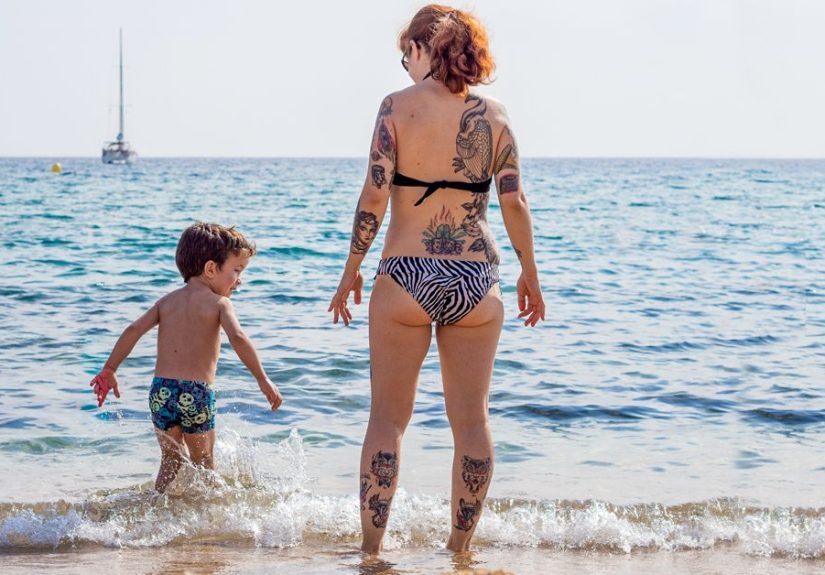
Pool days and beach days are fun, but they are basically obstacle courses for sunscreen. Water, perspiration, and friction all make protection wear down faster. Sand reflects light. Water reflects light. Towels remove product. The sun does not take breaks just because you are holding a smoothie.
On these days, use water-resistant sunscreen, reapply on schedule, and bring enough product with you. A tiny almost-empty bottle from last summer is not a plan. It is wishful thinking in plastic packaging.
5. Protect tattoos year-round
Sun protection is not just a summer hobby. Tattoos can get exposed during spring hikes, fall festivals, winter driving, and bright cloudy days. If your tattoo is on an area you uncover regularly, daily protection matters year-round. UV rays do not need a heat wave to show up.
Choosing the Best Sunscreen Format for Tattooed Skin
There is no single “best” texture for everyone. The best format is the one that fits your lifestyle enough to become routine.
- Lotion or cream: Great for even coverage, especially on larger tattoos like sleeves, calf pieces, or back tattoos.
- Stick sunscreen: Handy for small tattoos, touch-ups, and tricky areas like fingers, ankles, and the back of the neck.
- Spray sunscreen: Convenient, but easy to underapply. If you use a spray, apply carefully and rub it in for more even coverage.
If your skin is sensitive, choose a formula you tolerate well and that does not make you dread applying it. Fragrance-free options can be a good fit for reactive skin. Some people prefer mineral formulas, some prefer chemical formulas, and some use a hybrid. The crucial point is simple: broad-spectrum, SPF 30 or higher, and regular use.
Common Mistakes That Fade Tattoos Faster
- Using sunscreen only on beach vacations and ignoring daily exposure.
- Assuming a cloudy day means your tattoo is safe.
- Applying sunscreen too thinly.
- Forgetting to reapply after swimming or sweating.
- Putting sunscreen on a fresh tattoo before it has healed.
- Relying on a hat while leaving the rest of the tattoo uncovered.
- Thinking “water resistant” means “set it and forget it.”
- Ignoring often-exposed tattoos on hands, wrists, feet, neck, and ears.
Most tattoo fading is not caused by one dramatic mistake. It is caused by repeat habits. The upside is that better habits work the same way. Small protective choices, repeated often, can make a visible difference over time.
What to Do If Your Tattoo Already Looks Sun-Faded
First, do not panic. A tattoo that has lost some brightness is not necessarily ruined. Start by protecting it from further UV exposure. Use daily sunscreen, cover it when practical, and keep the skin moisturized so the tattooed area looks healthier overall.
If the design still looks dull after the skin has settled, you can talk to a reputable tattoo artist about whether a touch-up makes sense. But prevention is cheaper, easier, and far less annoying than trying to rescue a tattoo that has spent three summers being treated like outdoor furniture.
If you notice unusual irritation, blistering, ongoing itching, or a skin reaction over tattooed areas, check with a dermatologist or healthcare professional rather than guessing your way through it with internet folklore and half a tube of mystery ointment.
Experiences People Commonly Have With Tattoo Sun Protection
Ask tattooed people about sun protection and you will hear a pattern. The ones who are happiest with their ink a few years later are rarely the people who did one giant heroic act. They are the people who got boringly consistent. They kept sunscreen in the car, in a bag, near the front door, in the gym locker, and sometimes in that random kitchen drawer where modern life stores all its small emergencies. They turned sun protection into a routine instead of a rescue mission.
One common experience happens after a vacation. Someone goes to the beach with a relatively new shoulder tattoo, applies sunscreen once in the morning, and spends the rest of the day swimming, sweating, and lying in reflected sunlight without reapplying enough. A week later the skin feels dry and the tattoo looks a little less lively. Not destroyed, just tired. That is how many people first realize that sunscreen is not a one-and-done event. It is maintenance.
Another familiar story involves hand and forearm tattoos. People love these placements because they are visible, expressive, and easy to admire while pretending to be productive. But they are also exposed constantly. Drivers notice that the arm near the car window tends to get more sun. Runners realize their forearm tattoos take a daily beating. People with tiny wrist tattoos often forget those areas altogether because the design is small, but the exposure is not. These are the tattoos that quietly teach people the value of quick daily application.
Then there is the colorful tattoo lesson. Many people with bright reds, yellows, and blues say the moment they became serious about sun safety was the moment they noticed their vibrant piece looking less electric after repeated outdoor exposure. Black-and-gray tattoos fade too, but color often makes the change easier to spot. It is the visual version of realizing your favorite black T-shirt is not black anymore. It is “formerly black.” That can be a powerful motivator.
People with large pieces also learn that clothing can be a lifesaver. A light long-sleeve shirt on a hike or a cover-up at the beach often feels easier than constantly chasing every inch of a half-sleeve or chest piece with sunscreen. It is not about hiding tattoos. It is about being practical. The sun does not care how expensive the tattoo was.
Fresh tattoo experiences are usually the clearest of all. Most people who have accidentally exposed healing ink to too much sun remember it vividly because the skin becomes uncomfortable fast. It can feel tight, hot, and unhappy. That is usually enough to make the lesson stick. After that, many tattooed people become almost comically protective during the healing phase, choosing loose clothing, shade, and indoor plans until the skin has fully recovered.
The biggest shared experience, though, is this: the tattoos that age best are usually attached to people who stopped thinking of sunscreen as a special event product. They use it on regular Tuesdays. They keep an eye on the weather. They reapply even when it is mildly inconvenient. It is not glamorous, but neither is paying for great body art and then letting the sun freestyle all over it.
Final Thoughts
Tattoo sunscreen is not about vanity alone. It is about protecting both your skin and the artwork living on it. The smartest approach is simple: keep fresh tattoos out of direct sun while they heal, use broad-spectrum SPF 30 or higher on healed ink, reapply it correctly, and back it up with shade, clothing, and common sense. Do that consistently and your tattoos will have a much better chance of staying bold, crisp, and beautiful.
Your tattoo artist brought the design to life. Sun safety helps keep it that way. Think of sunscreen as part of the aftercare story that never really ends. Annoying? Slightly. Worth it? Absolutely.