Table of Contents >> Show >> Hide
- From Classroom Helper to Hackers’ Playground
- The Hackaday Project in Plain English
- How the Speak & Spell Actually Talks
- From Microphone to Robot Voice: Creating New Word Lists
- Why Hack a Speak & Spell in 2025?
- Speak & Spell Hacking vs. Classic Circuit Bending
- Practical Tips if You Want to Teach Your Own Four-Letter Words
- Real-World Experiences: Living with a Hacked Speak & Spell
- Conclusion: A Classic Toy with a New Voice
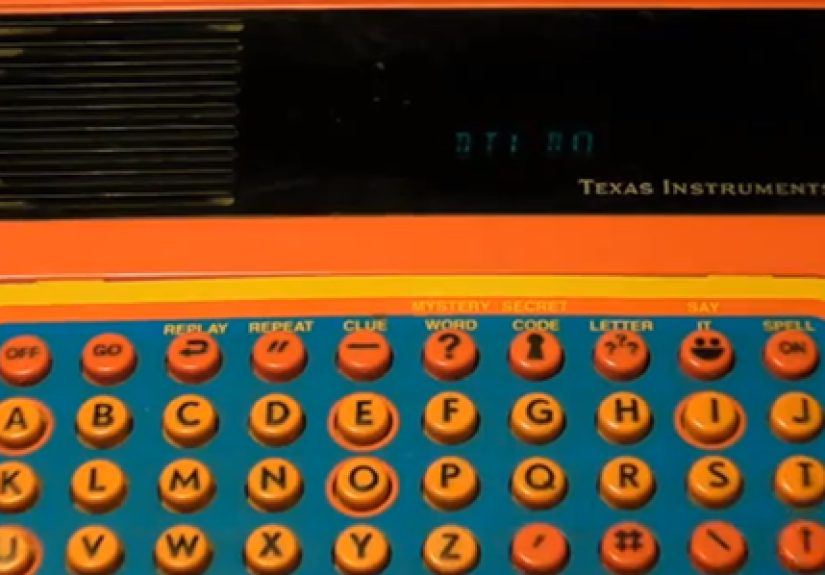
If you grew up in the late 1970s or 1980s, you probably remember the Texas Instruments Speak & Spell: that bright red slab with a handle, a tiny green display, and a voice that sounded like a bored robot who’d just learned English yesterday. Originally, this iconic learning toy drilled kids on a few hundred safe, school-approved words. But thanks to modern hardware hacking, you can now teach the Speak & Spell four-letter words your childhood self would have absolutely howled atand far more interesting vocabulary besides.
Today we’ll dig into what the Speak & Spell actually is, how the classic Hackaday-featured project managed to give it a brand-new vocabulary, and why this little orange-and-red brick still matters to makers, retro-computing fans, and anyone fascinated by early digital speech. We’ll also walk through what’s involved if you want to customize your own word lists, and wrap up with some hands-on experiences and tips from the DIY trenches.
From Classroom Helper to Hackers’ Playground
When Texas Instruments launched the Speak & Spell in 1978, it was a technological flex disguised as a children’s toy. Instead of playing back tape loops like earlier talking dolls and pull-string toys, the Speak & Spell generated synthetic speech with a custom digital signal processor and ROM-stored speech data.
Inside the plastic shell sits a TMC0280 (later branded TMS5100) speech-synthesis chip and associated memory devices storing phoneme data encoded with linear predictive coding (LPC). That LPC-based voice, piped through a small speaker and controlled by a 4-bit microcontroller and keyboard matrix, gave the toy its unmistakable robotic sound.
The original Speak & Spell shipped with a built-in list of commonly misspelled words, plus a few games such as Mystery Word and Secret Code. Cartridges plugged into a slot near the battery compartment added more word lists and mini-games without changing the core hardware.
Fast forward a few decades, and that same architectureCPU, speech chip, and pluggable ROM modulesturns out to be hacker gold. Instead of accepting the factory vocabulary, you can create your own module that feeds the speech chip entirely new LPC data. That’s exactly what the Hackaday-featured project “Teaching The Speak & Spell Four (and More) Letter Words” did.
The Hackaday Project in Plain English
The project, built by hardware hacker Furrtek and covered on Hackaday, attacks the Speak & Spell at its most interesting point: the expansion cartridge slot. Texas Instruments’ original cartridges stored speech data in unusual ROM devices that don’t behave like your typical parallel or SPI memory chips. Instead, they output data in quirky five-nibble chunks, timed in a very specific way for the TMS5100 speech processor.
Furrtek’s first idea was to emulate this weird ROM with a humble microcontroller such as an ATtiny. That turned out to be far too slow: the Speak & Spell expects data with tight timing guarantees, and trying to bit-bang that over a standard 400 kHz I²C bus just wasn’t going to keep up.
The solution was to build a custom cartridge based on a CPLD (Complex Programmable Logic Device). Whereas a microcontroller executes instructions one at a time, a CPLD behaves more like configurable hardware, responding to the Speak & Spell bus almost as fast as real ROM chips. With the CPLD handling the gnarly bus protocol and timing, the hack could present entirely new speech data to the TMS5100 as if it were an original Texas Instruments module.
The result? A Speak & Spell that no longer confines itself to kid-safe spelling lists. It can now say and spell anything you have the courage (and good taste) to encodefrom four-letter expletives to technical jargon, in-jokes, or spooky phrases for a Halloween prop. Hackaday described the final device as having a “perverse vocabulary” and rightly called it more interesting than a typical circuit-bent unit with a couple of random glitch switches.
How the Speak & Spell Actually Talks
To really appreciate what this hack accomplishes, it helps to understand how the Speak & Spell voice works under the hood. In the late 1970s, memory was expensive. Instead of storing whole waveforms of human speech, TI engineers used linear predictive coding. LPC breaks speech into parameterspitch, energy, filter coefficientsthat describe how air flows through a model of the human vocal tract. The speech chip then reconstructs the sound using internal noise and buzz sources plus a programmable filter.
Each word is stored as a sequence of frames, each frame containing LPC parameters. These frames live in ROM chips such as the TMS6100 and its relatives, which were cutting-edge 128-kilobit devices at the time. The Speak & Spell’s microcontroller selects frames and feeds them to the speech chip, which turns that compact data into the familiar metallic voice.
What Furrtek’s cartridge does is essentially “swap out the vocabulary.” Instead of TI’s original LPC data, the CPLD-backed module presents a custom ROM image containing newly encoded words and phrases. As long as the timing and format match what the TMS5100 expects, the chip doesn’t care whether it’s saying “rhythm” or some mischievous phrase you cooked up in your audio editor.
From Microphone to Robot Voice: Creating New Word Lists
Of course, teaching the Speak & Spell new words isn’t just about hardware. You also need to generate the LPC data itself. In the original TI workflow, engineers recorded professional voice actors and ran those recordings through specialized, expensive hardware and software to produce LPC frames.
Modern hackers don’t need a 1970s minicomputer, but the basic steps are similar:
1. Record or Source Your Audio
You start with a clean recording of each word or phrase you want the Speak & Spell to say. Good signal quality matters: background noise, reverb, or clipping will turn the already grainy LPC output into complete mush.
2. Run LPC Analysis
Next, you run that audio through an LPC analysis tool that can output coefficients compatible (or convertible) with the TI speech chip’s expected format. Enthusiasts have documented toolchains that rely on older Windows software, Unix utilities, or custom scripts to transform WAV recordings into the appropriate bitstreams.
3. Pack the Data into ROM Images
Once you have LPC frames, you assemble them into a ROM image matching the Speak & Spell’s oddball memory layout. That means dealing with frame boundaries, lookup tables, and the five-nybble-fetch quirk of the original memory devices.
4. Flash the Cartridge and Test
Finally, you burn the ROM image into whatever nonvolatile memory your CPLD or cartridge board uses, plug it into the Speak & Spell, and see what happens. The first attempts are rarely perfect: words can sound like they’re underwater, syllables can smear together, or timing can feel off. Tuning LPC coefficients is as much art as science.
The Hackaday project’s demo video drew some playful criticism from readers who could only make out a few words. That’s not surprising; TI’s own engineers had pricey, dedicated tools to get understandable speech out of LPC, and even then it still sounded like a retro sci-fi computer.
Why Hack a Speak & Spell in 2025?
With modern microcontrollers, text-to-speech engines, and cheap flash memory everywhere, you might wonder why anyone would bother teaching a 1978 learning toy new vocabulary. There are a few good reasons.
1. It’s an Amazing Hardware-Learning Platform
The Speak & Spell is a self-contained lesson in early digital design: matrix keyboards, multiplexed displays, dynamic RAM tricks, and custom DSP chips. Reverse-engineering or extending it exposes you to topics like unusual memory buses, timing constraints, and embedded ROM layoutsskills you can carry into modern FPGA and CPLD work.
2. The Sound Is Instantly Recognizable
The moment the Speak & Spell voice crackles to life, anyone of a certain age is transported back to school desks and shag carpet. Musicians and sound designers have embraced that aesthetic for decades, circuit-bending units or sampling their phrases for albums, games, and art installations.
3. Nostalgia Meets Open Hardware Culture
Modern DIY culture is full of projects that celebrate older tech in clever ways: Think Game Boy synths, Commodore 64 demo scenes, and analog TV art. A custom Speak & Spell cartridge fits right into that worlda mashup of nostalgia, reverse engineering, and playful subversion of a once-serious educational tool.
4. It’s Just Fun to Make a Toy Misbehave
Let’s be honest: half the appeal is hearing a device that used to solemnly quiz fourth-graders suddenly spell inside jokes and snark. There’s something delightfully rebellious about bending an IEEE-recognized milestone of digital signal processing into saying exactly what you want.
Speak & Spell Hacking vs. Classic Circuit Bending
For years, Speak & Spells have been favorites for circuit benders, who rewire internal connections to create glitchy, unpredictable sounds. You can spot these on YouTube: knobs and switches sticking out of red plastic cases, emitting chaotic stutters, drones, and shrieks.
The Hackaday-style vocabulary hack is different. Instead of shorting things until it wails like a haunted modem, you surgically replace the word data and keep the underlying speech engine intact. Think of circuit bending as free-jazz noise, and custom cartridges as composing new songs for the same instrument.
Both approaches have their charm:
- Circuit bending is quick, cheap, and delightfully unpredictablebut you give up intelligible speech.
- Custom cartridges demand more electronics and DSP knowledge, but reward you with fully programmable phrases (even if they still sound like your English teacher trapped in a tin can).
Practical Tips if You Want to Teach Your Own Four-Letter Words
If you’re tempted to follow in Furrtek’s footsteps and create your own vocabulary module, here are some practical considerations.
1. Start with Documentation and Emulators
Before you crack open the case, spend some time with existing documentation. Sites like Datamath, vintage computing collections, and independent researchers have mapped out the Speak & Spell’s internal chips, pinouts, and ROM layouts. There’s even a browser-based Speak & Spell emulator that uses recorded sound and pays attention to behavior of the original toy.
2. Decide Between Reversible and Permanent Mods
A cartridge-based hack has the big advantage of being reversible. You don’t have to cut traces or drill the case; you just design a compatible module and plug it in like the original expansion packs. That keeps collectors and nostalgia purists happy, and you can always pop back to stock behavior by swapping cartridges.
3. Expect Trial, Error, and Garbled Syl-la-bles
LPC isn’t forgiving. Small mistakes in encoding can turn “banana” into “bnnnnnn-a?” The Hackaday comments on the original project include several people laughing about how hard it was to understand many of the hacked words. Getting crisp, recognizable speech sometimes requires iterating on recording levels, phoneme boundaries, and parameter quantization.
4. Keep It (Mostly) Family-Friendly
It’s easy to lean into the novelty of teaching a childhood toy every rude phrase you never dared type as a kid. But the same platform can be used more creatively: making it spell your friends’ names, recite sci-fi quotes, act as a spooky prop, or become a quirky voice for an art installation or escape room puzzle.
Real-World Experiences: Living with a Hacked Speak & Spell
So what is it actually like to live with a custom-vocabulary Speak & Spell? Beyond the pure technical win, hackers often describe a few distinct phases.
The First Power-On: Equal Parts Triumph and Confusion
The first time a freshly hacked unit boots, there’s a noticeable tension. You hit the power switch, the familiar boot sound chirps, and then the toy barks out a word it was never designed to know. The delight is instanteven if the pronunciation is, frankly, atrocious. Many builders report that their earliest ROM images produce garbled, half-recognizable phrases that sound like the toy has a cold and just inhaled helium.
That’s part of the charm. You quickly develop an ear for what “good” LPC speech sounds like on this hardware, and you start tweaking encoding parameters, experimenting with different recording voices, and chopping syllables to see what the chip can handle.
Demo Day: Watching People React
Take a hacked Speak & Spell to a hackerspace or retro-computing meetup and you’ll see the same sequence of reactions play out:
- Someone spots the familiar red-and-yellow case, grins, and says, “Whoa, I haven’t seen one of those in years.”
- You press a few keys and the toy starts spelling words nobody expects to hear from a children’s learning aid.
- There’s a beat of silence while their brain tries to reconcile nostalgia with what they just heard.
- Then come the giggles, followed by a flurry of “Can it say this?” requests.
Because the Speak & Spell’s display shows the letters as it spells them, a hacked vocabulary becomes a visual gag as well as an audio one. People crowd around just to watch the green vacuum-fluorescent display squeak out unexpected phrases.
Using It as a Learning Tool… Again
Ironically, teaching the Speak & Spell new words turns it back into an educational devicejust for a different audience. Modern makers use it to demonstrate:
- How early digital signal processing worked long before smartphone voice assistants.
- The concept of ROM cartridges and bus protocols, which show up in everything from classic game consoles to embedded systems at work today.
- The idea that consumer devices aren’t “closed” if you’re patient enough to reverse-engineer them.
Students and younger hobbyists who’ve never seen one before are often surprised that such an old toy can be both so limited and so cleverly engineered. Listening to its laggy, robotic speech after spending their whole lives with near-human text-to-speech makes the progress of DSP feel tangible.
Daily Life with a Snarky Plastic Brick
After the novelty wears off, a hacked Speak & Spell often ends up as a mascot on a bench or shelf in the workshop. People wire it into other projectstriggering phrases via microcontroller GPIO pins, MIDI converters, or sensor inputs. It’s not unusual to see them used as:
- Alert devices that speak status messages in that unforgettable voice (“ERROR… CHECK… SOLDER”).
- Interactive elements in art pieces or haunted-house props that whisper distorted words at passersby.
- Retro “assistant” gadgets that respond to a button press with pre-programmed quips.
The toy’s rugged shell and simple power needs (four C cells or a DC adapter) make it surprisingly practical as a permanent part of a project. It’s not just a shelf queen; it’s a working, talking module from another era.
Lessons Learned from the Experience
Most people who go through the full processresearch, hardware design, LPC encoding, ROM buildingwalk away with a deeper respect for both old and new tech. You learn how much ingenuity it took to cram recognizable speech into kilobits of ROM, and you appreciate how effortless modern speech engines have become.
You also get something more personal: the satisfaction of bending history a little. The Speak & Spell was built to teach perfectly respectable vocabulary to grade-schoolers. With a CPLD cartridge and some stubborn determination, you get to decide what it teaches now.
Conclusion: A Classic Toy with a New Voice
The Speak & Spell started life as a groundbreaking educational tool, packing state-of-the-art digital signal processing and solid-state speech synthesis into a kid-proof case. Decades later, projects like “Teaching The Speak & Spell Four (and More) Letter Words” show that the same hardware is still inspiring curiosity, mischief, and seriously clever engineering.
By reverse-engineering its oddball ROM interface, recreating LPC workflows, and building custom cartridges around CPLDs, modern hackers have turned a nostalgia piece into a programmable speech platform. Whether you use it to deliver four-letter punchlines, eerie soundscapes, or cleverly re-themed spelling games, the hacked Speak & Spell proves that 1970s chips still have something to say.
And if that robotic voice is now reciting your own personal dictionary? Well, your inner eight-year-old finally got the last word.