Table of Contents >> Show >> Hide
- Key Takeaways
- What Counts as a “Cheap Solar Lamp”?
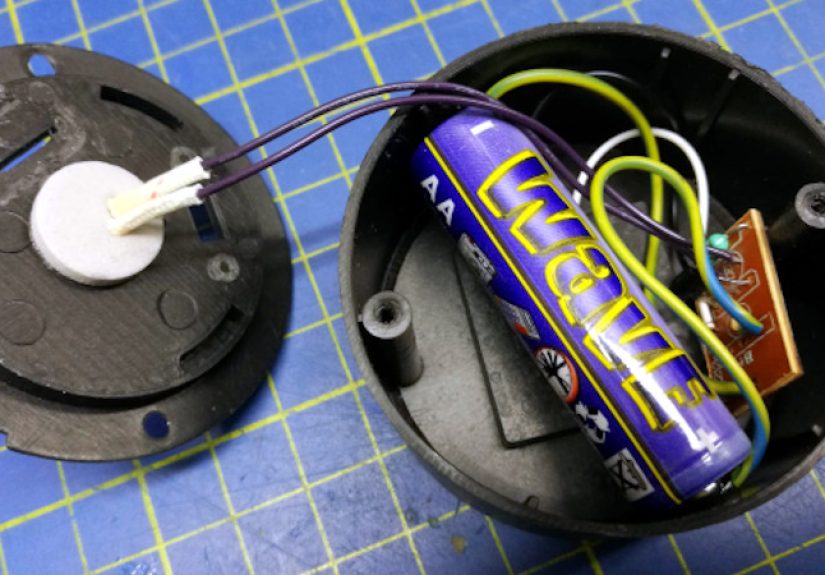
- The Usual Suspects: What You Typically Find Inside
- A Classic Cheap Design: The Garden Light Boost IC + Inductor
- Charging: Why Cheap Solar Lamps Usually Don’t “Charge Like a Phone”
- The Lamp’s Energy Budget: A Quick Reality Check With Numbers
- Why Cheap Solar Lamps Die (And Why It’s Not Always the Electronics)
- Design Trade-Offs: What the Teardown Teaches You About Engineering on a Budget
- What “Better” Looks Like (Without Turning It Into a Science Project)
- Disposal and Safety: The Part Everyone Skips Until It’s a Problem
- Conclusion: Tiny Solar Lamp, Big Lessons
- Experiences and Real-World Lessons From Analyzing Cheap Solar Lamps (Extra 500+ Words)
A cheap solar lamp is basically a tiny off-grid power plant that got a little too confident after watching one inspirational TED Talk.
It harvests sunlight, stores it, and spends it on LEDs like it’s shopping with a coupon and a dream.
And that’s why these little lights are fascinating: at rock-bottom prices, every design decision is a trade-off.
Fewer parts. Thinner plastics. “Waterproof-ish” seals. And circuitry that’s equal parts clever and chaotic.
Let’s crack open the ideas behind a bargain solar lamp and see what’s going on insidewithout the hype, without the fluff, and with just enough humor to keep the screws from rolling under the couch.
Key Takeaways
- Most cheap solar lamps combine a small PV panel, a rechargeable battery, and a minimalist “night switch” circuit.
- Many ultra-budget garden lights use a tiny boost driver (often a joule-thief style IC) to run a white LED from a 1.2V cell.
- Charging is usually crude by design: limited current and “good enough” control instead of fancy charge termination.
- Failures are often mechanical (water, corrosion, cracked solder joints) as much as electrical.
- You can learn a lot about energy budgets, LEDs, and real-world reliability by analyzing one $5 lamp.
What Counts as a “Cheap Solar Lamp”?
“Cheap solar lamp” covers a few common designs you’ve probably seen:
- Solar garden stake/path lights: tiny panel on top, one white LED, usually a single AAA/AA rechargeable cell inside.
- Solar lanterns and string lights: a slightly larger panel, more LEDs, sometimes a small Li-ion pack, and a bit more control logic.
- Solar “security” puck lights: multiple LEDs, a brighter burst mode, and often a larger battery and basic motion sensor.
The cheapest and most common is the garden light. It’s the lab rat of solar lighting: simple enough to understand, cheap enough to sacrifice,
and popular enough that its design patterns show up everywhere.
The Usual Suspects: What You Typically Find Inside
1) The Solar Panel (PV Module)
On a bargain lamp, the panel is small, lightweight, and optimized for “good enough in direct sun.”
Its job is not to run the LED directly. Its job is to trickle energy into a battery over many hours.
A typical little square panel can produce a couple of volts in bright sunlight, but current is limitedthink “sips,” not “gulps.”
If you’re looking at raw photovoltaic fundamentals: an individual silicon PV cell produces roughly about half a volt under open-circuit conditions,
so small panels are basically multiple cells in series to reach a useful charging voltage.
2) The Battery (The Lamp’s Tiny Savings Account)
Cheap solar lamps usually store energy in one of these:
- NiMH or NiCd (1.2V nominal): common in basic garden lights because a single cell is cheap, sturdy, and tolerant of low charging currents.
- Li-ion (3.6–3.7V nominal): more common in lanterns or brighter multi-LED lights because it stores more energy per size/weightbut demands better charging and safety design.
The ultra-budget end has historically used NiCd in some models, but many newer units lean toward NiMH for consumer and environmental reasons.
Either way, the battery is often the first performance bottleneck: tiny capacity, exposed to temperature swings, and expected to survive a life outdoors.
That’s… ambitious.
3) The LED (Simple, Efficient… and Slightly Judgmental)
White LEDs are efficient and bright, but they’re picky about current.
They don’t behave like little “3V light bulbs”; they behave like semiconductor diodes, and they want controlled currentespecially if you care about longevity.
Many LED references treat 20 mA as a common “typical” operating current for indicator-class LEDs, though real designs vary widely depending on brightness and heat.
4) The Driver / Control Circuit (The Real Magic)
This is where cheap solar lamps earn their tiny engineering merit badge.
In many garden lights, you’ll find a small inductor and a low-cost boost/oscillator circuit (sometimes a dedicated IC) that can:
- charge the battery during the day (usually in a very minimalist way), and
- turn the LED on at night, often by using the solar panel itself as a light sensor.
One common approach uses a “joule thief”-style boost topology: the circuit stores energy in an inductor and releases it in pulses,
stepping up a low battery voltage to a higher LED-forward-voltage range.
A Classic Cheap Design: The Garden Light Boost IC + Inductor
A widely discussed garden-light architecture uses a single 1.2V rechargeable cell, a small PCB, one white LED,
one inductor (often hundreds of microhenries), and a four-pin boost/oscillator IC. The goal: make a white LED run on a single low-voltage cell.
How the LED Runs From 1.2V (Without Breaking Physics)
A white LED’s forward voltage is typically several volts. A 1.2V battery can’t push that directly,
so the circuit “pulses” the inductor to create higher-voltage peaks.
In other words: it converts low-voltage battery energy into short bursts at a higher voltage,
and the LED integrates those bursts into steady-looking light (because the switching happens far faster than your eyes can perceive).
How It Knows It’s Dark (Spoiler: the Solar Panel Snitches)
Many cheap lamps skip a dedicated light sensor. Instead, they treat the solar panel like a two-in-one component:
it provides charging current in daylight and acts as a “daylight detector.”
The logic is delightfully simple:
- Daytime: the solar panel generates current/voltage, which keeps the LED driver disabled and routes energy into the battery.
- Nighttime: the panel output collapses, the driver wakes up, and the LED turns on.
In some designs, that “disable/enable” behavior happens through a chip-enable pin with a tiny internal pull-up current.
If the panel can supply more current than that pull-up, the circuit stays off (day).
When the panel can’t, the pin floats high and the oscillator runs (night).
It’s clever, low-part-count engineeringthe kind you do when adding a $0.02 component is a boardroom-level decision.
Charging: Why Cheap Solar Lamps Usually Don’t “Charge Like a Phone”
If you’re expecting a solar lamp to have the same charging sophistication as your smartphone, I have bad news:
your lamp is doing its best with the electronic equivalent of a paper clip and positive thinking.
Minimalist Charging on Purpose
Many inexpensive garden lights charge a 1.2V cell using the panel output through a diode path (sometimes even using internal protection diodes in a chip).
There’s often no precise current regulation, no temperature sensing, and no “I’m full, stop charging” termination like you’d see in a modern Li-ion device.
Why does this sort-of work? Two reasons:
- Tiny panels = tiny currents: a small panel can only supply so much current, especially in real-world outdoor conditions.
- Rugged chemistries (in some models): NiMH/NiCd cells can tolerate low-rate charging better than Li-ion (though heat and overcharge still shorten life).
Why Li-ion Changes the Game
When a cheap solar lamp uses Li-ion, the design usually needs a dedicated charging IC and protection strategy.
Li-ion energy density is great, but safety margins matter more.
Industry and consumer safety guidance commonly emphasizes using certified cells/packs, proper charging, and avoiding damaged batteries.
The Lamp’s Energy Budget: A Quick Reality Check With Numbers
Solar lamps fail expectations most often because of mathnot because the sun “isn’t working today.”
Here’s a simplified way to think about it:
Solar In: Small Panel, Small Daily Harvest
A tiny garden-light panel might produce only a few tens of milliwatts in full sun.
Over several strong hours of daylight, that can still add up to enough energy for evening lightif the LED current is modest and the battery is healthy.
But cloudy days, shade, dirt on the panel, and winter sun angles can shrink that daily harvest fast.
Light Out: LED Power Adds Up Faster Than People Expect
If an LED is driven gently (say, a few milliamps), it can glow for many hours on a small battery.
Push the current higher for more brightness and runtime drops quickly.
This is why cheap lamps often look “fine” at dusk but start fading deep into the night:
they’re spending a limited energy budget across more hours than the budget can afford.
Efficiency Tax: Conversions Aren’t Free
Any boost conversion has losses: switching losses, inductor losses, diode losses, and LED inefficiencies.
The design tries to keep parts minimal, but you still pay an efficiency tax whenever you step voltage up.
In cheap lamps, designers often accept pulsed drive and simpler control because it’s cheaper than perfect regulation.
Why Cheap Solar Lamps Die (And Why It’s Not Always the Electronics)
Cheap outdoor lights live a hard life: sun, rain, condensation, temperature swings, and the occasional surprise kick from a lawn mower.
The most common failure modes often look like this:
1) Water and Corrosion
“Outdoor rated” can mean a lot of things. Budget housings often have weak gasket design, thin plastic seams,
or vents that let moisture in over time. Once water gets to the PCB or battery terminals, corrosion follows.
2) Battery Aging
Rechargeable cells lose capacity with cycles, heat exposure, and time.
Even if the circuit is fine, an old cell can turn your “all night” lamp into a “15 minutes of optimism.”
3) Solar Panel Degradation
UV exposure can haze plastics and reduce light transmission. Panels can crack, delaminate, or suffer from worn connections.
If the panel’s output drops, the lamp starvesslowly, quietly, and with no error message.
4) Cheap Solder Joints and Mechanical Stress
Outdoor temperature cycling expands and contracts parts. Thin boards and minimal strain relief can lead to cracked solder joints,
especially around the LED leads and the inductor.
Design Trade-Offs: What the Teardown Teaches You About Engineering on a Budget
A cheap solar lamp is a masterclass in cost-down design:
- Part count is king: fewer parts means cheaper assembly, fewer failure points, and faster manufacturing.
- The solar panel doubles as a sensor: saves the cost of a photocell or a separate light sensor.
- Pulsed LED drive is “good enough”: the eye averages fast pulses into steady light.
- Charging is intentionally conservative: tiny panels and low current help avoid catastrophic charging issues, even if it’s not optimal.
Is it elegant? Sometimes. Is it robust? Not always. But it’s undeniably cleverlike building a working bicycle out of two forks and sheer confidence.
What “Better” Looks Like (Without Turning It Into a Science Project)
If you’re choosing a solar lamp (or diagnosing why yours disappoints), here’s what typically improves real-world performance:
- More panel area: more harvest means less runtime anxiety.
- Higher-quality battery: better cycle life and less capacity loss.
- Better sealing and drainage paths: moisture is the silent killer.
- Smarter power management: even basic regulation or lower LED current can stretch runtime dramatically.
- Credible safety markings for Li-ion products: especially important for higher-capacity lights.
Safety note: rechargeable batteriesespecially lithium-based packsshould be handled, charged, and recycled according to reputable guidance.
If a battery looks damaged, swollen, or compromised, don’t “test your luck.” Safety is not a fun hobby.
Disposal and Safety: The Part Everyone Skips Until It’s a Problem
Cheap solar lamps are full of things you shouldn’t casually toss in the trash: rechargeable batteries, circuitry, and sometimes lithium cells.
Many U.S. recycling and safety references recommend keeping rechargeable batteries out of household trash and municipal recycling bins,
and taking them to appropriate recycling or household hazardous waste options.
For lithium-ion batteries in particular, common guidance includes preventing short circuits during storage and recyclingoften by taping terminals
or isolating batteries so terminals can’t touch conductive materials.
If you’re buying solar lamps that use Li-ion packs, it’s also smart to pay attention to safety guidance that encourages certified components,
proper charging practices, and avoiding uncertified replacement batteries or chargers.
Conclusion: Tiny Solar Lamp, Big Lessons
A cheap solar lamp looks simple on the outside, but inside it’s a carefully balanced compromise:
a small PV panel feeding a small battery, driving an LED through a minimal boost circuit that uses the panel itself as a night detector.
Once you understand those pieces, the lamp’s behavior stops being mysterious:
the dimming makes sense, the winter struggles make sense, and the sudden death-after-a-storm definitely makes sense.
These lights aren’t “bad”they’re just honest about what a few dollars can buy.
If you want more reliable outdoor lighting, choose designs with bigger panels, better sealing, and better batteries.
And if you just want a fun electronics lesson, a cheap solar lamp is one of the most educational dollars you can spend.
Just don’t expect it to power your whole backyard like it’s a miniature sun.
Experiences and Real-World Lessons From Analyzing Cheap Solar Lamps (Extra 500+ Words)
If you’ve ever bought a cheap solar lamp because the box promised “ALL NIGHT ILLUMINATION,” you’ve already had the most authentic solar experience:
marketing optimism colliding with physics. What’s funny is that these lights aren’t really lyingthey’re just speaking a dialect of truth where
“all night” means “long enough that you stop paying attention.”
The first lesson most people learn is that sunlight isn’t a binary switch. It’s not “sun = charging” and “night = glowing.”
It’s gradients: haze, shade from a tree, a porch roof that blocks midday light, or that one mysterious spot in your yard where the sun apparently
refuses to participate. Cheap lamps don’t have much headroom, so small changes in daily solar exposure can create big changes in nighttime runtime.
Move the lamp two feet, and suddenly it’s a champion. Leave it under a shrub, and it becomes a very polite decorative disappointment.
The second lesson is dirt. Solar panels don’t look like they’re doing much, so people forget they’re the whole income stream.
Dust, pollen, water spots, and general outdoor grime act like a slow tax on charging. The lamp doesn’t complainit just gets dimmer,
earlier, and more passive-aggressive over time. When you remember that the panel is tiny, it makes sense: losing a little efficiency on a big panel
might not matter, but losing that same percentage on a miniature panel can be the difference between “nice glow” and “is it even on?”
Then there’s the battery reality check. Cheap solar lamps often use small cells that live outdoors, cycling daily and baking in summer heat.
Even rechargeable chemistries that are relatively forgiving will lose capacity over time under tough conditions. This is why a lamp can look great
in its first month and then start fading earlier and earlier as the season goes on. It’s not always the LED “getting weaker.”
It’s usually the battery’s ability to store energy shrinking while the lamp continues spending energy like nothing changed.
Another common “experience” is the storm test. After heavy rain or high humidity, some lamps behave strangely:
flickering, inconsistent turn-on timing, or sudden failure. That often points to moisture intrusion. Budget enclosures might survive splashes,
but condensation is sneakierit can form inside the housing with temperature swings, especially if the design traps humid air.
When moisture reaches metal contacts or the PCB, corrosion can start quietly. The lamp may still work for a while, but now it’s on a countdown.
One of the more interesting observations is how “smart” cheap lamps can look while still being electrically simple.
Using the solar panel as a light sensor is a classic example: it’s elegant because it’s free. No extra sensor. No extra wiring.
Just reuse what’s already there. This minimalism can feel almost magical when you first understand itlike finding out your lamp is multitasking
because it can’t afford to hire additional components.
Finally, there’s the “expectations reset” moment: cheap solar lamps are best treated as micro lighting.
They’re great for gentle path markers, a soft decorative glow, or a tiny “you are here” signal in the dark.
If you ask them to be porch lights, security lights, or a serious illumination source, you’re basically asking a hamster to tow a car.
The hamster might be adorable and trying its best, but towing a car was never the job description.
The good news? Once you understand the trade-offs, cheap solar lamps stop being frustrating and start being predictable.
Predictable is powerful: you can place them where they actually get sun, keep the panel clean, and pick the right style for the right job.
And if you’re into electronics, they’re a compact lesson in energy harvesting, storage, switching, and real-world reliability
all wrapped in a plastic shell that bravely claims to be “weatherproof.”