Table of Contents >> Show >> Hide
- What Is a Telescoping Tool Set, Exactly?
- What’s Usually Inside a Telescoping Tool Set?
- 1) Telescoping Magnetic Pickup Tool (The “Bolt Whisperer”)
- 2) Telescoping Inspection Mirror (Because Eyeballs Don’t Bend)
- 3) Flexible Claw Grabber or Mechanical Finger (For Non-Magnetic Stuff)
- 4) LED Work Light or Telescoping Flashlight (The “I Swear It’s Down There” Upgrade)
- 5) Magnetic Parts Tray or Bowl (Small Item Parking Lot)
- 6) Storage Case or Pouch (Because Loose Tools Multiply)
- Why Telescoping Tools Beat “Just Use Your Fingers”
- How to Choose the Right Telescoping Tool Set
- How to Use a Telescoping Tool Set Like You’ve Done This Before
- Specific Examples: Where a Telescoping Tool Set Pays Off Fast
- Care and Maintenance: Keep the Set Ready, Not Rusty
- Real-World Experiences: The 500-Word “Yep, I Needed This” Section
- Conclusion: A Small Kit That Solves Annoyingly Big Problems
You know that moment when a screw slips out of your fingers and vanishes into the engine bay like it just got accepted into a secret society?
That’s exactly when a telescoping tool set earns its keep. These compact kits are basically “extra arms” for tight spaces:
they extend when you need reach, collapse when you don’t, and save you from the time-honored DIY tradition of saying,
“It’s fine, I didn’t need that bolt anyway.”
Whether you’re a weekend mechanic, a home maintenance hero, or someone who simply refuses to move the couch again,
a telescoping tool set is one of those small purchases that pays you back in minutes, sanity, and fewer “how did that even get there?” moments.
What Is a Telescoping Tool Set, Exactly?
A telescoping tool set is a bundle of extendable, collapsible tools designed to help you retrieve, inspect,
and work in hard-to-reach areas. Most sets focus on two big jobs:
- Retrieval: Picking up dropped fasteners, sockets, bits, keys, and other small items from “the abyss.”
- Inspection: Seeing around corners, behind panels, under machines, or deep in compartments without contorting your spine.
Telescoping tools are popular in automotive work, HVAC, maintenance, electrical work, and general household repairs because they’re
portable and fast. In plain English: they’re the tools you grab when your hands can’t reach and your eyes can’t see.
What’s Usually Inside a Telescoping Tool Set?
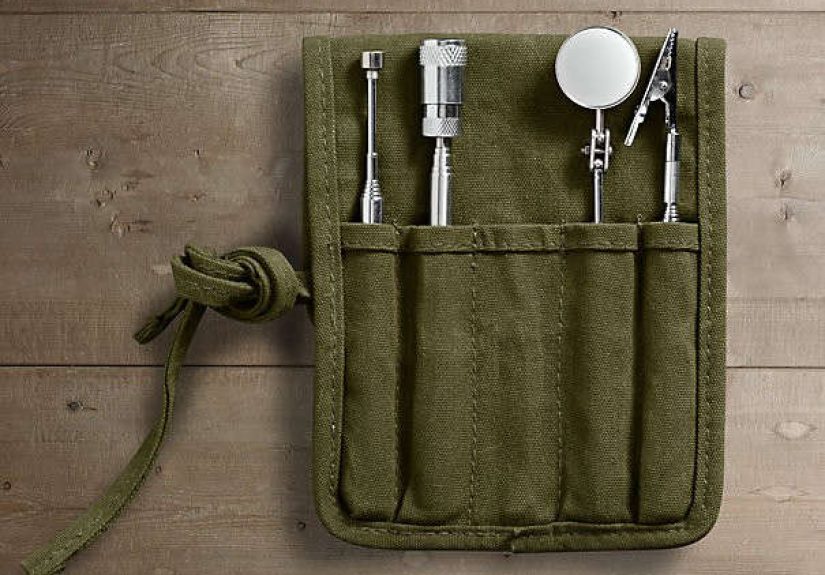
Not all kits are identical, but most “classic” telescoping tool sets include a few repeat all-stars. Here’s what to expectand why each piece matters.
1) Telescoping Magnetic Pickup Tool (The “Bolt Whisperer”)
This is the headliner: an extendable rod with a magnet at the end, designed to snag ferrous metal items like screws, nuts, bolts, washers,
and small hand tools. Many use rare-earth (neodymium) magnets for stronger holding power in a smaller tip.
Some kits include multiple magnets with different strengthshandy when you want precision for small fasteners, or more pull for heavier items.
The best ones feel solid when extended, with minimal wobble and a grip that doesn’t get slick the second oil enters the chat.
2) Telescoping Inspection Mirror (Because Eyeballs Don’t Bend)
An inspection mirror is the tool equivalent of a periscopeexcept instead of spotting pirates, you’re spotting a missing clip or a mystery leak.
Many mirrors mount on a swivel/ball joint so you can angle the mirror head for a better view.
Round mirrors are common, but some sets include square or rectangular mirrors for broader viewing. Bonus points for mirrors that stay put
instead of flopping around like a confused sunflower.
3) Flexible Claw Grabber or Mechanical Finger (For Non-Magnetic Stuff)
Magnets are great… unless what you dropped is plastic, aluminum, stainless that isn’t magnetic, or that one weird clip that seems made from
“unobtainium.” Enter the flexible claw grabber: a bendy shaft with a spring-loaded claw that can grab non-magnetic objects.
If your telescoping tool set includes a claw tool, you’ve basically added “arcade crane machine, but competent” to your toolbox.
4) LED Work Light or Telescoping Flashlight (The “I Swear It’s Down There” Upgrade)
A lot of sets pair retrieval tools with an LED inspection light or an extendable flashlight. Light matters because the place you dropped
the part is rarely well-lit, and your phone flashlight always chooses that moment to become a hand-warmer at 2% battery.
Some tools combine features (for example, a magnet pickup tool with an integrated LED near the tip), which can be genuinely useful if you’re working
in dark cavities where you need both vision and retrieval at the same time.
5) Magnetic Parts Tray or Bowl (Small Item Parking Lot)
Some kits include a small magnetic parts traya shallow bowl that holds fasteners in place so they don’t roll away.
It’s simple, but it can prevent the classic “I set the screws down… and now we’re missing two” situation.
6) Storage Case or Pouch (Because Loose Tools Multiply)
A compact pouch or molded case keeps the set from turning into a junk-drawer scavenger hunt. If you actually want to use your telescoping tool set
regularly, storage matters more than you think.
Why Telescoping Tools Beat “Just Use Your Fingers”
Telescoping designs aren’t just about reach. They also improve control and reduce the chance of making a small problem worse.
Here’s what the telescoping format does well:
- Reach: Extend into tight or recessed spaces without disassembly (or yoga).
- Portability: Collapse down to pocket or glovebox size.
- Precision: Place the tip exactly where you need it, especially with swivel mirrors and controlled magnets.
- Speed: Retrieve and inspect quicklyless downtime, fewer “where did it go?” detours.
How to Choose the Right Telescoping Tool Set
If you search “telescoping tool set,” you’ll see everything from professional-grade kits to gift-box gadgets. The goal is to buy the set that matches
your actual use, not the fantasy version of yourself who rebuilds transmissions for fun.
Prioritize These Features
- Extension length (min/max): Longer reach is helpful, but stability matters. A super-long, flimsy shaft can be frustrating.
Look for a solid feel when fully extended. - Pickup strength: For magnets, “pull force” or “pickup capacity” often varies widely. If you routinely drop sockets or heavier fasteners,
choose stronger magnet capacity. For delicate work (electronics or small hardware), you may prefer a smaller magnet tip for control. - Mirror size + swivel quality: A larger mirror gives more visibility; a better swivel joint gives more usable angles.
If the mirror can’t hold position, it’s basically a shiny disappointment. - Lighting: LED illumination is greatespecially integrated near the working end. Check battery type and how easy it is to replace.
- Grip + comfort: Cushioned or textured grips help when hands are oily, wet, or gloved.
- Build materials: Stainless or corrosion-resistant shafts last longer, especially in humid garages, job sites, or toolboxes that see weather.
- Bonus tools: A claw grabber, flexible shaft, or magnetic tray can add real valueif you’ll actually use them.
Match the Kit to Your Typical Jobs
- Auto repair & DIY mechanics: Magnet + mirror + light are must-haves; claw grabber is a huge plus.
- Home maintenance: A medium-strength magnet tool, inspection mirror, and a small light cover most needs.
- Professional trades: Favor durability, stable locks, and a case that can survive daily carry.
- Gift buying: Choose practical pieces (magnet, mirror, light) over gimmicks. A pouch/case is a bonus.
How to Use a Telescoping Tool Set Like You’ve Done This Before
You don’t need an instruction manual, but a few habits make these tools dramatically more effective.
The “Find, See, Retrieve” Workflow
- Stop moving things. The more you wiggle components, the more likely the part migrates deeper into chaos.
- Use the inspection mirror first. Confirm where the item is and what’s around it (wires, belts, hot surfaces).
- Choose the right retriever. Magnet for ferrous metal; claw grabber for non-magnetic or awkward shapes.
- Go slow on contact. Fast jabs can bump the part further away or knock it into an even worse location.
- Secure it, then retract. Once you’ve captured the item, retract steadily to avoid snagging it on edges.
Pro Tips That Save Time (and Language You Can’t Say in Front of Kids)
- Angle matters: A mirror lets you plan the approach instead of “fishing” blindly with a magnet.
- Use the light intentionally: Shine the LED across the surface to create shadowssmall parts “pop” visually.
- Magnetic tray = fewer re-lost parts: The moment you retrieve the screw, park it in the tray.
- Don’t overload the shaft: If the tool is rated for a certain pickup weight, treat that like a real limitnot a suggestion.
- Keep the magnet tip clean: Metal shavings love magnets. Wipe the tip so the magnet makes full contact with the part you want.
Safety and “Don’t Ruin Your Day” Notes
- Heat is real: Don’t poke around hot engine parts or recently used equipment without letting things cool.
- Mind sensitive electronics: Strong magnets can be risky near certain electronic components and magnetic storage media.
- Watch pinch points: Telescoping sections can pinch fingers when collapsingespecially if you’re rushing.
- Don’t use a mirror as a lever: Mirrors are for looking, not prying.
Specific Examples: Where a Telescoping Tool Set Pays Off Fast
Example 1: The Engine Bay Bolt Disappearance
You’re replacing a battery clamp or tightening a bracket. The bolt drops. It lands somewhere between “accessible” and “this is my life now.”
Use the inspection mirror to locate it, then bring in the magnet pickup tool at a shallow angle. If it’s wedged against a plastic cover or a bracket,
you may need the claw tool to reposition it before the magnet can grab it cleanly.
Example 2: The Dryer-Behind-Lint-Portal Adventure
Dropped a coin, a screw, or a tiny hardware piece behind a dryer? Instead of pulling the appliance out (and discovering lint that predates your lease),
use a telescoping mirror to spot the item and a magnet pickup tool to retrieve itespecially if it’s a screw or metal bracket hardware.
Example 3: Cabinet Hardware and “One Screw Short” Syndrome
You’re installing a hinge or drawer slide. A screw falls into the cabinet frame. The telescoping magnet tool gets it back in seconds,
and the magnetic tray prevents the other screws from making a run for it.
Example 4: HVAC, Vents, and Tight Utility Spaces
In cramped utility rooms or tight access panels, the inspection mirror helps you confirm screw locations and bracket alignment without forcing your head
into uncomfortable angles. Pair it with an LED light for better visibility, and use the magnet tool when a fastener goes rogue.
Care and Maintenance: Keep the Set Ready, Not Rusty
Telescoping tools are low-maintenance, but they do appreciate basic hygiene (unlike that one socket you’ve been stepping on for three months).
- Wipe after use: Oil and grime can make shafts sticky and attract debris.
- Retract gently: Don’t slam-collapsethis reduces wear on telescoping sections and joints.
- Store dry: A pouch or case helps prevent corrosion and keeps mirror surfaces from scratching.
- Check batteries: If your set has LED tools, don’t let dead batteries turn “quick fix” into “why is it dark in here?”
Real-World Experiences: The 500-Word “Yep, I Needed This” Section
Here’s what typically happens when someone adds a telescoping tool set to their life: at first, it sits in the drawer like a “nice-to-have.”
Then, one day, a screw drops into a spot that physics clearly designed as a personal prank. You reach in with your fingers, fail, and consider
removing half the surrounding parts. That’s when you remember the telescoping setand suddenly, you feel like you own a cheat code.
The first win is almost always automotive. You’re leaning over an engine bay, and a small fastener slips. It lands somewhere flat but unreachable.
The inspection mirror comes out first, because you’re done guessing. You angle the mirror, find the bolt, and realize it’s sitting near a wire loom.
Great: you now know where not to drag a strong magnet. You bring the magnet tool in slowly, touch the bolt, and it clicks onto the tip
with that satisfying “gotcha” feeling. You retract the tool carefully, andthis is importantyou immediately drop the bolt into the magnetic parts tray.
Because experience teaches you that retrieving the same bolt twice is how villains are born.
The second set of experiences tends to be household-related: behind appliances, under cabinets, and inside weird furniture gaps.
Telescoping tools shine here because you’re working around bulky objects you don’t want to move. The mirror helps you verify what’s actually down there
(a screw? a toy? a fossilized French fry?), and the retrieval tool does the rest. Even if the item isn’t magnetic, that flexible claw grabber earns its spot
by grabbing plastic caps, small bits of packaging, or a dropped earbud that’s trying to start a new life under the sofa.
Another common experience: the LED light becomes the surprise favorite. It’s not glamorous, but it’s the difference between “I think I see it”
and “I definitely see it.” In tight spaces, the light lets you work with confidence and saves time. People also end up using the telescoping light
in everyday situationschecking under a bed, looking behind a water heater, finding something in a dark closet cornerbecause it’s compact and quick.
Over time, you’ll notice a pattern: telescoping tools reduce the “effort tax” of maintenance. Small tasks stay small.
You don’t escalate to moving heavy objects or disassembling panels unless you truly have to. And yespeople absolutely buy these sets as gifts,
because they’re the rare present that gets used more than once. The best part is the moment someone borrows your set, retrieves a lost screw in 10 seconds,
and looks at you like you just performed wizardry. You didn’t. You just bought the right stick.
Conclusion: A Small Kit That Solves Annoyingly Big Problems
A telescoping tool set is one of those quietly brilliant additions to a toolbox: not flashy, not complicated, and wildly useful.
With the right mix of an extendable magnet tool, telescoping inspection mirror, optional flexible grabber,
and a good LED inspection light, you’ll spend less time disassembling things and more time actually fixing them.
If you’ve ever lost hardware in a tight space, struggled to see behind a panel, or crawled around the floor muttering “it was right here,”
this kit is for you. And if you haven’t? Congratulationsyour first missing screw is on the way. Prepare accordingly.