Table of Contents >> Show >> Hide
- 1) Pompeii (Italy)
- 2) Herculaneum (Italy)
- 3) Akrotiri (Santorini, Greece)
- 4) Helike (Gulf of Corinth, Greece)
- 5) Baiae (Italy)
- 6) Ephesus (near Selçuk, modern Turkey)
- 7) Troy (Hisarlık, modern Turkey)
- 8) Sagalassos (Pisidia, modern Turkey)
- 9) Birka (Björkö, Sweden)
- 10) Hedeby (Haithabu) (near Schleswig, modern Germany)
- What these lost cities teach us
- Experiences: How it feels to go looking for long-gone cities (about )
Europe loves a good city. Europe alsohistorically speakingloves losing them.
Sometimes it’s dramatic (a volcano does the architectural equivalent of hitting “Ctrl+Alt+Delete”).
Sometimes it’s slow (a harbor silts up and commerce quietly packs its bags).
Either way, the continent is dotted with places that used to be buzzing citiesand are now
ruins, mounds, or underwater neighborhoods that fish consider “open concept.”
In this article, “long-gone” doesn’t mean “forgotten forever.” It means the living city
disappeareddestroyed, drowned, abandoned, or relocatedleaving behind archaeological
fingerprints. These sites are time machines with inconvenient parking, and they tell us
how ancient people built, worshiped, traded, argued, and occasionally ignored the local
disaster risk assessment.
You’ll notice a few cities sit in what’s now modern Turkey. That’s not a loopholeit’s history.
The ancient Greek and Roman worlds stretched across the Aegean, and many “European” classical
cities lived their lives on the Anatolian side of the water. Empires don’t respect today’s
map boundaries, and neither do earthquakes.
1) Pompeii (Italy)
How it vanished
Pompeii didn’t slowly fade; it got snap-frozen. In 79 CE, Mount Vesuvius erupted and buried
the city under ash and pumice. That catastrophe turned streets, homes, shops, and even
graffiti into an accidental archivelike a city-sized scrapbook nobody asked for.
Why it still matters
Pompeii is priceless because it’s ordinary. Yes, there are villas and temples, but there are
also snack bars, political slogans, doodles, and daily-life clutter that historians usually
never get. It’s a Roman city caught mid-sentence, allowing archaeologists to study everything
from urban planning to what people ate when they were too tired to cook.
2) Herculaneum (Italy)
How it vanished
If Pompeii is famous, Herculaneum is the underrated director’s cut. Also destroyed in 79 CE,
Herculaneum was hit hard by pyroclastic surgessuperheated clouds of ash and gas that move
fast enough to make “run” a theoretical concept.
Why it still matters
Herculaneum often preserves what Pompeii can’t: wood, textiles, and other organic materials.
That means details like furniture, doors, and building elements survive in ways that feel
almost unfair to time. It’s one of the best places to see how Roman life looked in three
dimensionsnot just as stone outlines.
3) Akrotiri (Santorini, Greece)
How it vanished
Akrotiri was a thriving Bronze Age settlement on the island of Thera (modern Santorini) when
a massive volcanic eruption buried it in ash around the second millennium BCE. Think of it as
a prehistoric version of Pompeiiminus the Roman branding and with more Minoan flair.
Why it still matters
Akrotiri’s preserved buildings and frescoes reveal a society that was connected, artistic,
and surprisingly sophisticated. Archaeologists find evidence of careful urban design and
vibrant wall paintings that feel startlingly modern. The city’s sudden burial protected it,
while also reminding everyone that living next to a volcano is a lifestyle choice with a
very strict return policy.
4) Helike (Gulf of Corinth, Greece)
How it vanished
Helike was an important ancient Greek city associated with Poseidon when disaster struck in
373 BCE. Ancient accounts describe an earthquake and a flooding event that “drowned” the city,
turning it into a legend that later writers loved to compare to Atlantisbecause humans can’t
resist adding spice to a tragedy.
Why it still matters
Helike is a case study in how landscapes can erase cities and how archaeology can patiently
reverse the erasure. The search for Helike blends texts, geology, and fieldworkproof that
sometimes the ground doesn’t just move; it edits the historical record.
5) Baiae (Italy)
How it vanished
Baiae was a luxurious Roman resort near Naplesan ancient playground for the wealthy.
Then the ground started sinking. The culprit is bradyseism, a slow rise-and-fall of land
caused by volcanic activity in the Campi Flegrei area. Over centuries, parts of Baiae slipped
beneath the sea.
Why it still matters
Today, Baiae is famous for something most resorts can’t offer: underwater ruins. Columns,
mosaics, and architectural remains sit below the surface, making it one of the most
jaw-dropping reminders that “stable coastline” is not a universal feature of reality.
It also shows that cities don’t always die in one dramatic daysometimes they just… sink.
6) Ephesus (near Selçuk, modern Turkey)
How it vanished
Ephesus was once a major port city and a powerhouse of the ancient Mediterranean. But ports are
picky: if you can’t reach the water, you can’t stay rich. Over time, the harbor gradually silted up,
cutting off easy sea access. Add earthquakes, political upheavals, and shifting trade routes, and the
city’s importance diminished until it was largely abandoned.
Why it still matters
Ephesus is a masterclass in how environment and economy team up to reshape history. The ruinsroads,
theaters, public buildingsstill communicate the scale of ancient urban life. And the story is
painfully relatable: if your competitive advantage disappears, your city can become a museum without
even trying.
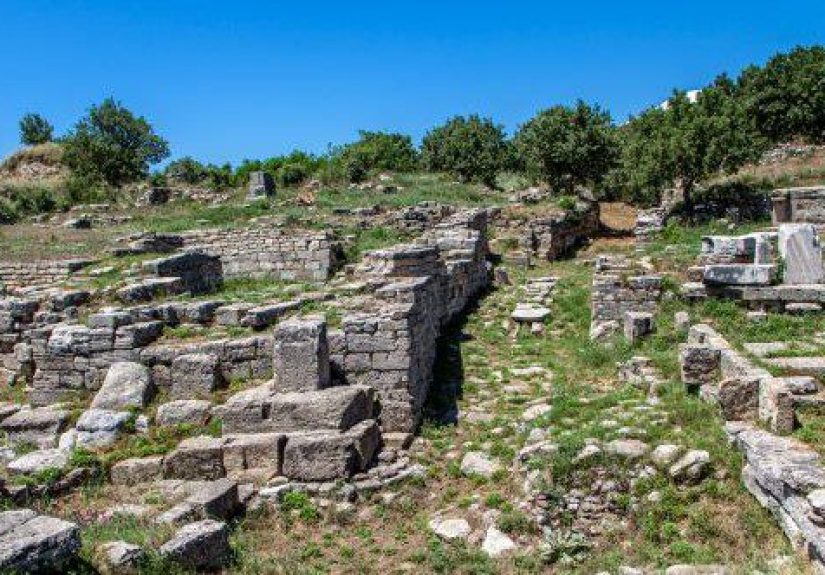
7) Troy (Hisarlık, modern Turkey)
How it vanished
Troy didn’t vanish once. It vanished repeatedly. The site at Hisarlık contains multiple major layers
of settlement spanning thousands of years, with cities built atop earlier cities like a historical
layer cakeexcept the frosting is rubble. Wars, fires, and rebuilding cycles turned Troy into an
archaeological puzzle with a legendary reputation.
Why it still matters
Troy sits at the intersection of myth and evidence. Archaeology shows a real, long-lived settlement
with strategic value, while literature turned it into a cultural monument. Visiting Troy is like
watching history argue with poetrypolitely, but with strong feelings.
8) Sagalassos (Pisidia, modern Turkey)
How it vanished
High in the Taurus Mountains, Sagalassos became a prosperous city in the Roman era. But mountain cities
can be vulnerable: earthquakes, disease, and regional instability can hit hardespecially when your
supply lines are not exactly “next-day delivery.” Over time, the city declined and was abandoned, leaving
monumental ruins in a dramatic landscape.
Why it still matters
Sagalassos shows how a city can thrive far from the coast through engineering, public architecture, and
regional networksand how quickly those supports can fray. Its remains, including grand public spaces and
striking sculptures, highlight the reach of Roman urban culture beyond the empire’s most famous centers.
9) Birka (Björkö, Sweden)
How it vanished
Birka was a key Viking Age trading town founded around the mid-8th century. It flourished for a couple
of centuries and then declined and disappeared by the late 10th century. Trade routes shift, competitors
rise, and sometimes the water itself changesturning a great location into a less-great location. Birka’s
economic moment passed, and the living town faded.
Why it still matters
Birka helps explain Vikings as traders, not just raiders. Artifacts and burials reflect networks stretching
across Scandinavia and beyond, showing how wealth moved and how identities formed in a rapidly connected
northern world. It’s also a reminder that “urban” isn’t only a Mediterranean inventionViking towns were
real cities with real systems.
10) Hedeby (Haithabu) (near Schleswig, modern Germany)
How it vanished
Hedeby was one of the great Viking Age trading hubs, strategically positioned between the North Sea and
the Baltic. But prime real estate attracts attentionoften the violent kind. After attacks and destruction
in the 11th century, the settlement was abandoned and activity shifted to nearby Schleswig. In other words,
the city didn’t just die; it moved its mailing address.
Why it still matters
Hedeby illustrates how early northern cities worked: trade, craft production, defensive structures, and
international connections. It also shows that “collapse” can be a transition. Sometimes a city’s end is
another city’s beginning, just a couple miles awayhistory’s version of changing apartments when the rent
gets weird and the neighbors keep invading.
What these lost cities teach us
Put these ten stories side by side and you’ll spot a few repeat offenders: volcanoes, earthquakes, coastline
changes, and human conflict. The pattern isn’t “ancient people were careless.” The pattern is that cities
are bold experiments. They concentrate people, wealth, and infrastructure in one placeand that makes them
powerful, fragile, and endlessly informative when things go wrong.
The good news is that a city can vanish without vanishing from knowledge. Ash preserves walls. Silt preserves
harbors. Water preserves mosaics. Even abandonment preserves street plansbecause nobody builds over them for
a while. Ancient European ruins are not just scenic backdrops; they’re evidence, arguments, and occasionally
warnings carved in stone.
Experiences: How it feels to go looking for long-gone cities (about )
Reading about lost cities is fun. Visiting them is a different kind of funlike stepping into a story where the
main character is “time,” and time has opinions about stairs. The first experience most people have is scale
shock: ruins look romantic in photos, but on-site they feel practical, almost blunt. Streets are narrow. Doorways
are low. You suddenly understand that the ancient world was not designed around your modern knees.
Places like Pompeii and Ephesus feel like urban ghosts. You can follow the logic of the citywhere people walked,
where they bought food, where they gathered to be entertained, where they argued about politics (and then wrote it
on a wall, because some traditions are eternal). The weirdly intimate part is realizing how many “modern” habits are
not modern at all. There were ads. There were shortcuts. There were places that were clearly the ancient equivalent
of “this corner smells suspicious; keep moving.”
The emotional curve is also sneaky. You arrive expecting grandeur, and you get itcolumns, theaters, plazas. But
what sticks is the small stuff: a worn threshold, a groove in stone where feet passed for generations, a fragment
of paint that survived because disaster sealed it away. It’s hard not to feel humbled by the idea that a city can be
both mighty and breakable. One day it’s a thriving network of neighbors and noise; the next it’s an excavation grid
with labels.
Underwater sites like Baiae flip the experience into “archaeology meets aquarium.” Even if you only take a glass-bottom
boat or watch footage, the mind-bend is immediate: cities are supposed to be on land. Seeing mosaics below the surface
makes you realize how temporary “shoreline” can be. It’s also a strange comfortnature didn’t destroy everything; it
stored it, like a museum curator with a dramatic sense of lighting.
Viking towns like Birka and Hedeby deliver a different vibe: less marble, more earthworks, a bigger sense of landscape.
You feel how trade created townshow location is destiny when boats are highways. And you sense how quickly destiny can
change when power shifts, routes rewire, or security collapses. These places make “abandoned” feel less like tragedy and
more like adaptation: people didn’t vanish; they relocated to wherever the future was happening.
The best part of exploring long-gone cities is the quiet realization that history isn’t just a list of rulers and wars.
It’s plumbing. It’s harbor maintenance. It’s soil carried by a river. It’s a mountain that erupts at the worst possible
time. If you want an experience that’s equal parts awe, curiosity, and “wow, humans have always been human,” go meet a
city that isn’t there anymore. You’ll leave with dusty shoes, a full camera roll, and a newfound respect for the phrase
“site conditions may vary.”