Table of Contents >> Show >> Hide
- What Are the 2026 401(k) Contribution Limits?
- Why the 2026 401(k) Limits Feel Like “Big Money” Now
- The Real Story: Employer Contributions Still Matter a Lot
- How the New Catch-Up Rules Change the Game
- The 2026 Roth Catch-Up Rule for Higher Earners
- Who Can Actually Max Out a 401(k) in 2026?
- Examples That Show Why These Limits Matter
- How to Make the 2026 401(k) Limit Work for You
- Is Maxing a 401(k) Always the Best Move?
- Real-World Experiences: What These Bigger 401(k) Limits Feel Like in Actual Life
- Final Thoughts
If you have not looked at your 401(k) limits in a while, 2026 may be the year that finally makes you sit up a little straighter in your desk chair. The standard employee contribution limit is now $24,500. If you are age 50 or older, the regular catch-up contribution is $8,000. And if you are age 60 through 63, the special catch-up can push your total employee deferral to $35,750. That is not couch-cushion money. That is “maybe I should stop pretending future-me will magically figure it out” money.
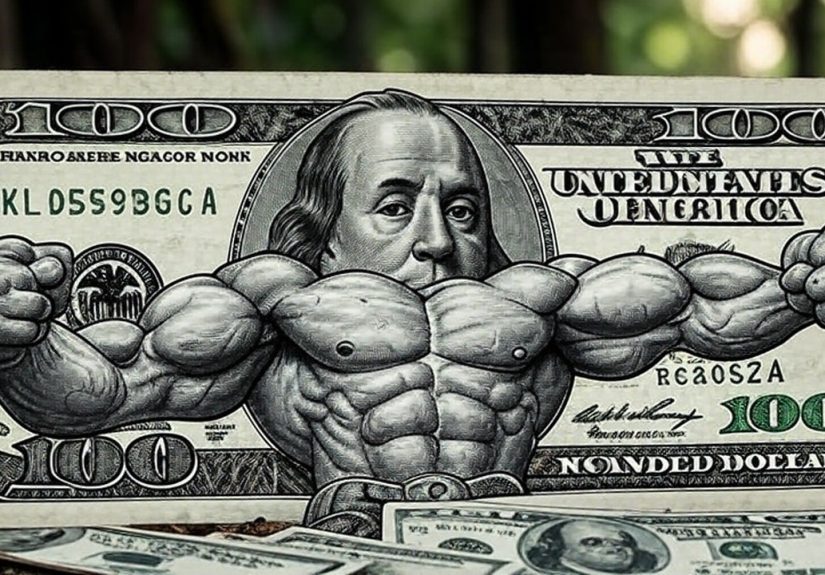
And that is exactly why the 2026 401(k) contribution limits feel so big now. They are not just higher on paper. They are large enough to change how people think about taxes, cash flow, employer benefits, and the whole idea of retirement planning. What once felt like a nice corporate side dish now looks more like a full entrée with a tax deduction on the side.
This article breaks down what changed, why it matters, who benefits the most, and how to use the 2026 limits without turning your monthly budget into a horror film.
What Are the 2026 401(k) Contribution Limits?
Let’s start with the numbers, because retirement planning without numbers is just optimism wearing a blazer.
2026 core 401(k) limits
- Employee salary deferral limit: $24,500
- Catch-up contribution, age 50 to 59 and 64+: $8,000
- Higher catch-up contribution, ages 60 to 63: $11,250
- Total annual additions limit with employee and employer contributions: $72,000
- Total with regular catch-up: $80,000
- Total with higher age 60 to 63 catch-up: $83,250
Those figures apply to 401(k), 403(b), many governmental 457 plans, and the federal Thrift Savings Plan in similar ways, though plan design details can differ. The headline number most workers care about is the employee deferral limit. That is the amount you can put in from your paycheck, whether pre-tax, Roth, or a mix of both, subject to plan rules.
Why the 2026 401(k) Limits Feel Like “Big Money” Now
The phrase sounds dramatic until you do the math. For a lot of households, contributing $24,500 is no longer a technical retirement-planner fantasy. It is a real percentage of real income. On an $85,000 salary, maxing the standard employee limit means setting aside nearly 29% of gross pay. On a $100,000 salary, it is 24.5%. That is a meaningful slice of income, not some rounding error hidden in payroll software.
In other words, the 2026 401(k) max now feels big because it is big relative to what many people earn and spend. Housing is expensive. Child care is expensive. Groceries have become the kind of experience that makes you stare at the receipt like it personally offended you. So when the IRS says you can shield $24,500 of salary in a tax-advantaged account, that number lands differently than it did years ago.
It also feels big because long-time savers can see the compounding potential more clearly now. A max contribution is no longer just a “good habit.” It is a serious annual wealth-building move. Over time, repeated maximum contributions plus employer money can build a portfolio that looks far more powerful than many workers expect.
The Real Story: Employer Contributions Still Matter a Lot
Most people focus on the employee limit because it is the part they control. Fair enough. But the employer side is where things can quietly get interesting. The annual additions cap for 2026 is $72,000, which means the combined total of employee contributions, employer match, and other employer contributions can be very large.
That matters because a 401(k) is not just about what you put in. It is also about what your employer is willing to layer on top. A typical match might look like 50% of the first 6% of pay or 100% of the first 4% of pay. Some employers add profit-sharing. Some do none of that and merely offer the account, which is the retirement equivalent of handing you a plate and no food.
If your company offers a match and you are not contributing enough to get the full amount, you are voluntarily leaving compensation behind. That is not frugal. That is just awkward. Before you chase every hot stock tip or personal-finance hack on the internet, make sure you are capturing the full employer match in your plan.
How the New Catch-Up Rules Change the Game
The catch-up rules are where 2026 gets more interesting. Workers age 50 and older have long had extra room to save, but now the rules have more texture.
Standard catch-up for many workers 50+
If you are age 50 to 59 or 64 and older, you can contribute an extra $8,000 in 2026. That pushes your employee total to $32,500.
Higher catch-up for ages 60 to 63
If you are in the 60-to-63 age band and your plan allows it, your catch-up can be $11,250. That creates a total employee contribution opportunity of $35,750. For late-career workers who are finally earning peak income, that extra room is a big deal. It can help close savings gaps, reduce current taxable income if contributions are pre-tax, and accelerate retirement readiness in a meaningful way.
This higher catch-up is one of the clearest examples of policy trying to meet real life. A lot of people do not hit their stride financially at 32. They hit it at 52, 57, or 61, once their career is more established and their income is stronger. The law is basically saying, “Fine, better late than never.”
The 2026 Roth Catch-Up Rule for Higher Earners
Now for the plot twist. Beginning in 2026, some higher earners age 50 and older who make catch-up contributions must do so on a Roth basis. In plain English: if your prior-year FICA wages from the employer sponsoring the plan exceeded the indexed threshold for 2026, which is $150,000 based on 2025 wages, your catch-up dollars generally have to go into Roth rather than pre-tax.
This does not mean your first $24,500 must be Roth. It means the catch-up portion is affected. Your standard employee deferral can still follow the plan options you choose, but once you go beyond the regular limit and into catch-up territory, the tax treatment may change if you are above the threshold.
Why does that matter? Because high earners who expected a larger pre-tax deduction may need to adjust expectations. You still get tax-advantaged growth and potentially tax-free qualified withdrawals in retirement, but the upfront deduction may disappear for those catch-up dollars. That changes paycheck planning, tax strategy, and even plan administration for employers.
Who Can Actually Max Out a 401(k) in 2026?
Not everyone, and that is okay. The internet sometimes treats maxing out a 401(k) like flossing: obviously everyone should do it, and if you do not, something is wrong with your character. Reality is more complicated.
A worker making $55,000 with rent, student loans, and child care may not be able to contribute anywhere near $24,500. A worker making $180,000 with low debt and a stable household budget may have a much easier shot. The smarter question is not, “Can you max it?” The smarter question is, “Are you increasing your savings rate in a way that fits your life?”
For many people, the right move in 2026 is to raise contributions by 1% to 3%, capture the full match, and automate annual increases. That may not sound glamorous, but boring systems usually beat dramatic intentions.
Examples That Show Why These Limits Matter
Example 1: Mid-career employee, age 42
Let’s say Maya earns $110,000 and contributes 10% of pay. That is $11,000 annually. If she increases to roughly 22.3%, she can max the full $24,500 employee limit. If her employer also matches 4%, that adds $4,400. Suddenly, more than $28,000 is flowing into her retirement account in one year.
Example 2: Late-career saver, age 61
David earns $190,000 and has kids out of the house at last. He can defer $35,750 if his plan allows the higher catch-up. Even if his catch-up must be Roth because of the income rule, he still has a powerful chance to accelerate retirement savings during high-earning years.
Example 3: High earner with strong employer contributions
Priya contributes the standard $24,500 and receives a generous employer contribution of $18,000. That means $42,500 lands in her account for the year before investment growth is even considered. Over time, that kind of consistent funding can do serious heavy lifting.
How to Make the 2026 401(k) Limit Work for You
1. Start with the employer match
If you are not getting the full match, begin there. It is the cleanest win in personal finance.
2. Increase contributions when raises hit
One of the least painful ways to save more is to divert part of every raise into your 401(k). If your paycheck grows and your lifestyle inflates less, the system does most of the work for you.
3. Check whether your plan supports Roth and the higher catch-up
Not every plan handles every feature the same way. If you are nearing age 60 or expect to make catch-up contributions above the threshold, verify how your plan processes those dollars.
4. Watch your percentage elections
Many workers choose a contribution percentage, not a flat dollar amount. That means you may need to recalculate if your pay changes or if you want to hit the exact annual maximum.
5. Do not ignore the rest of the plan
Contribution limits are exciting, but fees, investment choices, vesting schedules, and target-date defaults matter too. A shiny new limit does not fix a messy investment lineup or a bad asset allocation.
Is Maxing a 401(k) Always the Best Move?
Not always. If you are carrying expensive credit card debt, lack an emergency fund, or have a short-term cash need that could force a withdrawal or loan, maxing your 401(k) may not be the most efficient move right now. Good financial planning is not about worshipping one account. It is about building a system that keeps you solvent, flexible, and steadily wealthier over time.
That said, if your cash flow is healthy and your budget can support it, the 2026 401(k) limit is absolutely worth taking seriously. A larger tax-advantaged bucket, plus automation, plus time, is a combination that tends to age very well.
Real-World Experiences: What These Bigger 401(k) Limits Feel Like in Actual Life
For many workers, the emotional experience of a bigger 401(k) limit is a mix of excitement, intimidation, and a brief desire to lie down. The number looks empowering from a distance, but once it collides with rent, insurance premiums, utility bills, and that mysterious line item called “why is everything more expensive now,” it becomes very real.
Take the early-career professional who finally gets a meaningful raise after years of entry-level pay. On paper, a higher limit feels like opportunity. In practice, it also feels like a test of priorities. Do you increase retirement contributions, move to a nicer apartment, replace the aging car, or reclaim a little breathing room after years of scraping by? The experience here is not laziness or financial ignorance. It is tension. People want to save more, but they also want their present life to feel less like a boot camp.
Then there is the mid-career worker with family responsibilities. This is often the group that feels the biggest psychological gap between what the IRS says is possible and what monthly cash flow allows. A parent in their 40s may look at the $24,500 employee limit and think, “That sounds amazing, right after soccer fees, braces, summer camp, and my property tax bill stop tagging along.” Yet this is also the stage when many households become more intentional. They may not max the plan in one dramatic leap, but they start nudging contributions upward every year. That steady progress is often how real wealth gets built.
For late-career workers, especially those ages 60 to 63, the higher catch-up can feel almost redemptive. Some people spent decades under-saving because of recessions, layoffs, caregiving, divorce, or simply earning less than they expected. The ability to put away $35,750 as an employee in 2026 can feel less like a tax rule and more like a second chance. It does not erase past setbacks, but it gives motivated savers more room to fight back.
Another common experience is that people stop seeing the 401(k) as abstract once the balance reaches a meaningful threshold. The first few years can feel anticlimactic. You contribute, the market wiggles around, and your statement looks more polite than impressive. But once consistent saving meets compounding, the account starts to look like real capital. That is usually the moment when workers become more serious. The 401(k) stops being “retirement someday” and starts feeling like a concrete part of their net worth.
And finally, there is the experience almost nobody talks about enough: the strange satisfaction of learning to live on less than you earn. People who increase 401(k) contributions often discover that they adapt faster than expected. The paycheck shrinks a bit, yes, but the habit strengthens. Over time, the contribution stops feeling like deprivation and starts feeling like identity. You are no longer just hoping to build wealth. You are doing it on purpose, one payroll cycle at a time.
Final Thoughts
The 2026 401(k) contribution limits feel like big money now because they are big enough to matter in a serious way. The standard employee limit of $24,500 is meaningful. The catch-up rules are more generous. The higher age 60 to 63 contribution window is especially powerful. And the Roth catch-up rule adds a fresh layer of strategy for higher earners.
You do not need to max your plan overnight to benefit from these changes. But you do need to pay attention. A 401(k) is still one of the strongest wealth-building tools available to workers, especially when employer contributions and long-term compounding get involved. If 2026 is the year the numbers finally look big, that may be a good thing. Big enough to notice. Big enough to plan around. And big enough to help change your future if you use them well.