Table of Contents >> Show >> Hide
- How BHG Tests Space Heaters (and What That Means for You)
- The 7 Best Space Heaters
- 1) Best Overall: Shark TurboBlade Bladeless Fan + Heater
- 2) Best Budget: Amazon Basics Small Personal Mini Heater (500W)
- 3) Best Small (But Mighty): Vornado Velocity Cube 5S
- 4) Best Tower: Lasko Duo Comfort Electric Ceramic Space Heater
- 5) Best Safety Features: Dreo Whole Room Heater 714
- 6) Best Compact Value Upgrade: Vornado VH200
- 7) Best Infrared for Big Spaces: Dr. Infrared Heater DR-998
- What to Know Before You Buy a Space Heater
- Space Heater Safety Rules That Actually Matter
- How Much Does It Cost to Run a Space Heater?
- Real-World Experiences: What Using These Heaters Feels Like (and What You Learn Fast)
- Bottom Line
- SEO Tags
When your house is doing that thing where the living room feels like spring, the hallway feels like a walk-in freezer,
and your toes are drafting a formal complaint… a good space heater is basically a tiny indoor sun with manners.
The trick is finding one that warms you up fast and behaves safely while it’s doing its job.
Better Homes & Gardens (BHG) has tested dozens of space heaters over multiple winters. Their current list spotlights five
category winners. In this guide, we’ll cover those BHG-tested standouts firstthen round out the list to seven with two
additional heaters that consistently perform well in other reputable U.S. tests and reviews (using the same practical criteria:
fast heat, easy controls, and strong safety features).
How BHG Tests Space Heaters (and What That Means for You)
“Best” is a slippery wordespecially when every heater claims it can warm your whole life, your entire house, and maybe your soul.
BHG’s testing approach focuses on real-world performance: how quickly a heater warms a space, whether it keeps output steady over time,
how intuitive the controls are, and whether safety features actually feel reassuring in daily use.
The big takeaway: the best space heater isn’t necessarily the biggest or most expensive. It’s the one that fits your room,
your routine, and your tolerance for noise, airflow, and fiddly settings.
The 7 Best Space Heaters
Below are seven top picks organized by “best for” scenarios. The first five are BHG-tested category winners; the last two are
extra picks that repeatedly score well in other U.S. testing frameworks (and fill gaps like “best infrared” and “best compact value”).
1) Best Overall: Shark TurboBlade Bladeless Fan + Heater
If you want one appliance that can handle “my living room is enormous” and “why is it suddenly warm in here?”this is the showstopper.
In BHG testing, the TurboBlade stood out for powerful, consistent heat and unusually flexible airflow control. It’s part heater, part fan,
and part “I did not realize a space heater could be this extra.”
- Best for: Large rooms, open layouts, people who like customization
- Heat style: Convection-style forced warmth with adjustable direction
- Why it stands out: Strong reach, steady output, and lots of control over where the heat goes
- Heads-up: It’s sizablegreat for stability, less great for tiny corners
Practical tip: This kind of “room-filling” heater works best when you position it to push heat across the space (not straight at your knees).
Think: warming the room, not roasting your shins like a marshmallow.
2) Best Budget: Amazon Basics Small Personal Mini Heater (500W)
This is the “I just need my desk area to stop feeling like Antarctica” pick. It’s compact, simple, and low-wattage compared to most full-size
space heaters. That makes it a solid choice for personal warmthespecially if you’re in a small office nook or want quick heat near your feet.
- Best for: Desk-side warmth, dorm-style spaces, small personal zones
- Heat style: Ceramic heat
- Why it stands out: Tiny footprint, straightforward operation
- Heads-up: It’s not designed to heat a full roomthink “personal bubble,” not “whole bedroom”
Low-watt heaters can be a smart move if you mostly want localized comfort. Your electric bill often prefers this strategy too.
3) Best Small (But Mighty): Vornado Velocity Cube 5S
Vornado has a reputation for moving air efficiently, and this compact cube aims to do the “small heater, surprisingly even warmth” trick.
In BHG testing, it earned high marks for stability and a cool-to-the-touch exterior during usetwo details that matter when a heater is
living in a real home with real humans and real elbows that bump things.
- Best for: Bedrooms, offices, medium rooms that need even circulation
- Heat style: Forced-air warmth for broader distribution
- Why it stands out: Solid build, steady heat, designed to circulate warm air around a room
- Nice bonus: Control lock on many models helps prevent accidental setting changes
If you’ve ever owned a heater that only warms the air directly in front of it, you’ll appreciate what good circulation can do.
Instead of “hot spot + cold corners,” you get a more balanced room.
4) Best Tower: Lasko Duo Comfort Electric Ceramic Space Heater
Tower heaters are popular for a reason: they’re easy to place, tend to oscillate well, and can heat a living room corner without hogging
floor space. BHG’s tower pick is designed to deliver strong output with multiple heat settings and a profile that’s easier to tuck into
a room layout.
- Best for: Living rooms, bedrooms, anywhere you want wide coverage from a slim footprint
- Heat style: Ceramic heat with fan-driven distribution
- Why it stands out: Space-saving shape + solid heat output range
- Heads-up: Always confirm tip-over and shutoff features on the exact model/version you buy
Tower heaters shine when you want heat spread across a sitting areacouch, coffee table, and the spot where your cat judges you.
5) Best Safety Features: Dreo Whole Room Heater 714
If you want a heater that feels modern, controllable, and thoughtfully protected, this one earns its place.
BHG’s safety-feature winner is built around the essentials: tip-over protection, overheat protection, and an automatic shutoff,
plus user-friendly touches like a remote and clear alerts.
- Best for: Bedrooms, offices, households that prioritize safety features and easy control
- Heat style: Ceramic heat with broader room circulation
- Why it stands out: Feature set that emphasizes safety + convenience
- Extra convenience: Useful for people who want thermostat-style control rather than “low/medium/high guesswork”
Safety features don’t replace safe habitsbut they add important layers of protection for real life (where people forget things,
pets wander, and someone always leaves a blanket too close to something).
6) Best Compact Value Upgrade: Vornado VH200
Want something compact, effective, and widely praised for doing a lot with a small body? The VH200 is frequently recommended in U.S. testing
because it’s good at heating a room without sounding like a small airplane trying to take off from your rug.
- Best for: Medium rooms, shoppers who want strong performance without a huge footprint
- Heat style: Fan-driven circulation designed to distribute warmth evenly
- Why it stands out: Reliable heat for the price, generally quiet operation for a forced-air heater
- Heads-up: Like most 1,500W heaters, it needs a clear safety zone and a dedicated outlet
This is the kind of heater you buy when you want something you’ll use oftenand you don’t want to argue with it every morning.
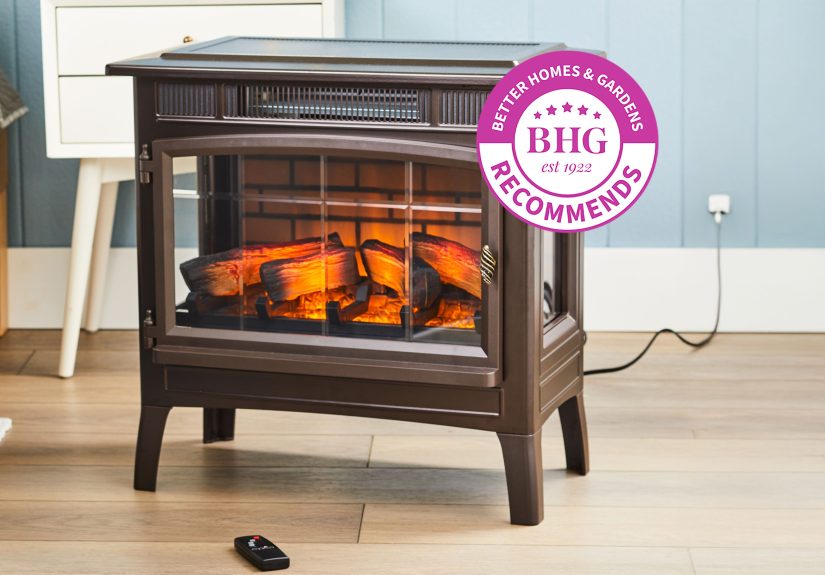
7) Best Infrared for Big Spaces: Dr. Infrared Heater DR-998
Infrared-style heaters are often chosen for a different “feel” of warmth: instead of only heating air, they can warm objects and people more directly.
This model is a frequent pick for larger rooms and is known for offering strong output with a classic “furniture-like” design.
- Best for: Larger rooms, draftier areas, people who prefer a gentler, radiant-feeling warmth
- Heat style: Infrared + convection approach (model-dependent) for room-filling comfort
- Why it stands out: Often recommended for bigger spaces and sustained comfort
- Heads-up: Larger heaters still aren’t “more powerful” than outlet limitsplacement and circulation matter
If you frequently heat the same big room (like a chilly basement hangout), an infrared-style unit can feel less “blowy” while still being effective.
What to Know Before You Buy a Space Heater
Choose the right heater type for your room
Most electric space heaters convert electricity into heat at similar efficiencyso “better” usually means how they deliver heat:
airflow pattern, thermostat control, noise, and safety design.
- Ceramic forced-air: Fast heat, good for bedrooms/offices; can be a bit “fan-like.”
- Vortex/circulation style: Aims to distribute heat more evenly across a room.
- Infrared/radiant: Can feel warmer on skin and objects; often preferred for steady comfort.
- Oil-filled radiator: Slower to heat, but quiet and steady; great for long, low-noise warmth.
- Fan + heater combos: Year-round usefulness; sometimes pricier, often more customizable.
Match wattage to room size (without falling for magic math)
A common rule of thumb is roughly 10 watts per square foot for electric heat in a typical room. That means:
a 150 sq. ft. bedroom may feel comfortable with up to ~1,500 watts, while a 250 sq. ft. space might need better insulation and circulation
(or simply a lower thermostat plus a heater aimed thoughtfully).
Important reality check: standard U.S. outlets put a cap on what portable heaters can draw, so you’re usually choosing between
different ways of using similar max powernot “twice the heat” because a box said so.
Prioritize safety features you can actually verify
Marketing terms come and go. Safety features should be obvious and specific. Look for:
- Tip-over protection (shuts off when the heater is knocked over)
- Overheat protection (shuts off if internal temps get too high)
- Cool-touch exterior (especially important around kids/pets)
- Timer or auto shutoff (helpful for forgetful humansaka all of us)
- Certification/listing from a recognized safety testing organization (often shown as UL or ETL on the unit)
Space Heater Safety Rules That Actually Matter
If you only remember three things, remember these three:
give it space, plug it right, and don’t sleep with it running.
Space heaters can be used safely, but they demand respectlike a stovetop that rolls around your living room.
- Keep a 3-foot safety zone around the heateraway from curtains, bedding, furniture, and anything that can burn.
- Plug directly into a wall outlet (not a power strip, not an extension cord).
- Turn it off when you leave the room or go to sleep.
- Place on a flat, stable surface and keep cords unpinched and uncovered.
- Use smoke alarms and (if applicable) CO alarms, and keep them working year-round.
Also: if a heater’s cord is frayed, the plug is loose, or the unit looks like it survived three moves and a breakupretire it.
Heaters are cheaper than disasters. (And yes, that includes the one your uncle “fixed.”)
How Much Does It Cost to Run a Space Heater?
You don’t need a finance degree to estimate running cost. Use this formula:
(Watts ÷ 1000) × hours used × your electricity rate = cost
Example: A typical full-size heater may use up to 1,500W (which is 1.5 kW). If your electricity rate is
$0.15 per kWh and you run it 6 hours:
- 1.5 kW × 6 hours = 9 kWh
- 9 kWh × $0.15 = $1.35 for that day
The money-saving move isn’t “finding a heater that breaks physics.” It’s using a heater strategically: heat the room you’re in,
seal drafts where you can, and let a thermostat handle the rest of the house at a reasonable baseline.
Real-World Experiences: What Using These Heaters Feels Like (and What You Learn Fast)
The first time you bring a space heater home, you expect “warm.” What you actually get is a crash course in how your space behaves.
A heater doesn’t just raise the temperatureit reveals drafts, dead zones, and the exact spot your home’s insulation is basically just vibes.
In a home office, a compact heater can feel like instant victory. You flip it on, your hands stop freezing, and suddenly you’re typing like a person
who has circulation. But you also learn the “desk tornado” effect: if the heater blasts directly at your legs, you might feel warm in one spot and chilly
everywhere else. The fix is usually simpleangle it so it pushes warm air across the room instead of straight into you. Even a few degrees of direction
change can turn “hot knees” into “comfortably warm.”
In bedrooms, the lesson is timing. People often want to run a heater all night, but the safer (and usually smarter) habit is to warm the room before bed,
then shut it off and rely on blankets. Many users end up loving heaters with timers because they can take the edge off the cold while you’re winding down,
without the risk of a heater running unattended for hours. It’s the difference between “cozy” and “I forgot this was on until sunrise.”
Living rooms introduce the “coverage reality check.” If you’ve got an open-concept space, the heater may work harder than you expect because heat has more
places to wander off. This is where oscillation and circulation designs shine. You’ll notice that a heater that moves air well can make a big room feel
uniformly comfortable faster than one that simply gets extremely hot in a narrow cone. Translation: it’s not only about raw heatit’s about distribution.
Then there’s noise. Some people don’t care; others hear every fan speed like it’s a personal insult. If you’re the “I can’t sleep if a clock ticks” type,
you’ll gravitate toward quieter circulation heaters or radiator-style warmth for long stretches. In contrast, if you’re using a heater while cooking, gaming,
or working with music on, a little fan noise may not matter at allso you can prioritize faster warm-up instead.
One surprisingly common experience: that faint “new appliance” smell during early use (especially with new heaters). It often fades, but it’s a reminder to
run a new unit in a well-ventilated space for a short period the first few times. And it’s also why you keep heaters away from fabricsbecause a heater is
basically a heat source with a schedule, and fabrics are basically enthusiastic heat absorbers with poor judgment.
Finally, the most practical experience of all: you learn your household’s habits. If you’ve got pets, you’ll notice how quickly they claim the warmest square
foot of floor space like tiny landlords. If you’ve got kids, you’ll appreciate cool-touch exteriors and control locks. If you’re forgetful (again: human),
you’ll start to prefer clear digital controls, auto shutoffs, and timers. The “best” heater is the one that fits how you actually livebecause no one lives in
a product description.
Bottom Line
The best space heaters aren’t the ones that promise miraclesthey’re the ones that deliver steady warmth, easy control, and strong safety design.
Start with a BHG-tested category winner that matches your space (tower for wide coverage, compact cube for balanced circulation, or a premium combo unit for
year-round use), then layer in smart habits: a 3-foot safety zone, a direct wall outlet, and turning it off when you sleep.
Warm rooms are great. Safe warm rooms are even better.