Table of Contents >> Show >> Hide
- WaitIs There Really a “Homer Simpson Gene”?
- The Brain Neighborhood It “Mutes”: Hippocampal Area CA2
- How RGS14 Works: The Molecular “Parking Brake” on Plasticity
- Why Would Evolution Keep a Gene That Makes You “Less Smart”?
- Could This Help Humans? Here’s the Realistic Take
- FAQ: The “Homer Simpson Gene” in Plain English
- Five Takeaways (So Your Brain Doesn’t Rage-Quit)
- of Real-World “Brain Brake” Experiences (And Why They Fit This Story)
If you’ve ever walked into a room and immediately forgot why you’re there, it’s tempting to blame the universe,
your phone, or that one group chat that never stops. But scientists have uncovered something even more satisfying
to point at: a gene that seems to keep part of the brain from doing the whole “learn new things quickly” routine.
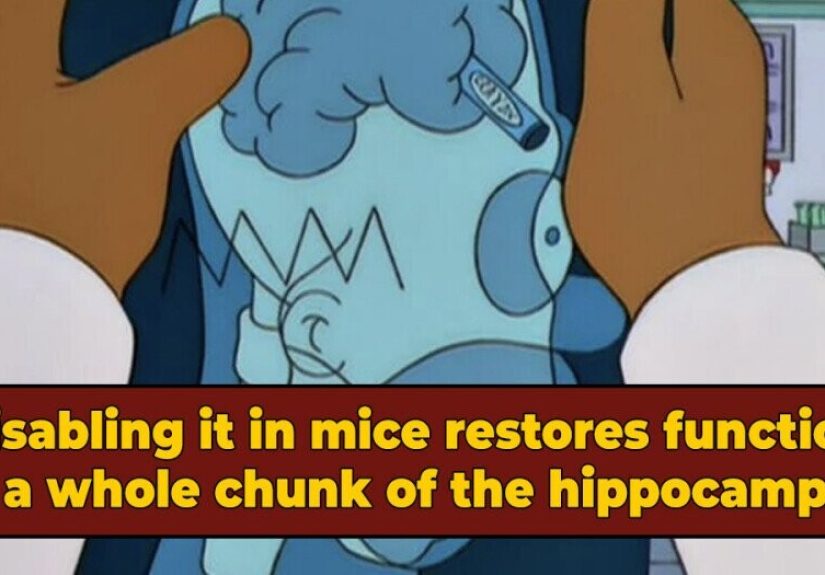
Researchers jokingly nicknamed it the “Homer Simpson gene”because, well… d’oh.
Before you start drafting a petition to “delete the Homer gene from humanity,” let’s slow down (preferably
without shutting down your hippocampus). The real story is more interesting than a cartoon punchline:
this gene appears to act like a molecular brake on a specific brain region involved in memory
and learning. In mouse studies, removing that brake “woke up” plasticity in a famously stubborn areaalmost like
flipping the “do not disturb” sign off a little neural neighborhood.
WaitIs There Really a “Homer Simpson Gene”?
Yes and no. There isn’t an official gene called “Homer Simpson” in biology textbooks (sorry, Springfield High).
The nickname came from researchers and science writers talking about a gene called
RGS14 (short for Regulator of G-protein Signaling 14). In experiments with mice,
RGS14 seemed to limit certain forms of learning and memory. When the gene was disabled, the mice performed better
on tasks that rely on the hippocampusparticularly tasks involving spatial learning and
object recognition.
That’s the “Homer Simpson” part: the gene looked like it was holding the brain back in a way that made the mice,
in a narrow experimental sense, less sharp than they could be. But in biology, anything that looks “dumb” at first
usually has a job description you haven’t read yet.
The Brain Neighborhood It “Mutes”: Hippocampal Area CA2
The hippocampus is a seahorse-shaped structure (yes, that’s why it’s named that) best known for helping form and
retrieve memories. Inside it are subregions with names like CA1, CA3, and the less famous middle child:
CA2.
For years, CA2 was oddly mysterious. Scientists knew it sat between CA3 and CA1, but it didn’t behave like its
neighbors. One of CA2’s standout quirks: it seemed unusually resistant to a process called
long-term potentiation (LTP), a key cellular mechanism linked to learning and memory.
In many parts of the hippocampus, LTP is like turning up the volume on connections between neurons after
meaningful activity. In CA2, that “volume knob” appeared stuck.
Why CA2 Is a Big Deal (Even If It’s Small)
Modern neuroscience has shown CA2 isn’t just filler. It’s deeply tied to
social recognition memorythe ability to recognize a familiar individual versus a strangerand
may also play broader roles in how the hippocampus processes information over time.
In other words, CA2 isn’t the part of your brain that helps you memorize state capitals; it’s the part that helps
you remember who someone is and what that relationship means.
So when people say the “Homer Simpson gene shuts down part of the brain,” the more accurate translation is:
RGS14 helps keep CA2 less plastic than other hippocampal regionsat least under typical
conditions.
How RGS14 Works: The Molecular “Parking Brake” on Plasticity
Think of brain plasticity like remodeling a house. You want the option to renovate when it mattersnew skills,
new memories, new environments. But if your brain remodeled every hallway every time you walked through it, you’d
never find the kitchen again.
RGS14 appears to function like a stability manager in CA2. It’s highly enriched in CA2 neurons
and acts as a scaffolding/signaling protein that interacts with pathways involved in synaptic strengthening.
In practical terms, it can limit the signaling “cascade” that would normally help a synapse
strengthen and persist.
What Scientists Observed When RGS14 Was Removed
In a key mouse study, removing RGS14 unlocked robust LTP in CA2 synapseswithout causing the same effect in CA1.
Behaviorally, the RGS14 “knockout” mice showed improvement in hippocampal-dependent tasks like spatial learning
and recognizing objects they’d encountered before.
This is the origin of the hype: it looked like scientists found a “brake” that, when released, made a normally
stubborn brain region more flexibleleading to measurable performance gains in certain memory-related tests.
But Is “More Plasticity” Always Better?
Not necessarily. Later research and reviews emphasize that CA2’s special tuning may exist for good reasons.
CA2 is heavily involved in social memory circuits, and shifting its balance could plausibly produce tradeoffs.
Some research suggests that changes affecting CA2 plasticity can impact social recognition outcomes, which is a
reminder that brains aren’t “upgradeable” like graphics cards: improvements in one benchmark can come with costs
in another.
Why Would Evolution Keep a Gene That Makes You “Less Smart”?
If RGS14 limits learning in certain contexts, why is it still around? A few plausible explanations show up
repeatedly in scientific discussion:
- Stability matters. Memories aren’t just writtenthey’re maintained. Too much plasticity can
make circuits noisy and unstable, like saving a file that keeps rewriting itself mid-sentence. - Specialization matters. CA2 may be optimized for specific kinds of memory (especially social),
and a tighter plasticity “gate” could help preserve reliable identity and relationship signals. - Protection matters. CA2 has been noted as unusually resistant to certain injuries in animal
models; mechanisms that limit over-excitation and runaway strengthening could be part of why.
In other words, RGS14 may not be a “dumb gene.” It may be a precision genethe kind that keeps
your brain from turning every moment into an irreversible, permanent, emotionally engraved memory. That would be
exhausting, and also a little terrifying.
Could This Help Humans? Here’s the Realistic Take
RGS14 isn’t a mouse-only curiosity; versions of the gene exist in humans. But turning the mouse findings into a
human “smart pill” is not a straight line. Translating results across species, brain complexity, ethics, and
safety is a long road with a lot of speed bumps (and a few detours marked “do not attempt at home”).
What’s More Plausible Than “Deleting the Gene”
The most realistic near-term value of this research is not creating super-geniuses. It’s understanding
how memory circuits control plasticity and how that control might be disrupted in conditions
involving cognition, aging, or neuropsychiatric symptoms. Scientists can explore:
- How CA2 plasticity is regulated by signaling pathways (calcium signaling, ERK/MAPK signaling, and more).
- How altering that regulation changes learning, object memory, and social memory in controlled settings.
- Whether targeted modulation (not permanent deletion) could support specific therapeutic goals someday.
The key word is targeted. The brain is a system of tradeoffs. If you loosen the wrong bolt, you
don’t get a smarter brainyou get a weird one.
FAQ: The “Homer Simpson Gene” in Plain English
Does RGS14 literally “shut down” part of the brain?
No. It doesn’t turn CA2 off like a power switch. The better description is that RGS14 helps keep CA2
less capable of long-lasting strengthening at certain synapsesreducing plasticity in ways that
affect learning and memory behaviors.
Does this prove there’s a single gene for intelligence?
Not even close. Intelligence involves many genes, environments, development, education, sleep, stress,
nutrition, and opportunity. RGS14 is best understood as a gene that influences specific memory-related
circuitry in specific conditions.
Could a person get tested for “the Homer Simpson gene”?
You have RGS14 because humans have RGS14. What we don’t have (at least from this line of research) is a simple,
clinically meaningful “RGS14 score” that predicts real-world intelligence. Mouse results ≠ human destiny.
Five Takeaways (So Your Brain Doesn’t Rage-Quit)
- “Homer Simpson gene” is a nickname for RGS14, not an official gene name.
- RGS14 is heavily enriched in hippocampal area CA2, a region with unusually limited LTP.
- In mice, removing RGS14 unlocked CA2 synaptic plasticity and improved certain memory task performance.
- CA2 is strongly linked to social recognition memory, so changing its tuning may involve tradeoffs.
- The research is more about understanding brain “brakes” than building a real-life intelligence cheat code.
of Real-World “Brain Brake” Experiences (And Why They Fit This Story)
Even without a lab coat or a mouse maze, most people recognize the feeling that the brain has a “brake pedal.”
It shows up in everyday momentslike meeting three new people in under two minutes and realizing your memory
logged exactly one detail: someone had amazing shoes. Or when you try to learn a new route home, but your brain
keeps steering you toward the old one like it’s running autopilot software from 2009.
Those moments are relatable because the brain is constantly deciding what deserves the effort of being stored,
reinforced, and made retrievable later. It’s not laziness; it’s resource management. Your brain has limited
attention, limited energy, and limited capacity to strengthen every connection all the time. So it prioritizes.
Novelty helps. Emotion helps. Repetition helps. Sleep helps. And when none of those are presentwhen everything
feels like background noisethe brain often chooses “temporary file” instead of “permanent save.”
That’s why the idea of a gene acting like a brake on plasticity resonates. In the research story, the CA2 region
isn’t “broken”it’s tuned. It’s like a venue with strict bouncers: not every signal gets in. For daily life, the
“bouncer effect” can feel annoying (“Why can’t I remember where I put my keys?”), but it can also be protective
(“I don’t need to permanently encode every boring email subject line I’ve ever seen”).
People also notice the brake pedal most clearly under stress. When you’re rushed, overwhelmed, or juggling too
many tasks, memory can feel like it’s operating in low-power mode. You may reread the same sentence five times
and still not absorb it. You may forget a name seconds after hearing it. That’s not a personal failure; it’s your
brain prioritizing survival-focused processing over careful, durable learning. In the hippocampus, stress-related
chemistry can change how information is encoded and retrieved, and “plasticity gates” can shift accordingly.
On the flip side, there are those rare, magical moments when learning feels effortlesswhen a concept clicks, a
song lyric sticks, or a new place becomes familiar fast. Usually, those moments have a recipe: strong focus,
meaningful context, repetition spaced over time, and enough rest for the brain to consolidate what it just
experienced. If the “Homer Simpson gene” story teaches anything useful for real life, it’s that the brain isn’t
a passive spongeit’s an active editor. The goal isn’t to remove every brake. The goal is to learn when to ease
off the pedal: reduce distractions, create meaning, practice deliberately, and give your brain the downtime it
needs to lock in what matters.
Because in the end, the smartest brains aren’t the ones that remember everything. They’re the ones that remember
the right thingsand can still find the kitchen.