Table of Contents >> Show >> Hide
- The Night Opened Like a Love Letter
- Conan O’Brien Brought Warmth Instead of Weird Tension
- The Acceptance Speeches That Felt Like Actual Human Beings Were Speaking
- The Unscripted Moments Were Often the Sweetest
- Why These Wholesome Oscar Moments Hit So Hard
- What It Feels Like to Watch a Night Like This
- Conclusion
If awards shows are usually built on suspense, sequins, and the occasional secondhand embarrassment, the 2025 Oscars managed to sneak in something a little sweeter: sincerity. Yes, there were jokes. Yes, there were gasp-worthy wins. Yes, there were dresses so dramatic they probably needed their own agent. But what made the 97th Academy Awards especially memorable was how often the night felt warm, human, and surprisingly tender.
That may sound odd for a ceremony where everyone is dressed like a luxury chocolate wrapper, but it is true. Between emotional acceptance speeches, heartfelt tributes, backstage hugs, and a few gloriously goofy moments that reminded everyone to unclench their red-carpet jawlines, the show often felt less like a competition and more like a beautifully lit group hug. Even when the stakes were sky-high, the mood kept drifting back toward gratitude, connection, and joy.
And honestly? That may be why these moments landed so well. The Oscars 2025 were not just about who won. They were about how people showed up for one another. They were about artists honoring family, cities, mentors, and memories. They were about applause that felt less automatic and more heartfelt. In a culture that often treats celebrity events like demolition derbies in formalwear, that softer energy stood out.
So let us revisit the most wholesome moments from the 2025 Academy Awardsthe scenes that made the night glow a little brighter and reminded viewers that Hollywood, for all its sparkle and absurdity, still knows how to have a heart.
The Night Opened Like a Love Letter
Before the ceremony even found its rhythm, the show made one thing clear: this was not going to be a cold, mechanical march through categories. It opened with a visible affection for movies, for performance, and for Los Angeles itself. That tone mattered.
The musical opener from Ariana Grande and Cynthia Erivo set the table beautifully. Their performance was more than a promotional wink at Wicked. It played like a celebration of movie musical magic across generations, drawing from The Wizard of Oz, The Wiz, and Wicked. It was theatrical in the best sense: emotionally direct, visually rich, and just earnest enough to work. Not an easy trick on Oscar night, where earnestness can sometimes wander into the room wearing clown shoes.
What made it especially wholesome was the feeling behind it. The performance did not come off as a flashy “look how expensive this is” spectacle. It felt generous. It invited viewers in. It nodded to movie history while still feeling fresh, and it helped the evening start with wonder instead of cynicism. That is rare, and it is powerful.
Even the details added to that mood. Grande’s styling reportedly included a sweet visual homage to Dorothy, while the opening itself folded in affection for Hollywood mythology without becoming overly nostalgic. It was less “Remember when movies were great?” and more “Movies still matter, and here is why we love them.” A much better vibe, frankly.
Backstage, that same warmth continued. Photos from the event captured Grande and Erivo looking overwhelmed and emotional after the performance, which made the moment feel even more real. The opener was not just polished; it clearly meant something to the people delivering it. Audiences can tell the difference.
Conan O’Brien Brought Warmth Instead of Weird Tension
Hosting the Oscars is one of the trickiest jobs in entertainment. You have to be funny but not mean, loose but not sloppy, and confident enough to steer a room filled with famous people who are trying very hard to look chill while absolutely not feeling chill. Somehow, Conan O’Brien pulled it off by doing something surprisingly wholesome: he made the room feel safe enough to laugh.
That may sound small, but it is not. Award shows can go stiff in a hurry. Conan’s humor had edge, sure, but it also had affection. He poked fun at Hollywood without sounding like he wanted to set Hollywood on fire and roast marshmallows over the ashes. The result was a lighter, friendlier ceremony where the comedy supported the mood instead of poisoning it.
More importantly, Conan helped ground the show in Los Angeles. The 2025 Oscars arrived in a year when the city had gone through devastating wildfires, and the ceremony did not pretend otherwise. There were tributes to the city, visible appreciation for first responders, and an overall sense that Hollywood’s biggest night was trying to share some of its spotlight with the community around it.
One of the most wholesome moments came when Los Angeles-area firefighters were honored onstage. They received a standing ovation, which could have been purely solemn, but the segment also let them participate in the fun. Conan had them read jokes from the teleprompter, turning the tribute into something warm rather than stiff. That blend of gratitude and humor worked beautifully. It recognized bravery without making the room feel heavy in a self-important way.
There was something deeply charming about that choice. Instead of using firefighters as a visual symbol and moving on, the show let them have personality. It let them share the stage. It treated them as people, not props. That kind of detail is what separates a nice gesture from a genuinely heartfelt one.
The Acceptance Speeches That Felt Like Actual Human Beings Were Speaking
Award speeches are often chaotic little weather systems. Some are moving. Some are rambling. Some sound as if the winner blacked out and woke up holding a gold statue. But the best Oscar speeches of 2025 felt refreshingly personal, and several of them became the emotional backbone of the night.
Zoe Saldaña’s emotional and historic win
Zoe Saldaña gave one of the evening’s most affecting moments when she won Best Supporting Actress for Emilia Pérez. Her speech had the kind of emotional tremor that cannot be faked. Rather than sounding like a polished press release in heels, she spoke with obvious love for her family and pride in her roots.
What made the moment especially wholesome was the way she connected professional achievement to family history. She honored her immigrant family story and the people who made her journey possible. When a speech expands the meaning of a win beyond the individual standing at the microphone, it hits differently. Saldaña’s moment did exactly that. It turned a personal milestone into something communal and hopeful.
That is also why viewers connected to it so strongly. She was not just celebrating success. She was placing that success inside a larger story of dignity, work, sacrifice, and cultural identity. On a night built around glamour, that kind of emotional clarity felt grounding.
Paul Tazewell’s history-making joy
Another standout wholesome moment came with Paul Tazewell, who won Costume Design for Wicked. His speech carried the energy of someone who fully understood the significance of the moment and still allowed himself to feel joy inside it. That balance is not easy. Historic milestones can sometimes make the air feel heavy. Tazewell made the room feel uplifted.
His win was not just about beautiful costumes, though his work absolutely delivered the goods. It was about representation, visibility, and the emotional power of finally seeing a barrier fall. The response in the room said everything. People were not applauding politely because history had happened and that seemed like the appropriate move. They were celebrating with him.
That is what made it wholesome. It was achievement wrapped in shared happiness. No manufactured drama. No strained narrative. Just a gifted artist having his moment and an audience clearly thrilled to witness it.
Kieran Culkin made family life weirdly adorable
If wholesome had a mischievous cousin, it probably looked like Kieran Culkin winning Best Supporting Actor for A Real Pain. His speech was funny, chaotic, affectionate, and weirdly lovablebasically the acceptance speech equivalent of showing up to a black-tie dinner with excellent manners and one untied shoelace.
Much of the charm came from the way he folded his wife, Jazz Charton, into the moment. Rather than delivering a polished “I would like to thank my beautiful family” speech and moving on, Culkin brought his marriage into the bit, turning the whole thing into a public callback about having more children. In another context, that could have fallen flat. Here, it landed because it felt like real affection wearing a comedian’s disguise.
The room laughed, but it also softened. It was a reminder that not every memorable Oscar speech needs to sound like a stone tablet from the heavens. Some of the best ones feel like family conversations that accidentally wandered into a globally televised event.
International wins added heart, not just headlines
Some of the night’s warmest moments came from the global reach of the awards. Flow winning Animated Feature gave Latvia a landmark Oscar moment, and I’m Still Here winning International Feature gave Brazil a deeply resonant victory. These were not just trophies changing hands. They felt like reminders that cinema is bigger than one industry, one city, or one red carpet.
There is something inherently wholesome about watching a room full of global artists celebrate stories from beyond the usual center of gravity. The Oscars can sometimes feel like a very shiny mirror. On this night, they also felt like a window.
That mattered. It meant the emotional center of the show was not limited to familiar stars and familiar franchises. It widened. It welcomed. And in a ceremony that could easily have become a victory lap for only a handful of names, that openness felt generous.
The Unscripted Moments Were Often the Sweetest
As always, some of the best parts of the Oscars happened in the gaps: backstage, during presenter banter, or in those unscripted seconds when someone’s guard dropped.
Andrew Garfield and Goldie Hawn shared a genuine tearjerker
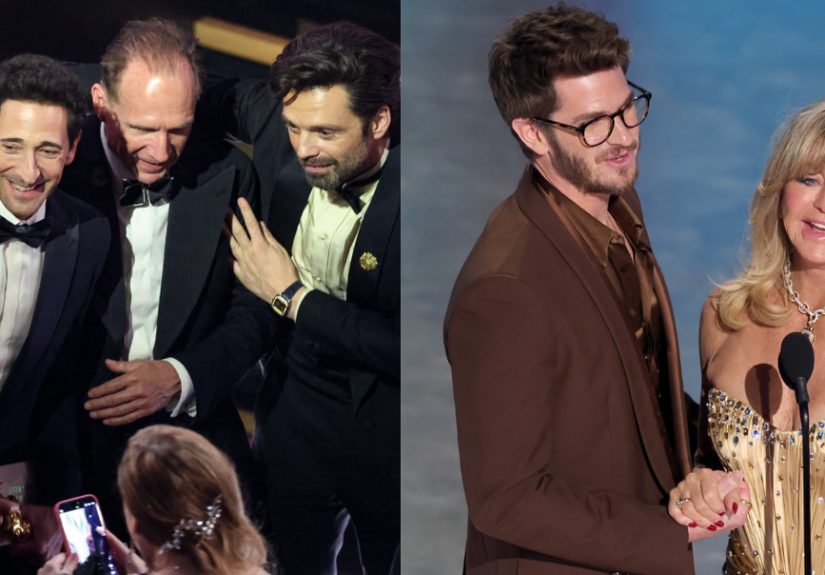
One of the most touching moments of the night came when Andrew Garfield shared heartfelt words with Goldie Hawn while presenting. Garfield thanked Hawn for the joy and comfort her work brought to his late mother, and the exchange visibly moved Hawn. It was brief, but it landed with remarkable force.
Why? Because it cut through the machinery of the show. In a room designed for spectacle, this was a deeply personal expression of gratitude. Not career gratitude. Human gratitude. The kind that comes from grief, memory, and love. It reminded viewers that movies are not just products or prestige objects. They become part of people’s lives. Sometimes part of their healing.
Colman Domingo turned a break into a small act of community
During a commercial break, Colman Domingo reportedly led a toast to Los Angeles, honoring the city’s resilience after the fires and urging the crowd to celebrate together. That moment did not dominate the telecast, but it captured the emotional mood around the ceremony perfectly.
Domingo has a gift for making elegance feel alive instead of formal, and this was a great example. Rather than letting the night become a bubble sealed off from real life, he pulled the room back into community. He reminded everyone that joy can be an act of solidarity too.
The backstage and audience moments looked refreshingly kind
Behind-the-scenes photography from the evening also told a story of warmth: Grande and Erivo emotional after their opening number, stars hugging before the show, and winners sharing quiet moments away from the stage lights. One especially lovely detail was the visible camaraderie among the Best Actor nominees, including a group photo and warm interactions after Adrien Brody’s win. Competition may sell headlines, but kindness often tells the better story.
That is part of what made the most wholesome moments from the 2025 Oscars so memorable. They did not feel engineered. They felt observed. They were the little signs that, beneath the styling teams and acceptance music, real relationships were still doing their thing.
Why These Wholesome Oscar Moments Hit So Hard
Maybe the reason these scenes resonated is simple: people are tired. Tired of snark for snark’s sake. Tired of every public event becoming either a battlefield or a meme farm. The 2025 Oscars highlights reminded viewers that warmth is not boring. Gratitude is not corny. Sincerity is not weakness. In fact, on a massive stage, sincerity can be the boldest thing in the room.
The night still had all the classic Oscar ingredientssurprises, fashion, speeches, applause, a little chaos, and enough gold to make a pirate dizzy. But the emotional throughline was gentler than usual. It was about honoring a city, celebrating history-making artists, remembering loved ones, and making room for humor that did not have to draw blood to get a laugh.
That combination gave the ceremony an unusual afterglow. People did not just remember who won. They remembered how the room felt. And that feelingwarm, grateful, occasionally teary, and just goofy enoughmay be the real reason the 2025 Oscars stuck with so many viewers.
What It Feels Like to Watch a Night Like This
Watching the wholesome moments from the 2025 Oscars was a little like finding out that the class clown also wrote a beautiful thank-you note and waters their plants. It was unexpectedly comforting. You tune into the Oscars expecting tension, couture, and at least one camera cut to someone blinking through disappointment. Instead, this ceremony kept handing viewers little reminders that behind every category and campaign is a very human desire to be seen, appreciated, and connected.
That is why the emotional moments hit harder than the flashy ones. Most viewers will never stand on the Dolby Theatre stage in custom couture while the orchestra politely threatens to interrupt them. But plenty of people know what it feels like to think about their parents while succeeding at something important. Plenty of people understand what it means to honor a city that has been hurting. Plenty of people know the relief of laughter after a hard season. The wholesome moments worked because they translated celebrity into something familiar.
Take the opener from Ariana Grande and Cynthia Erivo. Even if you are not a die-hard musical theater fan, there is something instantly relatable about seeing two performers pour themselves into a moment that clearly matters to them. That feeling travels through the screen. It reminds you of school plays, concerts, family karaoke disasters, church choirs, garage bands, and every other place where performance is really just emotion with a microphone.
Then there were the speeches. The best ones did not feel polished within an inch of their lives. They felt lived in. Zoe Saldaña’s emotion, Paul Tazewell’s joy, and Kieran Culkin’s affectionate chaos all worked for different reasons, but they shared one quality: they sounded like people, not brand statements. In an era when public speech is often scrubbed, optimized, and focus-grouped until it becomes wallpaper, that kind of honesty feels almost radical.
The same goes for the quieter moments. Andrew Garfield thanking Goldie Hawn for what her work meant to his mother was not just moving because it was sad. It was moving because it said something many people feel but rarely get to say out loud: art can keep people company. Movies can become part of family memory. A performance can sit beside someone in grief without ever knowing it did.
And that may be the real power of a wholesome Oscars moment. It collapses the distance between the audience and the stage. For a few seconds, nobody is just a star, a nominee, a host, or a headline. They are simply someone loving their craft, missing someone dear, thanking their family, or trying not to cry in expensive shoes. Suddenly, the giant machine of awards-season prestige feels surprisingly intimate.
There is also something refreshing about joy that is not ironic. The 2025 Oscars had enough wit to stay lively, but many of its best moments were openly sentimental. No apology. No wink to the camera. Just people clapping for one another, hugging backstage, paying tribute to first responders, and celebrating creative work that crossed borders and generations. That kind of shared feeling can sound soft on paper, but on screen it can be electric.
In the end, the experience of watching these moments is not just “Aw, that was sweet.” It is more layered than that. It is reassurance. It is nostalgia. It is admiration. It is a reminder that even on one of the most glamorous nights in entertainment, what people respond to most is still sincerity. Not perfection. Not polish. Sincerity.
So yes, the gowns were fabulous. The wins were dramatic. The stagecraft was polished. But the real magic of the 2025 Oscars came from something smaller and stronger: the feeling that, for one night, Hollywood loosened its bow tie, opened its heart, and let the warmth show.
Conclusion
The most wholesome moments from the 2025 Oscars were not side notes to the ceremony. They were the ceremony’s emotional center. From Ariana Grande and Cynthia Erivo opening the show with wonder, to Conan O’Brien bringing warmth to the room, to Zoe Saldaña, Paul Tazewell, Kieran Culkin, Andrew Garfield, Goldie Hawn, firefighters, and Colman Domingo giving the night its heart, the evening proved that the Academy Awards still work best when they remember the human beings inside the spectacle.
Sure, Oscar night will always love its glamour, surprises, and dramatic envelope energy. But this year’s ceremony was most memorable when it slowed down long enough to let gratitude, community, and affection take the spotlight. In a world that often rewards noise, that softer kind of magic felt pretty wonderful.