Table of Contents >> Show >> Hide
- The House That Started the Conversation
- Why This One-Room Family House Feels So Modern
- Why Small-House Design Is Having a Moment
- What This House Gets Right About Family Life
- The Trade-Offs Nobody Should Pretend Away
- Lessons Homeowners Can Borrow From This House
- The Real Meaning of “New Pioneers”
- Living the One-Room Life: A Ground-Level Experience
- Conclusion
Some houses are big. Some houses are expensive. Some houses are both, which is America’s favorite real-estate magic trick. Then there’s the one-room family house: smaller, sharper, and just opinionated enough to make everyone rethink what a home actually needs to do. In an era when buyers are paying more attention to efficient floor plans, flexible rooms, and square footage that earns its keep, the idea of a family living beautifully in one open space no longer sounds radical. It sounds suspiciously smart.
That is exactly why The New Pioneers: An Architect’s One-Room Family House feels so relevant. At the center of the story is architect Takaaki Kawabata and his family, who transformed a worn 1960s cabin in Garrison, New York, into a minimalist open-plan home shaped by Japanese farmhouse influence, careful budgeting, and a willingness to live with less stuff and more intention. The result is not a tiny-house stunt or a Pinterest fantasy built for exactly three photogenic weekends. It is a real family home, designed for daily life, morning light, children’s routines, work, meals, mess, and the ongoing domestic negotiation known as “Where exactly do we put this?”
This house matters because it challenges a stubborn American idea: that comfort comes from more rooms, more doors, and more square footage. Instead, it suggests something far more interesting. Maybe comfort comes from light, flow, flexibility, and a layout that keeps the family connected without making the house feel chaotic. Maybe a one-room family house is not a compromise at all. Maybe it is a design argument with really good windows.
The House That Started the Conversation
Kawabata’s home began as a rough-looking cabin that most buyers might have dismissed after one glance and one dramatic sigh. But he saw possibility in the bones. The structure sat on woodland in upstate New York and offered what many modern families want but rarely find at an affordable price: proximity to nature, room to breathe, and enough design potential to justify a leap of faith. Instead of preserving the cabin as a nostalgic log-house cliché, he and his wife, designer Christina Kawabata, stripped it down and rebuilt the experience of living inside it.
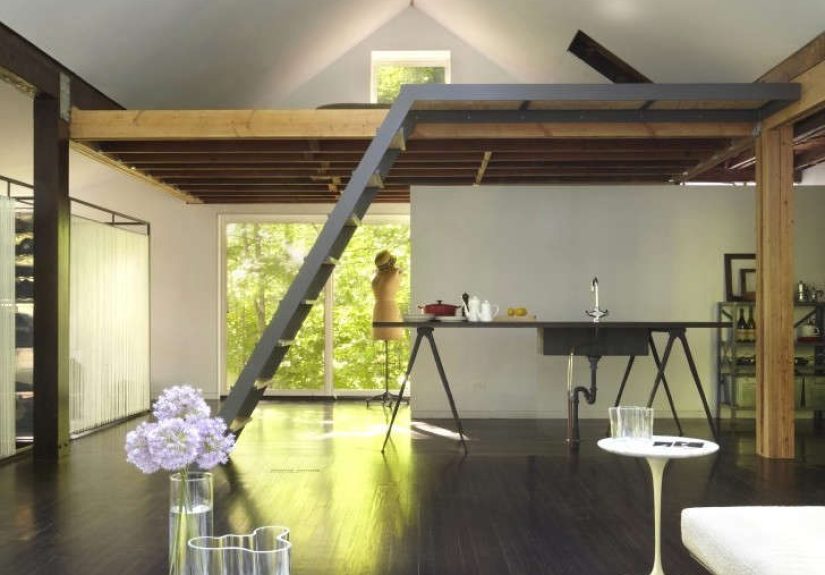
The renovated home centers on one large shared volume, with a sleeping loft above and support spaces tucked strategically behind walls or below grade. It borrows from the logic of Japanese minka, or traditional farmhouses, where communal life unfolds in open, flexible areas rather than in a maze of sealed-off rooms. In practical terms, that meant removing interior walls, opening sight lines, adding a long skylight, bringing in south-facing windows, and making every object visible enough that clutter would have nowhere to hide. A dramatic floor plan, yes. Also a bold parenting strategy.
The finished house works because the design is disciplined. Furniture remains movable. Storage stays purposeful. The children’s zone is partially screened rather than fully boxed in. Bedding can be rolled away. Seasonal items disappear into attic storage. Even the parents’ loft embraces restraint. Nothing about the home depends on fake spaciousness. It feels open because it is open, and it functions because every inch has a job.
Why This One-Room Family House Feels So Modern
1. It turns openness into a lifestyle, not just a layout.
Open-concept design has had a long and noisy run in American housing, but in this house the idea feels less like trend-chasing and more like common sense. The family can cook, eat, work, read, and supervise children within a connected visual field. For households with young kids, that kind of visibility is gold. It reduces friction, makes routines smoother, and supports a more communal style of living. You are not shouting through walls. You are simply living together.
That said, this home also shows what many glossy design articles skip: openness only works when the plan is edited carefully. A bad open floor plan feels like a warehouse with snack crumbs. A good one uses placement, light, furniture, shelving, and partial dividers to create distinct zones without closing the space. This house gets that balance right.
2. It treats light like a building material.
The long skylight is not decorative icing. It is structural to the experience of the house. Natural light changes how small spaces feel, how materials read, and how daily rhythms unfold. In the Kawabata home, light softens the minimal palette and helps the main room feel calm rather than cramped. It also reinforces the family’s closeness to the outdoors, which is part of the point. The house is compact, but it does not feel sealed up.
That indoor-outdoor relationship matters more than ever in smaller homes. When views, daylight, and access to nature are thoughtfully designed, a modest footprint can feel richer, more breathable, and less defensive. A house does not need to sprawl if it knows how to borrow from the landscape.
3. It proves minimalism works better when it is practical.
This is not the brittle, museum-style minimalism that makes guests afraid to set down a coffee mug. It is a warmer, working version of minimalism. Open shelving holds essentials. A screened corner becomes playroom, bedroom, closet, and mini gallery. A basement workspace gives the family another functional layer without bloating the main floor. The message is clear: living small is easier when storage is real, routines are simple, and possessions are curated rather than merely piled into prettier baskets.
Why Small-House Design Is Having a Moment
The one-room family house lands at the right time because American housing culture is shifting. The median new single-family home sold in the United States in 2024 measured 2,210 square feet, yet builders and buyers have also been moving toward more efficient planning and somewhat smaller footprints. Industry reporting has highlighted growing interest in homes where every square foot works harder, with fewer oversized formal rooms and more flexible living zones. In plain English: fewer useless hallways, more useful homes.
That broader context helps explain why the Kawabata house feels bigger than its dimensions. It embodies the “better, not bigger” mindset without sounding preachy about it. It says a family can choose compact living not because they failed to upgrade, but because they understand design. A smaller home can cost less to buy, less to remodel, less to maintain, and less to fill with objects you only sort of wanted in the first place. That is not deprivation. That is strategy wearing cedar siding.
And there is a cultural shift here, too. Homeowners increasingly want spaces that can flex between family time, work time, quiet time, and chaos management. The best compact homes respond with movable furniture, built-ins, lofts, multipurpose corners, open shelving, and clever storage tucked into overlooked places. Small-house design has matured. It is no longer about novelty. It is about competence.
What This House Gets Right About Family Life
The smartest thing about this one-room family house is that it does not pretend family life is neat. It simply creates systems that keep family life from taking over the architecture. The children’s play and sleep area is integrated into the main room, but still visually defined. Their bedding can be put away. Toys are limited. Art is displayed without turning the house into a school hallway. The parents sleep in a loft that feels separate enough to offer calm, even if it is not exactly a fortress of privacy.
That arrangement works especially well for young children. Designers still argue about open versus closed plans, but many agree that open layouts remain highly effective for families with small kids because they support visibility and ease of movement. This house leans into that advantage. It is not trying to solve the needs of every life stage forever. It is solving the needs of this family right now, while allowing room for future expansion later. Good residential design does not have to be eternal. It has to be honest.
There is also something refreshing about the values on display here. The family’s routines encourage participation. Beds are rolled out and rolled up. Objects are chosen carefully. Furniture shifts as needed. The home asks its occupants to be active, not passive. That may sound demanding, but it is also what makes the place feel alive. A one-room house is not just a container. It is a collaborator.
The Trade-Offs Nobody Should Pretend Away
Now for the part that keeps the article honest: one-room family living is not magic. It involves trade-offs, and some households will find them exhausting. Open plans can get noisy fast. Privacy is limited. Visual clutter becomes emotional clutter at record speed. A phone call, a tantrum, a blender, a cartoon soundtrack, and a laptop meeting can all collide with the elegance of a freight train.
This is why the best one-room homes rely on zones, storage, routines, and selective separation. Not every activity should happen dead center in the room all the time. A screened area, a loft, a basement workspace, a built-in bench, or even a curtain can create relief without sacrificing openness. In smaller homes, total openness can become overwhelming if it is not paired with control. The Kawabata house works because it understands that openness needs editing.
So no, this is not a blueprint for every family in America. Teenagers may want stronger boundaries. Remote workers may need acoustic separation. Multi-generational households may require more enclosed rooms. But for a young family willing to live lightly and intentionally, the one-room model offers something many larger homes accidentally lose: togetherness by design.
Lessons Homeowners Can Borrow From This House
You do not need to move to a wooded site in upstate New York or replace your siding to learn from this project. Its lessons are surprisingly portable.
First, simplify the plan before you decorate it. The most successful compact homes get the layout right before adding style. Open circulation, clear sight lines, and flexible zones do more for livability than another trendy light fixture ever will.
Second, use vertical space shamelessly. Lofts, tall shelving, hanging storage, and high windows can make compact homes feel layered rather than cramped. When floor area is limited, the walls and ceiling become part of the strategy.
Third, choose furniture that earns rent. Movable pieces, storage benches, extendable tables, fold-away beds, and slim-profile seating all help a smaller house do more than one thing well.
Fourth, edit possessions like a professional. Small-space living is less about buying clever organizers and more about deciding what deserves to stay. Harsh, yes. Effective, also yes.
Finally, make room for beauty. Minimal living should not feel punitive. Daylight, natural materials, outdoor views, art, texture, and a few beloved objects keep restraint from becoming austerity. The point is not to live with less joy. The point is to remove whatever blocks it.
The Real Meaning of “New Pioneers”
The phrase “new pioneers” fits because this house represents a quiet frontier in American domestic life. Not covered wagons. Not rustic cosplay. Just families and designers rethinking the old equation between size and quality. In a culture that still tends to equate bigger homes with better lives, a one-room family house makes a wonderfully inconvenient argument: perhaps the future belongs to homes that are more intentional, more adaptable, and less bloated.
That future is not anti-comfort. It is anti-waste. It values shared space, natural light, efficient planning, and a direct connection between architecture and the life happening inside it. And maybe that is what makes this house feel so memorable. It is modest, but it is not apologizing. It is compact, but it is not cramped. It is simple, but it is not simplistic. It is, in the best sense, a family home with an actual point of view.
Living the One-Room Life: A Ground-Level Experience
To understand the appeal of a one-room family house, it helps to imagine the daily experience instead of just admiring the floor plan. Morning arrives differently in a home like this. Light reaches farther. Sounds travel sooner. The day starts not with everyone emerging from a corridor of private boxes, but with the shared awareness that the house is already awake. In a conventional home, family members can disappear from one another for hours without trying. In a one-room house, that is nearly impossible, and strangely enough, that can be a gift.
You notice the small rituals more. Someone folds bedding while someone else starts coffee. A child spreads crayons at the dining table that will later hold dinner. A parent answers email in a corner workspace while still keeping an eye on breakfast negotiations and missing socks. The room changes character all day long, and that shape-shifting becomes part of the pleasure. The house is not static. It performs.
There is also a kind of honesty to living this way. A one-room family house has no patience for dead space, mystery clutter, or furniture that exists only to impress visiting relatives twice a year. Every item is either useful, beautiful, or on borrowed time. At first, that can feel demanding. Eventually, it feels liberating. You stop asking where to put more things and start asking why they are there at all. The home becomes lighter because the decisions become clearer.
Of course, the experience is not all poetic skylight and serene cedar. There are moments when togetherness feels a little too together. Someone is on a work call while someone else is building a cardboard kingdom. Someone wants silence while someone else wants a dance party. In a one-room layout, compromises are not optional side quests. They are the main storyline. Families who thrive in these homes tend to develop habits that soften friction: tidying as they go, using baskets and built-ins well, respecting visual boundaries, and learning when to step outside for a breather before declaring war over a misplaced sneaker.
But the rewards can be unusually rich. Parents stay more connected to children’s rhythms. Kids learn that home is something they help shape, not just occupy. Meals feel less isolated from the rest of life. Seasons become more noticeable when windows frame the landscape and daylight becomes part of the architecture. The house feels less like a machine for storing people and more like a setting for shared memory.
That may be the real secret behind the one-room family house. It is not merely smaller. It is more legible. You can read the life inside it at a glance: the art on the wall, the futons rolled away, the shoes by the door, the table ready for work and dinner and homework and conversation. In a sprawling home, life often scatters. In a compact open home, it gathers. For some families, that would feel intense. For others, it feels like the whole point.
And that is why this house lingers in the imagination. It offers a version of domestic life that feels edited, awake, and deeply human. Not perfect. Not always quiet. Definitely not clutter-friendly. But full of intention. In the end, the one-room family house is not asking us to live with less for the sake of aesthetics alone. It is asking whether a better home might begin when we stop confusing more space with more life.
Conclusion
The New Pioneers: An Architect’s One-Room Family House is ultimately about more than one beautiful remodel in upstate New York. It is about the growing appeal of compact, intelligent living. By combining open-plan family space, Japanese-inspired restraint, strong daylight, flexible zones, and realistic storage, this house offers a compelling model for modern family life. It proves that a small house design can be warm, stylish, highly functional, and deeply livable. Bigger homes may still dominate the market, but projects like this remind us that the most memorable houses are often the ones with the clearest ideas.