Table of Contents >> Show >> Hide
- 1. They Stretch the Room Vertically, Not Just Horizontally
- 2. They Use Angles and Clever Layouts to Cheat the Eye
- 3. They Maximize Natural Light and Layer Artificial Lighting
- 4. They Stick to Airy, Low-Contrast Color Schemes
- 5. They Use Mirrors, Glass, and Reflective Surfaces as “Space Multipliers”
- 6. They Hide Storage in Plain Sight with Multi-Functional Furniture
- 7. They Practice Ruthless Editing and Minimalism (Without Feeling Cold)
- Bringing Hotel Design Secrets into Everyday Spaces
- Real-Life Experiences with Space-Savvy Hotel Rooms
If you’ve ever walked into a hotel room, checked the square footage on the listing, and thought, “There’s no way this is only 250 square feet,” you’ve already met the magic of good hotel design. Hospitality designers are masters of illusion: they can’t move the walls, so they move your perception instead.
The same visual tricks that make small hotel rooms feel big and airy can work wonders in your own home, whether you’re dealing with a compact bedroom, a tight studio, or a guest room that moonlights as a storage unit. From smart layouts to sneaky lighting tricks, these seven hotel design secrets will make almost any room feel larger, calmer, and a whole lot more luxurious.
1. They Stretch the Room Vertically, Not Just Horizontally
Most of us obsess over floor space, but hotel designers know that the fastest way to make a small room feel larger is to think up. When you draw the eye vertically, you create a sense of height and airiness, even if the actual footprint is small.
How hotels do it
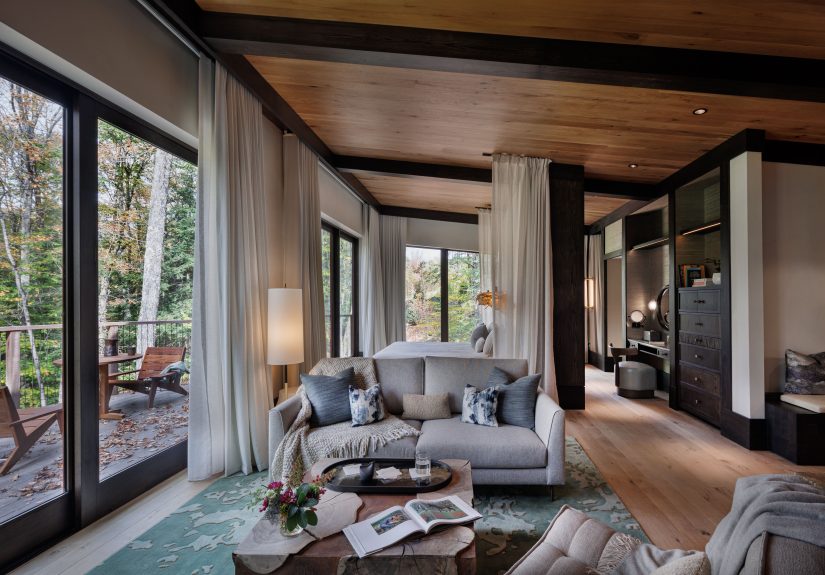
- Ceiling-height drapes: Curtains are hung at or near the ceiling and fall all the way to the floor, even if the window is much shorter. This creates a tall, elegant “frame” and tricks the brain into reading the room as loftier.
- Tall headboards and wall panels: Many boutique hotels extend the headboard or paneling almost to the ceiling. That continuous vertical line gives the impression of extra height and grandeur.
- Vertical pattern and panel breaks: Subtle vertical stripes in wallpaper, panel seams, or trim lines visually elongate the walls.
How to steal it at home
Mount curtain rods 4–6 inches above the window frame (or just shy of the ceiling) and let your curtains “kiss” the floor. Choose vertical elementslike tall bookcases, art hung in a vertical stack, or a taller headboardto draw the eye upward. Even painting the ceiling a slightly lighter shade than the walls can create the feeling of height by making the top surface recede visually.
2. They Use Angles and Clever Layouts to Cheat the Eye
In small hotel rooms, the furniture is rarely shoved flat against every wall. Designers experiment with angles and circulation paths to create a sense of flow and depth.
How hotels do it
- Angled beds and seating: Placing the bed slightly off a wall, or angling a lounge chair toward a window, makes the layout feel more dynamic and less boxy.
- Clear walkways: High-end properties obsess over circulation. You can usually walk from the door to the bed to the bathroom without dodging furniture. That clarity instantly makes a tight space feel more open.
- Floating furniture: Nightstands, desks, and vanities are often wall-mounted, opening up more visible floor area.
How to steal it at home
Resist the urge to push all your furniture flush to the walls. Sometimes pulling a sofa or bed a few inches away from the wall actually makes the room feel more intentional and spacious. Prioritize one clear traffic path and edit out extra pieces that interrupt it. If possible, use a floating desk or narrow console instead of a bulky traditional dresser or desk.
3. They Maximize Natural Light and Layer Artificial Lighting
If you’ve noticed that memorable hotel rooms feel bright but never harsh, that’s not an accident. Light is one of the strongest tools for changing how big or small a room feels.
How hotels do it
- Sheer window treatments: Opaque blackout shades are often paired with sheer drapes. During the day, the sheers soften and diffuse the light without blocking it.
- Layered lighting: Instead of relying on one ceiling fixture, hotels layer a combination of wall sconces, bedside lamps, floor lamps, and subtle cove or strip lighting. This eliminates dark corners that visually “shrink” the space.
- Strategic light placement: Lighting is aimed to wash walls and highlight vertical surfaces, making the edges of the room brighter and pushing them visually “outward.”
How to steal it at home
Think in layers: ambient (overall) light, task light, and accent light. Swap heavy drapes for sheers during the day or use top-down, bottom-up shades to maintain privacy while still letting light in. Add a wall sconce or slim floor lamp to brighten a dark corner, and consider using LED strips inside shelving or behind a headboard to create a soft glow that enlarges the space.
4. They Stick to Airy, Low-Contrast Color Schemes
You’ll notice that many hotel rooms lean heavily on light, soft neutralsthink warm whites, pale beiges, gentle grays, and muted blues. It’s not because designers are afraid of color; it’s because subtle, low-contrast palettes help a room feel expansive and calm.
How hotels do it
- Light, reflective colors: Soft neutrals and cooler tones bounce more light around the room and visually blend corners, so the walls feel farther apart.
- Minimal contrast between walls and trim: Painting trim and even doors in the same or a slightly lighter shade than the walls reduces visual breaks, making the envelope of the room feel continuous and larger.
- Color “drenching” in a gentle way: Some designers use one soft color on the walls, ceiling, and trim to create a cohesive shell that feels like a single, spacious volume.
How to steal it at home
Choose one light, forgiving base color and use it generously. If you love deeper tones, reserve them for accentspillows, art, a throw blanketrather than large surfaces. Avoid dramatic, high-contrast combinations (like dark trim on light walls) in very small rooms; they can visually chop up the space.
5. They Use Mirrors, Glass, and Reflective Surfaces as “Space Multipliers”
Mirrors are practically a cheat code for hotel designers. Used well, they double the apparent space and amplify light without adding clutter.
How hotels do it
- Full-height mirrors: Mirrored wardrobe doors or full-length wall mirrors reflect both the room and the view, creating the illusion of extra depth.
- Mirrored backsplashes or panels: In tiny entry nooks or behind desks, a mirror panel visually opens up what would otherwise be a cramped corner.
- Glass and acrylic furniture: Clear side tables, glass tops, and acrylic chairs seem to disappear, allowing your eye to travel through the room.
How to steal it at home
Add a generously sized mirror opposite a window to bounce light deeper into the space. Consider mirrored closet doors or a leaner mirror behind a nightstand. When you’re choosing accent tables or desk chairs, try a glass or acrylic option to keep the visual weight light and airy.
6. They Hide Storage in Plain Sight with Multi-Functional Furniture
Ever wondered where hotel guests stash their suitcases, extra pillows, and shopping hauls? The secret is that storage is built into almost everythingbut in a way that doesn’t read as bulky.
How hotels do it
- Platform beds with storage: Drawers or lift-up platforms under the bed hide luggage, extra linens, and seasonal items.
- Storage benches and ottomans: At the foot of the bed or under a window, these provide seating and a landing spot for bags, while hiding extra storage inside.
- Built-in millwork: Custom headboard walls often integrate nightstands, shelves, and lighting into one unified element, eliminating the need for multiple separate pieces.
How to steal it at home
Choose pieces that do double duty: a storage ottoman instead of a coffee table, a bed with drawers or room for pull-out boxes, a wall-mounted shelf that works as both a nightstand and a desk. The less random furniture you need to accommodate your stuff, the more open your room will feel.
7. They Practice Ruthless Editing and Minimalism (Without Feeling Cold)
Luxury doesn’t come from having more things; it comes from having the right things, thoughtfully arranged. High-end hotels are curated to the inch, with every object earning its place.
How hotels do it
- Fewer, larger pieces: Instead of several tiny tables and chairs, you’ll usually find one comfortable chair, one functional side table, and a bed that feels substantial. Ironically, a few larger pieces can make a room feel bigger than lots of small ones.
- Controlled decor: Art, accessories, and textiles are chosen around a cohesive storyoften a simple palette and a clear themeso the room feels calm, not chaotic.
- Visual quiet zones: Designers leave some surfaces intentionally empty so the eye can rest. Those “breathing spaces” are part of what makes a room feel open and relaxing.
How to steal it at home
Start by decluttering one zone: the nightstand, dresser top, or entry table. Keep only what you use daily plus one or two decorative pieces. Then look at your furniture: could you swap two small side tables for one narrow console, or replace multiple mismatched chairs with one comfortable lounge chair?
Bringing Hotel Design Secrets into Everyday Spaces
The core idea behind all these tricks is simple: your brain notices lines, light, and clutter more than it notices exact square footage. By managing what your eye sees firstvertical emphasis, clear circulation paths, cohesive color, reflective surfaces, and minimal visual noiseyou can make almost any room feel bigger, brighter, and more expensive than it really is.
You don’t need to renovate or win the lottery. You just need to think like a hotel designer: be intentional about what you bring into the room, where you put it, and what story the space tells at a glance. The result is a room that feels like a suite, even if it’s technically closer to a shoebox.
Real-Life Experiences with Space-Savvy Hotel Rooms
Design rules sound great on paper, but the magic really clicks when you’ve experienced it in person. If you’ve ever dragged your suitcase into a tiny city hotel, fully prepared to live on top of your luggage for a few nights, and then realized, “Oh, this actually feels kind of roomy,” you’ve already seen these principles in action.
The tiny room that didn’t feel tiny
Picture a compact urban hotel room: bed, small desk, one chair, and a bathroom tucked behind a sliding door. On the floor plan, it’s barely bigger than your first studio apartment, but it doesn’t feel cramped. Why?
- There’s a clear path: You can walk from the door to the window without weaving around furniture. Luggage fits neatly under the bed or in a built-in nook.
- The color story is simple and soft: Maybe it’s light sand-colored walls, white bedding, and a gentle blue accent. Nothing screams for attention, so your brain reads “calm” instead of “crowded.”
- Lighting is layered: A warm bedside lamp, a soft glow behind the headboard, and a ceiling fixture that washes the walls keep the room bright without glare.
Even if you can’t increase your square footage at home, you can absolutely borrow this approach: pick one simple palette, clear a clean traffic path, and layer your lighting so no corner feels like a cave.
How hotel tricks translate to guest rooms and small apartments
These hotel design secrets are especially powerful in guest rooms and small apartments, where every inch has to work overtime. For example, a guest room with a platform bed, two slim wall-mounted nightstands, and a single storage bench at the foot of the bed feels far more open than one crammed with a bulky dresser and random side tables.
Mirrors and reflective finishes are another game-changer. A full-length mirror on the wall opposite a window can make a modest bedroom feel twice as deep. Add a glass-topped nightstand or a shiny metal lamp base, and you’ve introduced subtle reflections that bounce light around without adding visual clutter.
Storage is where many real homes struggle compared to hotels. The secret is to make storage part of the architecture rather than an afterthought. Think under-bed drawers instead of plastic bins, a built-in or wall-mounted shelf instead of a free-floating bookcase, and a storage ottoman where a plain bench might sit. When your storage is integrated and discreet, the room looks cleaner and larger, even when it’s doing heavy-duty work behind the scenes.
Living with less (but better)
One of the most surprising “space” lessons from hotels is psychological: you really don’t need as much stuff in a room as you think you do. Hotel rooms feel relaxing partly because they’re edited. There’s just enough furniture, just enough decor, and plenty of empty space for your eyes and brain to rest.
Try giving one room in your home the “hotel treatment” for a week. Strip surfaces down to the essentials, remove one extra piece of furniture, open up the window treatments, and add a mirror. See how you feel in that space. Most people report sleeping better, feeling calmer, and noticing that the room suddenly seems biggereven though nothing structural has changed.
Once you experience that shift, it becomes much easier to adopt hotel design philosophy as a lifestyle: thoughtful lighting instead of bright-but-bland overheads, intentional color choices instead of random paint, furniture that works hard behind the scenes, and a commitment to less clutter. You may never look at a “small” room the same way againand that’s the real secret upgrade hotels have been using all along.
SEO JSON