Table of Contents >> Show >> Hide
- The Viral Story That Turned a Parking Grudge Into a Financial Disaster
- Why This Story Hit Such a Nerve Online
- What Street Parking Actually Means in Real Life
- How Small Parking Fights Become Big Money Problems
- Could This Have Been Avoided?
- The Real Lesson: Entitlement Is Expensive
- Extra Experiences That Show How Parking Wars Spiral in Real Neighborhoods
There are few neighborhood problems more absurdly small and weirdly emotional than parking. Not murder-mystery small. More like “I will absolutely remember this at 2 a.m.” small. A car parked in the wrong place on the wrong day can turn otherwise normal adults into amateur prosecutors, curb-space philosophers, and curtain-peeking detectives. And in one viral case, what started as an annoying parking habit allegedly ended with a six-figure consequence.
The story that caught the internet’s attention sounds like the setup for a suburban comedy with a surprisingly expensive ending. One resident said their neighbors had nine cars and kept parking two of them in front of the resident’s house while leaving their own large driveway mostly empty. Why? According to the viral retelling, the neighbors thought a full driveway looked “tacky.” That explanation did not exactly win Neighbor of the Year.
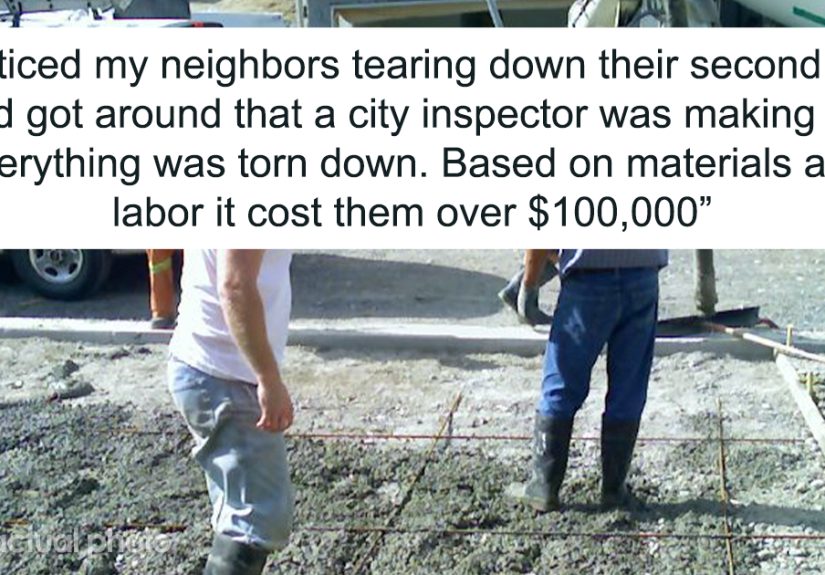
Then came the twist. The frustrated resident noticed the neighbors had quickly built a second unit behind their home. Suspecting the work may have been done without proper permits or inspections, the resident reported it. Authorities got involved. The second unit reportedly had to come down. Estimated loss: over $100,000. Suddenly, those “tacky” driveway concerns looked a lot less pressing.
It is the kind of story the internet loves because it combines three irresistible ingredients: entitlement, revenge, and consequences with lots of zeroes. But beneath the popcorn-worthy drama is a bigger lesson about modern neighborhood life. Parking fights are rarely just about parking. They are about territory, fairness, image, noise, convenience, and that ancient human instinct to think, “Yes, this public space is technically public, but spiritually it is mine.”
The Viral Story That Turned a Parking Grudge Into a Financial Disaster
The headline grabs you because it sounds outrageous, but the real reason this story spread so widely is that it feels familiar. Many people have dealt with the curb-space version of passive-aggressive warfare: the neighbor who hates cars in front of their home but never uses their own driveway, the household with too many vehicles for the lot, the person who treats public parking like a private inheritance handed down by the city itself.
In this case, the resident’s frustration apparently built over time. That matters. Neighborhood feuds rarely explode on day one. They simmer. First it is one car. Then it is every night. Then it is “they know this bothers me and keep doing it anyway.” Once people stop interpreting behavior as inconvenient and start interpreting it as disrespectful, the emotional math changes fast.
That is also why the reported revenge landed so hard. The resident did not slash tires, yell on the lawn, or start a cone-based turf war. Instead, they looked at a much bigger issue: an allegedly illegal backyard unit. If the story is accurate, the loss did not come from the complaint alone. It came from the neighbors taking a costly gamble by building something that allegedly could not survive inspection.
That detail matters because it shifts the moral center of the story. The parking may have triggered the complaint, but the financial damage appears to have come from the construction itself. In other words, the parking feud lit the match, but the permit problem was the gasoline.
Why This Story Hit Such a Nerve Online
People reacted strongly because the situation sits right in the messy gap between what is legal and what feels considerate. In many parts of the United States, a homeowner does not own the curb in front of the house. Public street parking is generally first-come, first-served unless signs, permits, time limits, or local rules say otherwise. So yes, someone may be legally allowed to park there.
But legality is not the same thing as being a good neighbor. That is where so many parking disputes go off the rails. One side says, “I’m allowed to park here.” The other says, “You may be allowed, but you’re still being annoying.” Both can be right, which is exactly why these arguments age like milk.
The viral story also tapped into a deep public appetite for consequences. When people see a pattern of smug behavior, they do not just want the behavior to stop. They want the universe to issue a receipt. A six-figure demolition is one heck of a receipt.
What Street Parking Actually Means in Real Life
No, You Usually Do Not Own the Spot in Front of Your House
This is the first thing many homeowners do not want to hear. The curb in front of your home may feel personal, but on most public streets it is not your reserved throne. If there is no special signage, no permit restriction, and no local rule being broken, someone else can often park there. That may include your neighbor, your neighbor’s cousin, your neighbor’s teenager with a suspiciously loud muffler, or a stranger visiting for taco night.
Emotionally, that is hard for people because the space sits directly in front of their most expensive asset. Practically, though, public streets are shared infrastructure. You do not automatically gain exclusive rights just because your windows face the curb.
But Public Parking Still Has Rules
Here is where the “technically legal” crowd sometimes gets humbled. Public parking does not mean anything goes. Many cities have rules against leaving a vehicle in the same place for extended periods. In Seattle, for example, a vehicle cannot remain on the same block for more than 72 consecutive hours. San Diego also bars vehicles from staying continuously in one public roadway location for more than 72 hours, and the city notes certain commercial vehicles face added restrictions in residential areas.
So while no one may own the curb, local government absolutely owns the rulebook. A car that sits too long can get cited or towed. A vehicle that blocks a driveway can trigger enforcement. And no, dropping a traffic cone out front like you are directing jets on an aircraft carrier does not magically convert public space into your private parking kingdom.
Blocking Access Is Where Things Get Serious Fast
There is a major difference between parking legally on the street and interfering with someone’s access. If a vehicle blocks part or all of a driveway, cities can treat that as a real enforcement issue. That is where neighbor irritation can shift into official consequences, because now the problem is not aesthetics or territorial feelings. It is access, safety, and traffic compliance.
This distinction is useful because many neighborhood parking arguments are emotionally framed but legally weak. “I don’t like seeing your truck there” is usually not a strong case. “Your vehicle is blocking my driveway entrance” is a much stronger one.
How Small Parking Fights Become Big Money Problems
Code Enforcement Can Reveal Bigger Issues
The most dramatic part of the viral story is not the parked cars. It is the alleged backyard unit. Parking disputes often push people to notice other things: suspicious additions, odd setbacks, unpermitted structures, drainage issues, fences in the wrong place, or work that looks rushed. Once a complaint reaches code enforcement, the original argument may stop mattering. Now the question becomes whether the property itself complies with local law.
That is where homeowners can get crushed financially. Permits, inspections, demolition, reconstruction, legal fees, and delayed occupancy can turn a petty feud into a full-budget horror movie. The true cost of “cutting corners” is often invisible until someone reports the shortcut.
HOA Rules Can Add Another Layer of Pain
If the neighborhood has an HOA, things can get even spicier. HOAs often regulate parking, exterior appearance, and property use. They may mediate disputes, but they can also impose fines when owners violate community rules. In other words, an HOA can function like a neighborhood hall monitor with paperwork and a monthly fee.
That does not mean every HOA is villainous. Some do help settle recurring conflicts before they turn into legal warfare. But they also create a second source of enforcement, which means one parking issue can become a city problem, a community-association problem, and a personal-enmity problem all at once. Congratulations, you now have a trilogy.
Towing, Tickets, and Repairs Add Up Quickly
Parking fights can also get expensive in smaller, sneakier ways. Tickets pile up. Towing fees land like surprise uppercuts. If a conflict escalates into a crash, insurers get involved. Auto property-damage liability generally helps cover damage when a driver hits someone else’s house or property, while collision coverage may help repair the driver’s own vehicle after hitting an object like a fence, pole, or building.
That matters because neighborhood parking drama sometimes ends not with a complaint but with a badly judged maneuver. One wrong reverse, one too-tight squeeze, one distracted driver trying to dodge a trash bin, and now everyone is exchanging policy information while pretending to be calm. Spoiler: nobody is calm.
Could This Have Been Avoided?
Probably yes. That is the least glamorous answer, but it is the honest one.
Neighbor disputes are often easiest to resolve before they harden into identity. Once one person becomes “the entitled parking family” and the other becomes “the snitch next door,” every conversation starts carrying emotional baggage. What could have been solved with one calm discussion becomes a season-long drama with code inspectors.
Mediation is one underused option here. A neutral third party can help neighbors move beyond accusations and into actual problem-solving. It is usually faster and cheaper than litigation, and unlike a court battle, it gives both parties some chance of continuing to live next to each other without needing blood pressure medication every morning.
Even informal communication can help when it happens early and without fireworks. A better version of this story might have involved a simple conversation: “Hey, I know the street is public, but could you rotate those cars or use your driveway more often? It’s becoming a recurring issue.” Not perfect. Not cinematic. But also not $100,000 worth of regret.
The Real Lesson: Entitlement Is Expensive
What makes this story memorable is not just the revenge. It is the arrogance that allegedly made the revenge feel inevitable. Leaving a large driveway empty because parked cars look “tacky” while crowding the street in front of someone else’s home is a perfect example of convenience dressed up as taste. And when people repeatedly externalize the inconvenience they do not want to deal with themselves, they often act shocked when others stop being patient.
That does not mean revenge is always wise. It often is not. In fact, escalating a neighbor conflict can create years of tension, legal costs, and emotional exhaustion. But the story still lands because the ending feels like a brutal case study in avoidable consequences. The neighbors were not reportedly ruined by one parked car. They were reportedly ruined by a chain of choices: dismissiveness, overconfidence, and an apparent willingness to bend rules until someone finally looked closer.
That is why this story resonates beyond parking. It is really about a broader truth of homeownership and community life: small acts of entitlement can expose much bigger vulnerabilities. If you are already cutting corners, antagonizing the people most likely to notice is a bold strategy. Bold in the way a squirrel crossing six lanes of traffic is bold.
Extra Experiences That Show How Parking Wars Spiral in Real Neighborhoods
Stories like this go viral because they are exaggerated versions of conflicts people see every day. In one neighborhood, the problem is not nine cars but one work van that gets parked in front of the same house every night. The van may be legal, but it blocks the homeowner’s view backing out, makes the street feel tighter, and becomes the visual symbol of “these people never think about anyone else.” What starts as mild irritation turns into photo-taking, note-writing, and eventually a 311 report.
In another block, the conflict comes from guests. One house becomes the unofficial holiday reunion headquarters, and suddenly both sides of the street look like a dealership overflow lot. Residents who normally do not care about parking begin caring very much when they cannot unload groceries near their door or find room for a visiting relative. Nobody says anything the first time. The third time, everyone has opinions.
Teen drivers also add a special layer of neighborhood theater. A family with two parents, two young drivers, and one driveway that fits only three vehicles ends up using the street regularly. A nearby homeowner interprets that as laziness. The family sees it as math. Neither side feels unreasonable, which is exactly why the conflict keeps simmering.
Then there are the curb-space “savers,” the people who use cones, bins, or creative audacity to hold a public spot. This tends to produce instant hostility because it breaks an unwritten social rule: if the street is public, at least pretend you understand that. Once one person starts acting like the curb is private property, everyone else gets less charitable fast.
Some of the most expensive neighborhood disputes begin with parking but do not end there. A complaint about cars leads to a complaint about an unpermitted shed. That leads to an inspector noticing drainage problems, fence height issues, or a converted garage. Suddenly the original feud is just the trailer, and the main feature is a stack of violations nobody budgeted for. People think they are fighting over a parking spot when they are actually fighting over trust, compliance, and how closely the city should look at their property.
That is the larger takeaway from this six-figure revenge story. Parking disputes feel silly until they are not. They are often the front door to deeper problems: resentment, bad communication, ignored rules, and the dangerous belief that a fed-up neighbor will never do anything about it. As this story shows, that belief can be incredibly expensive.