Table of Contents >> Show >> Hide
- What Is the Joss Whedon Shared Universe Theory?
- The Core Idea: Monsters Don’t VanishThey Get Managed
- The Timeline Fans Love (and Why It’s Weirdly Coherent)
- The “Proof” Fans Point To (Without Pretending It’s Canon)
- The Big Objections (Because Yes, There Are Some)
- Why This Theory Endures (Even If It’s Never Confirmed)
- of Fan-Rewatch Experience (Yes, You Should Try This)
- Conclusion
Every fandom has that friend. You know the one: they can’t enjoy a perfectly normal episode of TV without pausing to say,
“Okay, but what if this is secretly connected to everything?” Usually, you nod politely and back away before they start
drawing arrows on a napkin.
But the “Joss Whedon shared universe” ideaoften nicknamed the Whedonverse or the Universal Slayer Theoryis the rare
conspiracy corkboard that doesn’t collapse the moment you breathe on it. It’s still a fan theory (no studio press release is coming), but it lines up
with enough timeline math, recurring institutions, and thematic DNA that it feels… oddly plausible.
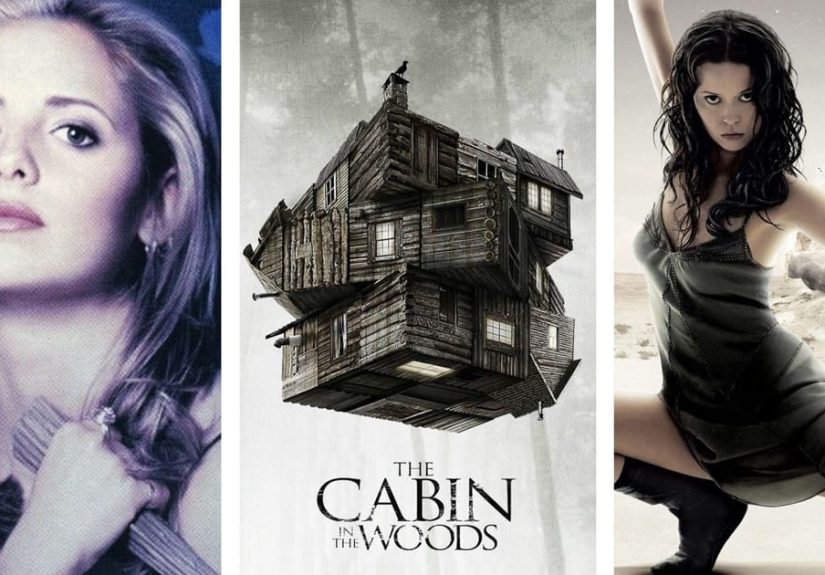
The pitch is simple: Whedon’s major live-action worldsBuffy the Vampire Slayer, Angel, Dollhouse,
The Cabin in the Woods, and Firefly/Serenityaren’t just spiritual siblings. They’re chapters in one long, messy,
very human story about power, control, sacrifice, and what happens when you try to “manage” monsters instead of understanding them.
What Is the Joss Whedon Shared Universe Theory?
In its most popular form, the theory argues that the supernatural ecosystem of Buffy/Angel doesn’t disappearit gets
industrialized. Governments and corporations learn the wrong lessons. Secret programs become secret facilities. Demon lore becomes a protocol.
Eventually, those systems scale up so dramatically that humanity either:
- breaks the world (because of course we do),
- or flees it,
- or does both, in the most dramatic order possible.
The theory is “insane” in the fun way: it connects different genres (high school horror-comedy, neo-noir supernatural detective drama, sci-fi thriller,
meta-horror satire, and space western) into one timeline. But it also feels like it understands Whedon’s favorite storytelling engine:
institutions that claim to protect people often end up using people.
The Core Idea: Monsters Don’t VanishThey Get Managed
Start with Buffy and Angel. You have a hidden world of demons, prophecies, secret councils, and ancient rules.
Now ask: what happens when the grown-ups notice? What happens when “the system” tries to put the supernatural in a filing cabinet?
The Buffyverse already flirts with that answer: a covert military operation in Sunnydale captures and studies demons, tags them, cages them, and tries to
build a controllable super-soldier solution. It’s bureaucracy meeting the occult, and it’s exactly as chilling as it sounds.
Meanwhile, Angel introduces the corporate version of evil: a massive law firm with influence that feels bigger than any one city,
any one government, or any one dimension. It’s not just “bad guys”it’s infrastructure.
Put those two together and you get a grimly believable through-line: once humans learn the supernatural is real, the next step isn’t “acceptance.”
It’s a budget request.
The Timeline Fans Love (and Why It’s Weirdly Coherent)
Different versions of the theory tweak the order, but the “classic” timeline tends to run like this:
1) Buffy/Angel: The supernatural goes mainstream behind the curtain
In Buffy, the Slayer line is tradition: one chosen girl at a time, suffering in private while the world sleeps through the apocalypse.
That system gets challenged hard, especially as the show leans into questions of power-sharing and institutions controlling young women.
One of the biggest “hinge moments” for theorists is the idea that Slayer power stops being scarce. If power can spread, then the old rulesone Slayer,
one Watcher, one secret warstart to crack. A world with many empowered people is harder to manage… and management is the kind of thing that makes
certain organizations very nervous.
2) The Initiative as the prototype for something bigger
A covert demon-research program under a college campus is already a bonkers premise, which makes it perfect connective tissue.
If governments were willing to build that once, they’d be willing to build it againbigger, deeper, and with better HR policies.
(Or worse. Probably worse.)
This is where the theory begins to feel like it has legs: it doesn’t rely on a single Easter egg. It relies on an escalation pattern.
If the supernatural exists and humans are human, someone will try to operationalize it.
3) The Cabin in the Woods: the endgame of “operationalizing” horror
The Cabin in the Woods doesn’t just show a secret facilityit shows a globalized system of ritualized horror, with technicians
manipulating victims like they’re running a haunted-house version of mission control.
Fans point at the facility’s logicits bureaucracy, its procedures, its casual workplace banter while people dieand say:
“This is what the Initiative becomes after a few decades of funding.”
Even the film’s mechanics feel Buffy-adjacent. You’ve got archetypes. You’ve got “rules.” You’ve got a sense that the universe demands a story shape,
and if you don’t follow it, reality itself throws a tantrum. In other words: it’s myth with a spreadsheet.
4) Dollhouse: control tech replaces magic
If Cabin is about feeding ancient forces, Dollhouse is about feeding modern ones: wealth, power, and the fantasy that
people can be rewritten like software. The show’s central horror is not demonsit’s the way a corporation can turn identity into a product.
In many fan versions of the timeline, Dollhouse represents a “late-stage” world where control isn’t performed with rituals and sacrificial
archetypes. It’s performed with tech: imprinting, remote manipulation, and bodies treated as interchangeable containers.
That rhymes with the Cabin facility’s manipulation tactics and with the Initiative’s “chip it, tag it, manage it” mindset. The details differ, but the
philosophy is the same: people are resources.
5) Firefly/Serenity: after the collapse, humanity goes to the stars
Firefly drops us into a future where humanity lives in a new star system under a central Alliance and a rough outer frontier.
The vibe is “history repeated in space,” which is exactly what you’d expect if the same institutions survived a planetary breaking point.
And the Serenity film supplies a very Whedon-flavored capstone: government experiments meant to “fix” human behavior backfire on a massive
scale, birthing horrors that the state then tries to bury. That is basically the Initiative’s thesis statement, just with better ships.
The “Proof” Fans Point To (Without Pretending It’s Canon)
To be clear: this is not an officially confirmed shared universe. It’s a fan-built map. But it’s a fan-built map with some surprisingly sturdy beams.
Here are the types of evidence people tend to citeand why they’re compelling even when they’re not definitive.
Recurring institutions: government labs, corporate empires, and “the system”
Whedon worlds repeatedly feature organizations that claim to protect the public while quietly treating the public as collateral. A demon-research
military program. A law firm that behaves like a cosmic machine. A shadow facility running ritualized deaths. A corporation turning identity into IP.
A galactic Alliance willing to do monstrous things for “stability.”
Even if none of these are literally the same organization, the theory argues they evolve from the same cultural response: fear plus power
equals control.
A consistent moral physics: power always has a cost
Buffy’s strength isolates her. Angel’s mission corrodes him. Dollhouse’s tech erases people. Cabin’s ritual demands blood. Serenity’s “calm” drug
kills a planet and creates Reavers. The specifics change, but the rule is consistent: when someone promises a clean solution to a messy human problem,
you should look for the hidden body count.
The genre shifts actually help the theory
A shared universe doesn’t have to look the same in every era. If anything, the genres changing can support the timeline:
- Teen horror-comedy for the “secret war nobody believes,”
- noir for the “adult consequences in a city that eats people,”
- thriller/cyberpunk for the “corporate capture of identity,”
- meta-horror for the “systematization of sacrifice,”
- space western for the “frontier after history repeats.”
It’s like watching the same civilization grow up, get cynical, get dangerous, and finally leave town.
The Big Objections (Because Yes, There Are Some)
A theory can be fun and still have holes big enough to drive Serenity through. Here are the main speed bumpsand why fans keep rolling anyway.
“But the timelines don’t perfectly match.”
Correct. Perfectly is doing a lot of work. Different stories were written for different networks, audiences, and eras. The shared-universe theory
works best when you treat it as “broad strokes” history, not as a forensic calendar that needs every Tuesday accounted for.
“Cabin ends the world. Firefly needs humans to keep going.”
This is the biggest sticking pointand also the reason the theory is so entertaining. If you want Cabin to be a stepping stone to Firefly, you have to
imagine some version of survival: escapes, off-world colonies, or a world-ending event that still leaves enough humans to rebuild elsewhere.
That’s speculative. But speculative is the genre tax of every shared-universe theory.
“Whedon reuses actors; that’s not evidence.”
Absolutely. Recasting is not canon. Seeing familiar faces across projects is fun, but it’s a production reality, not a lore key.
The stronger argument is thematic and institutional continuity, not “hey, that guy’s here too.”
Why This Theory Endures (Even If It’s Never Confirmed)
The Whedonverse idea is sticky because it’s less about secret cameos and more about a coherent worldview. It suggests that all these stories are asking
the same long question from different angles:
What do humans do when they’re scaredand what do they justify in the name of order?
That question survives genre changes. It survives new casts. It even survives time jumps from high school hallways to a spaceship drifting through the black.
And because the question is consistent, the timeline feels plausible even when the details are fuzzy.
In other words, the theory doesn’t “work” because a character name matches on a dusty folder in the background. It “works” because every step is a believable
escalation of the last: secrets become programs, programs become systems, systems become empires, and empires eventually try to rewrite humanity itself.
of Fan-Rewatch Experience (Yes, You Should Try This)
If you want to feel this theory in your boneswithout pretending it’s official canontry a “Whedonverse rewatch” mindset. Not a strict order. Not a homework
assignment. Just a playful approach where you watch each story as if it’s a historical document from the same civilization.
Start with Buffy and pay attention to how quickly the supernatural becomes procedural. Early on, it’s all whispers and libraries and monsters
in alleys. But as seasons roll forward, you’ll notice the world acting like it’s tired of being surprised. Suddenly, there are councils, rules, bureaucracies,
and people whose entire job is “keep the apocalypse from messing up the quarterly plan.” Watching it this way makes Sunnydale feel less like a quirky Hellmouth
town and more like the testing ground for how modern society metabolizes horror.
Then, when you hit the Initiative-style storytelling, the rewatch gets extra spicy. You stop seeing the lab as a one-off plotline and start
seeing it as the first draft of something much larger. You can almost imagine other facilities elsewheresome better run, some worsequietly learning the same
wrong lesson: if you can cage monsters, you can control monsters. (Spoiler: the universe loves punishing hubris.)
Jumping into The Cabin in the Woods after that is where the “experience” really clicks. The facility’s toneoffice jokes, betting pools, routine
crueltyfeels like what happens when horror becomes a job. On a rewatch, the most unsettling part isn’t even the monsters. It’s how normal the system looks.
If you’ve ever had a coworker treat a disaster like a minor inconvenience, you’ll recognize the vibe immediately, just with more mermen.
Now slide into Dollhouse and let the theme evolve again: the monster is no longer “the thing in the dark,” it’s the idea that a person can be
purchased, rewritten, and deployed. Watching with the shared-universe lens turns Dollhouse into a future chapter of the same argument: once society gets used to
controlling the supernatural, it eventually decides controlling humans is even more efficient.
Finally, end with Firefly and Serenity, and watch the Alliance not as a brand-new villain, but as the descendant of every
institution that ever promised safety at any price. The frontier then feels like the aftershock of everything that came before: a civilization that survived its
own worst impulses and kept going… without necessarily learning. The result is a rewatch that’s less “spot the reference” and more “watch a culture grow up and
carry its baggage into space.” Even if the theory stays unofficial, the experience makes the stories feel newly connectedand honestly, that’s the best kind of
fan magic.
Conclusion
“This insane Joss Whedon shared universe theory” doesn’t need to be canon to be satisfying. It’s a framework that highlights what these stories already share:
a fascination with power, a distrust of institutions, and a recurring warning that controlwhether magical, bureaucratic, or technologicalalways comes with
unintended consequences.
If nothing else, it’s a great excuse to revisit some beloved (and occasionally devastating) storytelling with fresh eyes. And if you find yourself drawing
arrows on a napkin afterward, just remember: you’re not alone. You’re simply… spiritually employed by the Facility now.