Table of Contents >> Show >> Hide
- Meet the Man Behind the Ninja Cats
- How the ‘Ninja Cats’ Series Was Born
- The Secret Behind Those Midair Martial-Arts Poses
- Why Ninja Cats Took Over the Internet
- What the Photos Reveal About Cats (and Us)
- How to Take Your Own ‘Ninja Cat’ Photos at Home
- Behind the Lens: Imagining a Day with Ninja Cats (Experience & Insights)
- Conclusion: The Tiny Warriors We Live With
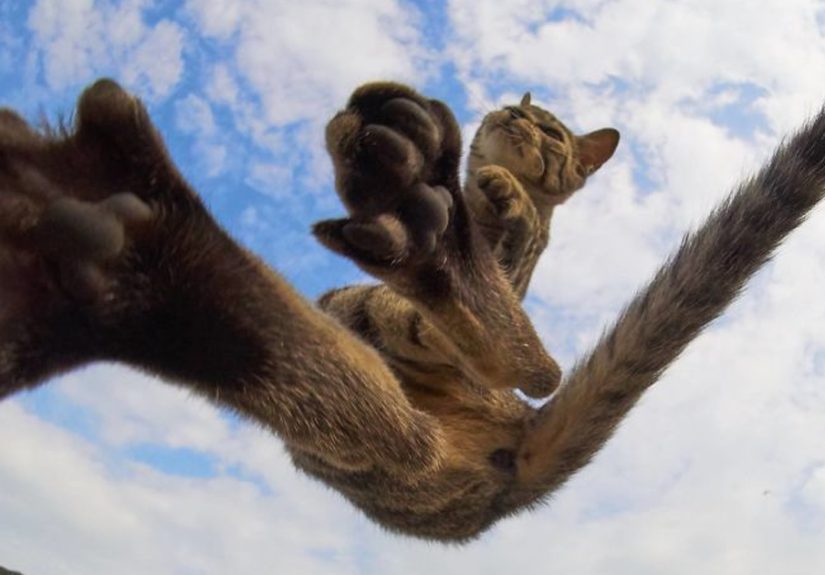
If you’ve ever watched a cat launch itself off the couch and thought, “Wow, that’s some serious martial arts,” you’re not alone. A Japanese photographer named Hisakata Hiroyuki has built an entire photo universe around that exact moment – the split second when a perfectly ordinary kitty suddenly looks like a black-belt ninja mid–flying kick.
His “ninja cats” photos have been shared all over the internet, especially through platforms like Bored Panda and cat-loving communities, turning anonymous stray cats into furry action heroes. The result is a mix of comedy, cuteness, and pure visual drama – basically, the cinematic universe our cats have always believed they deserved.
In this article, we’ll sneak behind the scenes of these ninja cat photos, explore how a Japanese photographer turned playful street cats into martial arts legends, and break down what makes these images so addictive. We’ll also dig into what you can learn from his work if you want to photograph your own cat like a tiny, whiskered warrior.
Meet the Man Behind the Ninja Cats
At the center of the ninja cat craze is Japanese photographer Hisakata Hiroyuki. While many pet photographers focus on cozy portraits or soft-lit studio sessions, Hisakata specializes in capturing cats at their most dramatic: mid-leap, mid-twist, mid–“I meant to do that.”
Instead of shooting pampered house pets on plush beds, he spends a lot of time with stray cats, often traveling to areas where felines freely roam in groups. Some reports describe him heading to islands or neighborhoods known for high stray-cat populations, arriving not with fancy props but with a camera bag and a stash of cat toys. His stage is an alley, a patch of dirt, or a stretch of broken pavement. His models are cats who have never seen a grooming salon but have incredible reflexes and strong opinions about feather toys.
The magic of his photos isn’t just that cats look like ninjas; it’s that their personalities explode off the frame. One cat appears to throw a perfect punch. Another kicks out both legs like it’s auditioning for a feline kung fu movie. Yet another stands upright with paws raised, looking like a tiny, furious sensei yelling, “You have dishonored the clan!”
By focusing on these spontaneous, over-the-top moments, Hisakata has carved out a niche that feels both ultra-specific and instantly relatable: cats being their chaotic selves, but framed like action stars.
How the ‘Ninja Cats’ Series Was Born
Like many great internet obsessions, ninja cats didn’t start as a huge, strategic project. They began with something simple: a love of cats and a fascination with movement.
According to interviews and coverage from various outlets, Hisakata originally started photographing cats in everyday situations. Over time, he realized that the most interesting images weren’t the quiet, sleepy moments. They were the explosive ones – when a cat jumped for a toy or twisted midair. Those images were weird, funny, and surprisingly elegant, all at once. From there, the idea evolved into a full-on series that people now recognize as “Ninja Cats.”
The timing helped. Social media feeds, especially those centered around pets, crave something that feels both cute and different. Ninja cats hit that sweet spot. The shots looked like they were pulled straight out of a video game or a martial arts anime, but they were completely real. No costumes, no CGI – just great timing, clever play, and some very athletic cats.
As the series spread, the nickname “ninja cats” stuck. Headlines outside Japan introduced the world to this Japanese photographer capturing “cats practicing their ninja skills,” and once you see the photos, you never look at a random street cat the same way again. That little fluff ball on the wall? Secretly training for its next flying side kick.
The Secret Behind Those Midair Martial-Arts Poses
So how does a Japanese photographer get such perfect shots of ninja cats without ending up covered in scratches and regret? There are three main ingredients: play, timing, and technique.
1. Turning Playtime into an Action Scene
The first “trick” isn’t really a trick at all – it’s play. Hisakata uses toys like feathers on strings, ribbons, or dangling objects to encourage cats to leap, twist, and attack. Think of it as turning a simple play session into a full-on choreography of flips and lunges.
Because cats naturally stalk and pounce, all he has to do is introduce an irresistible target and let instinct take over. When a cat springs up to catch the toy, paws extended and body fully stretched, the pose often looks uncannily like a martial arts move. One cat seems to punch. Another looks like it’s blocking an attack. A third appears to be performing an aerial spin kick worthy of a movie stunt double.
2. Fast Shutter, Faster Reflexes
The second ingredient is camera technique. To freeze motion in midair, you need a fast shutter speed and the patience to shoot a lot of frames. Reports highlight that Hisakata uses a modern digital camera (often mentioned is an Olympus body) that can handle rapid shooting bursts, giving him a better chance of catching that perfect “ninja” moment.
He pays attention to light and background, too. Strong natural light helps keep the images crisp and detailed, while simple backdrops – sky, dirt, concrete, or distant trees – make the ninja cat the unmistakable star of the frame. The result is a clean, graphic style where every whisker looks sharp and every paw is frozen in action.
3. Respecting Feline Limits
One of the most important details in coverage about his work is how he’s careful not to push the cats too far. If they get overstimulated, stressed, or simply bored, he stops. The goal isn’t to force a performance; it’s to capture a natural burst of play. That’s partly why his images feel joyful instead of staged. The cats look like they’re having fun – because they are.
In a world where people are increasingly sensitive about animal welfare, that matters. Ethical pet photography means understanding when to put the camera down and let the cat walk away with its dignity (and its ninja secrets) intact.
Why Ninja Cats Took Over the Internet
Out of all the pet photos online, why did these particular images blow up? It comes down to a powerful mix of story, timing, and universal cat chaos.
First, the visuals tell a clear story. Even if you don’t know anything about the photographer or the location, you instantly understand what’s happening: this cat is in battle mode. Your brain fills in the rest – the training montage, the rival dojo, the dramatic showdown at sunset. The photos act like still frames from a movie you didn’t know you needed.
Second, ninja cats fit perfectly into meme culture. The poses are exaggerated, funny, and easy to caption. One flying cat becomes “me trying to catch the weekend.” Another midair kick becomes “when the snack bag makes a noise.” It’s no surprise that sites and social pages devoted to animals, humor, and pop culture all joined in sharing the images.
Third, the series taps into a long-standing internet truth: cats secretly think they’re in charge. Seeing them rendered as fearless warriors just confirms what most cat owners already suspect. The photos feel like proof that cats really have been training for world domination this whole time.
What the Photos Reveal About Cats (and Us)
On the surface, ninja cat photos are just pure fun. But look a little deeper, and they reveal something about the bond between humans and animals – and the way we tell stories with images.
By photographing strays with so much flair and personality, Hisakata invites people to see them as individuals, not just background scenery. These aren’t nameless cats passing through an alley. Each one, even for a fraction of a second, becomes a protagonist. The dramatic framing gives them dignity, energy, and a dash of mythic status.
There’s also a cultural echo. Japan has a long-standing love affair with cats – from lucky maneki-neko figurines to cat cafes and cat islands. Combining this with martial arts aesthetics and anime-like poses gives the images a distinctly Japanese flavor that still feels totally accessible worldwide.
And then there’s us. We’re drawn to these photos because they turn the everyday into something epic. Most people live with cats that sleep 18 hours a day and ignore them the rest of the time. Seeing those same fluffy creatures captured as fearless fighters taps into a secret wish: maybe our own lazy tabby is a hidden hero, just waiting for the right moment to unleash its inner ninja.
How to Take Your Own ‘Ninja Cat’ Photos at Home
You may not be traveling across Japan with a dedicated camera bag, but you can borrow a few tricks from this Japanese photographer to create your own mini ninja cat photo sessions at home.
1. Start with Your Cat’s Favorite Game
Skip the costumes and props. All you need is your cat’s favorite toy – a feather wand, string toy, or anything that makes them jump. The goal is to get them to leap or twist naturally. Never force or scare your cat into moving; you’re just setting up a playful situation and letting instinct take over.
2. Use Burst Mode and a Fast Shutter
Most smartphones now have a burst mode that takes a rapid series of photos when you hold down the shutter button. Use that. If you’re working with a DSLR or mirrorless camera, switch to a fast shutter speed (for example, 1/1000 second or faster) to freeze the action.
You’ll probably end up with a lot of awkward blurs and half-blinks, but that’s part of the process. Hidden in the chaos will be a few golden frames where your cat looks like it’s performing a textbook karate move.
3. Watch Your Background
Ninja cats look best when there isn’t a lot of visual clutter behind them. Try to position your cat against a simple background: a wall, the sky, a stretch of lawn, or even a clean corner of your living room. That way, when your cat jumps, its silhouette stands out clearly.
4. Keep Sessions Short and Fun
Cats don’t clock in for eight-hour shifts. A few minutes of intense play is plenty. When your cat loses interest, let them go. The point is to capture joyful, natural motion – not to exhaust them. Reward them with treats and praise, like the tiny martial arts masters they are.
5. Lean into the Comedy
Some photos will make your cat look majestic and fierce. Others will make them look like a confused potato midair. Keep both. Part of the charm of ninja cat photography is that it celebrates every side of cats – the graceful warrior and the derpy goofball. That range is what makes Hisakata’s images feel so alive and relatable.
Behind the Lens: Imagining a Day with Ninja Cats (Experience & Insights)
Imagine arriving at a quiet, sunlit alley where a handful of stray cats lounge on concrete steps and low walls. At first, they barely acknowledge you. One cat squints, another stretches, a third pretends you don’t exist. This is your “casting call,” and they are in no hurry.
You sit down, unpack your camera, and wait. You don’t rush toward them; you let them get used to your presence. Maybe you toss a small toy or rustle a treat bag. A couple of cats stroll over, curious but cautious. The session hasn’t started, but the relationship has.
As you gently swing a feather toy, the energy shifts. A cat’s pupils widen. Its tail twitches. Suddenly, the sleepy afternoon turns into a training ground. One cat crouches low, shoulders rippling as it prepares to pounce. You lift the camera and hold your breath.
In the next few seconds, everything happens at once. The cat launches upward, claws outstretched, body fully extended like a tiny gymnast. Another cat joins from the side, twisting midair as if it’s intercepting an invisible enemy. You mash the shutter in burst mode, trusting that the camera is seeing more than your eyes can track.
From the outside, it probably looks very ordinary: a person playing with cats. But behind the lens, it feels like capturing a choreography that only exists for a fraction of a second. Each jump is unique. Each twist of the body, each angle of the paw, creates a different narrative. One frame looks like a heroic mid-battle pose; the next looks like a comedic blooper reel.
Later, when you scroll through the images, something becomes clear: these “ninja cats” aren’t acting for you. They are just being themselves – hunters, athletes, chaos machines wrapped in fur. Your job, as a photographer, is to anticipate the moment when instinct and motion line up just right.
This is where the deeper reward comes in. Spending time with cats this way teaches patience. You learn to slow down, to notice micro-movements – a twitch of whiskers, a shift in weight, the way a cat’s ears angle right before it jumps. You start to read their intentions a split second before they move, and that’s when you begin to reliably capture those “how is that even real?” frames.
It also changes how you see everyday life with your own pets. The blur of your cat racing across the hallway suddenly feels like a missed cinematic moment. The goofy leap from floor to sofa becomes a potential masterpiece. Even if you never travel to a cat island or build a massive social following, borrowing this mindset makes ordinary playtime feel richer and more memorable.
That, in many ways, is the true charm of the ninja cat phenomenon. It’s not just about impressive photos; it’s about the invitation to see cats – and by extension, the world around us – as more dynamic, more expressive, and more full of tiny, blink-and-you-miss-it stories. Whether you’re scrolling through Hisakata’s images on a lazy afternoon or chasing your own cat around the living room with your phone in burst mode, you’re participating in the same delightful idea: that every cat is a little bit ninja, and every leap is a chance to capture something too purrfect to forget.
Conclusion: The Tiny Warriors We Live With
This Japanese photographer’s ninja cats remind us that great photography doesn’t always require exotic locations or rare wildlife. Sometimes, it’s a stray cat on a dusty street, or your own pet, mid-jump, revealing its secret life as a martial arts legend.
By combining playful interaction, technical skill, and a sense of humor, Hisakata Hiroyuki has transformed ordinary feline chaos into a globally loved visual story. His images make us laugh, but they also nudge us to pay closer attention to the animals we share our world with. If a random street cat can look like the hero of an action movie for one split second, what other tiny, extraordinary moments are we missing every day?
The next time your cat launches at a toy with wild determination, don’t just duck. Reach for your camera. You might be one burst of photos away from discovering your very own ninja cat – and joining a global audience that can’t get enough of these too-purrfect tiny warriors.