Table of Contents >> Show >> Hide
- What “Tiny Trump” Actually Is (And Why It Matters)
- Why “Small” Is a Superpower in Activism
- Participatory Art: When the Audience Becomes the Author
- How Tiny Trump Turns Passive Frustration Into Visible Dissent
- Online Amplification: The Hashtag as a Traveling Gallery
- Safety, Legality, and Keeping Protest Peaceful
- Critiques, Tensions, and Why That’s Part of the Artwork
- What Tiny Trump Teaches Us About Civic Engagement in 2026
- Conclusion: Tiny Doesn’t Mean Trivial
- Experiences: What It Feels Like to Join a “Tiny” Protest Art Movement
Political participation often gets marketed like a gym membership: expensive, intimidating, and somehow always starting “next Monday.” But what if civic engagement looked less like a grand heroic gesture and more like… a three-inch cardboard nuisance with a slogan? Enter Tiny Trump, a crowdsourced public art installation that scaled a larger-than-life political figure down to pocket sizethen handed the power (and the placement) to regular people.
At first glance, it’s funny. A mini caricature. A tiny thumbs-down. A micro protest you can hold in one hand while holding coffee in the other. But the joke is doing real work: it lowers the barrier to action. It turns spectators into participants. And it proves a point every organizer learns the hard waymomentum is built from small steps, repeated by lots of people, in lots of places, over time.
What “Tiny Trump” Actually Is (And Why It Matters)
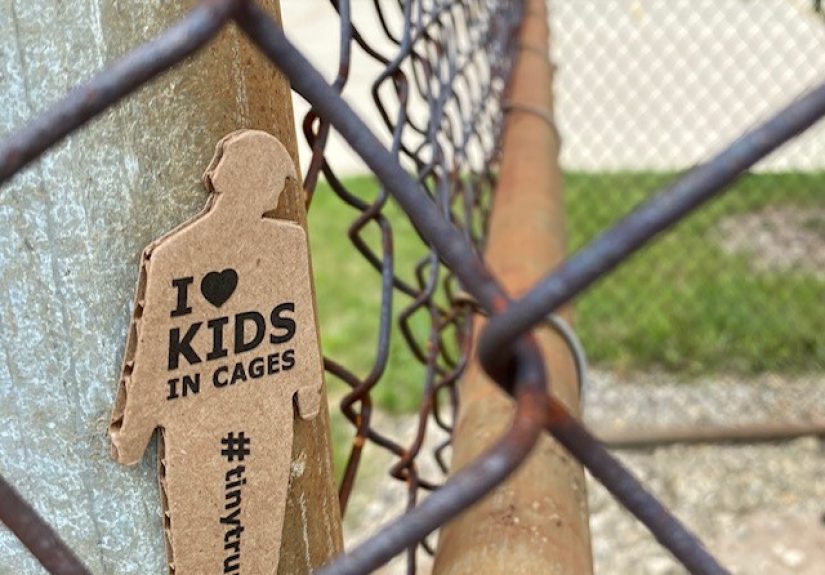
Tiny Trump began as an artist-led response to the political climate of the late 2010s, then evolved into a participatory, nationwide project. The core “unit” of the installation is simple: a small, protest-themed Trump cutout/stickeroften stamped with short, punchy slogansand distributed to participants who place it in the world and share the result.
The simplicity is the point. You don’t need a stage, a permit, a megaphone, or a 12-person planning committee that can’t agree on a font. You need one tiny object and a decision: will you make your opinion visible?
From a Handmade Protest Sign to a Crowd-Powered Movement
In its earlier form, the project used larger handmade cardboard figures that showed up in protest contexts. Over time, the concept condensed into a small sticker formatportable, easy to share, and built for repetition. That shift mattered: when the “tool” fits in an envelope, participation stops feeling like a special event and starts feeling like something you can do on a Tuesday.
The Scale of the Project Wasn’t Tiny at All
While the figure is small, the footprint grew large. The project ultimately involved thousands of participants and spread across cities and states. This is one of the defining features of crowdsourced public art: the artist designs a container, but the public supplies the reach, the variety, and the meaning-making.
Why “Small” Is a Superpower in Activism
Big protests can be life-changingand also exhausting. They require time, transportation, confidence, safety planning, and sometimes the emotional bandwidth to be seen in public while disagreeing with powerful people. Not everyone has that. And even people who do can burn out.
Tiny Trump flips the model. Instead of asking, “Can you show up to the biggest march of the year?” it asks, “Can you do one small thing that signals your valuesand then do it again?”
Micro-Activism Isn’t “Less Than”It’s How Movements Scale
“Micro-activism” sometimes gets mocked as performative. And yes, anything can become empty performance if it stops at optics. But micro-actions are also how people build identity, confidence, and community. A small act done publicly can be a rehearsal for bigger acts: volunteering, organizing, donating, mentoring, or simply having harder conversations at home.
In other words: tiny acts don’t replace deeper work. They can unlock it.
Humor Disarms Fear (And Invites People In)
There’s a reason satire has always been politically potent. Humor helps people speak when they’re tense, angry, or overwhelmed. It takes a heavy topic and makes it discussable. “Tiny Trump” is funny firstthen thoughtful.
The message is baked into the form: reduce the perceived power of something by shrinking it. Even the phrase “minimize Trump in your life” reads like a wellness tipif your wellness tip had cardboard legs and a slogan.
Participatory Art: When the Audience Becomes the Author
Traditional art asks you to look. Participatory art asks you to do. The public isn’t just the audience; the public completes the work. That changes everythingespecially in politics, where feelings of powerlessness can be the biggest barrier to engagement.
With participatory projects, the “art” is not only the object. It’s also the choices people make: where to place it, what to photograph, what story to tell, how to respond if someone challenges them, and whether the act leads to more action later.
What Crowd Participation Adds That Institutions Can’t
- Geographic reach: Thousands of small placements create a national footprint without a national budget.
- Local context: A tiny object means different things in a college town, a suburb, or a rural highway stop.
- Personal ownership: People protect what they help build. Participation turns politics into something you can touch.
- Story velocity: Social sharing transforms a local moment into a collective narrative.
How Tiny Trump Turns Passive Frustration Into Visible Dissent
A lot of people experience politics as a nonstop feed of headlines they didn’t ask for and can’t control. That creates a familiar loop: outrage → doomscroll → exhaustion → silence. Tiny Trump interrupts that loop with one practical question: “Want to do something, even if it’s small?”
It Gives People a Script (Without Giving Them a Speech)
Many would-be activists don’t need more opinionsthey need a starting point. A sticker with a slogan is a script that doesn’t require public speaking. It’s a conversation starter that can be as loud or as quiet as you want.
Sometimes the “activism” is simply making values visible in an environment where people assume everyone agreesor where people are afraid to disagree. Visibility matters because it helps others feel less alone, and loneliness is political kryptonite.
It Makes Participation Repeatable
Repeatability is underrated. Movements aren’t built by one iconic moment; they’re built by routines. A repeatable action (small, simple, and shareable) becomes a habitespecially when it’s connected to community.
Online Amplification: The Hashtag as a Traveling Gallery
A crowdsourced installation doesn’t stay in the street. It migrates to social platforms, where photos create a living archive: thousands of tiny acts stitched together into one larger signal.
That changes the audience. A local placement might be seen by five people in real lifebut the image can be seen by hundreds online, where others respond, remix, and join in. The work becomes a distributed gallery in motion, curated by participants rather than gatekeepers.
Safety, Legality, and Keeping Protest Peaceful
Creative resistance works best when it doesn’t put people at risk or damage communities. Peaceful protest is protected in the United States, but how you express yourself still mattersespecially when you’re using physical objects in shared spaces.
The most responsible approach is also the simplest: place items only where you have permission, avoid anything that could cause injury, and never use permanent materials on property you don’t own. If the goal is to spark thought and conversation, you don’t need chaos. You need clarity.
Smart, Peaceful “Tiny” Alternatives That Don’t Break Anything
- Personal property placements: Water bottles, laptops, notebooks, phone cases, or removable signage you carry.
- Community-approved spaces: Bulletin boards, art walls, student centers, or locations with explicit permission.
- Pop-up displays: A tabletop “tiny gallery” at an event, with printed captions and voter resources.
- Digital versions: Shareable images, zines, or meme-style posts that invite dialogue without physical placement.
Critiques, Tensions, and Why That’s Part of the Artwork
Any protest art that uses a public figure’s image can trigger a fair question: “Aren’t you just giving them more attention?” That critique shows up in nearly every movement that tries to confront power using symbols.
But attention isn’t a single thingit has direction. The project’s slogans and context aim to frame attention as critique, not admiration. And even when people disagree, the disagreement can be productive if it leads to real conversation rather than silent resignation.
In a polarized culture, protest art can also function as a thermometer: it reveals what people feel comfortable saying out loud, and what they’d rather keep hidden. That informationuncomfortable as it may beis valuable.
What Tiny Trump Teaches Us About Civic Engagement in 2026
The project emerged from one political era, but the underlying lesson travels well: people engage when the first step is approachable, the action is meaningful, and the community is visible.
That’s also why art remains a powerful gateway into civic life. It creates a low-stakes entry point with high emotional resonance. It doesn’t demand that everyone become a policy expert overnight. It asks people to show up as themselvescurious, frustrated, funny, worried, hopefuland then take one step forward.
Turning “Tiny Acts” Into Durable Habits
If you like the spirit of Tiny Trump, the next move is to build a ladder from symbolic action to sustained participation:
- Pair visibility with learning: Read local news, attend town halls, or join community forums.
- Pair humor with service: Volunteer, support mutual aid, or help a neighbor access resources.
- Pair expression with democracy: Register, vote, help others vote, or work the polls if eligible.
- Pair art with organizing: Make posters, zines, or graphics for groups doing on-the-ground work.
Conclusion: Tiny Doesn’t Mean Trivial
Tiny Trump is a reminder that civic engagement doesn’t have to start with a grand gesture. It can start with a small, creative act something you can do even when you feel tired, busy, or politically overwhelmed. The genius of the project isn’t the cardboard. It’s the invitation: become an author of public life, one tiny choice at a time.
And maybe that’s the most radical part. Not that people laughed. Not even that people protested. But that people who felt powerless found a way to practice powersmall, visible, repeatableuntil it started to feel normal.
Experiences: What It Feels Like to Join a “Tiny” Protest Art Movement
If you’ve never participated in something like Tiny Trump, it’s easy to assume it’s just a noveltypolitics as a prank, art as a gag gift. But the experience tends to unfold in layers, and the “tiny” part is exactly what makes it emotionally doable.
The first moment is surprisingly personal: you’re holding a small object that represents a big feeling. Maybe it’s frustration, maybe it’s worry, maybe it’s the sense that the news has been living in your brain rent-free for years. The object doesn’t solve anything, but it does something importantit converts an abstract emotion into a concrete choice. You can put it away. You can keep it. Or you can act.
Then comes the decision-making, which is basically civics in disguise. Where does this belong? What message do I want to amplify? What’s the difference between being bold and being reckless? A lot of participants discover they’re not just placing a sticker; they’re practicing judgment. They think about safety. They think about permission. They think about who might see it and what it might provoke. That kind of thinking is part of political maturity, and it often starts with small stakes.
The next layer is connection. You post a photo, you see someone else’s photo, and suddenly it doesn’t feel like you’re reacting alone in your bedroom to headlines you didn’t choose. Even if the interaction is just a few comments or likes, it creates a tiny social proof loop: other people care, too. That can be deeply stabilizing in a tense time. It’s not about chasing approval; it’s about locating community.
Some of the most interesting “experiences” aren’t even the placementsthey’re the conversations. A friend asks what it is. A family member rolls their eyes. A coworker laughs, then admits they’ve been feeling the same way. Or someone disagrees, and you get a chance to respond without turning the moment into a screaming match. Because the entry point is small and humorous, the conversation can stay human. You’re not debating in a comment war; you’re talking like people who share a sidewalk.
Over time, the experience shifts from “I did a thing” to “I’m the kind of person who does things.” That identity change is huge. Many people don’t avoid activism because they don’t carethey avoid it because it feels like a world reserved for louder, braver, more knowledgeable people. A participatory art project can quietly rewrite that story. It says: you can start here. You can start small. You can start safely. And you can still be part of something bigger than you.
Finally, for some participants, the “tiny” act becomes a bridge. It nudges them toward reading more, donating, showing up to local meetings, helping others vote, or supporting organizations that align with their values. Not because a sticker magically changes the worldbut because it changes the participant. It turns resignation into motion. And once you’re in motion, it’s easier to keep going.