Table of Contents >> Show >> Hide
- What TMJ Pain Usually Is (and Why Massage Can Help Fast)
- Safety First: A 30-Second Checklist (So You Don’t Make It Worse)
- The “Quick Relief” Routine: 5–8 Minutes, Minimal Drama
- Deep Dive: The Best TMJ Massage Techniques (With Exact Hand Placement)
- 1) Masseter Muscle Massage (Cheek-to-Jawline “Knead”)
- 2) Temporalis Massage (Temple “Headache Helper”)
- 3) TMJ Area Soothing (Gentle, Not Aggressive)
- 4) “Pterygoid-Friendly” Release (No Mouth Gymnastics Required)
- 5) Neck Muscle Release (Because Your Jaw Doesn’t Live Alone)
- 6) Suboccipital Hold (Tiny Muscles, Big Payoff)
- Optional (Advanced): Intraoral MassageOnly With Great Hygiene and Guidance
- Make Massage Work Better: Add These “High-Impact” Habits
- Common Mistakes That Make TMJ Massage Backfire
- When Quick Relief Isn’t Enough (and What Pros Usually Do First)
- Experiences From the Real World: What People Commonly Notice (500+ Words)
- Wrap-Up: Your Jaw Wants Calm, Not Combat
If your jaw feels like it’s been training for a heavyweight title fight (without your consent), you’re not alone. TMJ pain is one of those annoyingly common problems that can show up as jaw soreness, headaches, ear-ish pain, clicking, or that “why does chewing feel like work?” vibe. The good news: for many people, the fastest relief comes from calming down the muscles that boss your jaw aroundespecially with gentle, targeted massage and a few simple movement resets.
This guide walks you through practical TMJ massage techniques you can do at home, safely, in a way that’s actually helpful (not “rub your face and hope for miracles”). We’ll also cover what to avoid, when to call a professional, and how to stack small habits so your jaw stops acting like it pays rent.
What TMJ Pain Usually Is (and Why Massage Can Help Fast)
“TMJ” refers to the temporomandibular jointsone on each side of your facethat connect your jawbone to your skull. “TMD” (temporomandibular disorders) is the broader umbrella that includes joint issues and muscle problems. A huge chunk of everyday TMJ pain is muscle-driven (myofascial pain): the jaw-closing muscles get tight, irritated, and sometimes develop trigger points. Those trigger points can “refer” pain into your teeth, temple, cheek, or ear area, which is rude but extremely on-brand for the human body.
Massage helps because it can reduce muscle guarding, improve circulation in tight tissue, and signal your nervous system to downshift out of “clench mode.” It’s not magic and it won’t fix every cause of TMDbut it can deliver surprisingly quick relief when the main problem is muscle tension from clenching, grinding, stress, posture, or overuse.
Safety First: A 30-Second Checklist (So You Don’t Make It Worse)
Before you start poking around your jaw, check these quick guardrails. Self-massage should feel like “relief with mild tenderness,” not “I regret everything.”
Skip self-massage and get checked soon if you have:
- Recent trauma to the jaw/face, or sudden major change in your bite
- Jaw locked open or locked closed (can’t return to normal movement)
- Fever, facial swelling, drainage, or severe tooth pain (could be infection)
- Numbness, tingling, or new facial weakness
- Worsening pain that doesn’t improve with conservative care
During massage, stop if you feel:
- Sharp, stabbing, or electric pain
- Dizziness, nausea, or headache that ramps up quickly
- Clicking that becomes painful or movement that feels unstable
If you’re unsure, a dentist, primary care clinician, physical therapist (especially one familiar with jaw disorders), or an orofacial pain specialist can help you identify whether the main driver is muscle, joint, or something else.
The “Quick Relief” Routine: 5–8 Minutes, Minimal Drama
This is the short routine to use during a flare-up or at the end of a long day of talking, chewing, Zoom meetings, or stress-clenching through your email inbox.
Step 1: Warm the area (1–2 minutes)
Use a warm, moist compress on the side of your face (cheek/jaw area) to relax muscles. Warmth is often soothing for muscle spasm. If you have obvious swelling or the area feels “hot and angry,” a short cold pack may feel better. Keep it gentle and time-limited.
Step 2: Masseter “kneading” (60–90 seconds per side)
The masseter is your main chewing muscle, and it’s frequently the villain in TMJ muscle pain.
- Find it by placing fingers on your cheek and gently clenchingfeel the muscle bulge.
- Relax your jaw (teeth apart).
- Using 2–3 fingertips, apply light-to-moderate pressure and make slow circles, moving from the cheekbone area down toward the jawline and back up.
- Do not grind into the joint; stay on the muscle belly (more on “where exactly” below).
Step 3: Temporalis “temple circles” (45–60 seconds per side)
The temporalis is the big fan-shaped muscle on your temples. If you get temple headaches with jaw tension, this is your new best friend.
- Place fingertips on your temples.
- Make slow circles, gradually exploring slightly up/back toward the hairline.
- Keep your jaw relaxed while you do it (no “helpful clenching”).
Step 4: Jaw relaxation reset (30–45 seconds)
Put your tongue gently on the roof of your mouth just behind your upper front teeth. Let your teeth stay slightly apart. Then slowly open and close your mouth within a comfortable range, like a smooth hingenot a dramatic yawn.
Step 5: Posture reboot (30–45 seconds)
Try a few gentle chin tucks: stand tall, glide your chin straight back (as if making a subtle double-chin), hold 3–5 seconds, repeat a few times. This can reduce the neck-and-jaw tension feedback loop that keeps flare-ups going.
That’s it. Five minutes. Your jaw doesn’t need a full spa day to get the message.
Deep Dive: The Best TMJ Massage Techniques (With Exact Hand Placement)
If you want more targeted reliefor you’re not sure you’re on the right tissueuse this section. You can mix and match. Most people do best with short sessions (2–8 minutes) once or twice daily, plus micro-resets when clenching sneaks in.
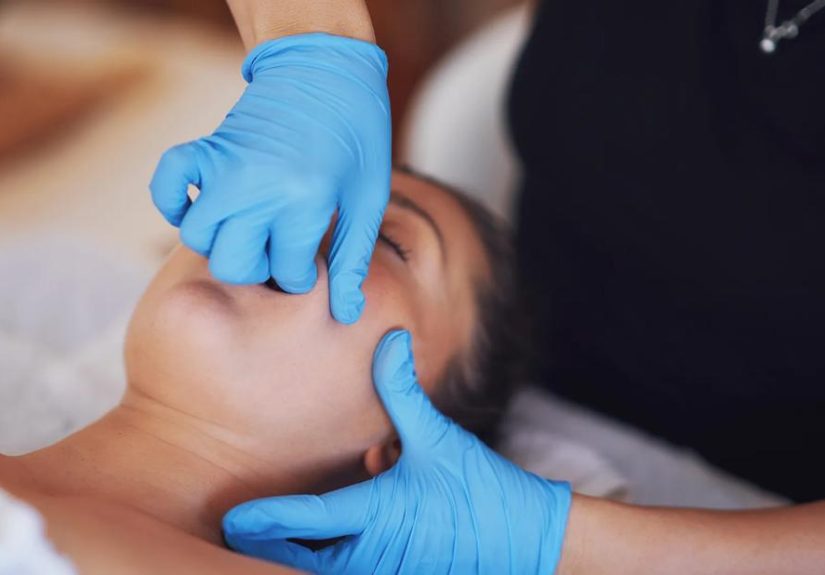
1) Masseter Muscle Massage (Cheek-to-Jawline “Knead”)
Where it is: On the side of your face, roughly halfway between your mouth and ear. It runs from the cheekbone area down to the angle of your jaw.
How to do it:
- Use 2–3 fingertips on the fleshy cheek area (not directly on the jaw joint).
- Circle slowly, then “scan” up and down the muscle.
- If you find a tender spot, hold gentle pressure for 10–20 seconds while breathing slowly.
- Keep teeth apart; if you catch yourself clenching, pause and reset.
Quick example: If your jaw aches most after meetings (aka talking for hours), you’ll often find tenderness higher on the masseter near the cheekbone. If your jaw aches after chewing, tenderness may live lower toward the jaw angle.
2) Temporalis Massage (Temple “Headache Helper”)
Where it is: Your temples, extending upward and backward into the hairline.
- Use flat fingertips and slow circles.
- Try 3 small zones: front temple, mid-temple, and back toward the ear.
- Use light pressurethis area can get irritated if you go too hard.
3) TMJ Area Soothing (Gentle, Not Aggressive)
The joint sits just in front of your ear. It’s tempting to dig in there like you’re searching for a hidden “off” switch. Don’t. The joint area can be sensitive and easily aggravated.
- Use light pressure with one fingertip in front of the ear.
- Do tiny circles for 15–30 seconds, then move back to the muscles (masseter/temporalis).
- If clicking is present, stay gentle and prioritize muscle work.
4) “Pterygoid-Friendly” Release (No Mouth Gymnastics Required)
The medial and lateral pterygoids are deep muscles that help guide jaw movement, and they can contribute to the sensation of “tightness inside the jaw.” True pterygoid release is often done by trained clinicians (sometimes intraorally). But you can still help the area indirectly.
- Place fingertips along the inside edge of your jawline (still on the outside of your face), near the back molar area, and apply gentle pressure upward and inward.
- Hold 10–20 seconds, then release. Repeat 2–3 times.
- Pair it with slow breathing and relaxed jaw position.
5) Neck Muscle Release (Because Your Jaw Doesn’t Live Alone)
Jaw tension often travels with neck and shoulder tension. If you’re forward-head-posture’d over a laptop all day, your jaw muscles may be compensating like overworked interns.
Try this:
- Gently massage the sternocleidomastoid (SCM): the ropey muscle that runs from behind the ear down toward the collarbone. Use light pinch-and-roll pressure, not deep digging.
- Massage upper trapezius (top of shoulder) with slow squeezing.
- Finish with 2–3 chin tucks to reinforce better head position.
6) Suboccipital Hold (Tiny Muscles, Big Payoff)
Those small muscles at the base of your skull can be involved in headache patterns and global “tension mode.”
- Lie down, place two tennis balls in a sock under the base of your skull (not your neck).
- Rest there 30–60 seconds, breathe slowly, then remove.
- If it increases symptoms, skip it and focus on jaw/temple massage.
Optional (Advanced): Intraoral MassageOnly With Great Hygiene and Guidance
Some clinicians use intraoral techniques to address deep chewing muscles. If you’ve never been shown how, don’t freestyle it. If you have been instructed by a professional and want a cautious refresher:
- Wash hands thoroughly; consider a clean glove or finger cot.
- Use very light pressure inside the cheek (not the throat), near the back molars.
- Hold tender points gently (10–15 seconds), then stop.
- Never force your jaw open, and stop if you feel sharp pain or gagging.
If that section made you nervous: good. Respect is appropriate. You can get excellent relief with external massage plus jaw relaxation and posture work.
Make Massage Work Better: Add These “High-Impact” Habits
Use the resting jaw position (all day, whenever you remember)
Think: lips together, teeth apart, tongue relaxed on the palate. Teeth only touch during chewing and swallowing. This simple posture can reduce clenching and keep muscles from re-tightening five minutes after you massage them.
Soft diet during flare-ups
If you’re flaring, give the jaw a break: softer foods, smaller bites, and less extreme opening. Avoid “jaw endurance sports” like bagels, jerky, gummy candy, or giant sandwiches that require unhinging your skull like a python.
Stop the “parafunction party”
Gum chewing, nail biting, pen chewing, and “resting your chin in your hand” keep jaw muscles active when they should be off-duty. If you do one thing besides massage, do this: catch and reduce those habits.
Stress downshift (because clenching is often emotional weightlifting)
Stress is a common amplifier. Short breathing drills (exhale longer than inhale), brief walks, and unclenching reminders can matter as much as the massage itself. If you grind at night, it’s worth discussing a night guard with a dentist.
Common Mistakes That Make TMJ Massage Backfire
- Going too deep, too fast. More pressure isn’t more effective; it can inflame tissue.
- Massaging the joint like it’s a knot. Prioritize muscles over the joint line.
- Holding your breath. Breath-holding keeps your nervous system in “guard” mode.
- Overdoing it. If you feel bruised the next day, scale back time and pressure.
- Ignoring posture and habits. Massage + nonstop clenching = treadmill progress.
When Quick Relief Isn’t Enough (and What Pros Usually Do First)
If symptoms keep returning, the best next step is getting a clear diagnosis: muscle-driven pain, joint disc issues, arthritis, bruxism, or a combination. Many treatment plans start conservativelyself-care, habit changes, heat/ice, targeted exercises, and sometimes oral appliancesbefore considering more invasive options.
A clinician may recommend physical therapy (jaw + neck), stress management strategies, short-term medication options, or a custom-fitted night guard if grinding is a major factor. If your jaw is locking frequently or pain is escalating, don’t white-knuckle itget evaluated.
Experiences From the Real World: What People Commonly Notice (500+ Words)
Let’s talk about what “quick relief” tends to look like in actual daily lifebecause it’s rarely a movie montage where you massage once and your jaw immediately starts singing Broadway tunes.
Experience #1: The “Whoa, that was tender… and then oddly soothing” moment. Many people’s first try is surprising: the masseter is way more sensitive than expected. They find one spot that feels like a bruised pea under the skin, hold it gently, breathe, and notice the ache soften within 30–90 seconds. The most common feedback is not “pain vanished,” but “it dialed down enough that I can think again.” That’s a win.
Experience #2: Relief lasts longer when they stop clenching between massages. A lot of people report that massage worksbut it “doesn’t stick” until they add one habit: resting jaw position. The minute they start catching daytime clenching (especially while driving, scrolling, or answering stressful messages), the massage benefits last longer. It’s like mopping a floor while the faucet is still running: you can do it, but you’ll be annoyed.
Experience #3: The neck connection is real (and mildly unfair). Desk workers often describe a pattern: jaw tightness ramps up late afternoon, along with tight shoulders and a forward head posture. When they add 30 seconds of chin tucks and a quick upper-trap squeeze after masseter massage, the jaw feels lighter. The surprise is that they didn’t “feel neck pain,” but the neck still fed the jaw tension loop.
Experience #4: The “I’m sore tomorrow” misunderstanding. Some people go too hard on day one (because they want results and also because humans are like that). The next day they feel bruised and assume massage “doesn’t work.” In reality, they likely over-pressured irritated tissue. When they cut the pressure in half and shorten sessions to 2–4 minutes, they usually do better: less soreness, steadier relief.
Experience #5: Clicking without pain often stays… and that’s not automatically a crisis. People sometimes expect massage to erase jaw sounds. But clicking can have different causes, and it may persist even when pain improves. Many folks notice: chewing becomes easier, headaches reduce, and morning jaw stiffness fades, while the click remains quieter or less frequent. The practical takeaway is to track function and painnot just sound effects.
Experience #6: Night grinding is the “plot twist.” Someone can do everything right during the day, but wake up with a jaw that feels like it worked a night shift. When this happens, people often benefit from discussing bruxism management with a dentistsometimes a custom night guard, sometimes stress reduction and sleep hygiene, sometimes both. Massage becomes a supportive tool, not the only tool.
Experience #7: The best results come from consistency, not intensity. Over and over, the pattern that shows up is: short sessions done regularly beat long sessions done rarely. People who do a 5-minute routine once or twice daily (plus tiny unclench resets) often report fewer flare-ups over a few weeks. Their jaw feels less “on edge,” and the tender trigger points become harder to findwhich is a very good problem to have.
Wrap-Up: Your Jaw Wants Calm, Not Combat
TMJ massage can be a fast, practical way to reduce jaw painespecially when muscle tension is the main driver. Keep it gentle, focus on the masseter and temporalis, add a jaw relaxation reset, and support it with posture and habit changes. If symptoms persist, worsen, or include red flags (locking, major bite changes, swelling, fever, or neurologic symptoms), get evaluated so you’re treating the right problem.