Table of Contents >> Show >> Hide
- How London 2012 Became a Legendary Olympics
- Top 10 Athletes of the London Olympic Games
- 1. Michael Phelps – The Medal Machine Makes History
- 2. Usain Bolt – The Fastest Man Alive, Confirmed
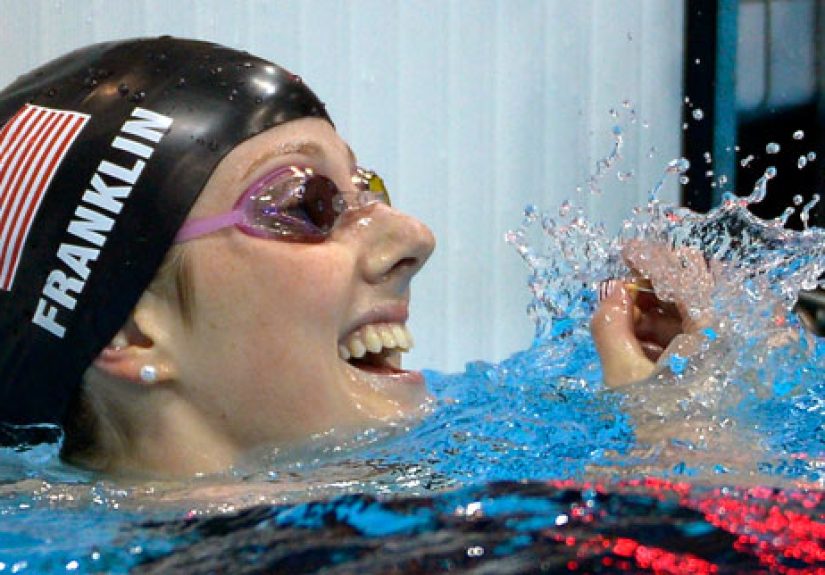
- 3. Missy Franklin – The Teenage Queen of the Pool
- 4. Mo Farah – The Long-Distance Hero of “Super Saturday”
- 5. Allyson Felix – Triple Gold and a World-Record Relay
- 6. David Rudisha – The Greatest 800 Meters Ever Run
- 7. Gabby Douglas – A New Face of Gymnastics
- 8. Serena Williams – Golden Slam on Sacred Grass
- 9. Jessica Ennis-Hill – The Face of the Home Games
- 10. Katie Ledecky – The 15-Year-Old Distance Disruptor
- Honorable Mentions
- What Made These London 2012 Athletes Different?
- Fan Experiences and Lasting Lessons from London 2012
- Conclusion: London 2012’s Hall of Legends
London 2012 felt less like a normal Olympics and more like a blockbuster crossover movie:
the greatest swimmer ever, the fastest man alive, teenage prodigies, hometown heroes, and
a tennis superstar steamrolling her way to history on Wimbledon’s grass. If you were
glued to the screen back then, you probably still remember where you were when certain
races, routines, and matches happened.
More than 10,000 athletes competed at the London Olympic Games, but a handful turned
those two weeks into pure legend. They didn’t just win medals; they rewrote record books,
shifted cultural conversations, and gave us highlight reels that still show up in
motivational videos a decade later.
Below is a curated, opinionated, and slightly star-struck look at the top 10 athletes of
the London Olympic Games. Think of it as a Listverse-style countdown: big names,
big moments, and just enough commentary to relive the drama without needing a time machine.
How London 2012 Became a Legendary Olympics
Before we get into the rankings, a quick refresher: London 2012 was statistically and
emotionally huge. The United States topped the medal table, Great Britain delivered
its best home performance in more than a century, and the games produced world records
across track, pool, and velodrome. Some nations won their first Olympic medals; others
cemented dynasties.
Most importantly, London 2012 showcased athletes who felt larger than life yet oddly
relatable. They cried, laughed, danced, prayed, and occasionally did lightning-bolt
poses or “Mobots” for the cameras. These weren’t just competitors; they were characters
in a story we’re still talking about.
Top 10 Athletes of the London Olympic Games
1. Michael Phelps – The Medal Machine Makes History
By the time Michael Phelps walked into London’s Aquatics Centre, he was already a
swimming myth. Then he casually added four gold medals and two silvers to his résumé,
finishing the Games with a total of 22 Olympic medals and becoming the most decorated
Olympian in history.
In London, Phelps won gold in the 100-meter butterfly, 200-meter individual medley,
4×200-meter freestyle relay, and 4×100-meter medley relay, plus silvers in the
200-meter butterfly and 4×100-meter freestyle relay. That’s a decent career for most
swimmers; for Phelps, it was just one more chapter.
What made his London run special wasn’t only the medal count. It was the sense that we
were watching an era wrap up in real time. His last relay swim felt like a curtain call,
an emotional goodbye from a swimmer who had dominated four straight Olympics. Even if
you weren’t a swimming fan, you understood: this was history happening in water.
2. Usain Bolt – The Fastest Man Alive, Confirmed
Usain Bolt arrived in London with critics whispering that he might be beaten. He left
with them very, very quiet.
Bolt defended his Olympic titles in both the 100 and 200 meters, winning the 100 in
an Olympic record 9.63 seconds and taking the 200 in 19.32. Then he anchored Jamaica’s
4×100-meter relay to a world record 36.84 seconds. Three events, three golds, and
a stadium full of people trying to process what “normal human speed” even means anymore.
Beyond the times, Bolt’s charisma made London unforgettable: the pre-race smiles,
the little jokes with the camera, the casual way he turned pressure into performance.
When he said, “I am a legend,” London 2012 more or less nodded and said, “Yeah, fair.”
3. Missy Franklin – The Teenage Queen of the Pool
At 17, Missy Franklin walked into her first Olympics and swam like she’d been doing
this for a decade. She left London with four gold medals and one bronze, making her
one of the most decorated athletes of the Games.
Franklin won gold in the 100-meter backstroke, 200-meter backstroke, 4×200-meter
freestyle relay, and 4×100-meter medley relay, and took bronze in the 4×100-meter
freestyle relay. Her world-record swim in the 200-meter backstroke was a showstopper:
long, smooth strokes, zero panic, and the kind of finish that makes an entire country
scream at their TV.
Her easygoing personalitychatting with reporters, talking about high school and
friendsmade her feel like the most relatable superstar in the pool. She wasn’t just
winning; she was enjoying every second. And London loved her for it.
4. Mo Farah – The Long-Distance Hero of “Super Saturday”
If you were anywhere near a TV in the UK on “Super Saturday,” you remember the roar
when Mo Farah kicked down the final stretch. Running under the Union Jack, Farah
delivered double gold in the 10,000 and 5,000 meters, becoming a national icon in
a matter of minutes.
Farah’s 10,000-meter win was Great Britain’s first Olympic gold at that distance.
A week later, he repeated the magic in the 5,000 meters, closing with a furious sprint
that made the stadium shake. His signature “Mobot” celebration became a symbol of
joy and disbelieflike even he couldn’t quite believe he’d just pulled off the long-distance double at a home Olympics.
Farah’s storySomali-born, raised in Britain, training in the U.S., and winning
for the home crowdperfectly captured London 2012’s global-meets-local energy.
5. Allyson Felix – Triple Gold and a World-Record Relay
For years Allyson Felix had been collecting silver medals in the 200 meters. In
London, she finally flipped the scriptand then some.
Felix won gold in the 200 meters, then added two more golds in the 4×100-meter
and 4×400-meter relays, giving her a clean Olympic treble. The women’s 4×100 relay
was particularly insane: the U.S. team shattered a 27-year-old world record, stopping
the clock at 40.82 seconds.
Felix’s running style is all grace and efficiency, but London showed just how ruthless
that smoothness could be. Watching her accelerate on the curve in the 200 felt like
watching physics give up and just let her do whatever she wanted.
6. David Rudisha – The Greatest 800 Meters Ever Run
Most world records are the result of careful pacing, drafting, and tactical chaos.
David Rudisha took one look at that approach and said, “No thanks.”
In the 800-meter final, Rudisha went straight to the front and never looked back. He
led from gun to tape, winning gold in 1:40.91 and breaking his own world record.
It was the firstand still the onlytime anyone has run under 1:41 for the distance.
Even more ridiculous: everyone else behind him also ran unbelievably fast times.
The race has been called the greatest 800 meters in history, and it’s hard to argue.
London didn’t just get a champion; it got a masterpiece of middle-distance running.
7. Gabby Douglas – A New Face of Gymnastics
At 16, Gabby Douglas stepped onto the Olympic stage with a smile that said, “I’ve
got this,” and routines that proved she absolutely did.
In London, Douglas became the first Black woman to win the Olympic all-around
gymnastics title. She also helped lead the U.S. women’s teamnicknamed the “Fierce Five”
to a dominant team gold. Her all-around score topped a field stacked with world champions and veterans.
Douglas’s impact went far beyond the medal podium. She became a symbol of possibility
for a new generation of gymnasts, especially young girls of color who suddenly saw
someone who looked like them standing at the very top of the Olympic world.
8. Serena Williams – Golden Slam on Sacred Grass
Technically, Wimbledon was hosting Olympic tennis. Emotionally, it felt like Serena
Williams was hosting everyone else.
In London, Serena crushed the women’s singles field, including a 6–0, 6–1 demolition
of Maria Sharapova in the final to win singles gold. She then teamed up with her sister
Venus to win doubles gold as well, defending their title and adding to an already
absurd Olympic résumé.
That singles gold completed Serena’s career Golden Slamwinning all four majors plus
Olympic singles gold over the course of her career. Doing it on the same grass where
she’d already won multiple Wimbledon titles felt like the universe tying a very fancy bow
on her legacy.
9. Jessica Ennis-Hill – The Face of the Home Games
Every host nation has a poster athlete. For Great Britain in 2012, that was
Jessica Ennis-Hill.
Ennis-Hill won the heptathlon with a British and Commonwealth record score of
6,955 points, dominating across two days of hurdles, high jump, shot put, 200 meters,
long jump, javelin, and 800 meters. Her final eventthe 800turned into a roar-filled
victory lap in spikes as she sprinted home in front of a stadium that had practically
adopted her as family.
The pressure on her shoulders leading into London was enormous, and the way she handled
it set the tone for the rest of Team GB’s track & field success. She wasn’t just
winning; she was anchoring the emotional heart of the home Olympics.
10. Katie Ledecky – The 15-Year-Old Distance Disruptor
In a Games packed with superstars, Katie Ledecky arrived as a relatively unknown
15-year-old and left as the future of distance swimming.
Ledecky stunned the world by winning gold in the 800-meter freestyle, swimming
one of the fastest times in history and pulling away from established champions
like it was a local age-group meet. It wasn’t just that she wonit was the
way she raced: fearless early pace, relentless middle, and a finishing push
that signaled she was nowhere near her ceiling.
Looking back now, London 2012 was just the prologue. But in that moment, it was
clear that a new era of women’s distance swimming had just kicked off, and her name
was Katie Ledecky.
Honorable Mentions
Narrowing London 2012 down to ten athletes is basically an invitation to arguments,
so let’s at least acknowledge a few more stars who could easily headline their own lists:
- Sir Chris Hoy – Dominated on the track in the velodrome for Team GB cycling.
- Team USA Women’s 4×100 Relay – World record, redemption, and relay perfection.
- Routinized greatness in men’s basketball and women’s soccer – Team USA defending their Olympic titles.
- Multiple British champions across rowing, cycling, and boxing who turned London into a home-medal festival.
What Made These London 2012 Athletes Different?
So what separated these athletes from the thousands of others in London?
Medals matteredbut they weren’t the whole story.
-
They defined the narrative of the Games. Phelps and Bolt didn’t just
participate; the schedule felt built around them. When they competed, the world stopped. -
They combined dominance with personality. Serena’s celebration dance,
Bolt’s poses, Franklin’s bubbly interviews, Farah’s “Mobot”they made greatness feel human. -
They broke barriers. Gabby Douglas winning all-around gold and
inspiring a new generation; Ennis-Hill carrying the hopes of a host nation; Rudisha
redefining what’s possible in the 800. -
They set records or started dynasties. World records in track and pool,
historic medal milestones, and careers that continued to shape sports long after the
flame went out in London.
In short, they didn’t just win. They left London with the feeling that the sport had
changed a little because they were there.
Fan Experiences and Lasting Lessons from London 2012
Ask people what they remember about London 2012, and they rarely start with numbers.
They start with moments. The sound of the crowd. The way an athlete looked in the
final seconds of a race. The weird feeling of cheering so hard at 3 a.m. that your
neighbors probably questioned your life choices.
For many fans, London 2012 was the first Olympics where social media, streaming,
and traditional TV all collided. You could watch a final live on your laptop, scroll
through reactions on your phone, and then catch slow-mo replays on cable an hour later.
That meant you didn’t just see the big momentsyou shared them in real time.
Think about what it felt like to see Michael Phelps touch the wall for another relay
gold, knowing you were witnessing the close of an era. There was a bittersweet edge to
the celebration: joy for what he’d done, and a little sadness that we might never see
that level of dominance again.
Or maybe your favorite memory belongs to Usain Bolt’s 100-meter final. Eight of the
fastest men in the world line up, the stadium goes quiet, a beer bottle gets thrown
onto the track (which Bolt ignores like a pro), and then less than ten seconds later
it’s overand you’re trying to wrap your head around 9.63 seconds of perfection.
For younger fans, Missy Franklin and Katie Ledecky were proof that teenagers could be
more than “up-and-coming.” They were already world-class. Parents watching at home saw
their own kids doing swim practice or track workouts and thought, “Dream bigbut also,
wow, that’s a lot of laps.”
Gabby Douglas’s all-around win hit differently. It wasn’t just a great performance; it
was a shift in who we imagine standing on that podium. For countless young gymnasts,
her gold medal wasn’t an abstract symbolit was a direct message: “You belong here too.”
And if you were in the UK, the emotional center of the Games was probably “Super Saturday.”
Jessica Ennis-Hill in the heptathlon, Mo Farah in the 10,000 meters, and other British
champions turned one evening into a national memory. People remember where they watched
itthe pub, the living room, the big outdoor screenbecause it felt less like sports
and more like a shared national story.
Even now, the London 2012 highlight reels still teach us a few things:
-
Greatness can look effortless, but it never is. Bolt’s relaxed smile,
Phelps’s smooth stroke, Felix’s clean stridethey all hide years of grinding work. -
Moments matter more than medals. Records can be broken; memories of
where you were and how you felt stick around longer. -
Representation changes lives. Athletes like Gabby Douglas and Mo Farah
didn’t just win; they expanded the picture of who belongs on the world’s biggest stage. -
Every era has its “you had to be there” Games. For many people,
London 2012 is that Olympicsthe one they’ll still be talking about when future
generations are arguing about athletes in sports we haven’t even invented yet.
Whether you watched from your couch, on a laptop in a cramped apartment, or live in the
stands, the top athletes of the London Olympic Games gave you something rare: a feeling
that for a brief stretch of time, the world agreed to hit pause, come together, and watch
human beings do incredible things.
Conclusion: London 2012’s Hall of Legends
The Olympic flame in London went out years ago, but the athletes who owned those Games
are still shaping how we think about greatness. Michael Phelps’s medal total is still
the gold standard. Usain Bolt’s records and personality still define sprinting. Serena
Williams’s Golden Slam still anchors the debate about the greatest tennis player ever.
Mo Farah, Allyson Felix, Missy Franklin, Katie Ledecky, David Rudisha, Gabby Douglas,
and Jessica Ennis-Hill still live rent-free in highlight packages and sports documentaries.
You could argue for different rankings or swap in other stars, and you wouldn’t be wrong.
That’s part of the fun. But however you shuffle the list, one thing is undeniable:
London 2012 delivered one of the strongest casts of Olympic athletes we’ve ever seen.
And if you ever need inspiration, motivation, or just an excuse to procrastinate for an
hour, those races, matches, and routines are always worth another watch.