Table of Contents >> Show >> Hide
- 1) The Great Disappointment of 1844
- 2) Halley’s Comet Panic of 1910
- 3) “The Jupiter Effect,” March 10, 1982
- 4) Y2K (1999–2000)
- 5) Heaven’s Gate & Hale-Bopp, 1997
- 6) Harold Camping’s Rapture Dates (2011)
- 7) The 2012 Mayan Calendar “End of the World”
- 8) Nibiru/Planet X Collisions (2003, 2012, 2017pick a year)
- 9) Large Hadron Collider Black Holes (2008)
- 10) The Blood Moon Tetrad (2014–2015)
- Patterns Behind Failed Doomsdays
- How to Spot the Next “End of the World” (and Keep Your Cool)
- Conclusion
- SEO Wrap-Up
- 500-Word Experience & Lessons: Living Through “The End” (Again and Again)
Short version: humanity has a perfect record of surviving the end of the world. From rogue planets that never RSVP’d to raptures that arrived “spiritually” (read: not at all), doomsday has been postponed more times than a group chat dinner. Below, we tour ten famous end-times forecasts that fizzled, and what each miss teaches us about hype, fear, and the very human urge to put a date on destiny.
1) The Great Disappointment of 1844
The prediction
In the early 1840s, American preacher William Miller calculatedvia timelines in the Book of Danielthat Christ would return “about 1843.” A refined timetable moved the focus to March 1844 and then to October 22, 1844. Tens of thousands prepared for the skies to part.
What actually happened
October 23 dawned like any other Wednesday. Believers woke up to the same chores, the same weather, and a painful new vocabulary term: The Great Disappointment.
Why it failed
Textual math is brittlechange a start point or a symbolic assumption and your calendar crumbles. The movement splintered, and some adherents reframed the event as a heavenly milestone rather than a visible apocalypse. The big takeaway: when interpretations require heavy spreadsheeting, the universe rarely cooperates.
2) Halley’s Comet Panic of 1910
The prediction
Spectroscopy revealed traces of cyanogen in the comet’s tail. Misquotes and sensational headlines suggested Earth’s brief pass through the tail could “snuff out” all life. Enter panic buyinggas masks, “anti-comet pills,” even special umbrellasbecause of course.
What actually happened
People watched a gorgeous sky show and lived to tell their grandkids. No toxic cloud, no planetary wipeoutjust a spectacular celestial visitor and a cautionary tale about science-by-headline.
Why it failed
Concentration matters. A molecule detected in a massive, diffuse tail ≠ a lethal dose at sea level. Media hype met early science comms, and fear sold faster than facts.
3) “The Jupiter Effect,” March 10, 1982
The prediction
A best-selling book warned that a rare planetary alignment would unleash mega-earthquakes, especially along the San Andreas Fault.
What actually happened
Planets aligned. Coffee brewed. California continued being California. Seismic chaos did not RSVP.
Why it failed
Planetary gravity at Earth’s distance is minuscule compared to the Moon’s daily tidal tug. The math never supported the melodrama; the marketing did.
4) Y2K (1999–2000)
The prediction
As the calendar rolled to 2000, two-digit year fields might reset to 1900, potentially wrecking finance, power, aviationbasically civilization. Some forecasted societal collapse.
What actually happened
Midnight came and went. A handful of minor glitches surfaced, most fixed quickly. No planes fell, no grids failed nationally, and the biggest meltdown was in late-night monologues.
Why it failed
Because people did the work. Governments and companies spent years auditing, patching, and rehearsing contingencies. The lesson is subtle: preparation made it boring, which lookedironicallylike overreaction. Boring is beautiful when the alternative is chaos.
5) Heaven’s Gate & Hale-Bopp, 1997
The prediction
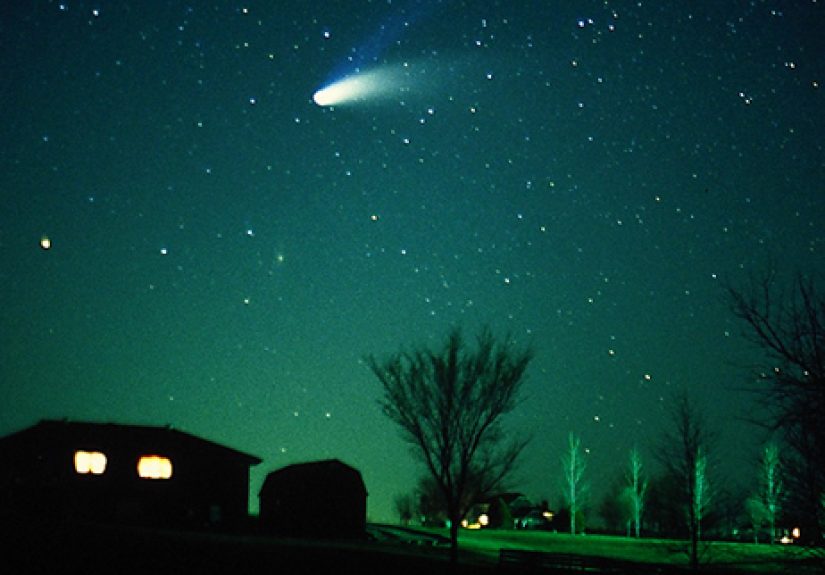
A fringe group believed a spacecraft trailing Hale-Bopp comet would ferry them to salvation as Earth faced imminent transformation.
What actually happened
There was no hidden shiponly a tragic mass suicide. The comet was real; the spaceship and the cosmic “handoff” were not.
Why it failed
A potent mix of confirmation bias, rumor amplification, and charismatic authority. When belief walls off falsificationreturning a telescope because it won’t show the ship you “know” is thereevidence can’t help.
6) Harold Camping’s Rapture Dates (2011)
The prediction
Radio evangelist Harold Camping announced the Rapture for May 21, 2011, with worldwide judgment rolling across time zones at 6 p.m. Then October 21, 2011, for the end of the world. Billboards, broadcasts, and bus wraps spread the countdown.
What actually happened
May 22 arrived. So did October 22. Camping later rebranded the event as “spiritual,” not physical. The world continued, awkward billboards and all.
Why it failed
Specific-date eschatology bumps into a hard-coded problem: reality keeps score. When the sun rises, reinterpretation follows. Rinse, revise, repeat.
7) The 2012 Mayan Calendar “End of the World”
The prediction
December 21, 2012, marked the close of a 5,126-year Long Count cycle. Pop culture and internet folklore upgraded that calendrical milestone into a global cataclysm involving pole flips, solar flares, or cosmic alignments.
What actually happened
Tourists partied at ancient sites. The next bʼakʼtun began. The world acted delightfully mundane.
Why it failed
Scholars noted the Maya did not predict doomsday; NASA methodically addressed every viral fear (rogue planets, gamma bursts, magnetic mayhem). Calendars cycle. That’s their thing.
8) Nibiru/Planet X Collisions (2003, 2012, 2017pick a year)
The prediction
A hidden worldsometimes a brown dwarf, sometimes a planetwould emerge from the solar shadows to smash Earth. Various dates came and went, most recently a 2017 reboot that leaned on numerology and a misread constellation diagram.
What actually happened
Astronomy kept astronoming. Telescopes found exoplanets by the thousandsbut not a stealth Earth-killer careening through the inner system.
Why it failed
Rogue planets don’t do subtle. If a massive object were inbound, it would warp the orbits of known planets and be visible long before arrival. “Secret planet” is not how celestial mechanics works.
9) Large Hadron Collider Black Holes (2008)
The prediction
Turning on the LHC would create a black hole that eats Earth, or strangelets that convert us into exotic soup. Fun headline; terrifying if true.
What actually happened
The LHC discovered the Higgs boson and a zoo of particles. The Alps remained delightfully non-devoured.
Why it failed
Nature already slams particles together at far higher energies via cosmic rays. If microscopic black holes could doom planets, we and many older worlds would be gone. Safety reviews agreed: collider physics is safe; fear was a mismatch between sci-fi and statistics.
10) The Blood Moon Tetrad (2014–2015)
The prediction
Four total lunar eclipses in close succession“blood moons”were framed by some as prophetic omens of geopolitical calamity and the end of days.
What actually happened
Stunning eclipses. Lots of social-media selfies. Zero apocalypses.
Why it failed
Celestial events follow orbital mechanics, not press tours. Eclipses are predictable, common, and gorgeousportents only if you insist.
Patterns Behind Failed Doomsdays
- Date addiction: attaching a calendar day creates urgencyand an easy audit. The sun rising is undefeated.
- Math without margins: from biblical numerology to planetary alignment gravity, tiny assumption errors become huge narrative mistakes.
- Media megaphones: sensational claims outrun sober caveats. Fear headlines better than footnotes.
- Reinterpretation reflex: when predictions fail, some shift the goalposts (“it happened invisibly!”). That’s theology or spin, not science.
- Preparation paradox: Y2K looked like “nothing happened” precisely because people did the work beforehand.
How to Spot the Next “End of the World” (and Keep Your Cool)
Run through a simple checklist:
- Source quality: Is this coming from peer-reviewed science, major observatories, or a monetized YouTube channel with a countdown clock?
- Mechanism: Can the claimant explain, in plain language, how the doom works and why we’d notice it now?
- Falsifiability: Is there any evidence that could prove it wrong? If not, it’s belief, not a forecast.
- Consensus: Do independent experts agree? Science is a team sport.
- Behavioral test: Are the people warning you acting like they believe it (selling everything, moving, changing plans), or mostly selling books and tickets?
Conclusion
The apocalypse makes for fantastic storytelling. But history says we’re more likely to be undone by mundane risks we ignore than by cinematic threats we obsess over. Pay attention to credible risk assessments. Celebrate eclipses without expecting omens. And remember: if someone gives you an exact date for the end, put it in your calendarthen book brunch for the morning after.
SEO Wrap-Up
500-Word Experience & Lessons: Living Through “The End” (Again and Again)
If you were online in 2012, you remember the countdown widgets. Friends joked about maxing out credit cards; others quietly googled “is the world actually ending.” I spent that December reading Q&A posts from exasperated astronomers who patiently answered the same questionsWhat about planet Nibiru? What about the pole flip? What about the solar flare?with the kind of calm only people who measure certainty for a living can muster. When dawn broke on December 22, it felt like a snow day with no snow: an anticlimax that taught a useful habit. Whenever a claim terrifies you, ask for the mechanism. If it can’t be explained simply, it probably can’t topple a planet.
Y2K taught a different lesson: “boring” is often what success looks like. In late 1999, IT teams pulled all-nighters, swapped firmware, printed contingency binders thick enough to stop a door. The public narrative painted them as alarmists; the truth is they were firefighters who prevented the blaze. Since then, whenever a forecast sounds diregrids, banking, logisticsI look for the unglamorous labor behind the scenes. If competent people are on it early, outcomes improve, and the headlines feel overblown. That’s not denial; that’s respect for professionals doing their jobs.
Heaven’s Gate is the case that tempers any impulse to snark. The story is tragic: belief unmoored from evidence can be deadly. It also shows how rumors metastasize. A whisper about a “companion object” near a comet ricocheted through talk radio and early message boards until it felt real to people primed to believe it. Today, the channels are faster and louder. So the personal practice is simple: if a claim makes you feel special for knowing it, or urgent to share it now, hit pause. Real science rarely demands a share button; it asks for replication.
Harold Camping’s billboards were everywhere in 2011, and the energy was strangely cheerfullike a stadium tailgate, but for the apocalypse. When nothing happened, many followers felt duped, but some reinterpreted the date as “spiritual.” That’s a human reflex: we hate sunk costs. Online, you’ll see softer versions of the same movepredictions revised, timelines extended, meanings spiritualized. The skill is recognizing when a hypothesis stops risking disproof. Once it does, it’s not a forecast; it’s a framework of faith.
So here’s a compact, lived checklist for the next scare. First, find the adults: see what national agencies, major universities, and professional societies say. Second, follow the incentives: if the loudest voice is selling coins, supplements, or VIP seminars, adjust your confidence downward. Third, ask how we’d already know: anything planet-killing would leave unmistakable fingerprints long before arrival. And fourth, hold two thoughts at once: real risks deserve attention (pandemics, climate, cybersecurity), while imaginary ones deserve a deep breath and a skyward look. Most of the time, the stars are just doing what stars do.