Table of Contents >> Show >> Hide
- From Pedal Bin to Place Setting
- Why the Table Was a Natural Next Step
- Chairs, Seating, and the Full Dining Scene
- The Kitchen as Dining Infrastructure
- When Vipp Stops Selling Products and Starts Selling Atmosphere
- What Vipp Gets Right
- The Experience: What It Feels Like When Vipp Really Comes to the Table
- Conclusion
Some brands dip a toe into dining. Vipp, true to form, showed up in steel-toe boots and somehow still managed to look elegant. For decades, the Danish company was best known for a pedal bin so beloved it escaped the utility closet and landed in the Museum of Modern Art. Not bad for a trash can. But design history has a funny way of rewarding obsession, and Vipp’s obsession has always been the same: make everyday tools so durable, so functional, and so visually disciplined that they become part of how people live, not just what they buy.
That is exactly why the idea of Vipp “coming to the table” makes sense. It was never just about launching cups, bowls, or a dining table with great posture. It was about extending a design philosophy from the overlooked corners of the home into one of its most emotional spaces. The table is where the practical meets the ceremonial, where coffee becomes a routine, dinner becomes a ritual, and a well-made object suddenly matters more than its price tag would like to admit.
Vipp’s move into dining has unfolded in layers: first tabletop ceramics, then tables, then seating, then kitchens, and finally fully immersive spaces where guests can eat, sit, cook, and linger inside an entire Vipp world. This is not a company chasing trends with a quick side plate and a hashtag. It is a brand building a complete domestic atmosphere, one carefully engineered object at a time.
From Pedal Bin to Place Setting
To understand Vipp at the table, you have to start far from the dining room. The company’s story begins in 1939, when metalworker Holger Nielsen made a pedal bin for his wife Marie’s hair salon. That original object set the tone for everything that followed: honest materials, mechanical precision, and a refusal to treat utility as visually dull. Over time, the bin became an icon, then a business, then the seed of a broader design universe.
The important thing is that Vipp did not abandon its roots when it expanded. It translated them. When the company moved into kitchens, furniture, and tableware, it carried over the same logic that made the bin famous: thoughtful ergonomics, industrial-grade materials, spare silhouettes, and an almost stubborn belief that products should last for years instead of one trend cycle and a regrettable mood board.
That philosophy gave Vipp an unusual advantage. Most brands come to the table from fashion, decor, or luxury lifestyle marketing. Vipp came from hardware. It understands hinges, finishes, weight, tactility, and how a product performs under repeated use. That may sound unromantic, but in the kitchen and dining room, performance is romance. A bowl that stacks well, a grinder that turns smoothly, a table that can survive heat and chaos without a nervous breakdown, these are the little love stories of everyday life.
The First Course: Tableware
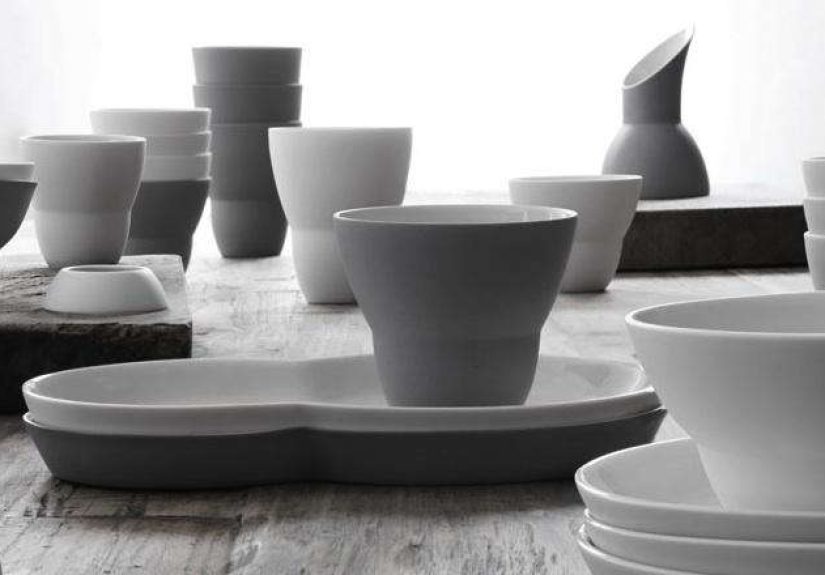
When Vipp first stepped into tabletop design, the move felt both surprising and inevitable. Early coverage of the collection highlighted espresso cups, coffee cups, a milk jug, a brunch set, plates, and bowls. Later coverage around the opening of the brand’s first U.S. showroom in Tribeca described ceramics with matte exteriors and glossy interiors in gray and white, plus coordinating mouth-blown glasses. In other words, Vipp did not arrive at the table with floral china and a dramatic flourish. It arrived with restraint, texture, and the confidence to let a coffee cup whisper instead of shout.
That restraint is part of the appeal. Vipp’s tabletop language is unmistakably Scandinavian but avoids the usual clichés. It is not trying to sell hygge by the yard. Instead, it leans into contrast: matte against gloss, soft curves against crisp lines, quiet colors against strong form. The result is tableware that feels composed but not precious. You can imagine it at breakfast with sourdough and jam, or at a dinner where the host says “casual” and then serves something that took two days to braise.
There is also a subtle intelligence in how the pieces photograph and live. They are neutral enough to work in many interiors, but not so anonymous that they disappear. They do what good supporting actors do: make the whole scene better without begging for applause. That is a lot to ask from a bowl. Vipp manages it anyway.
Why the Table Was a Natural Next Step
Once Vipp entered tabletop, furniture was not far behind. The dining table, in particular, was a natural bridge between the company’s industrial heritage and its growing architectural ambitions. An early Vipp dining table was described as a combination of untreated recycled teak planks and powder-coated aluminum, which neatly captured the brand’s balancing act: warmth on top, discipline underneath.
Later versions sharpened the formula. Current Vipp dining tables pair a steel frame with rounded corners and durable tabletops in materials like heat-pressed ceramics. Other pieces in the brand’s broader furniture line have featured powder-coated stainless steel and smoked-oak veneer tops. Across versions, the idea remains consistent: Vipp does not treat the table as a decorative slab with legs attached. It treats it as engineered architecture at domestic scale.
That approach matters because dining tables carry unusual pressure. They need to host meals, laptops, homework, flowers, awkward holiday conversations, birthday candles, and the occasional cardboard box that somehow lives there for three weeks. They are among the hardest-working pieces in the home. Vipp’s design language, rooted in utility, is especially well suited to that reality.
And then there is the aesthetic point. Vipp tables look calm. In a market full of sculptural excess, rustic cosplay, and faux-heirloom drama, calm is refreshing. The company’s tables are not trying to cosplay as farm antiques or spaceship relics. They are modern, composed, and materially honest. They know exactly what room they are in.
Chairs, Seating, and the Full Dining Scene
A table alone is not a dining experience. It is a platform waiting for a cast. Vipp understood that, which helps explain why seating became such an important chapter in its evolution. Coverage of the company’s first chair described it as a major move into furniture, prompted in part by Vipp’s architectural projects and hospitality spaces. In other words, once the company started creating environments, it needed its own seats to complete the picture.
The Vipp chair introduced softness into a brand long associated with metal, hardware, and monochrome rigor. Powder-coated aluminum frames were paired with upholstery, proving that Vipp could do comfort without losing its identity. The brand’s later sofas followed the same pattern: black metal skeletons wrapped in tactile, livable materials. This matters for dining because it reveals something broader about Vipp’s intentions. The company is not just making objects; it is choreographing how people move through a room, how they sit, how long they stay, and whether the space invites one more glass of wine or politely sends you home after dessert.
That is also why Vipp’s dining products do not feel isolated. The table relates to the chair. The chair relates to the kitchen. The kitchen relates to the room. The room relates to the experience. In strong interiors, everything is in conversation. Vipp is very good at making sure nothing interrupts that conversation with an off-brand accent piece yelling from the corner.
The Kitchen as Dining Infrastructure
If the table is the emotional center of the home, the kitchen is its backstage machinery. Vipp has been especially influential here, not because it invented modular kitchens, but because it helped make them feel architectural, elevated, and a little less like compromise. Modular kitchens are appealing because they offer rearrangeable, semi-custom components that can adapt to different spaces. Vipp’s interpretation brings the company’s industrial precision into that format, which is part of why designers and homeowners keep returning to it.
One of the smartest things about Vipp kitchens is that they often feel more like freestanding furniture than fixed millwork. That quality has been noted in real homes, where raised legs and adjustable heights make the systems look lighter and work harder. It is a deceptively big deal. A kitchen that looks furniture-like helps connect cooking and dining instead of trapping them in separate visual worlds. The room feels more open, more flexible, and more intentional.
That link between kitchen and table becomes even clearer in Vipp’s hospitality projects. In one recent guesthouse, the outdoor dining table extends directly from the kitchen counter, turning food preparation and shared eating into one continuous gesture. It is an elegant idea, and very Vipp: no unnecessary boundaries, just a clean transition from making to gathering.
When Vipp Stops Selling Products and Starts Selling Atmosphere
This may be the real story behind “Vipp Comes to the Table.” The company no longer operates only as a product brand. It increasingly operates as a curator of lived experience. Its showrooms have been styled like functioning homes rather than retail sets. Its guesthouses invite visitors to try the products in context. Its supper club experiments turn design into social ritual. The table, in that world, is not a standalone hero piece. It is the stage where Vipp’s entire philosophy becomes visible.
That strategy is unusually smart for a contemporary design company. Online shopping can tell you dimensions, finishes, and lead times, but it cannot fully communicate the feeling of sitting in a room where every surface, object, and proportion is in sync. Vipp’s answer has been to let people inhabit the brand. A showroom inside a family home. A guesthouse in a dramatic landscape. A hospitality setting with custom tables and carefully resolved material palettes. It is retail, yes, but it is also rehearsal for a different way of living.
And crucially, dining keeps showing up in these environments. A loft dining area with Vipp lighting and tables. A guesthouse with a travertine table softened by curtains and wood. A retreat where guests can test-drive the first furniture collection. A supper club that turns a showroom into a communal meal. These are not random scenes. They suggest that Vipp sees the table as the place where brand identity becomes behavior. You do not just see the design. You use it. You pass food across it. You spill something on it. You wipe it down. You return the next morning with coffee. That is when design proves itself.
What Vipp Gets Right
The strongest thing Vipp brings to the dining category is discipline. The brand rarely overdesigns. It understands proportion. It respects materials. It knows that tactile pleasure matters just as much as silhouette. And unlike plenty of luxury-adjacent design brands, it has a convincing reason for being in this space. Its products do not feel like licensing exercises. They feel like the next logical chapter in a long, coherent story.
Vipp also understands modern dining as a fluid, multitasking reality. The table is not only for formal meals. It is a morning desk, an afternoon landing pad, and an evening gathering point. The kitchen is not hidden. The dining room is rarely separate. Products need to perform across uses without looking generic, and that is exactly where Vipp is strongest.
Of course, there is a catch, and it is printed on the price tag. Vipp is not pretending to be everyday affordable. This is premium design, and often conspicuously so. But if the company’s argument is that durability, material quality, and long-term coherence are worth paying for, it at least makes that argument honestly. Vipp is not offering fast decor in minimalist clothing. It is offering fewer things, made better, with the expectation that they will stay relevant for a very long time.
The Experience: What It Feels Like When Vipp Really Comes to the Table
Here is where the Vipp story gets interesting, because the table is not just a product category. It is an experience category. Imagine entering a room where the kitchen does not scream for attention, even though it is clearly expensive and beautifully made. The table sits nearby with the kind of calm confidence that makes other furniture seem a little overdressed. The ceramics are matte on the outside, glossy where it counts, and the whole setup feels less like a “tablescape” and more like a well-rehearsed mood.
You notice the textures first. Powder-coated metal has that dry, almost architectural finish that absorbs light instead of bouncing it around like a desperate influencer ring lamp. Ceramic feels cool, dense, and ready for actual use. Wood, when it appears, is there to warm the room, not turn it into a cabin cosplay situation. Nothing is fussy. Nothing looks as if it needs to be hidden the moment a child approaches with grape juice.
Then there is the sound. It is one of the least discussed parts of good design and one of the most powerful. A grinder turns with a precise, satisfying click. A cup lands with a quiet ceramic tap. A chair moves without drama. A drawer or lid closes with mechanical grace instead of announcing itself like a cymbal crash. Vipp has always been unusually good at this kind of sensory control, maybe because the company began with products whose job depended on repeated daily motion.
What makes the experience memorable is not luxury in the glossy-magazine sense. It is luxury as composure. A Vipp dining setting does not try to dazzle you with ornament, color fireworks, or collector bait. It slows the eye down. It creates confidence through reduction. The room feels edited, but not sterile. You can actually imagine making toast there. Or pasta. Or coffee at 6:45 a.m. while still half asleep and unwilling to perform any version of your best self.
That balance is rare. Minimalism often fails at the table because eating is messy, social, repetitive, and gloriously uncurated. But Vipp’s version of modern dining leaves room for life. The best examples of the brand in homes, showrooms, and guesthouses suggest not a museum set but a highly functional stage for everyday rituals. Someone chops herbs at the counter. Someone else leans on the table with a newspaper. A friend arrives early and drops keys next to a bowl that somehow makes even loose change look intentional. Dinner runs long. Nobody rushes to clear the plates because the room feels better when it is inhabited.
That may be the biggest achievement of all. Vipp does not merely style the table. It legitimizes the ordinary acts around it. Breakfast looks sharper. Lunch feels calmer. A casual weeknight meal gets a little architectural dignity. You are still eating leftovers sometimes, let us be realistic, but now the leftovers have excellent supporting design.
So when people say Vipp has come to the table, they are talking about more than new products. They are talking about a brand that finally reached the place where design becomes social. The table is where objects meet habits, where craftsmanship meets appetite, and where a company known for a pedal bin proves that usefulness, rigor, and beauty can share a meal without getting weird about it. Honestly, that is a dinner party worth attending.
Conclusion
Vipp’s journey into dining is not a random expansion. It is the natural result of a brand that has always believed good design should improve daily life through precision, durability, and restraint. From ceramics and glassware to engineered dining tables, upholstered chairs, modular kitchens, and immersive guesthouse experiences, Vipp has built a convincing case for treating the table not as a decorative afterthought but as the center of modern living. The genius is not that the company suddenly discovered dining. It is that it brought decades of industrial discipline to one of the home’s most human spaces and made the result feel warm, livable, and quietly unforgettable.