Table of Contents >> Show >> Hide
- Why This AGT Performance Became a Big Talking Point
- The Performance Itself: A Rickroll, But Make It Dramatic
- Mel B’s “Big Risk” Comment Explained
- What the Other Judges Said and Why It Matters
- Who Is Benjamin Hightower?
- Why the Risk Worked From a Performance Strategy Angle
- The Bigger AGT Season 20 Context
- Did the Risk Translate Into Results?
- What Viewers and Performers Can Learn From This AGT Moment
- Experience-Based Takeaways: What This Kind of AGT Performance Feels Like in Real Time
- Final Thoughts
Some America’s Got Talent performances are impressive. Some are emotional. And then there are the ones that make judges lean forward like, “Wait… are they really doing that song that way on a live quarterfinal?” Benjamin Hightower’s Season 20 performance landed squarely in that category.
In a season packed with high-stakes live rounds, Hightower took an ultra-familiar pop classic and gave it a dramatic, stripped-down rework. The move could have gone sideways in a hurry. Instead, it sparked one of the most talked-about reactions of the night, with Mel B praising the performance and calling it a major gamble that paid off.
If you missed it, here’s the full breakdown of why this AGT moment hit so hard, what made it risky, how the judges responded, and what it says about winning over an audience when everyone is fighting for votes.
Why This AGT Performance Became a Big Talking Point
The headline-making moment came during the live quarterfinal stage of AGT Season 20, when singer and pianist Benjamin Hightower returned after a strong audition run. By this point in the competition, “good” isn’t enough. Live shows are where contestants have to prove they can evolve, stand out, and stay memorable while competing against a stacked field.
Hightower chose to perform Rick Astley’s “Never Gonna Give You Up,” but not as a nostalgia-party singalong. He slowed it down, reshaped the energy, and delivered it as a more theatrical, piano-led performance. In other words: he didn’t just cover the songhe reintroduced it.
That kind of choice is risky on a talent show for one simple reason: the audience already knows the original version by heart. The second a contestant starts a famous song, viewers instantly compare it to the version in their heads. If the new take feels forced, it flops. If it feels fresh, it can become a signature moment.
Hightower’s performance triggered exactly that debate, which is usually a sign that something interesting happened. And on a show like AGT, “people are talking” is often half the battle.
The Performance Itself: A Rickroll, But Make It Dramatic
According to coverage of the episode, Hightower performed while seated at a red stand-up piano, and the crowd quickly realized he was taking a very different route with the song. That visual setup mattered. It framed the performance as a reinterpretation from the start rather than a karaoke-style cover.
There was also a little showmanship baked into the choice. Let’s be honest: using “Never Gonna Give You Up” on a national TV competition in 2025 is bold enough already. It carries decades of cultural baggage, internet jokes, and audience expectations. A lot of contestants would avoid that and play it safe with an emotional ballad.
Hightower did the opposite. He leaned into a song everyone recognizes and then rebuilt the mood. That’s why the performance felt like both a musical choice and a strategic one. He was betting that originality and commitment would matter more than familiarity.
And in a weirdly perfect AGT way, the performance managed to be both sincere and a little playful. It had the surprise factor of a Rickroll, but it was delivered with enough control and conviction to avoid becoming a joke act.
Mel B’s “Big Risk” Comment Explained
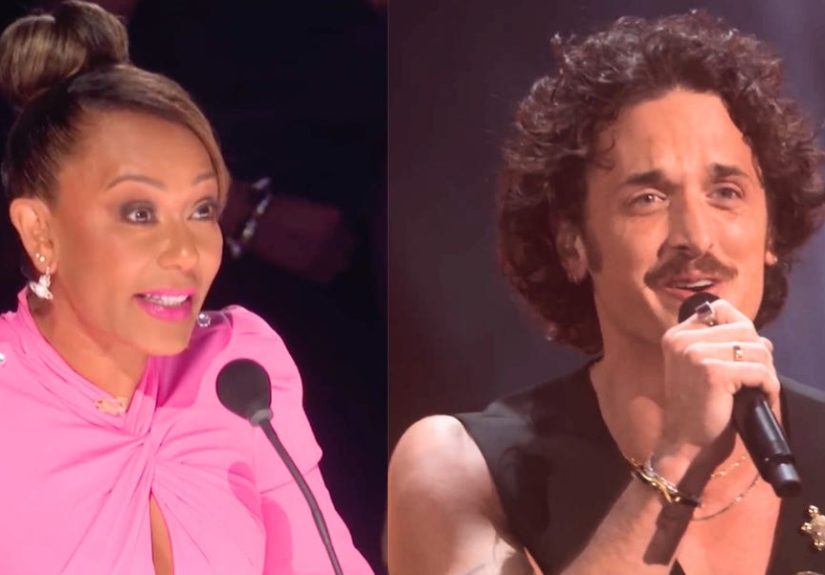
Mel B’s reaction is the reason this performance turned into a headline. She praised Hightower’s choice and specifically called it a “big risk,” which is exactly the right phrase for what he attempted.
Her reaction matters because Mel B has never been the “every performance gets a trophy” judge. She tends to be direct, and Season 20 coverage repeatedly highlighted that she returned to the panel with the same blunt honesty fans remember. So when she gives credit for a bold creative decision, it carries extra weight.
She also reportedly pointed out that Hightower committed to the arrangement and successfully changed the performance’s feel midstream. That’s a key detail. Risky song choices only work when the performer fully commits. A half-confident reinvention can feel awkward fast. Mel B’s response suggests she saw intention, not gimmick.
In short, her comment wasn’t just “nice job.” It was a mini performance review: brave song selection, strong execution, and enough control to justify the risk.
What the Other Judges Said and Why It Matters
The judges weren’t all in the exact same laneand that’s what made the moment even more interesting.
Mel B: Risk Rewarded
Mel B clearly appreciated the guts of the song choice and felt Hightower pulled it off. Her response framed the performance as a successful creative gamble, which is exactly the kind of language contestants want during live rounds.
Howie Mandel: Strong Talent, Different Direction
Howie reportedly said he’s a big fan of Hightower but felt the arrangement transformed the song into more of a musical-theater presentation. That’s not necessarily a bad thing, but it shows how thin the margin is in AGT live shows. A contestant can impress the judges and still split them on style.
Sofía Vergara: Star Quality Still Intact
Sofía emphasized Hightower’s star quality and supported the song choice. That’s an important contrast to purely technical criticism. On AGT, charisma and screen presence matter almost as much as the note choices, especially once voting moves to the public.
Simon Cowell: Ambitious, But Possibly Overproduced
Simon reportedly said the performance wasn’t as strong as Hightower’s audition and described it as overproduced, though he also acknowledged that people would be talking about it. That’s classic Simon: a critique and a compliment hidden in the same sentence.
From a competition perspective, Simon’s comment was actually revealing. Even if he preferred the audition, he recognized the performance had buzz. And on AGT, memorable can sometimes beat technically perfect.
Who Is Benjamin Hightower?
Part of why the performance landed so well is that Hightower already had a compelling story and a strong first impression in the competition.
Coverage across entertainment outlets identified him as an Air Force veteran who later pursued music full time. During his AGT journey, he spoke about serving on active duty for seven years and making the scary decision to leave the military to bet on himself as a performer. That backstory gave his performances an extra layer of emotional weight: he wasn’t just singing for exposurehe was proving a life-changing choice was worth it.
He also came into the live rounds with momentum. Earlier in Season 20, Hightower gained attention for his audition performance of Chappell Roan’s “Pink Pony Club,” which drew strong reactions and helped establish him as one of the more watchable vocalists of the season.
Multiple outlets also described him as a singer/keyboardist with roots in Alabama and Tennessee, which matches the onstage image viewers saw: a confident performer with a musician’s instinct for arrangement, not just a singer picking crowd-pleasing songs.
Why the Risk Worked From a Performance Strategy Angle
Let’s zoom out for a second, because this is where the AGT strategy gets fun.
In live competition shows, contestants usually face a choice:
- Play it safe and try to sound flawless
- Take a creative swing and risk dividing the room
Hightower chose the second path. Here’s why that was smarteven if not every judge loved every element:
1) He avoided repeating his audition formula
One of the fastest ways to disappear in a long talent season is to give the same performance twice in different outfits. Hightower’s quarterfinal number showed range and identity. He wasn’t just “the guy who did that one great audition.” He was trying to become a recognizable artist.
2) He used a familiar song to create surprise
This is harder than it sounds. Picking a famous song can backfire because the audience expects the original. But if the rework is strong, the familiarity becomes an advantage. The crowd realizes what the song is, then feels the surprise of hearing it in a completely different shape.
3) He gave the judges something specific to react to
“Great voice” is nice feedback, but it doesn’t always move votes. A performance that sparks debateWas it brilliant? Was it too produced? Was it a smart gamble?gets replayed in people’s heads. That can help a contestant cut through a crowded night of performances.
4) He created a moment, not just a song
Mel B’s “big risk” comment turned the performance into a story. Now it wasn’t just a cover; it was the risky AGT performance Mel B praised. That kind of framing matters in TV competition storytelling.
The Bigger AGT Season 20 Context
This performance also hit differently because of the season it happened in. Season 20 was positioned as a milestone year for America’s Got Talent, with Mel B returning to the judging panel and the show leaning into both nostalgia and high-stakes live moments.
Mel B’s comeback was a major part of the season’s identity. Entertainment and TV outlets highlighted her return as a headline story, especially with Heidi Klum out for the season. Coverage also emphasized that Mel B’s judging style brings sharper criticism and stronger opinions back into the mixwhich helps explain why her endorsement of Hightower felt meaningful.
The live format added pressure too. Recap coverage described the quarterfinal setup as a crowded field with 11 acts performing in one night, public voting determining several semifinal spots, and a judge-controlled Golden Buzzer adding another layer of drama. In that environment, contestants have very little time to make an impression. A safe performance can disappear by the next commercial break.
Hightower clearly understood that. Whether viewers agreed with every arrangement choice or not, his performance was built to be remembered.
Did the Risk Translate Into Results?
Here’s the tough reality of AGT: a performance can be artistically successful and still not carry a contestant forward.
Recap and results coverage from the quarterfinal week indicated that Hightower’s performance generated strong reactions, but he was ultimately eliminated after the voting/results cycle. That outcome is a reminder of how brutal AGT can be in live rounds. Judges’ praise helps, online buzz helps, and viral moments helpbut the vote math can still go another way.
In a strange way, that makes Mel B’s comment even more memorable. It preserved the performance as a standout moment even if it didn’t end with a trophy. Not every AGT highlight belongs to the eventual winner. Some belong to the contestants who took the biggest creative swings.
What Viewers and Performers Can Learn From This AGT Moment
Hightower’s quarterfinal performance is a great case study in what modern TV audiences respond to:
- Familiarity + surprise beats predictability.
- Commitment matters more than “safe perfection.”
- A strong point of view makes performances memorable.
- Judge reactions shape the story almost as much as the act itself.
And yes, it also proves an important universal truth: if you’re going to risk a Rickroll on live TV, you’d better bring your A-game.
Experience-Based Takeaways: What This Kind of AGT Performance Feels Like in Real Time
One of the most relatable things about this AGT moment is the way it mirrors real-life creative risks. Whether someone is a singer, a student giving a presentation, a content creator trying a new style, or even just a person changing careers, there’s always that terrifying in-between moment: the second after you commit, but before anyone reacts.
That’s exactly the emotional energy this performance tapped into.
For viewers, the experience of watching a risky performance like Hightower’s is usually a mix of curiosity and tension. At first, people recognize the song and think they know what’s coming. Then the arrangement shifts, the vibe changes, and suddenly the audience is listening more carefully. That’s a powerful experience because it turns passive watching into active attention. Instead of background TV, it becomes a moment people lean into.
There’s also a psychological “reward” that comes with seeing a risk succeed. Audiences love confidence, but they love earned confidence even more. When a performer makes a bold choice and backs it up with control, viewers feel like they witnessed something personalalmost like they saw a performer choose identity over safety. That tends to stick longer than a technically perfect but forgettable performance.
For aspiring performers, this AGT moment offers another kind of experience: permission. A lot of singers get trapped trying to prove they can sing well. Fewer try to prove they have taste, point of view, and artistic instincts. Hightower’s quarterfinal choice showed that a performer can respect a well-known song while still reshaping it. That’s a useful lesson for anyone building a career in music: the audience often remembers interpretation more than imitation.
It also highlights a less glamorous truth about competition shows and creative work in general: good risks do not guarantee immediate rewards. Even when a judge praises the decision, even when fans react online, even when the performance becomes a talking point, the final result can still go against you. That’s frustratingbut it’s also real. And in many ways, it’s part of the experience of becoming an artist.
In fact, those moments can be more valuable than a safe win. A bold performance builds identity. It tells future audiences, “This is who I am and how I think about music.” That kind of artistic fingerprint tends to travel farther than a single round of voting.
For everyday viewers who aren’t performers, there’s still a takeaway here. Watching someone take a public creative risk is a reminder that reinvention usually looks awkward right before it looks smart. The same principle applies in work, school, and life. New ideas often sound “wrong” for a few seconds because people are comparing them to what they already know.
That’s what made Mel B’s reaction so satisfying. She recognized the risk in real time and rewarded the commitment. It wasn’t just a judge comment; it was an acknowledgment of the courage behind the choice.
And honestly, that’s why this AGT performance keeps resonating. It wasn’t only about one song, one episode, or one result. It was about the experience of making a bold move in front of everyoneand hearing someone say, in effect, “Yep, that was risky… and you made it work.”