Table of Contents >> Show >> Hide
- Why the Fulton Bar Faucet Gets Attention
- Key Specs (A.K.A. the Stuff You Actually Feel Day to Day)
- Materials: Solid Brass vs. 316 Stainless Steel
- Finishes and Style: Matching the Faucet to the Room
- Installation Notes: Avoiding the “Why Is My Faucet Angry?” Phase
- Performance in Real Life: Splash, Swivel, and “Guest-Proof” Use
- Is It Worth It? Who the Fulton Bar Faucet Is For
- Common Questions People Ask Before Buying
- Conclusion
- of Real-Life Experience With a Fulton-Style Bar Faucet
A home bar faucet is one of those “small” decisions that somehow becomes a daily relationship. You don’t think about it much
until you’re juggling a tray of glasses, the ice is melting, guests are asking for sparkling water, and your faucet responds with
the enthusiasm of a sleepy garden hose. That’s the moment people start Googling things like Waterstone Fulton Bar Faucet.
The Fulton Bar Faucet (commonly referenced as model 1625) sits in the “I bought this once” category: a compact, high-end bar/prep
faucet designed for wet bars, entertainment areas, and smaller sinks where a full-size kitchen faucet would feel like wearing ski boots
to a yoga class. It’s also the kind of faucet that makes your bar sink look like it has a job title.
Why the Fulton Bar Faucet Gets Attention
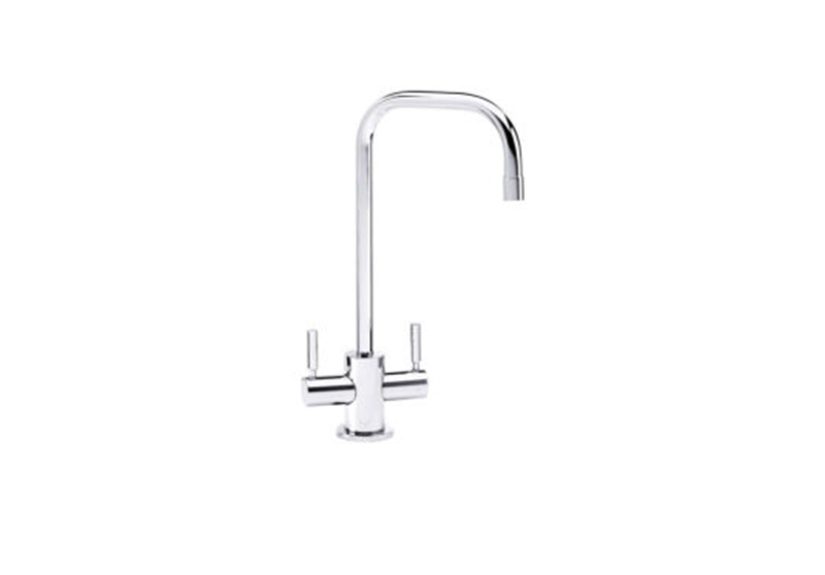
The Fulton’s signature is its clean, two-bend U-spout silhouettemodern, but not so futuristic that it looks like it’s about to
launch a satellite. It’s designed for bar-size sinks and prep stations where reach, clearance, and swivel matter more than
a pull-down sprayer and a dozen spray modes you’ll never use.
It’s purpose-built for small sinks (and big nights)
A bar faucet has a different mission than your main kitchen faucet. It’s not trying to wash a roasting pan the size of a snowboard.
It’s trying to:
- Fill an ice bucket without splashing your shirt like a surprise waterpark ride.
- Rinse cocktail shakers, wine glasses, and the occasional “why do we own this?” martini glass.
- Serve as a second water station during parties so the kitchen sink doesn’t become a traffic jam.
- Handle prep tasks on an island or secondary sinkwashing berries, quick rinses, handwashing delicate items.
Key Specs (A.K.A. the Stuff You Actually Feel Day to Day)
Specs aren’t just numbersthey’re how a faucet behaves in real life. Here are the highlights that tend to matter most for the
Waterstone Fulton Bar Faucet.
Spout reach, height, and clearance
The Fulton Bar Faucet’s spout reach lands around the 6-inch range (roughly 6-1/4″ in many listings), which is a sweet spot for
smaller bar sinks: far enough to get water where you need it, not so far that it turns your compact sink into a splash zone.
Overall height is approximately 13″, with spout outlet height just under 9″enough clearance for filling pitchers, tall glasses,
and (let’s be honest) that one oversized water bottle everyone carries around now.
360° swivel (because bar sinks are busy)
A full swivel matters more at a wet bar than people expect. You’re not just turning the faucet onyou’re rotating it out of the way
to set down glasses, rinse tools, or give yourself space. The Fulton’s spout is designed to swivel 360 degrees, which makes a small
sink feel bigger and more flexible.
Flow rate: strong enough, not outrageous
The Fulton Bar Faucet is typically listed at about 1.7 GPM with an aerated tip (sometimes rounded to 1.75 GPM depending on how a
retailer formats the spec). Translation: it’s quick for bar tasks, but still controlled so you don’t blast bubbles out of your
mixing glass like you’re pressure-washing a driveway.
Valves and handle feel
Waterstone commonly specs ceramic disc cartridges on the Fulton Bar Faucet. Ceramic discs are popular in premium faucets because
they’re smooth, durable, and less prone to the slow “drip… drip…” that turns people into amateur plumbers at 11:42 p.m.
The Fulton Bar Faucet uses dual lever handles (hot and cold) with a short-turn style operation. In plain English: the handles feel
quick and deliberate, which is exactly what you want when your hands are wet and you’re trying not to fling water onto your bar top.
Materials: Solid Brass vs. 316 Stainless Steel
This is one of the Fulton’s standout choices: it’s offered in either solid brass or 316 stainless steel (depending on configuration and finish).
Both are premium, but they’re not identical in personality.
Solid brass: the classic luxury backbone
Brass is the traditional go-to for high-quality faucets because it’s durable, corrosion-resistant, and has the heft that makes a
faucet feel “real” (instead of “lightweight mystery alloy”). In day-to-day use, brass faucets tend to feel solid and stableno
wiggly body, no hollow vibes.
316 stainless steel: a smart choice for demanding water conditions
316 stainless is often chosen for environments where corrosion resistance is a priority. If your bar sink is paired with reverse
osmosis (RO) filtered wateror you’re simply picky about long-term durabilitythis material option is part of the reason people
look at Waterstone in the first place.
Reverse osmosis compatibility (yes, it matters)
Many faucets aren’t thrilled about ultra-filtered water over time because RO water can be more aggressive toward certain materials.
The Fulton Bar Faucet is commonly described as resistant/compatible with reverse osmosis water, which makes it appealing for
dedicated filtered-water bar sinks or prep stations.
Finishes and Style: Matching the Faucet to the Room
A bar faucet is often more visible than a main kitchen faucet because it lives in the “hosting zone.” In other words, people stare
at it while you’re trying to look like you casually know how to make a Negroni. The Fulton design is clean and architectural, and
it’s offered in a wide selection of finisheseverything from classic chrome and stainless to darker modern finishes and warm
decorative tones.
Quick pairing ideas
- Matte black + white quartz: crisp, modern, and forgiving of fingerprints.
- Polished nickel + marble: bright, upscale, and timeless with a little shine.
- Warm bronze/copper tones + dark counters: cozy, moody, “cocktail lounge” energy.
- Stainless + stainless bar sink: clean, cohesive, and easy to maintain.
The trick is to match undertones rather than playing “exact twin” with every metal in the room. If your cabinet pulls are
warm (gold/brass), choose a finish that leans warm. If your appliances and fixtures skew cool (stainless, chrome, nickel), keep the
faucet in that lane. Mixing metals can look intentional; mixing undertones can look like you lost a bet.
Installation Notes: Avoiding the “Why Is My Faucet Angry?” Phase
High-end faucets aren’t hard to install, but they do reward people who read instructionsespecially around supply lines and debris.
The Fulton Bar Faucet typically installs as a single-hole deck-mount faucet, with supply hoses that connect to standard shutoff
stops using compression fittings.
Measurements and fit
The spec sheet commonly lists a maximum counter thickness around 2-1/2″, and an installation hole size adaptable up to about 1-3/8″.
If you’re installing on a thick stone top or an oddly drilled hole, those limits matter. Always measure your counter thickness and
hole diameter before ordering (it’s the home-improvement version of “measure twice, cry once”).
Flush the lines (seriously)
New installs stir up debristiny bits of grit that can clog an aerator and make your brand-new faucet run like it’s drinking through
a coffee stirrer. Many installation guides recommend flushing supply stops before connecting hoses. It’s a small step with big payoff.
Aerator cleaning: the easiest fix you’ll ever do
If flow slows down, the aerator is usually the culprit. The Fulton Bar Faucet is commonly designed with a removable aerator tip for
easy cleaning. Unscrew, rinse, reassemble. It’s the kind of maintenance task that makes you feel wildly competent for five minutes.
Performance in Real Life: Splash, Swivel, and “Guest-Proof” Use
A bar faucet’s performance isn’t about extreme powerit’s about control. The Fulton’s aerated stream helps reduce splash, and the
spout geometry aims the water into a bar sink without forcing you to shove every glass into one exact spot.
Dual handles: old-school control with modern speed
Dual lever handles give you precise temperature control, which is surprisingly useful at a wet bar. You might want cold water for
filling an ice bucket, lukewarm for rinsing sticky syrups, and warm for quick handwashing. With two handles, you can dial in a
“sweet spot” and return to it easily.
360° swivel: small feature, big difference
At a wet bar, counter space is sacred. Being able to swivel the spout away means you can clean the sink, set down a tray, or position
tall items without playing faucet Tetris.
Is It Worth It? Who the Fulton Bar Faucet Is For
Let’s be honest: Waterstone sits in the luxury tier. The Fulton Bar Faucet isn’t trying to win a bargain contestit’s trying to be
the faucet you stop thinking about because it works, looks great, and doesn’t feel disposable.
It’s a strong fit if you:
- Have a dedicated wet bar, beverage station, or prep sink that gets regular use.
- Care about materials (solid brass / 316 stainless) and long-term durability.
- Want a distinctive design that still plays nicely with many kitchen styles.
- Need RO-friendly compatibility for filtered-water setups.
- Prefer a faucet that feels substantial, with refined handle action.
You might choose something else if you:
- Just need the cheapest way to get water into a secondary sink (no judgmentbudgets are real).
- Want a pull-down sprayer at the bar sink for heavy-duty cleanup.
- Prefer single-handle mixing for one-handed use (some people love it; some people hate it).
Common Questions People Ask Before Buying
Is a bar faucet different from a prep faucet?
In practice, the terms overlap. “Bar faucet” often implies a smaller footprint sized for bar sinks, while “prep faucet” may be used
for secondary kitchen sinks (like an island prep sink). The Fulton Bar Faucet is commonly positioned for wet bars and entertainment
areas, but it can work beautifully at a prep sink, tooespecially where space is limited.
Will it look too modern in a transitional kitchen?
Not necessarily. The Fulton’s shape is clean and contemporary, but it’s not aggressively “industrial” or ultra-minimal. With the
right finish (for example, polished nickel or a warm bronze tone), it can blend into transitional and even more classic spaces.
What should I pair it with?
A compact undermount or drop-in bar sink, a simple drain assembly, and a finish that coordinates with nearby hardware usually gets
you 90% of the way there. If the wet bar includes an RO system or filtration, this is where RO-friendly compatibility can be a real
advantage.
Conclusion
The Waterstone Fulton Bar Faucet is a premium bar/prep faucet designed to make small sinks feel capable, polished, anddare we sayfun.
Between its U-spout profile, full swivel, aerated flow, ceramic disc internals, and solid material options, it’s built for the kind of
everyday hosting tasks that add up: filling, rinsing, washing, and keeping the party moving without creating a puddle on your counter.
If your wet bar or prep sink is a real part of how you live (or how you aspire to live when you buy cocktail bitters you swear
you’ll use), the Fulton is the sort of upgrade you’ll notice every daymostly because you won’t be annoyed by it.
of Real-Life Experience With a Fulton-Style Bar Faucet
The first thing you notice with a well-built bar faucet isn’t the waterit’s the feel. The handles move with a confident,
smooth resistance that says, “Yes, I’m made of actual materials,” not “Please don’t look at me too hard or I’ll squeak.”
On busy nights, that matters more than you’d think. When you’re hosting, your hands are wet, you’re moving fast, and you’re trying to
keep the bar area from turning into a science experiment. A faucet that responds predictably becomes part of the rhythm.
A typical evening at a home bar goes like this: someone wants ice, someone wants a quick glass rinse, and someone is convinced they can
make the world’s best margarita if you just give them “a little space.” This is where the Fulton-style 360° swivel shines. You can swing
the spout out of the way to park a pitcher in the sink, then rotate it back to rinse bar tools, then rotate it again to fill a bottle
without banging into glassware. It’s a small motion, but it keeps the sink usable instead of becoming the place where things go to get
awkward.
The aerated stream is another underappreciated perk. In a compact bar sink, an aggressive, splashy flow doesn’t feel powerfulit feels
messy. Aeration helps the stream stay controlled, which means fewer droplets on your counter and less time wiping down the “hosting zone.”
It also makes quick rinses more pleasant: you can rinse sticky syrup off a jigger without it ricocheting onto your shirt like you’re
being punished for choosing a complicated cocktail.
Over a few weeks, the faucet quietly proves itself in the unglamorous moments: washing strawberries at the prep sink, filling a dog bowl
when the kitchen is busy, rinsing a paintbrush because the bar sink is closer than the laundry room (creative people contain multitudes),
and cleaning up after the party when you’re tired but still determined to wake up to a tidy counter. The dual-handle setup is surprisingly
practical hereyou can set a comfortable warm temperature for handwashing, then pivot to cold for filling a carafe without fiddling around.
The only “welcome to adulthood” surprise is that premium faucets still like basic maintenance. If your water has sediment, the aerator may
need a quick rinse after installation and occasional cleaning later. The good news is that this kind of faucet typically makes it easy:
unscrew by hand, rinse, reassemble, and congratulate yourself for performing plumbing that doesn’t involve panic.
In the end, the best compliment you can give a bar faucet is that it becomes invisibleuntil a guest uses it and says, “Oh wow… this feels
nice.” And that’s when you smile, nod, and pretend you didn’t spend an entire week deciding between finishes.