Table of Contents >> Show >> Hide
- The Ad That Launched a Thousand “Wait…What?” Tweets
- So We Recreated ItAnd Here’s What That Actually Proves
- Why This Matters More Than One Poster in One Store
- How Brands Can Avoid This Exact Kind of Backlash
- What Shoppers Can Take From This (Without Spiraling)
- The Big Takeaway: The Ad Wasn’t “Evil”But It Was Avoidable
- Experiences: What Recreating a Controversial Ad Teaches You (The Part You Don’t Expect)
- Conclusion
Every once in a while, an ad tries to be inspiring and accidentally invents a brand-new emotion:
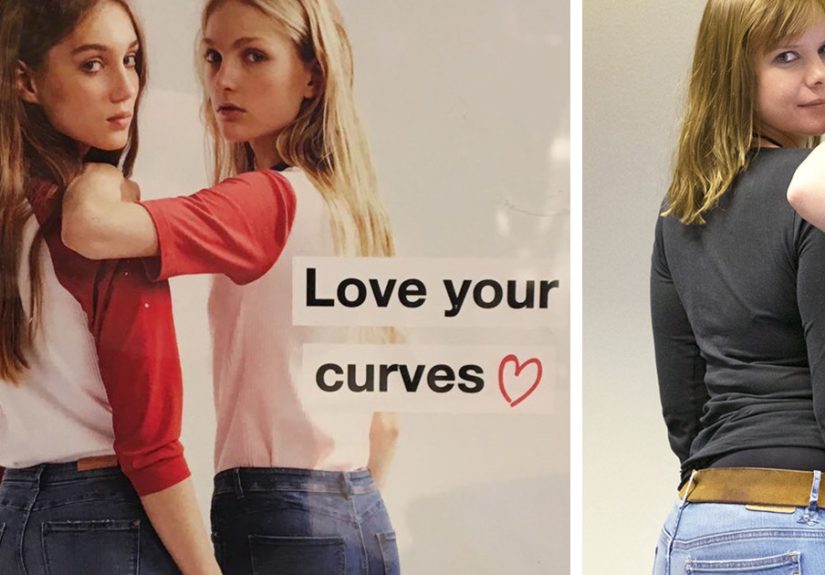
confused side-eye. In 2017, Zara ran a denim ad with the cheerful message “Love your curves”
next to two visibly straight-size models. The internet responded the way the internet always responds
when it smells irony: loudly, quickly, and with receipts.
Here’s the thing, though: the conversation that followed got messy. Some people blamed the models.
Others argued about what “curvy” even means. A few folks tried to turn it into a team sportlike
body diversity has jerseys. So we’re doing a reset. We’re recreating the ad (in spirit, not in
copyright trouble) to clear up what people were actually upset about, what brands can learn from it,
and how we can talk about body image without making anyone feel like their body is a debate topic.
The Ad That Launched a Thousand “Wait…What?” Tweets
The controversy wasn’t complicated: the slogan said “curves,” the casting said “sample size.”
And when an ad sells “body positivity” but visually represents only one narrow body type, it can
feel less like encouragement and more like a marketing wink: “Love your curves… as long as your
curves behave.”
To be clear, the issue was never “thin models shouldn’t exist.” Models are workers doing a job.
The critique was about the message and the mismatcha body-inclusive
tagline paired with imagery that didn’t reflect the audience the words were supposedly celebrating.
That disconnect is why people called it tone-deaf.
Why “Curvy” Became a Flashpoint
“Curvy” is one of those words that sounds simple until you realize it’s doing a lot of social work.
For many shoppers, “curvy” signals bodies with fuller hips, thighs, bust, or a smaller waist-to-hip
ratiooften associated with mid-size and plus-size ranges. For others, “curvy” just means “not a
straight line,” which basically includes… most humans, because bones come with corners.
Brands love flexible words. Flexible words can sell to everyone. But when a brand uses “curvy”
as a vibe instead of a realityespecially in fashion, where sizing and fit are the entire point
it can feel like the brand wants the cultural brownie points of inclusivity without doing the
practical work (like expanding sizing, adjusting patterns, and showing clothes on different bodies).
So We Recreated ItAnd Here’s What That Actually Proves
The recreation that spread online took the concept of the original poster and swapped in curvier
bodies to highlight the contradiction. It wasn’t a takedown of the original models. It was a
neon sign pointing at the decision-making above them: casting, styling, copywriting, and the
broader question of who “counts” as the face of a message about curves.
Recreating the ad makes two key points crystal clear:
-
Body positivity isn’t a font choice. You can’t just slap a supportive phrase on a
poster and call it inclusive. The visuals and the product offering have to match the promise. -
Representation isn’t “anti-thin.” Showing a wider range of bodies doesn’t erase
anyone; it just stops pretending one body type is the default setting for “beautiful.”
What “The Same Ad” Looks Like With Different Bodies
When you keep the slogan and change the casting, the meaning changes immediately. “Love your curves”
next to curvy bodies reads like a direct invitation. Next to only straight-size bodies, it can read
like a corporate shrug: “Sure, curves… whatever that means to you. Anyway, here’s a jacket.”
The recreation isn’t about proving who is “curvy enough.” It’s about showing how marketing can
unintentionally redefine words by repeatedly attaching them to one look. Over time, the audience
learns the brand’s dictionary: “curvy” becomes “still thin, just posed differently.”
Why This Matters More Than One Poster in One Store
Advertising doesn’t just sell products; it sells expectations. And expectations are stickyespecially
for teens and young adults who are constantly soaking up “ideal” images from social media, shopping
apps, and influencer culture.
Research and guidance from major health and youth-focused organizations have repeatedly warned that
appearance-focused media can shape body satisfaction and self-esteem, particularly when the images
are narrowly curated or digitally altered. That doesn’t mean “all fashion ads are evil.” It means
the stakes are real, so brands should treat messaging like it mattersbecause it does.
But Isn’t This “Just Marketing”?
Sure. And marketing is “just” the thing that follows us into our phones, our mirrors, and our
group chats. It shows up when you’re trying on jeans and your brain suddenly becomes a very rude
commentator. It shows up when you’re scrolling and your mood drops for no obvious reason.
When a brand uses a body-positive phrase, it’s borrowing a social movement’s language. That language
is personal to people. So if the brand doesn’t handle it carefully, the backlash isn’t “sensitivity
gone wild.” It’s the audience protecting the meaning of words that were never meant to be a sales
gimmick.
How Brands Can Avoid This Exact Kind of Backlash
If you’re a brand (or someone who works in marketing and wants to keep your group chat peaceful),
here’s what “don’t be Zara-in-2017 about this” looks like in practical terms.
1) Match the Promise to the Product
If you’re advertising “curvy,” make sure the product line actually includes curvy-friendly cuts and
a meaningful size range. Not “we added one extra size online” meaningful. Actual-inventory,
actually-try-it-on meaningful.
2) Cast More Than One “Acceptable” Body Type
Diversity isn’t a single token model in the back row. It’s a range: different sizes, heights,
proportions, ages, and visible features. You don’t need a casting call that looks like a census,
but you do need to stop treating one body type as the universal mannequin.
3) Stop Using Body Positivity as a Decorative Throw Pillow
Body-positive language should be used when you’re willing to stand behind itthrough product design,
styling, and consistent representation. If you’re not ready, choose different copy. “New denim drop”
has never harmed anyone.
4) Be Careful With Retouching and “Perfect” Poses
A little color correction is normal. But heavy editing and hyper-stylized poses can create an
unrealistic impression of bodies and fit. If your jeans only look “curvy” because the model is
twisted like a human pretzel, the product isn’t doing the workthe pose is.
5) Test the Message With Real People Before You Print It on a Wall
Run the ad by a diverse group of shoppers. Not just employees who already know what the campaign
“means.” If multiple people interpret it as contradictory or excluding, that’s not a “them problem.”
That’s feedback you just got for free.
What Shoppers Can Take From This (Without Spiraling)
If you’ve ever seen an ad like this and thought, “Is my body the issue?”no. The ad’s logic is the
issue. Your body is not a marketing mistake.
Try These Simple Reality Checks
-
Words are cheap; patterns are expensive. If the brand’s words say “everyone” but
their visuals and sizes say “one type,” believe the patterns. -
Fit is engineering, not morality. If something doesn’t fit, it means the garment
wasn’t built for your proportions. It does not mean your body is “wrong.” -
Curate your feed like it’s your home. If content makes you feel worse about
yourself, you don’t owe it a lease renewal.
And if you’re someone who struggles with body image, it can help to talk to a trusted adult, a
counselor, or a healthcare professional. Support isn’t “dramatic.” It’s maintenancelike charging
your phone before it dies.
The Big Takeaway: The Ad Wasn’t “Evil”But It Was Avoidable
Zara’s “Love your curves” moment is a classic example of how a brand can stumble when it borrows
inclusive language without inclusive execution. The internet didn’t “cancel” a slogan. People
challenged a contradiction.
And honestly? That’s not a bad thing. Public pushback can be a shortcut to better marketing,
better representation, and better products. The goal isn’t to shame brands into silence; it’s to
nudge them toward honesty.
If you’re going to say “curves,” show curves. If you’re going to sell body confidence, don’t limit
it to one body type. And if you’re going to make a mistakeown it, learn fast, and do better next
campaign.
Experiences: What Recreating a Controversial Ad Teaches You (The Part You Don’t Expect)
Recreating an adespecially one that sparked a backlashsounds like it would be all jokes and
camera angles. And yes, there’s always that one friend who turns the shoot into a full-blown
director’s commentary: “No, no, tilt your chin like you’re emotionally unavailable to denim.”
But the surprising part is how quickly it becomes less about the photo and more about the
feeling behind it.
The first moment usually hits when you try to copy the vibe. You realize ads aren’t accidental.
The lighting is intentional. The posture is intentional. The styling is intentional. Even the
“effortless” expression is usually practiced. And when the ad is attached to a phrase like “Love
your curves,” you can feel how the visuals steer the meaning. If you recreate the same pose with a
different body type, the slogan suddenly lands differentlylike the words finally found the audience
they were talking to.
Then there’s the wardrobe reality check. Real bodies don’t behave like product photos. Waistbands
sit differently. Fabric drapes differently. Pockets do that weird balloon thing sometimes. And that’s
not a flaw; it’s physics. Recreating an ad makes you appreciate how often “perfect fit” in marketing
is less about the garment and more about clamps, pins, and the invisible hands off-camera making
everything look effortless. It teaches you to be kinder to yourself in the fitting room, because
you start to see how staged “effortless” really is.
The experience also changes how you read comments. When people see a recreation, the best reactions
usually don’t say, “Finally, the correct body type.” They say things like, “This feels more honest,”
or “This is what the slogan sounded like in my head.” That’s the heart of it: many people weren’t
asking to replace one standard with another. They were asking to stop treating one body type as the
only “brand-safe” way to visualize confidence.
Of course, recreations can also reveal a trap: it’s easy to swing from critique into comparison.
If you’re not careful, a parody can accidentally become a new measuring stickwho did it “better,”
who looked “more” anything. The best recreations avoid that by keeping the point focused on the
marketing contradiction, not on ranking bodies. They punch up at the decision, not sideways at
other people.
And maybe the most useful part is what happens after the laughs: you start noticing these mismatches
everywhere. “Inclusive” campaigns with limited sizing. “Real bodies” messaging with the same
silhouette repeated in ten different outfits. “Comfort for everyone” lines that only seem comfortable
on one kind of frame. Once you’ve recreated one controversial ad, you become fluent in the subtle
ways brands can say “all” while showing “some.”
If there’s a final lesson, it’s this: recreating an ad can be empoweringnot because it proves
anything about your body, but because it proves something about media. You learn that images
are constructed. You learn that language can be borrowed. And you learn that when something makes
you feel “less than,” the problem is often the messagenot you.
Conclusion
The “Love your curves” Zara ad didn’t become controversial because people hate fashion or dislike
models. It became controversial because it showed how easily inclusive language can be used without
inclusive practice. Recreating it helped clarify the real critique: if a brand wants to celebrate
curves, it should represent themvisually, practically, and consistently.
Better ads are possible. Better sizing is possible. Better choices are possible. And the next time
a brand tries to sell confidence with a slogan, hopefully they’ll remember: people can spot a
contradiction faster than they can find their lost AirPods.