Table of Contents >> Show >> Hide
- The Short Answer: What Are the 4 Types of Buyers?
- Why Understanding Buyer Types Matters
- 1. Driver Buyers: Sell the Outcome, Not the Opera
- 2. Analytical Buyers: Bring Receipts
- 3. Amiable Buyers: Trust Comes Before Transaction
- 4. Expressive Buyers: Sell the Vision
- How To Sell Better to All 4 Buyer Types
- Common Mistakes When Selling to Different Buyer Types
- Experience From Real Sales Situations: What These Buyer Types Look Like in Practice
- Final Thoughts
- SEO Tags
Some buyers want the bullet points, the ROI, and the bottom line before you finish your first sip of coffee. Others want to know whether you are trustworthy, whether the product will make life easier, and whether this whole conversation feels more like a smart partnership than a hostage negotiation. That is why “just use the same pitch on everyone” is one of the fastest ways to lose a sale.
If you have ever walked out of a sales call thinking, Well, that went weirdly sideways, there is a good chance you were selling in the wrong language. Not English. Buyer language. The truth is, customers do not all process information the same way, weigh risk the same way, or decide at the same speed. Great salespeople adjust their style without turning into a fake infomercial version of themselves.
In this guide, we will break down a practical four-buyer framework that many sales teams use in real-world conversations: Driver, Analytical, Amiable, and Expressive. You will learn how each type thinks, what they care about, what makes them hit the brakes, and how to sell to them without sounding like a robot wearing a blazer.
The Short Answer: What Are the 4 Types of Buyers?
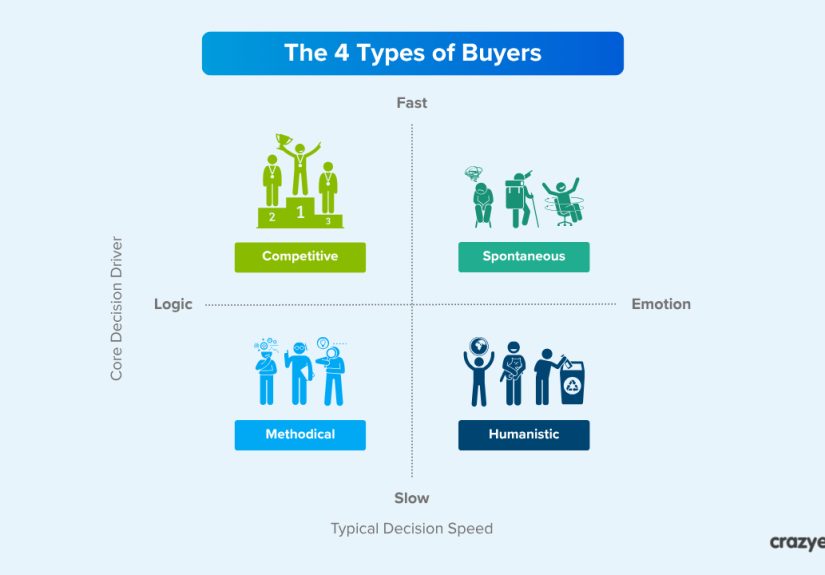
There is no single official list of buyer types used by every company on Earth. Different sales and marketing teams use different frameworks. But one of the most practical and easy-to-apply models groups buyers into four broad personality-driven categories:
- Driver buyers – fast, decisive, results-focused
- Analytical buyers – logical, detail-oriented, cautious
- Amiable buyers – relationship-focused, patient, trust-driven
- Expressive buyers – enthusiastic, big-picture, emotionally engaged
Think of these as dominant decision styles, not tiny personality prisons. Most people are a blend. A buyer may be mostly analytical in a software purchase, then become highly expressive when choosing a brand for a creative project. Your job is not to label people like soup cans. Your job is to recognize the signals and adapt your sales approach.
Why Understanding Buyer Types Matters
Knowing buyer types helps you do three important things better. First, it improves communication. Instead of dumping every fact, story, feature, and testimonial into one giant sales casserole, you choose what matters most to that buyer. Second, it helps you reduce friction. Buyers often say “I need to think about it” when what they really mean is “You did not answer the thing I care about most.” Third, it builds trust. People tend to respond well when they feel understood.
In plain English, understanding buyer behavior helps you stop overselling, stop underexplaining, and stop accidentally annoying the exact person you are trying to win over.
| Buyer Type | What They Care About Most | Best Sales Approach | Biggest Turnoff |
|---|---|---|---|
| Driver | Results, speed, control | Be direct, concise, outcome-focused | Rambling and wasting time |
| Analytical | Data, proof, accuracy | Provide details, evidence, comparisons | Vague claims and hype |
| Amiable | Trust, safety, relationships | Build rapport, guide gently, lower risk | Aggressive pressure tactics |
| Expressive | Vision, excitement, people impact | Use stories, possibilities, enthusiasm | Dry, overly technical presentations |
1. Driver Buyers: Sell the Outcome, Not the Opera
Driver buyers are focused, decisive, and usually in a hurry. They want to know what works, how fast it works, what result it delivers, and why your solution is the smartest move right now. They tend to value efficiency over chit-chat and results over relationship-building.
How to spot a Driver buyer
- They get to the point quickly
- They ask direct, bottom-line questions
- They show impatience with unnecessary details
- They want options, control, and clear next steps
How to sell to a Driver buyer
Be concise. Lead with the result. Show how your product solves a business problem, saves time, increases revenue, lowers cost, or creates competitive advantage. Give them a clean decision path. Drivers appreciate confidence, but they do not appreciate fluff in a necktie.
A good pitch to a Driver sounds like this: “This tool cuts reporting time by 40%, reduces manual errors, and can be deployed in two weeks. Here are the three plan options and which one I recommend based on your team size.”
What not to do
Do not wander into a ten-minute origin story about your company founder’s garage unless the garage is somehow producing a 27% lift in performance. Do not overuse emotional testimonials. Do not repeat yourself. And do not act uncertain. If you do not know an answer, say so and promise a follow-up. Bluffing is a terrible hobby.
Example
If you are selling payroll software to an operations director, the Driver buyer wants to hear about efficiency, compliance risk reduction, and implementation speed. They do not need a poetic monologue about your brand values. They need a business case.
2. Analytical Buyers: Bring Receipts
Analytical buyers are careful, methodical, and deeply allergic to vague promises. They want proof. They want details. They want to compare options, review documentation, and understand exactly how your offer works before they make a decision. In sales, this is the buyer who can smell hype from three zip codes away.
How to spot an Analytical buyer
- They ask thoughtful, specific questions
- They want numbers, processes, and documentation
- They take notes or request follow-up materials
- They move more slowly because they want certainty
How to sell to an Analytical buyer
Use data, examples, side-by-side comparisons, implementation details, and precise language. Break information into organized chunks. An analytical buyer usually responds well to case studies, pricing breakdowns, technical FAQs, product demos, and realistic timelines. Clarity wins. Drama loses.
A good approach sounds like this: “Here is how the onboarding process works in four phases. Here is the average time to value. Here is a comparison chart against the two most common alternatives. And here is what your team would need internally to make the rollout successful.”
What not to do
Never pressure an analytical buyer into an instant decision unless your goal is to watch them disappear forever. Avoid exaggeration, empty buzzwords, and suspiciously shiny claims like “best in class” with zero evidence behind them. If you say your product is “game-changing,” you had better be ready to explain which game, how it changed, and whether anyone kept score.
Example
If you are selling cybersecurity services, this buyer wants to review your audit method, response time commitments, scope, risk model, and pricing logic. Give them substance. A calm, well-structured presentation will beat a high-energy pitch every single time.
3. Amiable Buyers: Trust Comes Before Transaction
Amiable buyers care deeply about relationships, safety, and confidence in the people behind the product. They are often thoughtful, patient, and considerate. They may not make decisions quickly, not because they are confused, but because they want to feel comfortable with the decision and the people involved.
How to spot an Amiable buyer
- They are warm, calm, and polite
- They ask people-centered questions
- They may avoid conflict or high-pressure confrontation
- They often want reassurance before committing
How to sell to an Amiable buyer
Slow down and build real rapport. Ask thoughtful questions. Listen carefully. Show that you understand their concerns, not just their budget. Use relevant stories about customers like them. Explain what support looks like after the sale. Reduce perceived risk with guarantees, flexible terms, or a clear onboarding plan.
A strong pitch might sound like this: “You will have a dedicated support contact, weekly check-ins during launch, and a simple training path for your team. We have helped businesses in a similar stage make the transition without disrupting day-to-day operations.”
What not to do
Do not bulldoze. Do not use fake urgency unless it is real. Do not mistake quietness for lack of interest. Amiable buyers often need a little more time and a little more trust, but when they feel secure, they can become extremely loyal customers.
Example
If you are selling a coaching program or a medical-adjacent service, the amiable buyer wants to know how supported they will feel. They are buying the experience as much as the offer. In many cases, the sale closes when the buyer believes, “These people will actually take care of me.”
4. Expressive Buyers: Sell the Vision
Expressive buyers are energetic, idea-driven, and often emotionally engaged in the buying process. They tend to respond to possibility, creativity, momentum, and stories about impact. They like to imagine what comes next and how a purchase will help them grow, stand out, or make something better.
How to spot an Expressive buyer
- They are enthusiastic and conversational
- They think out loud and jump between ideas
- They care about big-picture outcomes
- They respond strongly to stories, examples, and vision
How to sell to an Expressive buyer
Bring energy. Use stories, case studies, transformations, and future-focused language. Show what is possible, not just what is included. Help them picture the outcome. Expressive buyers often respond well to social proof, client success stories, brand credibility, and messaging that connects features to real human impact.
A good pitch sounds like this: “Imagine launching this campaign with half the production chaos and twice the creative consistency. Your team gets a central system, faster approvals, and a cleaner brand presence across channels.”
What not to do
Do not drown them in a swamp of technical detail before they even care. Do not be flat, stiff, or painfully cautious. They need enough structure to trust you, but they also need enough excitement to care. Selling to an expressive buyer with a spreadsheet-only presentation is like proposing marriage with a quarterly expense report.
Example
If you are selling a branding package, event technology, or creative software, the expressive buyer wants to know how the solution transforms the experience. They want to hear about momentum, audience response, visibility, and what becomes possible after the purchase.
How To Sell Better to All 4 Buyer Types
Even though each buyer type prefers a different style, a few principles work across the board.
1. Ask better questions
Strong selling starts with curiosity. Ask what matters most, what problem they are solving, how they measure success, what concerns them, and what a good outcome looks like. Good questions keep you from delivering the wrong pitch to the right person.
2. Mirror without becoming weird
Matching a buyer’s pace, tone, and communication style can build comfort and trust. The key is authenticity. You are not doing theater. You are making the interaction easier for the other person.
3. Personalize the message
Buyers respond better when your pitch feels relevant. Tie your language to their priorities. For a Driver, emphasize performance. For an Analytical buyer, emphasize proof. For an Amiable buyer, emphasize support. For an Expressive buyer, emphasize transformation.
4. Reduce friction
Make decisions easier with simple next steps, clear pricing, realistic expectations, and honest answers. The smoother the process feels, the more confidence buyers tend to have.
Common Mistakes When Selling to Different Buyer Types
- Treating every buyer the same: One script rarely fits all.
- Talking more than listening: You cannot tailor a pitch if you have not learned what matters.
- Pushing too early: Pressure often backfires, especially with analytical and amiable buyers.
- Using the wrong proof: ROI appeals to some buyers, while relationship stories or vision matter more to others.
- Ignoring mixed styles: Many buyers show traits from more than one category.
Experience From Real Sales Situations: What These Buyer Types Look Like in Practice
In real sales environments, these buyer types rarely arrive wearing helpful name tags that say, “Hello, I am an Analytical who also has Amiable tendencies on Tuesdays.” Instead, they reveal themselves through small signals. A Driver often starts the meeting by skipping the warm-up and asking, “What does this cost, how long does implementation take, and what results have similar companies seen?” That is not rude. That is efficient. If a salesperson responds by taking a scenic route through company history, the Driver mentally leaves the building before the meeting is halfway over.
The Analytical buyer usually creates a very different experience. They may ask for documentation before the call, question your assumptions, and circle back to one small detail you hoped would go unnoticed. This is not because they enjoy tormenting sales teams for sport. It is because they are trying to reduce risk. In practice, many of the best sales conversations with analytical buyers happen after the meeting, when they review a thorough follow-up email with pricing logic, scope details, implementation steps, and answers to every question they asked. If you make their decision easier to validate internally, you dramatically improve your odds.
Amiable buyers often create the most pleasant conversations and the slowest closes. They are warm, thoughtful, and genuinely interested in whether your solution will help people. They may want to know what support looks like after the contract is signed, how responsive your team is, and whether the transition will create stress for staff. In many real-world deals, amiable buyers do not need louder persuasion. They need lower anxiety. The moment they feel safe, heard, and supported, movement happens.
Expressive buyers, meanwhile, can make a sales call feel like a brainstorm session with espresso shots. They jump to possibilities quickly. They may say things like, “Could this also work for our content team?” or “Imagine if we rolled this out across three markets.” These buyers can be exciting because they see upside fast, but they can also drift off course. The best experiences with expressive buyers happen when the salesperson keeps the energy high while gently guiding the conversation back to a decision. Too much structure can flatten the momentum. Too little structure can leave the deal floating in the clouds wearing sunglasses.
One of the most useful lessons from real selling is that buyers are often blends. A founder might act expressive during a demo, then turn analytical when contracts appear. A department head might look like a Driver in the first meeting but become highly amiable once team adoption becomes the focus. That is why the strongest sellers do not memorize scripts for four boxes and call it a day. They observe, ask questions, adjust, and stay flexible. In practice, selling each buyer type well is less about manipulation and more about respect. You are showing the buyer that you understand how they make decisions and that you can communicate in a way that helps them move forward with confidence.
Final Thoughts
So, what are the four types of buyers and how do you sell each one? In the most practical sense, you are usually working with some mix of Driver, Analytical, Amiable, and Expressive decision styles. Drivers want results. Analytical buyers want proof. Amiable buyers want trust. Expressive buyers want vision.
If you learn to recognize those patterns, your sales conversations become sharper, smoother, and much more effective. You stop pitching everything to everyone and start saying the right thing to the right person at the right moment. And that, conveniently, is usually where more sales live.