Table of Contents >> Show >> Hide
- Start With One Question: What Does This Space Need To Do?
- Zone Your Home Like A City Planner (Minus The Hard Hat)
- Go Vertical: Walls Are Not Just For Art You Bought At 2 A.M.
- Choose Furniture That Works Overtime
- Hide Clutter Like It’s A Plot Twist
- Make A Little Space Feel Bigger (Without Lying To Yourself)
- Small-Space Habits That Keep You From Losing It
- Specific Examples: How This Looks In Real Life
- Common Small-Space Mistakes (And How To Avoid Them)
- Conclusion: Your Space Is Small, But Your Systems Can Be Mighty
- Experience-Based Add-On (About ): What People Learn The Hard Way In Little Spaces
Your apartment is small. Your dreams are not. And yetsomehowyour dreams keep tripping over a laundry basket.
If you’ve ever tried to do yoga next to a coffee table only to invent a brand-new pose called Downward-Facing Ow,
welcome. Living in a little space isn’t about pretending you’re fine with less. It’s about getting smarter with what you have,
so your home works with you instead of against you.
This guide is a practical (and mildly comedic) playbook for small space living: how to set up zones in a studio apartment,
pick space-saving furniture that actually earns its rent, build small space storage without turning your home into a plastic-bin museum,
and keep things calm when your “living room” is also your office, dining room, and occasional emotional support floor.
Start With One Question: What Does This Space Need To Do?
Tiny homes and studio apartments feel hard because we ask one room to do everything. The fix is not “buy more stuff.”
The fix is clarity. Before you reorganize a single drawer, decide your top priorities.
Pick Your Big Three
Most small homes are trying to juggle these core needs: sleep, eat, work,
store, and recharge. You can absolutely do all of thembut not all of them need equal space.
If you work from home daily, your desk can’t be a wobbly afterthought. If you never host dinner parties, you don’t need a table
that seats six “just in case.” (Your future guests will survive.)
Give Yourself Permission To Not Have “A Whole Room” For Things
In a little space, you don’t get a dedicated “guest room.” You get a guest plan. A fold-out sofa, an air mattress that lives under the bed,
or a daybed with a trundle can be the difference between “Come visit!” and “Let’s meet at a hotel lobby like spies.”
Zone Your Home Like A City Planner (Minus The Hard Hat)
The biggest mental upgrade you can make is turning “one room” into multiple zones. Zoning makes a small apartment feel intentional,
not accidental. It’s how you stop feeling like you live in your kitchen while also sleeping in your kitchen. (Poetic, but not ideal.)
Use Rugs, Lighting, and Furniture Placement
A rug can define a “living area” even if you’re five steps from the fridge. A small lamp near the bed can signal “sleep zone,”
while brighter task lighting signals “work zone.” And yesfurniture can be a “wall.” A sofa floated away from the wall, or a slim console table behind it,
creates separation without shrinking the room.
Room Dividers That Don’t Feel Like Prison Bars
- Curtains: Great for separating a bed area and softening noise/visual clutter.
- Open shelving: Divides space while still letting light through (and gives you storage).
- Folding screens: Flexible, renter-friendly, and excellent for hiding “the chair” (you know the one).
- Half-height dividers: If your rental allows it, even a low divider can separate sleep and living areas while keeping things airy.
The goal isn’t to chop the room into tiny boxes. It’s to create just enough division that your brain understands where life happens.
Go Vertical: Walls Are Not Just For Art You Bought At 2 A.M.
When square footage is limited, the most underused “room” is your wall space. Vertical storage is the difference between “cozy minimalist”
and “I live inside a laundry pile.”
High-Impact Vertical Storage Ideas
- Wall shelves: Use them above desks, sofas, and door frames for books, baskets, and display items.
- Pegboards: Especially useful in kitchens, entryways, and craft corners.
- Hooks everywhere: Backpacks, hats, headphones, keys, coatshooks turn chaos into “organized chaos.”
- Back-of-door organizers: The door is basically a free wall that swings.
Small Kitchen and Bathroom Moves That Matter
Tiny kitchens aren’t short on problems; they’re short on shelves. Add shelf risers or cabinet “extenders” to stack dishes and keep items visible.
Use the inside of cabinet doors for slim racks (spices, lids, cleaning sprays). In bathrooms, vertical shelves, stacked drawers, and over-the-toilet
storage can add function without stealing floor space.
Choose Furniture That Works Overtime
In big homes, furniture can just sit there and look pretty. In small homes, furniture needs a second job. Ideally a third.
Preferably with benefits.
Space-Saving Furniture That’s Worth It
- Storage ottomans: Seating + storage + occasional foot throne.
- Bench with storage: Great at the foot of the bed or in an entryway.
- Nesting tables: Spread out when you need them, disappear when you don’t.
- Expandable dining table: Small daily footprint, big-host energy.
- Wall-mounted drop-leaf table: Especially useful in micro-kitchens.
Murphy Beds, Sofa Beds, Daybeds, and Loft Beds: A Reality Check
Murphy beds (wall beds) can transform a studio apartment by letting your bedroom “fold away” in the daytime.
Some come with integrated shelving or desks, which is basically a tiny-apartment power move. Sofa beds and daybeds are great for
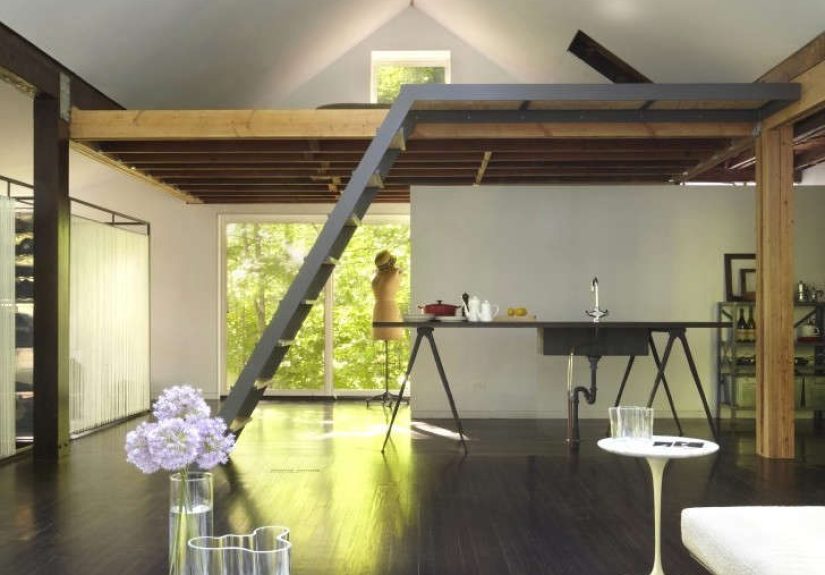
flexibility, while loft beds can create a workspace underneathideal when your floor plan is more “postage stamp” than “open concept.”
The trick is to be honest about your tolerance for daily setup. If you hate converting things, don’t buy a bed that requires a ten-step ceremony.
(Your future self will revolt.)
Pick Visually Light Pieces
Bulky furniture makes small rooms feel crowded. Choose pieces with legs (so you can see floor space), or materials like glass/clear acrylic to reduce
visual weight. It’s not magic; it’s sightlines. Your eyes like breathing room even when your closet does not.
Hide Clutter Like It’s A Plot Twist
Clutter is the fastest way to make a small space feel smaller. The goal isn’t to own nothingit’s to store things where they don’t constantly shout at you.
Use “Under” and “Behind” Spaces
- Under the bed: Soft bins for linens, off-season clothes, shoes, gift wrap, and bulky items.
- Under the sofa: Low-profile bins can hold games, cables, or extra throws.
- Behind doors: A classic for cleaning tools, pantry items, or bathroom supplies.
- Under stairs or awkward nooks: If you have them, built-ins or fitted storage can turn “dead space” into “bonus closet.”
Containerize, Label, and Don’t Collect Bins Like Pokémon
Containers work best when they create categories. “Cords and chargers.” “Winter accessories.” “Important papers.”
If you label a bin “Misc,” that bin will become a black hole with a subscription.
One more rule: don’t buy storage before you declutter. Otherwise you’ll just have neatly organized stuff you still don’t need.
Make A Little Space Feel Bigger (Without Lying To Yourself)
You can’t add square footage, but you can add light, flow, and calm.
That’s how tiny apartments become “efficient” instead of “cramped.”
Light Is Your Best Friend
Let natural light travel. Use sheer curtains, keep windows as unobstructed as possible, and avoid blocking light paths with tall furniture.
Add layered lightingoverhead, task, and ambientso the room feels functional at any hour.
Color and Consistency
A consistent palette can make a space feel more cohesive (and therefore less chaotic). You don’t need to paint everything white,
but limiting competing colors and patterns helps your space read as one calm environment.
Mirrors: Not Just For Checking If Your Hair Has Betrayed You
A mirror opposite or near a window can bounce light around, which can make a room feel brighter and more open.
Bonus: it doubles as a “wow, this room is bigger than I thought” illusionwhich is the friendliest kind of deception.
Small-Space Habits That Keep You From Losing It
In a larger home, mess can hide. In a small home, mess holds meetings. The good news: tiny spaces reward small routines.
The 10-Minute Reset
Set a timer for 10 minutes at the end of the day: dishes, laundry into a hamper, surfaces cleared, trash out.
It’s not about perfection. It’s about not waking up to yesterday’s chaos performing interpretive dance in your kitchen.
The One-In, One-Out Rule
If storage is limited, new items need a trade. New shoes? Donate old shoes. New kitchen gadget? Say goodbye to the gadget that only makes
“spiralized zucchini” twice a year.
Seasonal Swaps
Rotate bulky items: coats, boots, extra blankets, holiday gear. Store them under the bed or on top shelves. You don’t need to see your snow boots in July
unless you enjoy emotional confusion.
Specific Examples: How This Looks In Real Life
Example 1: A 350-Square-Foot Studio With Work-From-Home Life
The move: put your desk near the brightest light source (usually a window), and make it feel “separate” with a small rug or a wall shelf above it.
Use a slim bookcase or curtain to create a sleeping nook. Choose a sofa with storage or a storage ottoman for tech accessories.
Keep cables in a labeled bin so your living room doesn’t look like it’s powering a spaceship.
Example 2: A Bedroom With No Closet (A Classic Plot Twist)
The move: use a wardrobe rack or a compact wardrobe system, then keep it visually calm with matching hangers and a consistent color palette.
Add under-bed storage for off-season clothes. Put hooks behind the door for bags and jackets. If you can, add a bench at the foot of the bed for
“worn-but-not-dirty” clothes (aka the limbo category).
Example 3: The Kitchen That’s Basically A Countertop With Opinions
The move: go vertical inside cabinets (shelf risers, stackable bins), mount a rail or pegboard for tools, and use inside-door storage for lids or spices.
Limit duplicates: one skillet you love beats three you tolerate. If you must keep specialty appliances, store them high and rotate seasonally.
Common Small-Space Mistakes (And How To Avoid Them)
Mistake: Shoving Everything Against The Walls
It feels logical, but it can create a “ring around the room” effect that makes the center feel weirdly empty and the edges feel cramped.
Try floating one key piece (like a sofa) a few inches off the wall, or use a narrow console behind it to add function.
Mistake: Buying Full-Size Furniture Because It Was On Sale
A bargain loveseat isn’t a bargain if it blocks a walkway and makes you climb over it like a mountain goat.
Measure first. Then measure again. Then, because tiny homes love humility, measure one more time.
Mistake: Organizing Without Decluttering
Organization is not a magic spell that turns too much stuff into not-too-much stuff. Declutter first. Then store what remains in a way that supports
your daily routines.
Conclusion: Your Space Is Small, But Your Systems Can Be Mighty
Living in a little space is less about sacrificing comfort and more about designing with intention. When you zone your home, go vertical,
pick space-saving furniture that truly earns its keep, and build small routines that keep clutter from multiplying overnight, you get your life back.
And yesyour yoga mat can finally open without starting a fight with a chair.
Experience-Based Add-On (About ): What People Learn The Hard Way In Little Spaces
The funny thing about small space living is that it doesn’t just change your homeit changes your habits. People often start out thinking
the solution is a perfect storage system, when the real transformation is how they use their space every day.
One common “aha” moment: the first week after a big reorganization, everything feels incredible… and then life happens. A package arrives,
laundry piles up, and suddenly the beautifully labeled bins look at you like disappointed librarians. The lesson is simple:
systems must be frictionless. If putting something away requires moving five things, opening a heavy lid, and performing a minor
ballet, it won’t happen consistently. People who succeed long-term tend to choose storage that’s easy: open baskets for daily items, hooks for
grab-and-go stuff, and bins for seasonal things that don’t need daily access.
Another real-life pattern: people overestimate how much “multi-purpose” they’re willing to do. In theory, a folding table is genius.
In practice, if you have to unfold it three times a day, you may start negotiating with yourself like, “What if I just eat standing up?”
The most effective setups usually minimize daily transformations. That’s why a daybed (that looks like a couch) often beats a complicated sleeper sofa,
and why a desk that can also act as a vanity works better than a desk you have to assemble like a puzzle.
Tiny spaces also reveal what people value. Some discover they don’t actually care about having a full dining setthey care about
a comfortable place to sit and eat. Others realize the true luxury is not a bigger couch, but a clear pathway from the bed to the bathroom
that doesn’t require parkour. Once those priorities become obvious, it gets easier to make decisions like “Yes to a slim table,” “No to a second accent chair,”
or “I love this lamp, but it’s shaped like a traffic cone and I keep hitting it.”
A frequent experience in little spaces is the emotional power of “empty.” People often feel guilty about leaving space unusedlike every inch must be filled.
But in small homes, negative space is functional. It’s where you stretch, fold laundry, open a suitcase, or just exist without bumping into something.
Successful small-space setups protect that emptiness on purpose, almost like a budget: “I can spend this space, but only if the purchase is worth it.”
Finally, there’s the social side. Small apartments can feel awkward for hostinguntil you set up a plan. People who host happily in little spaces
tend to use flexible seating (ottomans, stools, floor cushions that store away), and they embrace casual gatherings: snacks, music, and “we’re all cozy,
it’s fine.” The best small-space hosts don’t apologize for size; they curate the vibe. And that mindset shifttreating your home like a smart, intentional
space instead of a “temporary problem”is often the biggest upgrade of all.