Table of Contents >> Show >> Hide
- Power Yoga in Plain English
- A Quick Origin Story (No Pop Quiz, Promise)
- What to Expect in a Power Yoga Class
- Common Power Yoga Poses (and What They’re Doing for You)
- 3 Power Yoga Workouts You Can Try (Beginner to Spicy)
- Benefits of Power Yoga (What You Can Actually Expect)
- Is Power Yoga “Cardio”?
- Who Is Power Yoga Best For?
- Getting Started: Simple Tips That Save Your Wrists (and Your Pride)
- FAQ: Quick Answers to Common Questions
- Experiences From the Mat (The Real-World Feel of Power Yoga)
- Conclusion
Power yoga is what happens when yoga puts on sneakers, turns the music up (sometimes), and decides that “a gentle stretch”
is not today’s personality. It’s still yogabreath, focus, and posturesbut with a faster tempo and a very “let’s move”
attitude. If you’ve ever left a class thinking, “Did I just do yoga… or did I accidentally join a sweat club?” you’ve
probably met power yoga.
In this guide, you’ll learn what power yoga actually is (and what it isn’t), the poses you’ll see all the time, sample
workouts you can try, and the benefits you can realistically expectwithout the woo-woo overload or the “just breathe
through your taxes” promises.
Power Yoga in Plain English
Power yoga is a vigorous, fitness-forward style of yoga that’s usually built on a vinyasa flow format:
you move from pose to pose with your breath as the metronome. Compared with slower styles, power yoga tends to be
faster-paced, more strength- and endurance-oriented, and more likely to make your
triceps introduce themselves.
Here’s the key detail: power yoga isn’t one standardized sequence. Unlike some traditions that follow a
set series, power yoga classes often vary by studio, teacher, and even the day of the week. One class might be
plank-heavy, another might feature lots of lunges, and a third might spend quality time with your core (whether you
asked for it or not).
Power Yoga vs. Vinyasa: Are They the Same?
You’ll often see “power yoga” used interchangeably with vigorous vinyasa. Think of it like this:
all power yoga is vinyasa-style flow, but not all vinyasa is power yoga. Power yoga usually implies a
higher intensitymore heat-building sequences, longer holds in strength poses, and fewer pauses.
Power Yoga vs. Ashtanga: What’s the Difference?
Ashtanga-inspired movement is a big part of power yoga’s DNA, but there’s a major difference:
Ashtanga traditionally follows a fixed sequence, while power yoga typically uses a teacher-designed flow.
Same family tree, different house rules.
A Quick Origin Story (No Pop Quiz, Promise)
Power yoga developed in the United States as teachers adapted stronger, athletic, breath-led yoga into formats that felt
accessible to Western fitness culture. It’s commonly described as an offshoot of Ashtanga-style vinyasa practice, but it
evolved into a broad label that can include multiple vigorous approachessometimes branded, sometimes not.
Translation: power yoga is less about one sacred script and more about a shared vibeflowing movement, steady breathing,
and enough work to earn your post-class water bottle moment.
What to Expect in a Power Yoga Class
If you’re wondering what you’ll actually do, here’s a typical “power yoga shape” (even if the details change):
- Warm-up flow: Breath work + gentle movement, often leading into sun salutations.
- Heat-building sequence: Repeating flows that ramp intensity (think: plank, chaturanga, lunges).
- Standing series: Warriors, balances, and transitions that build stamina and leg strength.
- Core + upper body focus: Planks, boats, side planks, and “why is this so hard?” moments.
- Cool-down: Hip openers, twists, and longer holds to bring your nervous system back to Earth.
- Savasana: Yes, you still get it. Yes, it still feels amazing.
Do You Need Props?
A mat is the only must. Blocks, a strap, and a towel are helpfulespecially if you’re tight in the hamstrings or if the
class runs warm. Props aren’t “cheating.” They’re “smart engineering for humans with bones.”
Common Power Yoga Poses (and What They’re Doing for You)
Power yoga borrows many familiar postures but often emphasizes transitions and strength-based holds. Here are common
staples you’ll see in power yoga workouts:
Foundational Standing Poses
- Mountain Pose (Tadasana): Your reset buttonposture, grounding, breath awareness.
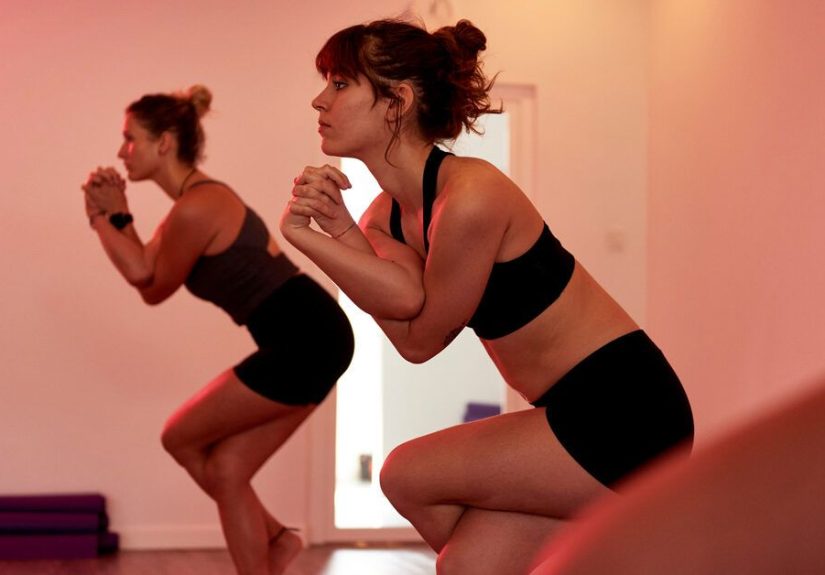
- Chair Pose (Utkatasana): Quads and glutes, plus a deep conversation with your willpower.
- Warrior I (Virabhadrasana I): Legs, hips, and core stability; great for building heat.
- Warrior II (Virabhadrasana II): Lower-body endurance + shoulder stability.
- Triangle (Trikonasana): Hamstrings, hips, and a strong side body line.
Strength-Builders You’ll Meet Often
- Plank: Core, shoulders, and full-body tension control.
- Chaturanga (low plank): Upper-body strength and scapular stability (modifications encouraged).
- Upward-Facing Dog: Back-body strength + chest opening (shoulders love good alignment here).
- Downward-Facing Dog: Shoulder stability, hamstring length, and active recovery during flows.
- Boat Pose (Navasana): Core strength and hip flexor endurance.
Balance Poses for “Brain + Body” Coordination
- Tree Pose (Vrksasana): Balance, focus, and hip stability.
- Chair Twist: Core control + spinal rotation (keep it smooth, not cranky).
- Warrior III: Posterior chain strength and serious concentration.
Mobility + Recovery Poses That Keep You Functional
- Low Lunge: Hip flexor opening (especially nice if you sit a lot).
- Pigeon / Figure Four: Hip external rotation and glute release options.
- Supine Twist: Spinal decompression and downshift for the nervous system.
- Child’s Pose: Breath-focused reset; shoulders and back get a break.
3 Power Yoga Workouts You Can Try (Beginner to Spicy)
These sequences are designed to feel like real power yoga: breath-led flow, strength emphasis, and a finish that leaves
you calmer than when you started. Move with control. If your breath turns into frantic gasps, slow down.
Workout #1: 20-Minute Beginner Power Flow (No Ego Required)
- Breath + Warm-up (3 min): Child’s Pose (5 breaths), Cat-Cow (6 rounds), Down Dog (5 breaths).
- Sun Salutation A (5 min): 4 rounds at an easy pace (knees down for plank/chaturanga as needed).
- Strength Flow (8 min):
- Chair Pose (3 breaths)
- Forward Fold
- Half Lift
- Step back to Plank (hold 2 breaths)
- Lower to knees or chaturanga
- Up Dog or Cobra
- Down Dog
- Repeat 3 rounds
- Standing Series (2 min): Warrior II → Reverse Warrior → Side Angle, each side.
- Cool-down + Savasana (2 min): Supine Twist (each side), Savasana (at least 5 breaths).
Workout #2: 30-Minute Intermediate Power Yoga (Strength + Flow)
- Warm-up (5 min): Cat-Cow, Low Lunge (each side), Down Dog pedal.
- Sun A + Sun B (8 min): 3 rounds Sun A, then 2 rounds Sun B (add Chair + Warrior I).
- Warrior Ladder (10 min):
- Warrior I → Warrior II → Reverse Warrior → Side Angle → Half Moon (optional)
- Flow back through vinyasa
- Repeat on both sides, 2 times
- Core Finisher (4 min): Boat (3 breaths) → Low Boat (3 breaths) x 3 rounds; Side Plank (each side).
- Cool-down (3 min): Pigeon/Figure Four, Forward Fold, Savasana.
Workout #3: 45-Minute Power Yoga “Athletic Flow” (For When You Want a Challenge)
This is the format many studios use: longer heat-building blocks, more holds, and a deliberate strength focus. Add
optional “yoga sculpt” elements like light weights only if your form stays clean.
- Warm-up (6 min): Breath + mobility + 2 easy Sun As.
- Heat Block (12 min): 6 rounds of Sun A with a 2-breath plank hold each round.
- Strength Block (12 min):
- Chair → Chair Twist (each side)
- High Lunge (3 breaths) → Crescent Twist (2 breaths)
- Optional: add slow mountain climbers in plank (10 reps)
- Repeat both sides, 2 cycles
- Balance + Control (8 min): Warrior III holds (2 x 3 breaths each side) + Half Moon (optional).
- Core + Back Body (4 min): Forearm Plank (30–45 sec), Locust Pose (2 rounds).
- Cool-down (3 min): Hip opener + twist + longer Savasana if time allows.
Benefits of Power Yoga (What You Can Actually Expect)
Power yoga benefits overlap with other yoga styles, but the intensity can make the training effect feel more like a
hybrid of yoga and bodyweight strength work. Here are realistic, evidence-aligned benefits many people experience with
consistent practice:
1) Strength and Muscle Endurance
Holding poses like plank, chair, and warrior builds time-under-tensionone of the simplest ways to train muscular
endurance. You’re not just stretching; you’re asking your muscles to stabilize joints and control movement in multiple
planes. It’s sneaky strength training… with better music.
2) Flexibility and Mobility (With More “Active” Control)
Power yoga tends to create active flexibilitymobility you can use while you’re moving, lunging, balancing, and
transitioning. That matters for everyday life (and every other workout you do).
3) Balance, Coordination, and Body Awareness
Balances aren’t only about ankles. They train coordination, proprioception (your internal GPS), and focus under fatigue.
In power yoga, you often hit balance poses after a tough sequencebecause life is like that too.
4) Stress Reduction and Mental Reset
Even though it’s intense, power yoga still uses breath and attention. Many people report that the structured challenge
quiets mental noise: it’s hard to doom-scroll in your head when you’re trying not to faceplant in Warrior III.
5) Sleep and Recovery Support
Yoga in general is associated with improved sleep in various populations, and a regular practice can help create a
consistent wind-down rhythmespecially if you cool down properly and don’t sprint out of class like a caffeinated deer.
6) General Fitness and Heart-Rate Support
A fast flow can elevate your heart rate, particularly with repeated sun salutations and minimal rest. Some classes feel
closer to cardio conditioning; others feel more like strength endurance. Intensity depends on sequencing, pace, and your
effort level.
Is Power Yoga “Cardio”?
Sometimes yes, sometimes “cardio-adjacent.” A good rule of thumb is the talk test:
if you can speak in full sentences, you’re likely at a moderate intensity; if you can only get out a few words at a time,
it’s more vigorous. Power yoga can raise heart rate, but it’s not automatically the same stimulus as running intervals.
The payoff is that you’re simultaneously building strength, mobility, and breath control.
Who Is Power Yoga Best For?
- People who get bored easily: Variation keeps it fresh.
- Strength-training fans: It complements lifting with mobility + stability.
- Runners and desk sitters: Hips, hamstrings, ankles, and spine often benefit from the mix of strength and stretch.
- Busy schedules: A 20–45 minute flow can hit multiple fitness targets at once.
Who Should Be Cautious (and Why Modifications Matter)
Yoga is generally considered safe when practiced properly with qualified instruction, but injuries can happenmost often
sprains and strains. If you’re new, returning after an injury, pregnant, older, or managing conditions like high blood
pressure, balance issues, or glaucoma, you may need pose modifications and instructor guidance.
The biggest risk factor in power yoga isn’t the styleit’s the combo of speed + unfamiliar alignment + trying to “keep up.”
Your practice is not a race. It’s a workout with a breath soundtrack.
Getting Started: Simple Tips That Save Your Wrists (and Your Pride)
1) Start slower than you think you should
If the class is moving fast, prioritize form over speed. Taking an extra breath in Down Dog is not a moral failure.
2) Modify early
Knees-down in plank, cobra instead of up dog, blocks under hands, shorter stancesthese are smart choices, not beginner
badges. Build consistency first; intensity comes later.
3) Treat chaturanga like a skill, not a push-up contest
A poorly aligned chaturanga can irritate shoulders and wrists. If you’re not sure, lower your knees or skip it. Your
shoulders will thank you with decades of continued service.
4) Breathe like it’s part of the assignment
In power yoga, breath is the pace car. If breath gets jagged, slow the transition, shorten the hold, or take a reset pose.
The goal is controlled effort, not survival panting.
FAQ: Quick Answers to Common Questions
Is power yoga good for beginners?
It can be, if the class is beginner-friendly and you’re comfortable modifying. If you’re brand new to yoga, trying a
slower flow class first can help you learn alignment and common transitions.
How often should I do power yoga?
Many people do well with 2–4 sessions per week, depending on intensity and what else they’re training. If you lift heavy
or run a lot, treat power yoga like a training sessionplan recovery accordingly.
Can power yoga help with weight management?
It can contribute by increasing activity, building strength, and supporting healthy habits. Like any exercise, results
depend on overall routine, nutrition, sleep, and consistency. Expect “support,” not magic.
Experiences From the Mat (The Real-World Feel of Power Yoga)
Power yoga has a funny way of giving you a “two-in-one” experience: part workout, part mental reset. People often walk in
carrying the usual daily baggagetight hips from sitting, shoulders creeping up toward the ears, a brain doing that
squirrelly thing where it hops between errands, emails, and existential dread. Then the class starts, and within a few
minutes the body takes over the conversation.
Early on, the most common surprise is how athletic it feels. You might expect stretching and calm, but you get a
steady rhythm of transitions: fold, lift, step back, plank, lower, open the chest, back to down dog, step through, rise.
At first, it can feel like learning choreography while your hamstrings heckle you from the sidelines. Over time, though,
that flow becomes satisfyinglike your body finally found a playlist it understands.
Another frequent experience is the “strength awakening.” Chair pose looks innocent until you hold it long enough for your
legs to start negotiating. Plank feels fine until you’re asked to stay there while the instructor says something cheerful
like, “Just two more breaths!” (Those breaths are always suspiciously long.) People often notice that power yoga reveals
weak links in a helpful way: ankles wobble in balance, shoulders complain in chaturanga, the core begs for earlier
attention. The upside is that these are trainable skillsstability and control improve quickly with consistency.
Mentally, power yoga tends to create a specific kind of focus: not the sleepy calm of a nap, but the bright calm of being
fully engaged. You’re paying attention to where your weight is distributed, whether your ribs are flaring, how your breath
sounds, and whether you can soften your jaw even while your legs work. Many people describe this as a “moving meditation”
that’s easier than sitting stillbecause your body gives your mind a job.
There’s also a real-world confidence effect that shows up outside the studio. Not because power yoga turns you into a
superhero, but because it repeatedly puts you in manageable discomfort and teaches you to stay present. You learn that
effort can be steady instead of frantic, that you can pause without quitting, and that “hard” doesn’t automatically mean
“unsafe.” That’s a surprisingly transferable skilluseful for workouts, deadlines, and any moment where your brain says,
“Nope,” and you calmly reply, “We’ll take this one breath at a time.”
Finally, the post-class feeling tends to be a blend of energized and grounded. Your muscles feel worked, your posture
feels taller, and your nervous system often settlesespecially if you allow the cool-down and savasana to do their job.
People who stick with power yoga commonly report that the practice becomes a reliable reset button: a place to build
strength, improve mobility, and leave the room a little more like themselves than when they arrived.
Conclusion
Power yoga is a strong, fast-paced, breath-led practice that blends yoga postures with athletic flow. It’s ideal if you
want a workout that builds strength and endurance while still supporting flexibility, balance, and stress relief. Start
with smart modifications, prioritize form over speed, and let consistency do the heavy lifting. Power yoga will meet you
where you arethen gently (or not-so-gently) invite you to level up.