Table of Contents >> Show >> Hide
- Quick Navigation
- What Kennections Is (and Why It’s Addictive)
- Why Ken Jennings Is the Perfect Quiz Gremlin
- What Makes “What’s the Kennection? #181” a Classic Kennections Vibe
- A Repeatable Method to Solve Kennections (Without Melting Your Brain)
- Case-Study Thinking With #181-Style Clues
- Why This Puzzle Format Is Weirdly Good for Your Brain
- How to Write Your Own Kennection (So You Can Torment Your Friends Politely)
- FAQ
- Conclusion
- +: What It Feels Like to Play “What’s the Kennection? #181”
Some trivia quizzes want you to know stuff. Kennections wants you to know stuff… and then do something
slightly devious with it.
If you’ve never played, here’s the deal: you answer five trivia questions, and then you figure out what all five
answers have in common. That last step is where the fun (and the dramatic sighing) lives.
Quick Navigation
- What Kennections is (and why it’s addictive)
- Why Ken Jennings is the perfect quiz gremlin
- What makes #181 a classic Kennections vibe
- A repeatable method to solve Kennections
- Case-study thinking with #181-style clues
- Why this puzzle format is weirdly good for your brain
- How to write your own Kennection
- FAQ
- : what it feels like to play #181
- SEO tags (JSON)
What Kennections Is (and Why It’s Addictive)
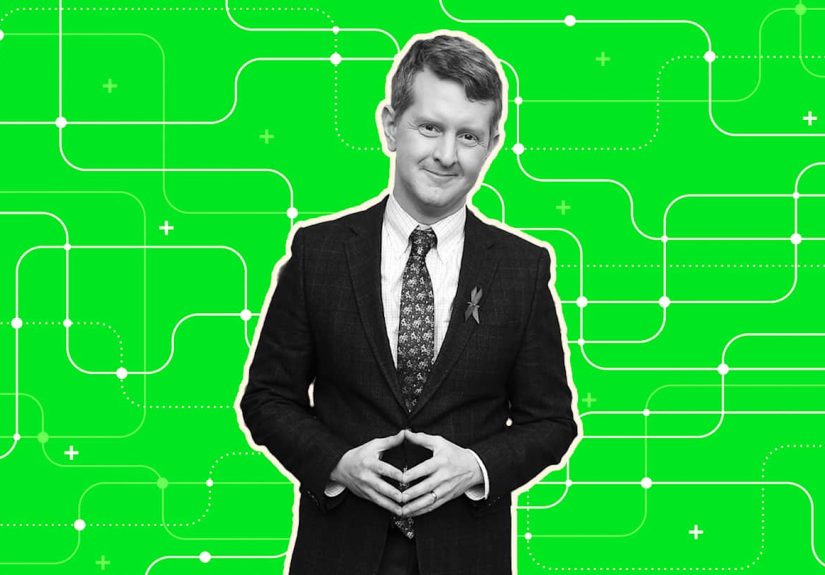
Kennections is a weekly trivia-and-pattern puzzle created by Ken Jennings, best known to many
people as a champion (and now host) of Jeopardy!. The hook is simple enough to explain in one breath:
answer five questions, then find the “Kennection”the shared theme tying those answers together.
But the simplicity is a trap door. The five answers often feel unrelated on purpose: pop culture next to
geography, a slang term next to classical history, a food item next to a sports fact. Your brain tries to grab
the obvious category (“things that are… famous?”) and the puzzle quietly says, “Cool theory. Wrong door.”
The best Kennections themes are not “all five are desserts.” They’re more like: “all five are also names of
roller coasters,” or “all five are last names of characters who…,” or “all five appear on a list you’d never
think to Google unless you were trapped in an elevator with a librarian and a competitive streak.”
Kennections has been running for years and has been collected into a big, official book editionbecause when a
puzzle is good, we eventually want it in a physical brick we can keep by the couch (or, as the internet
inevitably suggests, the bathroom). The format is designed to be played quickly, but solved slowlymeaning it’s
perfect for anyone who enjoys being right… eventually.
Why Ken Jennings Is the Perfect Quiz Gremlin
Ken Jennings isn’t just “a trivia guy.” He’s the trivia guy for a lot of Americans. His original
Jeopardy! run included a record-setting streak that still lives rent-free in quiz history. The important
part for Kennections, though, isn’t only what he knowsit’s how he thinks.
Great quiz writers don’t merely ask questions. They build misdirection with manners. They know what you’ll
assume, then they set up a smarter pattern one step to the left. Kennections is basically that skill turned into
a weekly hobby: “Let’s see if you can resist the first three wrong patterns your brain will try.”
And because Jennings is a word-nerd who loves how knowledge is organized (lists, categories, labels, and those
delightful “Wait, that’s a real word?” moments), the themes often reward the same instincts you use in good
trivia: precision, curiosity, and the willingness to look beyond the obvious definition.
What Makes “What’s the Kennection? #181” a Classic Kennections Vibe
Kennections #181 (published as part of the Mental Floss Kennections series) is a great example of why this
puzzle format works: the questions span totally different everyday worlds, and the connection hides in how those
worlds overlap.
Clue energy #1: “A weird word” + roller coasters
One of the most memorable moves in Kennections puzzles is the “vocabulary curveball”a term that sounds like it
escaped from a spellbook. In the #181 orbit, that includes veloxrotaphobia, described as fear of
roller coasters. Whether you’ve ever used that term in a sentence (most of us have not), the clue immediately
pulls you into a real place where roller coasters are a big deal: Six Flags Magic Mountain in
Valencia, California.
That park has been famous for its coaster lineup for years; at one point it even earned a Guinness record for
having the most roller coasters in one theme park. Numbers shift as rides open, close, and get reworked, which
is exactly why it’s such a rich trivia anchor: it’s both “a real fact” and “a moving target,” the perfect
playground for quiz writers.
Clue energy #2: “A simple recipe” + a classic cocktail
Another Kennections staple is the “you either know it or you don’t… but you can reason it out” clue. A classic
example is the Negroni, often summarized as a clean 1:1:1 formulagin, Campari, and sweet
vermouthbuilt on bitterness, balance, and the kind of confidence you can only get from a drink with a century
of lore behind it.
What’s funny is how these two worldsroller coasters and cocktailsfeel miles apart. One is screaming in the
sun; the other is sitting in a dim bar pretending you read long novels. But Kennections loves that distance,
because the “Kennection” is rarely “these things are similar.” It’s usually “these things share a label you
didn’t realize was a label.”
A Repeatable Method to Solve Kennections (Without Melting Your Brain)
You don’t need to be a walking encyclopedia to solve Kennections, but you do need a system. Here’s one that
plays nicely with #181-style clues.
1) Answer first. Connect second.
Sounds obvious, but people skip it. The fastest way to wreck your solve is to guess the theme after only one or
two answers. Get all five answers on paper first, even if you’re unsure on one. Kennections themes often become
visible only when the full set is present.
2) For each answer, write 3–5 “metadata” notes.
Not synonymsmetadata. For example:
- Negroni: equal-parts cocktail; Italian; gin/Campari/vermouth; orange garnish; aperitivo vibe.
- Roller coaster (Magic Mountain context): loops; thrill rides; engineering; height/speed; “coaster” as a word with multiple meanings.
The goal is to produce extra handles your brain can grab later. Often the Kennection is hiding in one of these
“side properties,” not the main identity.
3) Look for “category labels,” not “topic similarities.”
A good Kennection theme is frequently something like:
- They’re all official members of a defined list (awards, ranks, records, official cocktails, etc.).
- They’re all titles, nicknames, or names used in a different context (songs, rides, teams, ships, books).
- They’re all things that share a structural feature (anagrams, homophones, hidden words, repeated letters).
The trick is: you’re not finding “what they are.” You’re finding “what they’re called somewhere else.”
4) Run the “list test.”
Ask: “Could these five answers plausibly appear together on a list page?” If yes, what kind of list?
(Cocktails? Roller coasters? World records? TV episodes? Great. Now search your brain for the list title.)
5) Try one ‘boring’ interpretation on purpose.
This is the anti-chaos move. Before you go full conspiracy board, test the dull option: shared letters,
geography, shared suffix/prefix, repeated pattern. Kennections is clever, but it’s not always complicated.
Sometimes the “aha” is literally spelling.
Case-Study Thinking With #181-Style Clues
Since Kennections #181 includes clues that can land you in roller-coaster trivia and cocktail trivia, it’s a
perfect example of how the puzzle tests range more than depth. You don’t need to know every
coaster ever built; you need to recognize the kinds of “lists” coaster facts live in. You don’t need to be a
bartender; you need to know that classic cocktails have formal recipes, official classifications, and a whole
ecosystem of riffs.
Start with anchor facts
Anchors are answers with strong identity. “Negroni” is an anchor because it’s distinctive and well-defined.
“Six Flags Magic Mountain” (or “roller coasters” via that park) is an anchor because it points to records,
named rides, and a specific place.
Then generate “candidate Kennections” (plural)
Your first theme guess is usually wrong. That’s not failurethat’s scouting. With just these two anchors,
reasonable candidate themes might include:
- Official lists (e.g., official cocktails, official records, official something).
- Names that double (a “coaster” is also a drink coaster; words that mean two different things).
- Things associated with circles/loops (roller-coaster loops; equal-parts “round” recipes).
- Italian connections (Negroni is Italian; coasters may have Italian-named rides, designers, or themed areas).
Notice what we’re doing: we’re not declaring a final answer; we’re building a set of testable hypotheses. Once
you have all five answers, one of these hypotheses will usually snap into focus, or you’ll discover a fifth
option you couldn’t see earlier.
Common trap: confusing “vibe” for “Kennection”
“Thrill” is a vibe. “Bitter” is a vibe. “Things you do on vacation” is a vibe. Kennections doesn’t pay out for
vibes. It pays out for something you can phrase cleanly, like a category label:
“All five are ____.” If your sentence ends with “kind of,” it’s probably not it.
Why This Puzzle Format Is Weirdly Good for Your Brain
Kennections isn’t a medical treatment (and neither is yelling “NEGRONI!” at your laptop like it owes you money),
but the mental skills it uses overlap with the kinds of cognitive habits health experts often encourage:
staying mentally active, learning new things, and challenging attention and recall.
The cognitive lift comes from switching between modes:
- Recall: pulling facts (ingredients, names, places) from memory.
- Recognition: noticing patterns (shared labels, structures, list membership).
- Flexibility: abandoning the first “cute” theory and trying a different one.
- Inference: solving unknowns by reasoning from clues (especially with food/drink, geography, and wordplay).
That mix is exactly what makes Kennections satisfying: you’re not only testing knowledge; you’re practicing how
to reorganize knowledge on the fly. It’s the mental equivalent of rearranging your junk drawer until the
measuring tape magically appears.
How to Write Your Own Kennection (So You Can Torment Your Friends Politely)
Want to build a Kennection in the spirit of #181? Here’s a safe, repeatable template.
Step A: Pick a connection category that is definable
- Official lists (awards, record categories, standardized recipes)
- Names that double (brands that are also verbs, places that are also people’s names)
- Word patterns (hidden animals, shared endings, anagrams)
Step B: Choose five answers that don’t “feel” connected
The best puzzles hide the link by mixing domains. For example: a cocktail, a theme park, a book title, a sports
term, and a biology word. If your five answers all live on the same shelf, your players will solve it too fast
and then start feeling superior, which is not the goal. The goal is friendly despair.
Step C: Write questions that point cleanly to each answer
Each clue should be solvable on its own, even if the player doesn’t get the Kennection. Use one “easy win,” two
medium questions, and one or two that feel spicylike a phobia term or a recipe ratio.
Step D: Make the Kennection a sentence, not a paragraph
If your explanation requires a TED Talk, it’s probably too niche. A solid Kennection is something you can say
in one crisp line:
“All five are ____.”
FAQ
Is Kennections like the New York Times “Connections” game?
They’re cousins, not twins. Both reward pattern recognition, but Kennections is built on five trivia answers
that share one hidden theme, while Connections typically asks you to sort multiple words into groups. If you
enjoy one, your brain will probably tolerate the other. (It may not thank you, but it will show up again
tomorrow.)
How often do new Kennections puzzles come out?
It’s presented as a weekly quiz. The weekly rhythm is part of why it works: you get a fresh challenge often
enough to build the habit, but not so often that you forget what daylight looks like.
What’s the “right” way to play #181?
Answer the questions first, then hunt the theme. If you get stuck, treat the weirdest clue as a gift: unusual
words (like phobia names) and standardized things (like classic cocktail recipes) are often the strongest
anchors for the final connection.
Conclusion
“What’s the Kennection? #181” is a great snapshot of why Kennections has lasted: it’s trivia, but it’s also a
logic puzzle; it’s fact-based, but it rewards creative categorizing. The roller-coaster angle reminds you that
knowledge lives in records, lists, and places. The Negroni angle reminds you that culture lives in formulas,
names, and traditions. And the hidden Kennection reminds you that your brain is both brilliant and gullible
sometimes in the same five minutes.
If you want to get better at Kennections, don’t just memorize more facts. Practice labeling facts in multiple
ways. The puzzle is less “what do you know?” and more “how many drawers can you store it in?”
+: What It Feels Like to Play “What’s the Kennection? #181”
You sit down to play Kennections #181 with the confidence of someone who has watched exactly three trivia
documentaries and therefore believes they are basically a quiz sherpa. The first question greets you with a word
that sounds like it was invented by a committee of Latin-speaking roller skaters: veloxrotaphobia.
Your brain does the classic three-step routine: (1) panic, (2) squint, (3) pretend you meant to do this.
Then you notice the clue points you toward roller coasters, and suddenly you’re not scaredyou’re smug. You
know roller coasters! You know at least one roller coaster! You once waited ninety minutes for a ride and
complained the entire time, which is basically a certification. When Six Flags Magic Mountain shows up in your
mental theater, you can practically smell sunscreen and hear a teenager yelling “I’m not scared!” in a voice
that is, scientifically speaking, pure fear.
The second clue drops you into a totally different world: cocktails. Specifically, the Negroniequal parts gin,
Campari, sweet vermouth. The vibe shift is immediate. We’ve gone from “hands in the air screaming” to “hands on
the glass contemplating life choices.” Your brain tries to connect the two, and your first attempt is hilariously
wrong: “They’re both… things that make your stomach feel weird?” (Technically accurate. Spiritually useless.)
This is the exact moment Kennections reveals its personality. It doesn’t reward the loudest idea; it rewards the
cleanest one. So you start doing what the puzzle wants: you stop chasing “meaning” and start chasing labels.
Roller coasters live in record books, in named lists, in park maps, in engineering categories, in the lore of
“most loops” and “tallest drop.” The Negroni lives in recipe standards, official cocktail lists, bar menus, and
the sacred geometry of ratios. These are different ecosystems, but both are highly list-shaped.
As you work through the remaining questions (some you know instantly, some you bulldoze with logic, and at least
one you stare at like it personally insulted you), you feel your brain doing an awkward but productive dance.
You’re collecting answers, then circling them, then writing tiny notes like a detective who specializes in
nonsense: “Italian?” “Official?” “Name used elsewhere?” “Is this also a band name?” At some point you will
absolutely say, out loud, to nobody, “Wait… is this a thing?” and the answer will be yes, because trivia is a
museum of things you didn’t know were things.
The emotional arc is predictable and also somehow fresh every time. Early confidence. Midway confusion. A brief
period of bargaining (“If the theme is just ‘things with orange in them,’ I’m going to scream”). Then you get
the itch: the sense that the connection is right there, hiding behind a simpler sentence. You start testing
candidate Kennections like you’re trying on jackets. Too big. Too small. Too weird. Thensometimes suddenly,
sometimes slowlyyou land on the one that fits all five without stretching. That’s the best part: the theme isn’t
“close.” It’s clean.
And when you finally see it, you get that tiny, unreasonable burst of pride. Not because you know everything,
but because you found the organizing principle. You didn’t just collect facts; you arranged them. Which, in a
world where most of us can’t even arrange our kitchen drawers, feels like a minor superpower.
Thenbecause you are a human being with a sense of humoryou immediately want to give the puzzle to someone else
just to watch their face when the word veloxrotaphobia shows up. This is how Kennections spreads:
not through advertising, but through the ancient tradition of lovingly bothering your friends.