Table of Contents >> Show >> Hide
- The short answer: the site has the perfect mix of age, environment, and exposure
- Millions of years ago, South Jersey was underwater
- Why the fossils are “emerging” now
- The quarry preserves a rare record of the mass extinction interval
- What kinds of fossils are turning up?
- Why New Jersey is a better fossil state than many people realize
- So why are thousands of fossils emerging from this quarry, specifically?
- What scientists are really learning from the site
- Experience section: what this story feels like on the ground
- Conclusion
- SEO Tags
At first glance, the setting sounds almost like a prank. One of America’s most scientifically important fossil sites sits in suburban South Jersey, in a former marl quarry not far from modern retail sprawl. This is not the cinematic version of paleontology with heroic music, desert mesas, and a dramatic helicopter shot over the badlands. This is more like Jurassic Parking Lot. And yet the fossils are real, the science is serious, and the discoveries keep coming.
So why are thousands of fossils emerging from a New Jersey quarry? Because this site won the geological lottery several times over. It preserves sediments from the end of the age of dinosaurs. It formed in a shallow marine environment that was excellent at trapping and preserving dead organisms. It was later exposed by quarrying. And today, scientists and trained diggers continue to recover everything from shark teeth and fish bones to turtles, crocodilians, mosasaurs, and occasional dinosaur remains. In other words, the quarry is not “suddenly” creating fossils. It is finally revealing a deep-time archive that has been waiting 66 million years for somebody with a shovel and a good question.
The short answer: the site has the perfect mix of age, environment, and exposure
The New Jersey quarry at the center of this story is famous because it captures an extraordinary slice of time around the Cretaceous-Paleogene extinction event, the same world-changing catastrophe linked to the asteroid impact that ended the reign of non-avian dinosaurs. Scientists are interested in it not simply because it contains a lot of fossils, but because those fossils sit in a geologic setting that helps explain what happened before, during, and after that extinction.
That matters because fossils are not just cool objects; they are data with teeth. A lone fossil can tell you that a species existed. A dense fossil layer can tell you about an ecosystem, a shoreline, a mass death event, a storm deposit, or the biological aftermath of planetary disaster. This quarry offers the rare chance to study many of those questions in one place.
Millions of years ago, South Jersey was underwater
If modern New Jersey makes you picture highways, diners, and people arguing about whether Central Jersey exists, rewind the clock 66 million years and the landscape looks completely different. During the Late Cretaceous, much of what is now southern New Jersey sat beneath a shallow sea. That ancient marine setting is one major reason the quarry is so fossil-rich.
Shallow seas are excellent places to build fossil inventories. They teem with life, they receive constant sediment, and they collect the remains of organisms from both the water and nearby land. At the New Jersey quarry, that means marine fossils dominate the scene: sharks, rays, bony fish, shell-bearing invertebrates, sea turtles, crocodilians, and giant marine reptiles such as mosasaurs. But the site can also preserve material from land animals that ended up washed into the sea. That mix is part of what makes the quarry scientifically delicious.
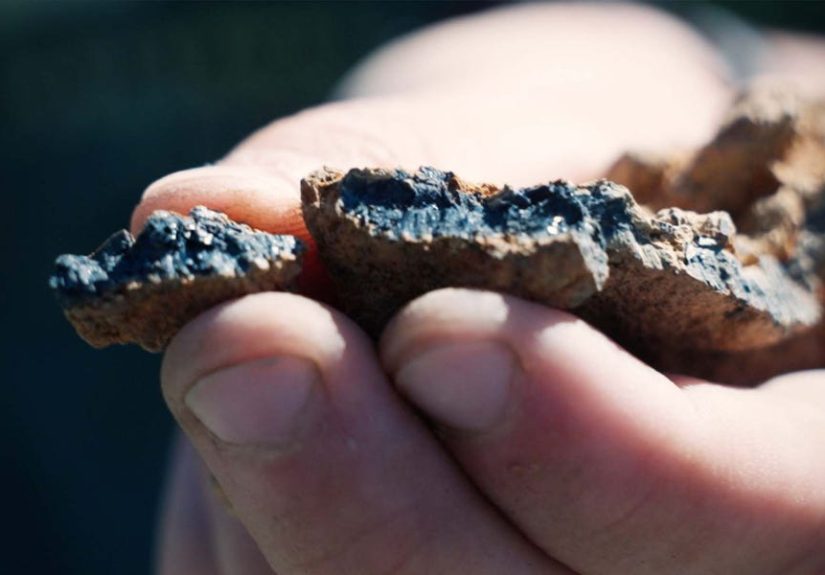
The sediments themselves matter too. Much of the site involves glauconitic greensand and marl, those greenish, mineral-rich marine deposits that helped make parts of New Jersey famous long before social media discovered “hidden gems.” In the 19th and early 20th centuries, marl was mined for fertilizer. Conveniently for modern science, those same deposits also turned out to be packed with fossils. Agriculture got a soil amendment; paleontology got a time capsule.
Why the fossils are “emerging” now
The phrase emerging fossils makes it sound as if the bones and teeth are politely climbing to the surface on their own. In reality, several processes are responsible.
1. Quarrying exposed the fossil-bearing layers
The site is a former marl pit. Quarry operations cut down into ancient sedimentary layers that would otherwise remain buried. That exposure is everything. Without quarry walls, excavated surfaces, and removed overburden, this fossil bed would stay hidden underground, unknown except to very patient worms and the occasional unlucky root.
This is one of the great ironies of paleontology: industrial digging often destroys context, but it can also reveal treasures that science would never have found otherwise. In New Jersey, the quarry opened a window into the extinction interval. Once those layers were visible, researchers could map them, sample them, and recover fossils with far more precision than random surface collecting would ever allow.
2. Ongoing excavation keeps uncovering new material
Fossil sites do not behave like vending machines. You do not press B4 and receive a mosasaur tooth. Instead, discoveries accumulate through repeated excavation, careful screening of sediment, and detailed recording of where every specimen comes from. At this quarry, researchers have spent years analyzing fossil positions, sediment layers, and geochemistry to understand how the bonebed formed.
That work explains why the number of fossils keeps growing. Every field season, every screened bucket of sediment, and every fresh cut into the quarry has the potential to reveal more specimens. A site that has already yielded a huge number of fossils often keeps giving precisely because scientists know where to look and how to recover even tiny remains that earlier generations might have ignored.
3. Tiny fossils count too, and there are lots of them
When most people imagine a fossil, they picture something dramatic: a giant skull, a rib the size of a canoe paddle, or a dinosaur tooth menacing enough to improve your posture from across the room. But many of the most important fossils are small. Really small. Tooth fragments, vertebrae, scales, fish elements, and microfossils recovered through screen-washing can completely reshape scientists’ understanding of biodiversity at a site.
That is exactly what has happened in New Jersey. Recent research on microfossils from the quarry expanded the known fauna and added more taxa to the site’s list. In other words, thousands of fossils are emerging not because paleontologists suddenly became lucky, but because modern methods allow them to detect a much richer ecosystem than a casual collector would ever see.
The quarry preserves a rare record of the mass extinction interval
This is where the story becomes bigger than “wow, neat shark teeth.” The New Jersey quarry is scientifically important because it captures part of the transition around the end-Cretaceous mass extinction. Researchers have studied the main fossiliferous layer in detail and found evidence consistent with severe ecological disruption associated with the asteroid impact and its aftermath.
That layer is not just a random pile of old bones. It sits within a narrow stratigraphic interval near the contact between formations dating to the latest Cretaceous and earliest Paleogene. Scientists have discussed different explanations for how the bonebed formed. Some have interpreted parts of it as reworked material, perhaps influenced by storms or tsunami-like processes. Others emphasize rapid ecosystem collapse and mass accumulation around the extinction event. The key point is not that every detail is settled beyond argument. The key point is that this quarry preserves the right window of time to ask those questions in the first place.
Even more compelling, studies tied to the site have reported impact-related clues such as shocked quartz and an iridium spike in the fossil-bearing interval. Those are the kinds of signals that make paleontologists stop, grin, and immediately want more sediment samples. They connect the fossils to the larger global story of the Chicxulub impact and the fifth mass extinction.
What kinds of fossils are turning up?
The site’s fossil inventory reads like a roll call from a vanished coastal ecosystem.
Marine life dominates
Because the area was once underwater, many of the most common finds are marine. Shark teeth are especially famous because they are durable, abundant, and frankly excellent at marketing fossil parks to the public. Fish remains are common too, along with shells, brachiopods, snails, and other invertebrates that help reconstruct the ancient seafloor.
Sea turtles and crocodilian remains add another layer of ecological complexity, while marine reptiles such as mosasaurs remind visitors that the ocean at the end of the Cretaceous was not exactly a gentle petting zoo. If you had gone swimming there, your options would have ranged from “bad idea” to “historically unforgettable for the wrong reasons.”
Land animals also enter the picture
One of the reasons the quarry fascinates researchers is that it can include material from terrestrial animals that drifted or were transported into marine settings. That means the site can preserve occasional remains tied to dinosaurs and birds alongside its richer marine record. The result is an unusually informative blend of land and sea, catastrophe and routine life, death assemblage and ecosystem snapshot.
Microfossils deepen the story
Large fossils are exciting, but microfossils provide the fine print. They reveal species diversity, survivorship patterns, and the ecological turnover that followed the extinction. New work on vertebrate microfossils from the quarry has identified additional sharks, bony fish, and other taxa, showing that the site’s scientific value is still growing. The fossil bed is not “finished.” It is an active research engine.
Why New Jersey is a better fossil state than many people realize
New Jersey does not always get the respect it deserves in fossil history. That is partly a branding problem. If a giant skeleton comes out of Montana, people nod solemnly and say, “Naturally.” If it comes out of New Jersey, people act like the dinosaur must have taken a wrong exit off the Turnpike.
But New Jersey has deep paleontological roots. The state played a major role in early dinosaur science. The discovery of Hadrosaurus foulkii in Haddonfield was a landmark moment in North American paleontology, and New Jersey fossils also contributed to changing scientists’ ideas about dinosaur posture and diversity. Reuters recently highlighted the importance of Hadrosaurus and Dryptosaurus discoveries in shaping the early history of dinosaur science.
That background matters because the modern quarry is not an isolated miracle. It belongs to a broader geologic and scientific tradition. New Jersey’s Coastal Plain preserves rocks of the right age. Its marl and greensand deposits have long yielded fossils. And now, with a protected, actively studied quarry tied to a museum and university, the state has a world-class platform for turning local geology into global science.
So why are thousands of fossils emerging from this quarry, specifically?
Put it all together, and the answer becomes wonderfully clear.
Thousands of fossils are emerging from the New Jersey quarry because the site preserves a shallow-marine ecosystem from around the time of the dinosaur-killing mass extinction; quarrying exposed those fossil-rich layers; and modern paleontologists are excavating them with increasingly precise methods.
It is the combination that matters. Not just old rocks. The right old rocks. Not just bones. Bones in a scientifically valuable stratigraphic context. Not just a quarry. A quarry that slices through one of the most important ecological transitions in Earth history.
That is why the finds keep coming. The fossils are not random leftovers. They are the remains of an ancient coastal world, concentrated in the right sediments, preserved through geological luck, and revealed by decades of careful work.
What scientists are really learning from the site
The biggest lesson from the quarry is not simply that catastrophe happened. We already knew that an asteroid struck Earth and changed life forever. What this site helps scientists explore is how that catastrophe played out in a real ecosystem. Which species disappeared? Which ones crossed the boundary? Which fossils were reworked? Which were buried quickly? What happened in the days, months, and years after impact?
Those are the questions that turn a quarry into a laboratory. The New Jersey site helps bridge the gap between global theory and local evidence. Instead of a vague statement like “many animals died,” researchers can examine specific layers, specific species, and specific taphonomic patterns. That is how paleontology moves from a museum mural to a testable history of life.
It also gives the public something rare: access to big science without the velvet rope. Visitors can see that paleontology is not just about giant skeletons in perfect poses. It is about stratigraphy, field notes, sediment, uncertainty, revision, and the thrill of finding meaning in a tooth smaller than your thumbnail. That is science at its messiest and best.
Experience section: what this story feels like on the ground
To understand why this quarry captures people’s imagination, it helps to picture the experience of standing there. You arrive in modern South Jersey with all the usual signs of the present day: roads, parking, traffic, buildings, coffee, probably somebody checking a phone while holding a fossil brochure. Nothing about the approach prepares your brain for the jump in scale that is about to happen.
Then you look down into the quarry, and the ordinary world starts to lose its grip. The greenish sediment does not feel theatrical at first. It feels modest, almost understated, which somehow makes the science more powerful. This is not a fake adventure dressed up for tourists. It is a real place where ancient death, burial, chemistry, time, erosion, mining, and research all collided to preserve a vanished world.
There is something deeply strange and wonderful about the idea that the ground beneath your shoes once lay under a warm Cretaceous sea. You start imagining sharks moving through the water column, marine reptiles cruising overhead, shells settling into soft sediment, and the distant shoreline carrying animals whose remains might someday drift out and become part of this same fossil archive. The quarry turns imagination into geography.
And then there is the emotional whiplash of the timeline. One moment you are hearing about mosasaurs, turtles, and fish in a thriving ecosystem. The next, you are thinking about the asteroid impact, ecosystem collapse, and the brutal reshuffling of life on Earth. The site makes extinction feel less abstract. It is no longer a textbook heading in boldface. It becomes a place, a layer, a physical boundary you can point to and say, “Something enormous happened here.”
For families and first-time visitors, the experience often carries a second thrill: discovery. Even a small fossil feels electric when it comes out of sediment that has not seen daylight in tens of millions of years. A shark tooth the size of a fingernail can suddenly make a person understand why paleontologists spend so much time bent over dirt. It is not only about rarity. It is about contact. You are holding evidence that the world was once unimaginably different, and yet somehow connected to the present.
That connection may be the most powerful experience of all. The quarry is about dinosaurs, yes, but it is also about survival, environmental change, and the fragility of ecosystems. A fossil bed formed during one mass extinction naturally makes visitors think about biodiversity, climate, and what kind of planetary record modern humans are leaving behind. The past feels ancient, but the questions feel uncomfortably current.
That is why this New Jersey quarry sticks with people. It does not just offer fossils; it offers perspective. It reminds you that world-ending events can be written into stone, that local places can hold global stories, and that one of the best windows into Earth’s most famous extinction is not in some unreachable wilderness. It is in a place where ancient seas, industrial digging, and modern science happened to meet. Which, honestly, is such a classic New Jersey plot twist it almost deserves its own license plate.
Conclusion
Thousands of fossils are emerging from a New Jersey quarry because the site preserves a uniquely rich and well-exposed record of life at the end of the Cretaceous, when southern New Jersey sat beneath a shallow sea and the planet was approaching one of its most dramatic turning points. The fossil-rich sediments, the quarry’s history as a marl pit, and years of careful excavation have combined to make the site a paleontological jackpot.
But the real wonder is not just the number of fossils. It is what they reveal: a living coastline, a collapsing ecosystem, and a world reorganizing itself after catastrophe. That is why this quarry matters. It is not merely a place where ancient bones happen to show up. It is a place where Earth’s history is still being read, one fossil at a time.