Table of Contents >> Show >> Hide
- What Is Ultra-Wideband, Really?
- Why UWB Beats Bluetooth and Wi-Fi for Spatial Awareness
- Real-World Use Cases Already Proving the Point
- Why UWB Adoption Is About to Explode
- Challenges Holding UWB Back (and Why They’re Solvable)
- What Hardware Makers and Developers Should Do Now
- The Near Future: UWB in Everything Within Arm’s Reach
- A Day in a UWB-Powered Life: An Experience Perspective
- Conclusion: UWB as the Missing Piece of “Smart”
Your phone can talk to your watch, your door lock knows when you’re home, and your car sometimes feels like a rolling smartphone.
Yet all of this “smart” often falls apart the moment you need <emprecision rather than just a vague sense of “nearby.”
That’s where ultra-wideband (UWB) quietly walks in, looks at Bluetooth and Wi-Fi, and says, “Step aside, I’ve got this.”
Ultra-wideband isn’t trying to replace your existing wireless tech. Instead, it gives devices something they’ve always lacked:
spatial awareness. Not just “the phone is in the house,” but “the phone is 37 inches to your left, behind the couch.”
As more devices depend on location, presence, and context, UWB is going from “nice to have” to “why doesn’t this gadget already have it?”
What Is Ultra-Wideband, Really?
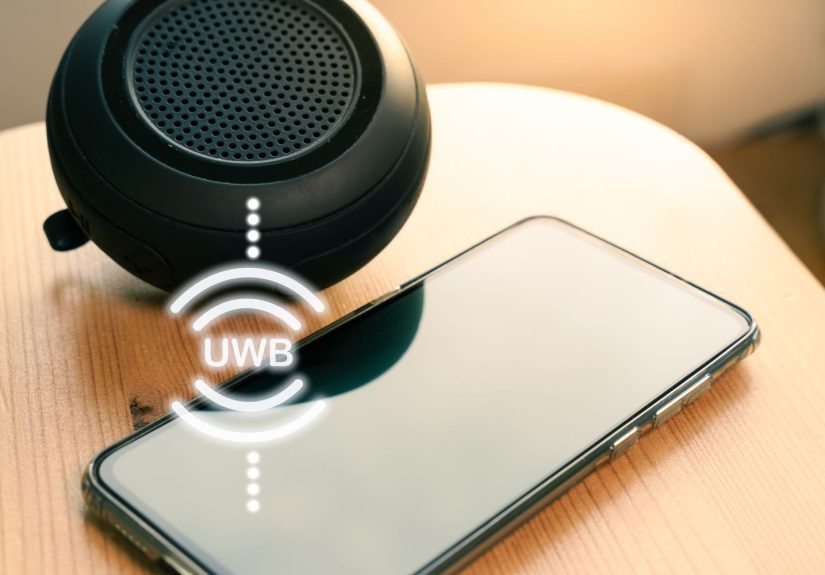
Ultra-wideband is a short-range, low-power wireless technology that spreads tiny bursts of energy across a very wide frequency range
(roughly 3.1–10.6 GHz). Instead of focusing on high data throughput like Wi-Fi or basic proximity like Bluetooth,
UWB specializes in precise distance and direction measurement.
The secret sauce is time-of-flight ranging. A UWB transmitter fires out incredibly short pulses.
A receiver measures how long those pulses take to arrivedown to fractions of a nanosecond. Because the speed of light is constant,
devices can calculate distance with centimeter-level accuracy. Add angle-of-arrival information and you get not just “how far,”
but “which way.”
In plain English: Bluetooth can tell you your keys are somewhere in your living room. UWB can tell you they’re under the left cushion
of the gray sofa, three feet away, slightly behind you. That shift from fuzzy proximity to precise spatial awareness is exactly why
more smart devices need UWB inside.
Why UWB Beats Bluetooth and Wi-Fi for Spatial Awareness
Bluetooth and Wi-Fi are fantastic for what they were built to do: connect devices and move data. They just weren’t designed to be
digital tape measures. When you ask them to guess distance, they rely mostly on signal strength (RSSI), which is easily thrown off by
walls, furniture, people, and even how you’re holding your phone.
UWB approaches the problem differently:
- Accuracy: UWB can typically achieve sub-10 cm accuracy in ideal setups, far tighter than Bluetooth-based ranging.
- Resilience to interference: Because it uses very short pulses over a wide spectrum, UWB is more resistant to multipath
effects and interference indoors. - Direction, not just distance: Many UWB implementations support angle-of-arrival, giving devices a clear sense of where
another device is in 3D space. - Low latency spatial updates: UWB can update position rapidly enough to support smooth “hot/cold” or arrow-style guidance.
For indoor navigation, secure access control, and precise tracking, Bluetooth and Wi-Fi alone usually can’t deliver the consistency and
accuracy users now expect. That’s why we’re seeing hybrid designs: Bluetooth for discovery and wide coverage, Wi-Fi for data,
and UWB for pinpoint positioning and intent-based actions.
Real-World Use Cases Already Proving the Point
1. Smarter Keys and Safer Cars
The automotive industry is one of UWB’s fastest-growing playgrounds. Digital car keys are evolving from “tap your phone on the handle”
to “just walk up and your car knows it’s really you.” UWB enables secure ranging so the vehicle can verify not only that
your digital key exists, but that it’s physically near and outside the car, not being relayed from across the street.
Current and upcoming cars from brands like BMW and others are rolling out UWB-based keys that support truly hands-free entry and start.
The market for UWB digital car keys is growing at an eye-popping pace, with analysts projecting steep adoption curves as automakers
prioritize both convenience and security in new models.
For smart devices, this matters because cars are often trendsetters. Once consumers get used to their car recognizing them automatically,
they’ll expect the same “walk up and it just works” experience from front doors, office buildings, hotel rooms, and even garages.
That expectation puts pressure on every other access device to add UWB, too.
2. Item Trackers That Actually Find Things
If you’ve used a modern item tracker that supports UWB, you know the difference immediately. Instead of a vague map dot and a sad little
beep, you get an on-screen arrow and live distance readout that guides you right to your lost backpack or keys.
Apple’s ecosystem is the poster child here: compatible iPhones use their on-board UWB chip to enable “precision finding” for tags,
using distance and direction to walk you to your stuff. On the Android side, newer tags are adopting UWB so that supported phones
can offer similarly precise guidance instead of only Bluetooth-based proximity.
This isn’t just a party trick. It’s exactly the kind of user experience that spoils people. After you’ve watched your phone confidently
point you to a lost item, any tracker that just “gets you in the general area” suddenly feels outdated. That’s the difference UWB makes.
3. Smart Homes That Understand Presence, Not Just Motion
In many homes today, “smart” lighting or locks are driven by motion sensors, time schedules, or your phone’s GPS. Those are fine,
but they’re blunt tools. Walk into a room, wave your arm, lights turn on. Great. Walk out, the light turns off three minutes later…
even though someone else is still sitting perfectly still, reading a book.
UWB can change that. Because it can accurately determine where a device (like a phone, watch, or UWB tag) is in the house,
it enables room-level or even zone-level presence. Smart locks using UWB can unlock only when you are right at the door,
not simply when your phone crosses some arbitrary GPS geofence. New smart locks are already launching with UWB-based auto-unlock features,
combining it with standards like Apple Home Key and emerging multi-protocol frameworks.
For lighting, HVAC, and media, UWB can make automations feel less like timers and more like a house that genuinely knows where you are.
Imagine music following you from room to room, or AC gently pre-cooling the room you’re walking toward, not just whatever zone is nearest
to a motion sensor.
4. Industrial, Healthcare, and Workplace Safety
Outside the home, UWB has already made serious inroads in real-time location systems (RTLS).
Manufacturing plants, hospitals, and warehouses use UWB to track tools, pallets, medical equipment, and even people
with very high accuracy. That enables everything from faster equipment retrieval to automatic safety shutoffs
if a worker enters a hazardous zone.
In personnel safety and emergency response, precise indoor positioning can be the difference between “we think someone is on this floor”
and “we know this person is standing in this room.” As more of that infrastructure gets deployed, it becomes much easier and cheaper
to give every worker, visitor, or patient a UWB-enabled badge or wearable.
This is another reason more smart devices should have UWB: once the infrastructure exists, adding UWB to phones, wearables,
scanners, and robots lets them all plug into the same high-precision location fabric.
Why UWB Adoption Is About to Explode
We’re past the “science experiment” stage. Market research firms estimate that the global UWB market is already worth several
billion dollars, with double-digit annual growth forecast through the end of the decade as more devices and industries adopt it.
Part of that growth is driven by smartphones: analysts expect well over a quarter of new smartphones to ship with UWB in the near term.
Add in cars, tags, smart locks, wearables, and industrial devices, and we’re on track for hundreds of millions of UWB-enabled
devices shipping each year.
Standards work is also accelerating. Organizations like the FiRa Consortium are continually updating core specifications and
certification programs to ensure that UWB devices from different manufacturers can interoperate securely and reliably.
At the same time, emerging frameworks for digital keys and multi-protocol access (combining Bluetooth, NFC, and UWB)
are making it easier for device makers to build on a common foundation rather than inventing everything themselves.
Challenges Holding UWB Back (and Why They’re Solvable)
If UWB is so great, why isn’t it in everything already? A few reasons:
- Cost and complexity: Adding a UWB radio, antennas, and secure ranging logic costs more than dropping in yet another
Bluetooth chip. For ultra-budget devices, that’s still a tough sell. - Power consumption trade-offs: On paper, Bluetooth Low Energy (BLE) can be more power efficient. In practice,
UWB systems are often designed so that tags sleep most of the time and wake briefly to transmit, keeping battery life reasonable. - Regulatory and regional constraints: UWB operates in different portions of the spectrum in different regions,
and regulations vary. That adds complexity for global product lines. - Ecosystem maturity: Developers need solid SDKs, reference designs, and interoperable standards to feel confident
building UWB features. Until recently, that tooling was still maturing.
The good news is that all of these constraints are easing. Chip vendors are on their second or third generation of UWB silicon.
Standards bodies are converging on stable profiles. And as more flagship devices adopt UWB, economies of scale help bring costs down.
We’ve seen this movie before with Wi-Fi, GPS, and NFCUWB is just the latest tech to climb the adoption curve.
What Hardware Makers and Developers Should Do Now
If you build smart devices or apps, you don’t have to wait for some distant future where everything magically speaks UWB.
There are practical steps you can take now:
- Design for multi-protocol from the start. Assume your device will eventually support BLE, Wi-Fi, NFC, and UWB.
Architect your software so that “how we measure distance” is swappable, not hard-coded. - Start with clear UWB-centric use cases. Don’t add UWB just for spec-sheet bragging rights.
Focus on features where centimeter-level accuracy or secure ranging truly improves the experiencelike auto-unlock,
indoor navigation, or precise item finding. - Leverage emerging standards and ecosystems. Align with existing frameworks for digital keys, smart home platforms,
and RTLS solutions so your device isn’t stuck in a proprietary cul-de-sac. - Think in terms of “intent” and “presence,” not just connectivity. Use UWB to infer what the user is trying to do
(“walk up to door, wants to unlock”) instead of forcing them into extra taps and manual steps.
In other words, treat UWB as your context engine. Let Wi-Fi and cellular move the bits; let UWB tell you where
and when to act.
The Near Future: UWB in Everything Within Arm’s Reach
Today, UWB is mostly hiding in premium smartphones, high-end cars, a few smart locks, and top-tier item trackers.
But the trajectory is clear: as costs fall and standards mature, UWB will quietly seep into all the objects that live within
arm’s reachthings you carry, wear, or walk past a dozen times a day.
Picture this near-future scenario:
- Your earbuds case has UWB, so your phone can guide you right to it, even when it’s wedged between couch cushions.
- Your laptop uses UWB to auto-lock when you leave your desk and unlock as you return, without relying only on a camera or keyboard.
- AR glasses and game consoles tap UWB to map your living room in real time for more precise, safer mixed-reality experiences.
- Office badges with UWB enable frictionless access while also powering precise emergency mustering and space analytics.
None of this requires consumers to know or care what “UWB” is. Just like most people can’t explain how Wi-Fi or GPS works,
they don’t need to learn a new acronym. They’ll simply notice that their devices feel more intuitive, more responsive, and a lot
less “dumb” about physical space.
A Day in a UWB-Powered Life: An Experience Perspective
To really understand why more smart devices need ultra-wideband, it helps to imagine a typical day in a UWB-rich world.
No sci-fi gadgets, just slightly upgraded versions of what you already own.
You wake up to your phone’s alarm. As you swing your feet onto the floor, your phone and watch quietly talk to a UWB-enabled hub
in your bedroom. The house doesn’t just know that “someone moved”it knows you are awake in that room. The lights in your hallway
ramp up to a gentle glow, and the thermostat nudges the temperature in the kitchen a few degrees warmer, anticipating your coffee run.
On your way out, you grab your bag, or at least you think you do. Halfway to the door, your phone buzzes with a friendly nudge:
“Laptop is behind you, 4 feet away, under the table.” You turned on a simple “don’t let me leave without my work gear” automation
that uses UWB tags inside your laptop sleeve and backpack. Instead of realizing your mistake in the parking lot, you correct it in the hallway.
As you approach your front door, your smart lock wakes up. It senses your phone’s UWB signal getting closer and checks securely that it’s really you.
The lock doesn’t rely on GPS (which thinks your whole street is one giant dot) or a random Bluetooth RSSI threshold.
It waits until you’re truly at the doorsay, within a meterthen quietly unlocks. No opening apps, no tapping keypads,
no yelling “Hey assistant, unlock the door!” while juggling coffee.
At your apartment’s parking lot, your car does something similar. Your digital car key, stored in your phone or watch,
uses UWB to prove that it’s actually near the vehicle and on the outside. Relay attacks, where thieves try to extend
wireless signals to trick cars into unlocking, get much harder when the car can measure real distance instead of just
listening for any valid signal.
At work, you walk into the building with a UWB-enabled badge. The security system doesn’t just know that a badge was
tapped near the door; it knows you walked through at a specific time, which floor you headed to, and which zones you entered.
In an emergency, that same system can give responders a much more accurate view of who is where, instead of a rough “they badged in today.”
In the afternoon, a coworker borrows your laptop and leaves it in a conference room. An hour later, your phone pings:
“Laptop is on Floor 5, Meeting Room Cedar, 7 feet from the north wall.” You follow an augmented map on your phone,
and as you enter the room, an arrow overlay directs you to the exact spotno scavenger hunt required.
Back home that evening, you collapse on the couch to watch a movie. Your TV and soundbar use UWB to understand where you are sitting,
balancing audio so that voices are crisp and centered from your exact position rather than blasting the whole room equally.
When you get up and move to the kitchen, your smart speakers pick up the background music there instead, fading it from the living room
so you’re not listening to an echoey mess.
Before bed, you realize you haven’t seen your wallet all day. Instead of panicking, you open your phone, tap “Find Wallet,”
and follow an arrow that leads you straight to the jacket you tossed over a chair that morning. The app tells you it’s “2 feet away,
to your right, slightly behind.” You reach back, grab the wallet, and laugh at how un-dramatic that little crisis just became.
None of these experiences are flashy in isolation. But together, they’re exactly why more smart devices need ultra-wideband.
UWB takes all the connectivity and intelligence we already have and grounds it in the physical world with accuracy and intent.
It makes our devices feel less like random gadgets and more like a coordinated, spatially aware assistant that understands
where thingsand peopleactually are.
Conclusion: UWB as the Missing Piece of “Smart”
Ultra-wideband won’t replace Wi-Fi, Bluetooth, NFC, or cellular. Instead, it complements them by adding something they all lack:
reliable, secure, centimeter-level awareness of distance and direction. That capability unlocks more natural smart locks,
more helpful item tracking, safer cars, smoother industrial operations, and smarter homes that respond to presence instead of
just motion.
As chips get cheaper, standards mature, and more flagship devices adopt UWB, it will quietly become a default expectation
rather than a luxury feature. If a device depends on location, presence, or access, the question won’t be
“Should we add ultra-wideband?” but “Why didn’t we add it already?”