Table of Contents >> Show >> Hide
- What Is “Wild Boar Ragu Bolognese,” Exactly?
- Why Wild Boar Works So Well in Ragù
- Wild Boar Ragu Bolognese Ingredients
- Equipment You’ll Want
- Step-by-Step: Wild Boar Ragu Bolognese
- 1) Optional but Worth It: A Quick “Boar Tamer” Marinade (30 minutes to overnight)
- 2) Start the Flavor Foundation
- 3) Brown the Boar (Or “Make the Pot Earn It”)
- 4) Tomato Paste + Milk: The Bolognese Signature Move
- 5) Wine Time (For the Pot, Not Just You)
- 6) Add Tomatoes + Stock, Then Go Low and Slow
- 7) Final Adjustments (The “Make It Restaurant Good” Part)
- How to Serve Wild Boar Bolognese Like You Mean It
- Food Safety Notes for Wild Boar
- Variations and Smart Swaps
- Make-Ahead, Storage, and Freezing
- Troubleshooting: Common Problems (and Easy Fixes)
- of Real-World Wild Boar Bolognese Experience (The Part You’ll Remember)
- Conclusion
If regular Bolognese is a cozy sweater, wild boar ragu Bolognese is the same sweater… but you found it in an Italian villa, it fits perfectly, and it somehow smells like rosemary, red wine, and good decisions.
This is a meat-forward, slow-simmered ragù with the classic Bolognese “rules” (soffritto, milk, wine, gentle heat), plus the earthy, slightly sweet, woodsy flavor that wild boar brings to the party.
The goal isn’t a tomato sauce with meat in it. The goal is meat becoming saucesilky, rich, and clinging to wide noodles like it pays rent.
Let’s make the kind of pasta dinner that makes everyone go quiet for a minute, which is the highest compliment a cook can receive.
What Is “Wild Boar Ragu Bolognese,” Exactly?
“Ragù” is a broad Italian category: slow-cooked meat sauces. “Ragù alla Bolognese” is a specific style from Bolognatypically built on a soffritto (onion, carrot, celery), cooked with wine, finished with a little tomato and often dairy for tenderness and richness.
A good Bolognese is usually thicker, less tomato-forward, and more luxurious than your average red sauce.
Wild boar ragu Bolognese keeps that Bolognese structure but swaps in wild boar (often shoulder, stew meat, or ground).
Because boar is usually leaner and more robust in flavor than farmed pork or beef, we’ll use a couple smart tricks:
fat for richness (pancetta/olive oil/butter), milk for tenderness, and low-and-slow cooking to mellow everything into a smooth, savory sauce.
Why Wild Boar Works So Well in Ragù
- Bold flavor: Boar tastes pork-adjacent but deeper and “wilder” (in a good way).
- Leaner meat: Great for ragù, but it benefits from added fat and gentle braising.
- Perfect with wine + aromatics: Red wine, rosemary, bay, and a little tomato paste are boar’s best friends.
Wild Boar Ragu Bolognese Ingredients
Makes about 6 generous servings (or 4 servings plus “midnight taste-testing”).
The Meat + Base
- 2 lb wild boar shoulder or stew meat, cut into 1-inch chunks (or 2 lb ground wild boar)
- 3–4 oz pancetta, finely diced (or thick-cut bacon in a pinch)
- 2 tbsp olive oil
- 2 tbsp unsalted butter (optional but extremely persuasive)
Soffritto + Aromatics
- 1 large onion, finely chopped
- 2 medium carrots, finely chopped
- 2 celery stalks, finely chopped
- 3–4 cloves garlic, minced
Liquids + Umami
- 2 tbsp tomato paste
- 1 cup dry red wine (or a dry white wine if you prefer lighter)
- 1 cup whole milk (or 3/4 cup milk + 1/4 cup cream)
- 1 to 1 1/2 cups low-sodium chicken stock (as needed)
- 1 (14–28 oz) can crushed or passata-style tomatoes (use 14 oz for more traditional, meat-forward; 28 oz if you like it saucier)
Seasoning
- 1 bay leaf
- 1 small sprig rosemary (or 1/2 tsp dried)
- Pinch of freshly grated nutmeg (optional but classic)
- Salt and black pepper
- Parmesan rind (optional, for “why does this taste expensive?” depth)
To Serve
- 1 to 1 1/2 lb tagliatelle, pappardelle, or rigatoni
- Freshly grated Parmigiano-Reggiano
- Chopped parsley (optional)
Equipment You’ll Want
- Large Dutch oven or heavy pot with lid
- Wooden spoon
- Sharp knife (or a food processor for quick soffritto chopping)
Step-by-Step: Wild Boar Ragu Bolognese
1) Optional but Worth It: A Quick “Boar Tamer” Marinade (30 minutes to overnight)
If your boar is very game-forward, toss the chunks with: 1/2 cup red wine, 1 tbsp olive oil, a strip of orange peel, a pinch of salt, and a little rosemary.
Refrigerate 30 minutes (or overnight). Pat dry before browning.
This isn’t mandatoryit’s just a friendly handshake between you and the wild side.
2) Start the Flavor Foundation
- Heat the Dutch oven over medium heat. Add pancetta and cook until it renders fat and turns golden.
- Add olive oil (and butter if using). Stir, then add onion, carrot, and celery.
- Cook 8–12 minutes until soft and sweet-smelling. Don’t rush thissoffritto is the slow jam of sauces.
- Add garlic and cook 30 seconds, just until fragrant.
3) Brown the Boar (Or “Make the Pot Earn It”)
Turn heat to medium-high. Add wild boar and season with salt and pepper.
Brown wellthis builds depth. If using chunks, brown in batches so the meat sears instead of steaming.
If using ground boar, cook until it loses raw color and starts to caramelize in spots.
4) Tomato Paste + Milk: The Bolognese Signature Move
- Stir in tomato paste and cook 2 minutes until it darkens slightly (that’s flavor concentrating).
- Pour in the milk and bring to a gentle simmer. Cook until the milk mostly evaporates and the sauce looks richer, not soupyabout 10–15 minutes.
- Add a pinch of nutmeg if using.
5) Wine Time (For the Pot, Not Just You)
- Add the wine. Scrape up the browned bits from the bottom.
- Simmer until the wine reduces by about half, 8–12 minutes.
6) Add Tomatoes + Stock, Then Go Low and Slow
- Add crushed tomatoes (or passata), bay leaf, rosemary, and Parmesan rind if using.
- Add stock until the mixture is saucy but not watery (start with 1 cup; add more later if needed).
- Bring to a low simmer, cover partially, and cook gently:
- Stovetop: 2.5 to 3.5 hours at the lowest simmer, stirring occasionally.
- Oven (recommended): 300°F for 2.5 to 3.5 hours, lid slightly ajar.
- If using boar chunks, cook until fork-tender, then shred them in the pot with a spoon. Simmer 20–30 minutes more to tighten the sauce.
7) Final Adjustments (The “Make It Restaurant Good” Part)
- Too thick? Add a splash of stock or pasta water.
- Too loose? Simmer uncovered 10–20 minutes.
- Needs brightness? A tiny splash of wine vinegar or a squeeze of lemon (very small) can wake it up.
- Salt check: Add salt at the end so it doesn’t over-reduce into the Salty Olympics.
How to Serve Wild Boar Bolognese Like You Mean It
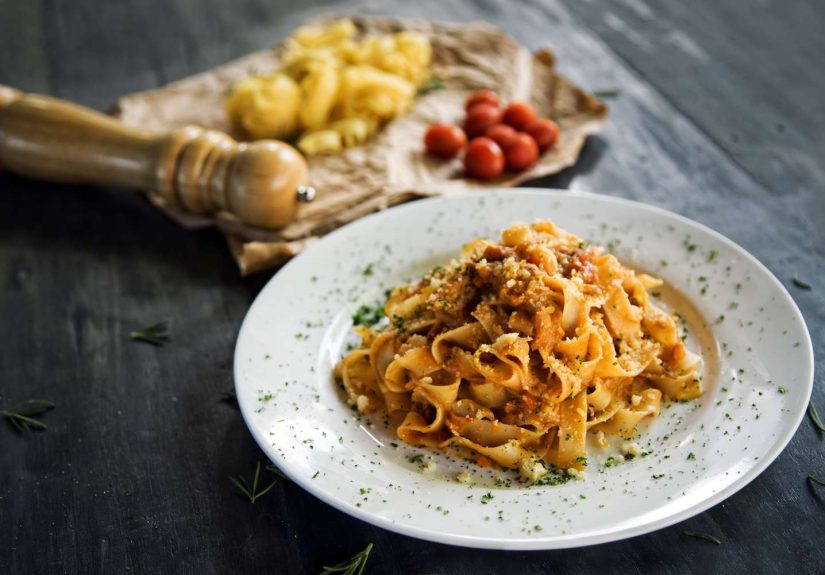
Pair this sauce with pasta that has enough surface area to carry itthink tagliatelle, pappardelle, or rigatoni.
Cook pasta until al dente, reserve 1 cup pasta water, then finish the pasta in a pan with the ragù and a splash of pasta water.
Add Parmesan and toss until glossy. That silky finish is called “mantecatura,” and it’s basically sauce gluein the best way.
Food Safety Notes for Wild Boar
Wild boar is delicious, but it’s still wild gamehandle it carefully.
Keep raw meat separate, wash hands/tools, and cook thoroughly.
The long simmer in this recipe is designed to cook the meat fully, but always use good kitchen hygiene and follow safe-temperature guidance.
Variations and Smart Swaps
Make It More Traditional (More Meat, Less Tomato)
Use the smaller tomato amount (14 oz) and lean into stock + milk for the liquid base. The sauce becomes darker, richer, and more “Bologna-style.”
Make It Faster (Pressure Cooker / Instant Pot)
Brown pancetta, soffritto, and boar using sauté mode. Add milk and reduce a bit, add wine and reduce, then tomatoes/stock.
Pressure cook 45 minutes (chunks) or 25 minutes (ground), natural release 15 minutes, then simmer uncovered to thicken.
You’ll get a very legit ragù on a weeknightyour future self will clap.
No Pancetta?
Use 2 tbsp olive oil + 2 tbsp butter and add a little extra Parmesan at the end. You’ll still get richness.
Want a “White” Ragù (Ragù Bianco Style)?
Skip tomatoes. Use stock, milk, and a touch of white wine. Finish with lemon zest and Parmesan. It’s elegant and very “I definitely own linen napkins.”
Make-Ahead, Storage, and Freezing
- Make ahead: Tastes even better the next day (the flavors marry overnight).
- Fridge: 4 days, tightly covered.
- Freeze: Up to 3 months. Thaw overnight in the fridge and reheat gently with a splash of stock.
Troubleshooting: Common Problems (and Easy Fixes)
“My sauce tastes a little sharp.”
Simmer longer uncovered, add a splash more milk, or stir in a knob of butter. Sharpness often means it needs time, not panic.
“It’s greasy.”
Skim the surface with a spoon or chill the sauce, then lift off solidified fat. Also, keep the simmer gentleviolent boiling can separate fats.
“The boar tastes too ‘wild.’”
Next time use the quick marinade, add orange peel, or use rosemary + bay more assertively. Serving with Parmesan and finishing with parsley also helps balance strong game flavor.
of Real-World Wild Boar Bolognese Experience (The Part You’ll Remember)
The first thing you’ll notice when you start this sauce isn’t the meatit’s the smell of the soffritto quietly turning sweet.
Onion, carrot, and celery don’t sound dramatic on paper, but together they create a base that makes everything else taste like it belongs.
If you’ve ever wondered why some sauces taste “rounded” and others taste like a list of ingredients arguing in public, this is the difference.
Wild boar adds its own personality. Sometimes it’s mellow and porky; sometimes it has that foresty, slightly mineral edge that reminds you this animal had hobbies.
That’s why browning matters so much: the caramelized bits don’t just add “meaty flavor,” they add a kind of roasted depth that makes the boar feel intentional instead of intense.
If you crowd the pot, you’ll steam the meat and miss that deep brown foundationthen you’ll try to fix it later with extra tomato or extra salt, and the sauce can drift away from classic Bolognese territory.
Give the meat space. Let the pot do its job. Try not to hover like an anxious stage parent.
Milk is the moment where people raise an eyebrow, but it’s also where the magic starts to happen.
As it simmers down, the sauce shifts from “wet ingredients in a pot” to something thicker, silkier, and more cohesive.
This is also the point where patience pays rent: if you rush the reductions, you can end up with a sauce that tastes like wine and dairy are taking separate vacations.
If you let each step cook down properly, the transitions feel smooth and the final ragù tastes integratedlike it was born that way.
The long simmer is where your kitchen turns into a low-key aroma spa.
A gentle bubble, an occasional stir, and suddenly the sauce goes from chunky and obvious to dark and velvety.
If you cook it in the oven with the lid cracked, you’ll often get a more even reduction (and less risk of scorching), which is great if you’re the kind of person who forgets to stir because you’re “just quickly” doing five other things.
The best part is how forgiving the end game becomes: too thick, add stock; too thin, simmer uncovered; a little flat, finish with Parmesan and pasta water.
It’s not fragilejust picky about being treated slowly.
Serving is its own experience. Wide noodles plus thick ragù is one of the most satisfying textures in pasta.
Tossing pasta with the sauce and a splash of pasta water changes everythingsuddenly it clings instead of pooling, and the whole dish looks glossy and cohesive.
Add Parmesan, and you get that savory depth that makes people ask, “What did you put in this?”
The honest answer is: time, heat control, and one pot that got the respect it deserved.
Conclusion
A great wild boar ragu Bolognese is about balance: bold meat softened by milk, lifted by wine, anchored by soffritto, and made luxurious through slow cooking.
Make it on a weekend, freeze half, and you’ll have a “fancy dinner emergency kit” ready for any night you want comfort food that feels a little legendary.
Serve it with wide pasta, finish with Parmesan, and enjoy the moment when your kitchen suddenly feels like a trattoria.