Table of Contents >> Show >> Hide
- Why Do Face Masks Hurt Your Ears in the First Place?
- What Are Plastic Mask Holders and How Do They Work?
- Do Plastic Mask Holders Actually Relieve Ear Pain?
- How to Choose a Plastic Mask Holder That Won’t Make Things Worse
- Possible Downsides of Plastic Mask Holders
- Alternatives If Plastic Mask Holders Aren’t Your Thing
- So, Will Plastic Mask Holders Relieve Your Ear Pain?
- Real-World Experiences: What It’s Actually Like to Use Plastic Mask Holders
If you’ve ever come home after a long day, taken off your mask, and thought, “Wow, my ears are filing a complaint with HR,” you are not alone. The thin elastic loops on many disposable and cloth masks were not designed with human comfort (or human ears) in mind. Enter plastic mask holders, also known as ear savers or mask extendersthose little bands that promise to take the pressure off your ears and give you some relief.
But do these plastic mask holders actually help with ear pain, or are they just one more gadget to toss in the junk drawer? Let’s break down how they work, what the research and real-world experience suggest, and whether they’re worth adding to your everyday carry.
Why Do Face Masks Hurt Your Ears in the First Place?
To understand whether plastic mask holders can help, you first need to know why your ears are so angry. Most everyday masks rely on elastic ear loops to keep the mask snug against your face. That elastic does a few things over time:
- Creates constant pressure on the skin behind your ears, especially where the elastic digs into the fold.
- Rubs and moves every time you talk, chew, or turn your head, leading to friction and irritation.
- Traps sweat and moisture, which softens the skin and makes it more vulnerable to breakdown.
Healthcare workers, retail employees, teachers, and anyone who wears a mask for hours at a time are especially prone to sore, red, or even damaged skin behind the ears. Over time, that can escalate from “mildly annoying” to “I dread putting this mask on.”
Beyond sheer discomfort, prolonged pressure from mask straps can contribute to skin indentation, irritation, or small wounds in sensitive areasbehind the ears is one of those hot spots. So the problem is real. The question is whether plastic mask holders solve it.
What Are Plastic Mask Holders and How Do They Work?
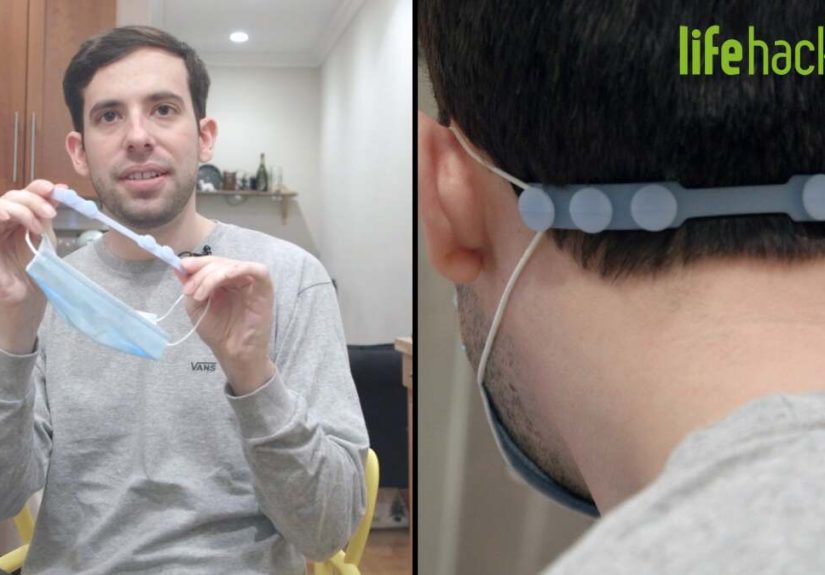
Plastic mask holders (or ear savers) are simple devices that sit at the back of your head or neck and act as an anchor point for your mask’s ear loops. Instead of looping the elastics around your ears, you hook them onto the holder.
Most plastic mask holders share a few common features:
- Curved strip or band that rests against the back of your head or neck.
- Multiple notches or hooks so you can tighten or loosen the mask to get a better fit.
- Flexible material such as soft plastic, TPE, or silicone designed to bend without cracking.
The idea is pretty straightforward: move the pulling and pressure away from your delicate ear cartilage and onto sturdier real estate. The back of your head can typically handle more pressure than the small area right behind your ears.
Do Plastic Mask Holders Actually Relieve Ear Pain?
Short answer: for many people, yes. Longer answer: it depends on your face shape, your mask type, and the design of the plastic holder you use.
1. Comfort: Shifting Pressure Away From Your Ears
When you use a mask extender, the ear loops no longer dig into your ears. The tension shifts to the back of your head, where the band distributes the force over a wider area. For most users, that means:
- Less soreness and redness behind the ears.
- Fewer “elastic grooves” on your skin when you finally take the mask off.
- Less fighting with glasses, earbuds, or hearing aids that already compete for ear space.
People who wear masks all daynurses, grocery workers, drivers, teachersoften report a clear difference in comfort when they switch to extenders. For some, it’s the difference between tolerable and unbearable.
2. Skin Health: Reducing Friction and Hot Spots
Skin behind your ears is thin and not used to constant pressure. Plastic mask holders can help by:
- Eliminating the main friction point (elastic on skin behind the ears).
- Preventing the ear loops from sawing back and forth when you move.
- Giving irritated skin a chance to heal if you’ve already developed sore spots.
However, if the plastic holder itself is too rigid or has rough edges, you may simply move the irritation from one place to another. That’s why the material and design matter a lotwhich we’ll get to in a moment.
3. Mask Fit and Safety: Not Just About Comfort
Mask extenders aren’t only about comfort; they can also affect how well your mask fits and performs. A good mask holder can:
- Improve the seal by letting you tighten loose ear loops without destroying your ears.
- Help with oddly shaped faces where standard ear-loop tension just doesn’t cut it.
- Keep the mask in place during talking, walking, or working, so you touch your face less.
Of course, there’s a flip side. If you overtighten the loops using the holder, your mask can start to dig into your cheeks or nose, risking more irritation. If you hook it too loosely, you may get gaps at the sides of your mask. The key is balance: comfortable, but still snug.
How to Choose a Plastic Mask Holder That Won’t Make Things Worse
Not all mask extenders are created equal. Some are soft and flexible; others feel like strapping a piece of a plastic binder to your head. If you want pain relief instead of a new headache, pay attention to these details.
Material Matters
Plastic mask holders come in several materials:
- Hard plastic: Cheap, widely available, can be durable, but may dig into your head if the edges are sharp or the band is too stiff.
- Flexible TPE or soft plastic: Bends more easily, usually more comfortable on the scalp or neck.
- Silicone: Soft, grippy, and often the most comfortable for long use; tends to stay in place better.
If your main complaint is pain, it’s usually worth opting for softer materials or designs labeled as “flexible,” “soft touch,” or “silicone.” Hard plastic can work in short bursts but may not be your best friend during a 10-hour shift.
Adjustability and Fit
Look for extenders with multiple hooks or holes along the band. This allows you to:
- Fine-tune the tension depending on your mask and head size.
- Use the same holder with different mask brands and elastic lengths.
- Share with family members (kids can use the inner hooks, adults the outer ones).
If you only have one or two hook positions, you might end up with a mask that’s either too tight or annoyingly loose. More adjustment points = more chances to find that sweet spot between comfort and security.
Where It Sits: High, Low, or Behind the Neck?
Plastic mask holders can sit:
- High on the back of your head (good if you have more hair volume or want to keep the mask from sliding up).
- Mid-head, just above the ears (common position for many extenders).
- Low on the neck (often more comfortable if you have short hair or prefer less visible gear).
Some people with glasses or hearing aids prefer lower placement so the band doesn’t tangle with earpieces. Others like a higher strap that pulls the mask up and tight for a better seal.
Ease of Cleaning
Anything that lives on your head and touches mask straps should be easy to clean. Simple designs with smooth surfaces can be wiped with soap and water, alcohol wipes, or a disinfectant spray. If the holder has lots of tiny ridges or crevices, it may collect sweat and skin oils over time, which is… not ideal.
Who Might Benefit the Most?
Plastic mask holders are especially helpful for:
- People who wear masks for many hours a day (healthcare workers, retail staff, drivers, teachers).
- Anyone with sensitive skin behind the ears or existing irritation.
- Folks who wear glasses, hearing aids, or earbuds and are tired of playing “how many things can my ear hold?”
- Kids who complain that masks “hurt” or keep slipping off.
On the other hand, if your mask is already snug and comfortable, or you wear it only a few minutes at a time, a plastic mask holder might be overkill.
Possible Downsides of Plastic Mask Holders
As with most hacks, there are trade-offs. Plastic mask holders are not magic wands, and you may run into a few issues:
- New pressure points: Instead of sore ears, you might end up with a sore spot on the back of your head or neck if the band is too tight or too rigid.
- Slipping or sliding: Some holders move around on fine or very straight hair, requiring constant readjustment.
- Compatibility issues: Very short ear loops or unusual mask designs may not hook well onto standard holders.
- Extra step in your routine: It’s one more thing to keep track of, clean, and not lose in your bag or car.
Most of these problems are solvable with a bit of trial and error: adjusting the position, trying a softer material, or experimenting with different masks.
Alternatives If Plastic Mask Holders Aren’t Your Thing
If plastic mask extenders don’t work for youor you just don’t like the feelthere are other ways to protect your ears:
- Headbands with buttons: The ear loops hook onto buttons sewn near your temples instead of wrapping around your ears.
- Cloth or elastic straps: You can use a short strip of fabric or elastic to connect the ear loops behind your head.
- Masks with over-the-head straps: Some masks skip ear loops entirely and secure with straps around your head or neck.
- Simple DIY solutions: People have improvised with small Velcro ties, ribbon, or even paper clips in a pinch.
Plastic mask holders are just one option in a larger toolkit. If one design doesn’t work, another might.
So, Will Plastic Mask Holders Relieve Your Ear Pain?
If your ears are screaming by lunchtime, plastic mask holders are absolutely worth trying. They’re inexpensive, simple to use, and for many people, they make a dramatic difference in comfort. They won’t fix every problempoorly fitting masks, sensitive skin elsewhere on your face, or very long wear times may still cause issuesbut they can take a lot of strain off your ears.
The key is to treat them like any other piece of gear: experiment. Try different materials (plastic vs. silicone), different positions (high, mid, low), and different masks until you find a combo that feels good and still fits securely. When you get it right, your ears may finally stop protesting.
Real-World Experiences: What It’s Actually Like to Use Plastic Mask Holders
The theory is nice, but what does it feel like to actually wear these things all day? While everyone’s experience is different, a few patterns show up when you talk to people who’ve lived in masks for months.
From “I Can’t Do This” to “Okay, I Can Survive My Shift”
Imagine a nurse starting a 12-hour shift. By hour three, the combination of mask, glasses, and stethoscope has turned their ears into a battlefield. Every time they turn their head, the loops bite into the same sore spots. When they finally switch to a soft plastic or silicone mask holder, the change isn’t subtle: the pain behind the ears eases, and instead there’s a broad, more tolerable sense of pressure across the back of the head.
They may still feel the maskthere’s no way around thatbut the worst pain point is gone. The holder becomes just another part of the uniform, like a badge reel or a pen tucked into a pocket.
Teachers, Cashiers, and the “All-Day Mask” Crowd
Teachers, store employees, and service workers often describe a similar arc. At first, they try to “push through” the discomfort. Ears get sore, then red, then chafed. They adjust the mask constantly, which is not ideal for comfort or hygiene.
When they add a mask extender, a few things often happen:
- The mask stays put better, so they touch it less.
- The end-of-day “my ears are on fire” feeling is reduced or gone.
- They’re more willing to wear a snug, effective mask because it doesn’t feel like a punishment.
Some people even keep a spare holder in their bag or car in case they forget the main one at home. Once you get used to not having ear pain, going back to bare ear loops feels… barbaric.
When Plastic Mask Holders Don’t Work So Well
Of course, not every story is a glowing review. Some users find that certain plastic extenders pinch the back of the head, especially if they have short hair or very little padding. Others discover that the band slides down throughout the day, especially on very straight or fine hair, which means constant readjustment.
There are also people whose primary mask issues have nothing to do with the ears. If your biggest complaint is foggy glasses, itchiness on your cheeks, or heat buildup, then a plastic mask holder can only do so much. It may still improve fit and help you tighten the mask, but it won’t solve every comfort issue on its own.
Trial, Error, and Small Tweaks
One of the most useful “lessons learned” from real users is that small tweaks matter a lot:
- Moving the holder an inch higher or lower can change how the mask pulls on your face.
- Switching from a hard plastic extender to a silicone one can turn a “meh” experience into a great one.
- Pairing the holder with a mask that has softer elastic loops reduces rubbing even further.
People who get the best results tend to treat mask comfort like shoe comfort: if one pair gives you blisters, you don’t give up on shoesyou try a different pair. The same goes for mask holders.
The Emotional Side: Less Dread, More Control
There’s also a psychological element. Constant, low-grade pain (even “just” behind your ears) adds stress to your day. When a simple plastic gadget takes that away, even partially, it can feel like a small but meaningful win. You’re not suddenly thrilled to wear a mask, but you’re no longer bracing yourself every morning for the moment the loops snap into place.
In short, plastic mask holders are not miracle devicesbut for many people, they transform an annoying, painful experience into something manageable. If your ears are tired of doing all the heavy lifting, handing that job off to the back of your head might be one of the easiest upgrades you can make.