Table of Contents >> Show >> Hide
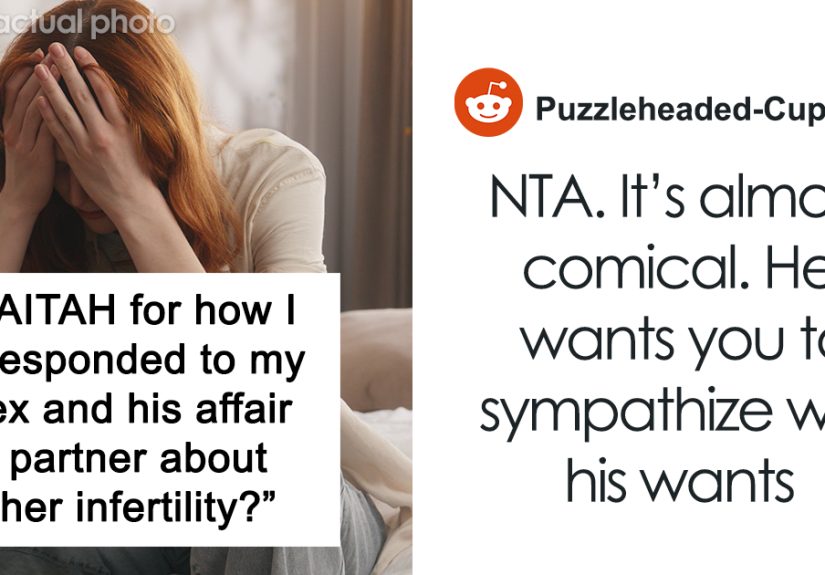
Some internet stories arrive with all the subtlety of a slammed screen door, and this one kicked the hinges clean off. A woman’s blunt response to her ex-husband and the woman he left her for sparked a wave of debate online after she refused to treat the affair partner’s infertility like a shared family emergency. Her ex called the reaction “disgusting insensitivity.” Much of the internet, meanwhile, responded with a collective, “Actually… no.”
The viral story hit a nerve because it sits right at the uncomfortable intersection of three emotionally loaded realities: betrayal, infertility, and co-parenting. Each one is heavy on its own. Stack them together and suddenly everyone online becomes part therapist, part judge, and part amateur custody consultant. But beneath the outrage and headline drama, the situation raises a serious question: when someone who helped blow up your marriage is hurting, do you owe them compassion, accommodation, or even access to your emotional energy?
The answer, according to many readers, is not nearly as fuzzy as some people pretend. Compassion is not the same thing as surrender. And infertility, painful as it can be, does not erase years of disrespect, boundary-pushing, or attempts to rewrite a child’s relationship with their mother.
Why This Story Struck Such a Nerve
The account that spread online centered on a mother who said her ex-husband and his new partner had spent years trying to push the idea that the new woman would become a replacement mom to the children. According to the story, they pressed for bonding, challenged boundaries, and acted as though the original mother’s role could simply be swapped out like an old sofa. Then, after struggling with infertility, the couple wanted extra grace, extra access, and extra sympathy.
That is the part that made so many people recoil. Not the infertility itself. Not the sadness around wanting a child and not being able to have one. The outrage came from the expectation that infertility should suddenly function like a moral eraser. As if the right diagnosis could wipe the whiteboard clean of cheating, manipulation, custody tension, and years of trying to force a family script no one else agreed to perform.
It is also what made the phrase “disgusting insensitivity” feel so backward to many readers. From their perspective, the truly insensitive move was expecting the betrayed ex-wife to become the emotional support department for a relationship built on her own pain. That is not empathy. That is revisionist history with a co-parenting app.
The Real Issue Was Never Just Infertility
Betrayal changes the emotional math
One reason this story resonated is simple: infidelity does not vanish when the divorce papers are signed. Affairs are not just “bad memories” tucked neatly into the past. For many people, betrayal changes how they experience trust, safety, self-worth, and even everyday communication. When children are involved, the wound can stay open longer because the betrayed partner often still has to communicate with the person who hurt them.
That reality matters here. A request for compassion sounds very different when it comes from someone who once expected you to disappear from your own children’s lives. If the affair partner had been introduced slowly, respectfully, and with clear boundaries, the story might have landed differently. But that was not the picture that emerged. What readers saw instead was a long-running pattern of trying to replace the biological mother first, then asking for her understanding later.
In other words, the internet was not saying infertility is trivial. It was saying context matters. A lot.
Boundaries are not cruelty
There is a habit online of confusing emotional restraint with meanness. If someone does not cry on cue, offer instant comfort, or soften every sentence until it tastes like warm oatmeal, they get branded cold. But adulthood requires a more mature distinction. Not every refusal is cruel. Not every neutral response is heartless. And not every person who declines to center someone else’s suffering is morally bankrupt.
In this case, the woman’s stance came across less like cruelty and more like a boundary. She was essentially saying: your fertility struggle is real, but it is not mine to carry. That may not be poetic. It may not win a greeting-card contest. But it is emotionally coherent.
Healthy co-parenting is supposed to revolve around the children’s needs, not around forcing the betrayed parent to help soothe the emotional consequences of the new couple’s life together. Once that line gets crossed, “be compassionate” can quickly become shorthand for “please ignore everything we did and help us feel better anyway.”
Why Commenters Saw a Boundary, Not a Character Flaw
Infertility deserves compassion, but not entitlement
Infertility is a real medical and emotional challenge. It is common, it can involve grief, and it often brings stress, guilt, sadness, and isolation. None of that should be minimized. But compassion for infertility is not a universal access pass to other people’s time, children, or emotional labor.
That is the distinction many readers drew. They were not mocking infertility. They were rejecting the idea that infertility automatically creates an obligation for the ex-wife to behave like a supporting cast member in her former husband’s marriage reboot.
There is also a practical reality here: people cannot be bullied into genuine empathy. You can request civility. You can expect respect. But demanding tenderness from someone you betrayed is a spectacularly risky strategy. It is like borrowing your neighbor’s lawnmower after setting their hedge on fire. Bold, yes. Wise, not especially.
Children are not consolation prizes
This is where the story gets especially uncomfortable. Many commenters felt the children were being treated less like independent human beings and more like emotional stand-ins for the family the couple wished they had. That is a problem.
Kids are not spare emotional inventory. They are not there to fill the silence of adult disappointment. They are not there to heal an affair, validate a stepparent, or patch the cracks in someone else’s marriage. When adults start acting as though a child “owes” them closeness because they are hurting, the child ends up carrying a burden they never agreed to hold.
That is likely why so many readers zeroed in on the pressure around bonding. A child can have a warm relationship with a stepparent. Plenty do. But that relationship grows best when it is earned, not assigned. You cannot announce, “Congratulations, everyone, this woman is mom now,” and expect the emotional furniture to rearrange itself.
The Kids-in-the-Middle Problem
Forced bonding usually backfires
Family experts have warned for years that children tend to do better when parents reduce conflict and avoid putting them in the middle. The internet recognized that pattern in this story immediately. If children are pushed to choose sides, rename relationships, or perform affection on command, the result is often resentment rather than closeness.
And honestly, that makes sense even outside expert guidance. Adults do not enjoy being told how intimate they must feel, so why would children? Telling a child they should hug more, bond faster, or treat a stepparent like a substitute mother can feel less like love and more like emotional choreography. Kids notice when affection is being managed like a school project.
What many commenters seemed to understand instinctively is that trust has its own pace. If the affair partner was struggling because the children still felt distant, that may be painful, but pain is not proof of injustice. Sometimes it is just proof that relationships take time, and sometimes proof that the adults mishandled the beginning so badly the middle became much harder.
Stepparents earn trust slowly
Experts on blended families make this point over and over: stepparents are usually more successful when they build rapport gradually rather than trying to step immediately into a full parental role. Supportive? Yes. Respectful? Absolutely. Instant replacement parent? That tends to go over about as well as surprise karaoke at a funeral.
Children often experience loyalty binds in stepfamilies. They may like a stepparent and still feel strange about showing too much closeness. They may be curious, guarded, affectionate one week and frosty the next. None of that automatically means someone is being alienated. Often it means they are children trying to make sense of a family structure adults complicated first.
That nuance matters because the viral argument was not just about infertility. It was about whether the ex-wife should actively help deepen a bond the children themselves did not appear ready to embrace. For many observers, that answer was no. Respect the custody agreement, respect the children’s pace, and stop trying to draft the ex into your rehabilitation campaign.
The Bigger Lesson About Compassion After Betrayal
Compassion and distance can coexist
One of the most useful takeaways from this whole saga is that compassion does not require closeness. You can believe infertility is heartbreaking without opening your calendar, your parenting time, or your emotional boundaries. You can say, “I’m sorry that’s hard,” and still keep your distance. You can even privately feel for someone and still refuse to let them reshape your children’s lives to soothe themselves.
That is not hypocrisy. It is emotional adulthood.
Too often, people frame situations like this as a choice between sainthood and bitterness. But most real life happens in the middle. You do not have to become your ex’s villain to stop being his volunteer. You do not have to wish suffering on the affair partner to decide her suffering is not your assignment.
Co-parenting works best when adults stop auditioning for moral victory
Another lesson here is that co-parenting can collapse when adults turn every disagreement into a referendum on who is the better person. Once that happens, ordinary boundaries get recast as cruelty, and ordinary hurt gets weaponized into leverage.
The healthier question is not, “Who is morally purer?” It is, “What actually serves the children?” In many cases, that means predictable schedules, fewer emotional power plays, less pressure on the kids, and far less expectation that one parent should manage the emotional temperature of the other parent’s household.
From that angle, the woman’s response looks a lot less “disgusting” and a lot more practical. She was not denying the affair partner’s humanity. She was declining an invitation to participate in a family dynamic that had already cost her enough.
Experiences Related to This Story: Why So Many People Saw Themselves in It
Part of the reason this story exploded is that it did not feel isolated. It felt familiar. Many divorced parents, stepparents, and betrayed spouses recognized pieces of their own experience in it, even if the details were different.
One common experience is the shock of being asked to “move on” on someone else’s timeline. In real life, that request often arrives long before the emotional damage has settled. The cheating partner may be focused on the new relationship, the new household, or the new story they want to tell about themselves. But the betrayed partner is still carrying the old story in her body: the humiliation, the suddenness, the practical fallout, the way ordinary routines became evidence that life had split in two. When that person is then asked to be warm, flexible, and endlessly understanding, it can feel less like growth and more like being ordered to skip straight to the final chapter.
Another familiar experience is the pressure to treat a stepparent relationship like an instant success. Adults may want the family to look stable as quickly as possible. Children, however, rarely move that fast. Many kids need time to sort out loyalty, anger, confusion, and grief. Some eventually adore a stepparent. Some settle into respectful distance. Some fluctuate wildly. What they usually do not need is a campaign built around proving that a new adult belongs in the exact emotional slot once occupied by a parent. That pressure often creates the very resistance adults claim to be worried about.
Then there is the experience of being told that someone else’s pain should outweigh your own because it seems more current, more dramatic, or more socially acceptable. Infertility is visible in a particular way. People understand the sadness of wanting a baby. But betrayal after a marriage ends can become socially invisible, especially when the betrayed partner is expected to “be mature” and keep everything calm for the children. Many readers seemed to understand that this woman was being asked to subordinate an old but still meaningful wound to a newer sorrow she did not create.
There is also a quieter experience beneath stories like this: exhaustion. Not rage. Not revenge. Just plain emotional fatigue. A lot of people in high-conflict co-parenting situations describe reaching a point where they are not interested in punishing anyone; they simply do not have the energy to keep participating in the other household’s emotional drama. They want clear schedules, civil exchanges, and fewer speeches. When viewed through that lens, the woman’s response does not read as icy. It reads as tired. And to many people online, tired felt honest.
That honesty may be the real reason this story traveled so far. It reminded readers that empathy is meaningful when freely given, not when extracted through guilt. It reminded them that grief does not cancel accountability. And it reminded them that even in messy, modern family arrangements, one truth still stands: children deserve relationships built on patience and respect, not on adult panic, adult entitlement, or adult attempts to rewrite the past with a prettier ending.
Conclusion
In the end, this viral conflict was never just about infertility. It was about whether pain gives people permission to ignore the damage they caused before that pain arrived. Most readers seemed to answer with a firm no. Infertility is painful. Betrayal is painful. Co-parenting through resentment is painful. But not all pain creates the same obligations.
The woman at the center of this debate may not have responded with softness, but softness was never the only measure of decency. Sometimes decency looks like civility. Sometimes it looks like distance. And sometimes it looks like refusing to let your children become emotional glue for adults who still have not learned where the boundaries belong.