Table of Contents >> Show >> Hide
- What Does “Stacking” Peloton Classes Mean?
- Why Stacking Works: The Real Benefits
- How to Stack Peloton Classes (Without Overthinking It)
- Stacking Strategies for Different Goals
- Examples of “Smart” Peloton Stacks You Can Copy
- Common Stacking Mistakes (and How to Avoid Them)
- How to Make Stacking Work With a Weekly Plan
- Advanced Stacking Tips (For When You’re Ready)
- Extra: of “Experience” (What Stacking Feels Like in Real Life)
- Experience 1: The “I have 18 minutes, don’t waste them” parent stack
- Experience 2: The desk-worker “midday reboot” stack
- Experience 3: The “recover smarter, not harder” stack after a tough ride
- Experience 4: The “balanced fitness” stack for someone who only wants to ride
- Experience 5: The “mood-first” stack on a stressful day
- Conclusion: Make the Stack Do the Heavy Lifting
Peloton has a funny way of turning “I’ll just do a quick ride” into “How did I end up stretching to a 90s playlist while holding a plank and questioning every life choice?”
The secret sauce behind that smooth, sweat-soaked slide from one workout to the next is a feature Peloton literally calls Stacked Classesaka stacking.
And yes, you should be using it, because it’s basically the fitness equivalent of meal prep: you make one good decision up front, and Future You benefits without having to negotiate with a tired brain.
In this article, we’ll break down what stacking Peloton classes means, why it works, how to build stacks that match your goals, and how to avoid the classic mistake of stacking
five “quick” classes that somehow add up to a full-time job. We’ll also share realistic “experience-style” examples at the end so you can picture how stacking fits into actual life.
What Does “Stacking” Peloton Classes Mean?
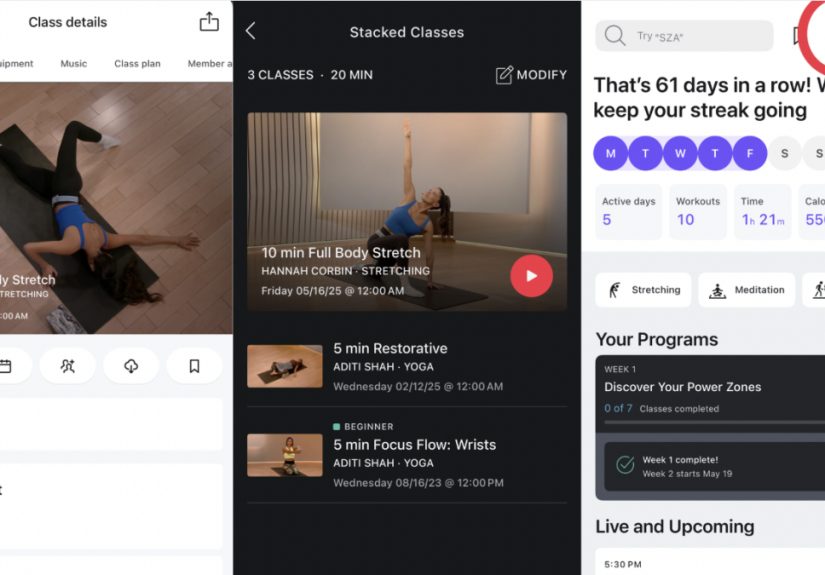
Peloton’s Stacked Classes feature lets you create a mini-playlist of workoutsup to 10 classesso you can move from one class to the next with minimal
scrolling, searching, or “Wait… what was I doing again?” energy. You can build the stack on compatible devices (like your Peloton hardware, the mobile app, or web) and then follow
it when you’re ready to train. When a class ends, you’ll typically get a prompt to continue your stack, keeping momentum on your side.
The beauty is that stacking supports how most people actually train: warm up, do the main workout, add a small accessory (core, glutes, mobility), then cool down.
Instead of hunting through the library mid-sweat (while your heart rate politely requests you stop tapping the screen), stacking keeps you moving.
Why Stacking Works: The Real Benefits
1) It protects your warm-up and cool-down (aka the parts we love to skip)
Warm-ups and cool-downs aren’t just fitness “bonus content.” They help your body transition into and out of exercise more smoothly, and many heart-health and sports medicine orgs
recommend them for performance and recovery. A stack makes it easier to actually do them because they’re already queuedno extra decisions required.
2) It reduces “decision fatigue”
Motivation is great, but it’s also unreliablelike a flaky friend who says they’re “five minutes away” while still in the shower. Planning a stack ahead of time shifts your workout
from willpower to structure. When you’re tired, busy, or distracted, the stack does the steering.
3) It builds balanced training (instead of accidental chaos)
Many adults benefit from a mix of aerobic activity and muscle-strengthening work across the week. Stacking makes it easier to blend modalities in one sessionlike cycling + core,
or a walk + strength + stretchwithout turning your week into an overcomplicated spreadsheet.
4) It helps you scale workouts to your time, not your guilt
One of the most underrated stacking benefits: you can build a “menu” for your day. If you have 20 minutes, do the first two classes. If you have 45, run the full stack.
That flexibility keeps consistency highwithout forcing an all-or-nothing mindset.
How to Stack Peloton Classes (Without Overthinking It)
The mechanics are straightforward: while browsing classes, tap the stack icon to add classes to your stack. On some Peloton hardware, you can add a class quickly by
pressing and holding the class thumbnail. Then open your stack, reorder if needed, and start when ready. You can typically queue up to 10 classes, and you generally
have one active stack at a time.
A simple stacking formula that works for most people
- Warm-up (5–10 min): easy movement to ramp up
- Main session (10–45 min): ride, run, row, strength, or HIIT
- Accessory (5–15 min): core, glutes, upper body, mobility
- Cool-down / stretch (5–10 min): downshift and reset
If that looks suspiciously like what trainers have recommended for decades… yep. Stacking just makes it easier to follow through.
Stacking Strategies for Different Goals
If your goal is consistency (the “I just need a win today” stack)
This stack is short, doable, and satisfying. It’s designed to get you moving without triggering the “this is going to be hard” alarm.
- 5-min warm-up ride or warm-up walk
- 10–15 min low impact ride / walk
- 5-min full-body stretch
Why it works: you get a full beginning-to-end session, build the habit loop, and walk away feeling accomplishednot crushed.
If your goal is better cardio fitness (without living in max effort)
Lots of people assume “cardio improvement” means “suffer daily.” A smarter approach blends easier aerobic work with occasional intensity.
You can create stacks that alternate effort and recovery days, or keep intensity contained in a short segment.
- 5–10 min warm-up
- 20–30 min endurance ride or power walk
- 5–10 min cooldown + stretch
If your goal is strength (and you still want to feel like a human tomorrow)
Strength stacks shine when you pair a focused strength class with a mobility finisher. Many reputable health organizations suggest adults include muscle-strengthening activity
at least twice weekly, and the “stack” structure helps you do that consistently.
- 5-min warm-up (light cardio or mobility)
- 20–30 min strength (upper, lower, or full-body)
- 5–10 min mobility or stretch
If your goal is “a little of everything” (the balanced total-body stack)
This is the crowd-pleaser: a cardio base, strength touch, then a calming finish. It’s also the easiest way to avoid the common Peloton trap of doing only what you like
(hello, fifth ride in a row) and neglecting what your body needs (hi, mobility).
- 10 min low impact ride
- 20 min theme ride / intervals (choose your spice level)
- 10 min core or glutes
- 5 min stretch
Examples of “Smart” Peloton Stacks You Can Copy
The 25-minute “Lunch Break Reset”
- 5-min warm-up ride
- 15-min pop ride (or low impact if you’re cooked)
- 5-min post-ride stretch
The 40-minute “Stronger Weekday”
- 5-min warm-up
- 20-min strength (upper or lower)
- 10-min low impact ride or walk
- 5-min stretch
The 60-minute “I Have Time and I’m Using It”
- 10-min warm-up ride or walk
- 30-min endurance ride / run
- 10-min core
- 10-min yoga flow or full-body stretch
Notice what’s missing? The “randomly add three HIIT classes and pray” strategy. Which brings us to…
Common Stacking Mistakes (and How to Avoid Them)
Mistake 1: Stacking intensity on top of intensity
Two hard sessions back-to-back can be fine for some people, sometimesbut stacking multiple high-intensity classes regularly can spike fatigue and increase injury risk.
If you love HIIT, consider limiting it and spacing it out with easier aerobic work, strength, or active recovery. Your body improves when it recovers, not when it’s stuck in
permanent “fight-or-flight but make it fitness” mode.
Mistake 2: Forgetting the purpose of each class
Every class should have a job. Warm-up prepares. Main session trains. Accessory supports. Cool-down restores. If you can’t explain why a class is in your stack, it’s probably
there because the thumbnail looked fun. (No judgment. Thumbnails are persuasive.)
Mistake 3: Building a “perfect” stack you never start
If you keep designing cinematic stacks that belong in a training montage, but you never press play… simplify. Start with a 2-class stack:
main workout + stretch. Then expand.
Mistake 4: Treating stacking like a punishment
Stacking isn’t a tool to “make up for” anything. It’s a tool to make training smoother and more consistent.
If you’re tired, scale the stack down. If you’re stressed, choose calming modalities. If you’re new, keep it gentle and build gradually.
If anything feels painful (not just challenging), it’s smart to stop and consider professional medical advice.
How to Make Stacking Work With a Weekly Plan
Here’s a simple structure that works for many adults: mix aerobic sessions with strength across the week, include mobility, and keep intensity in check.
Stacking helps by letting you build “templates” you repeatlike a strength + stretch stack every Tuesday, or an endurance + mobility stack on weekends.
A realistic week (example)
- Mon: Low impact ride + stretch (stack)
- Tue: Strength + mobility (stack)
- Wed: Endurance ride or walk + core (stack)
- Thu: Easy recovery: yoga or mobility (stack)
- Fri: Intervals/HIIT (short) + cooldown + stretch (stack)
- Sat: Longer steady session + stretch (stack)
- Sun: Rest or gentle movement
You can adjust this based on your fitness level, schedule, and what you enjoy. The point is that stacking makes “balanced” easier to execute because the pieces are already queued.
Advanced Stacking Tips (For When You’re Ready)
Use stacking to protect recovery
Try stacking a short mobility class after a harder session. It’s not glamorous, but it’s the kind of boring-smart habit that tends to pay off.
Build “minimum viable stacks” for busy days
Create a go-to 10–15 minute stack you can do when life is chaotic. Something like:
5-min warm-up + 5-min core + 5-min stretch. It keeps the routine alive.
Rotate instructors and music on purpose
If you get bored easily, stacking is your antidote. Make a “mood stack”: one class for energy, one for focus, one for calm. Variety isn’t just funit can keep adherence high.
Extra: of “Experience” (What Stacking Feels Like in Real Life)
Since you’ll probably want to imagine how this plays out beyond the theory, here are experience-style scenarios inspired by common Peloton routines.
These aren’t personal claimsthink of them as realistic snapshots of how different people use stacking Peloton classes to stay consistent.
Experience 1: The “I have 18 minutes, don’t waste them” parent stack
One parent builds a tiny stack the night before: a 10-minute low impact ride and an 8-minute post-ride stretch. The next day is chaosbreakfast, backpacks, a missing shoe
that apparently entered another dimension. But because the stack is ready, they clip in and go. There’s no scrolling, no bargaining, no “maybe later.”
Ten minutes in, they’re sweating. Eighteen minutes later, they’re stretching, breathing slower, and feeling oddly proud that the day didn’t win before 9 a.m.
The stack becomes a reliable “minimum dose” habit: small enough to be repeatable, complete enough to feel like real self-care.
Experience 2: The desk-worker “midday reboot” stack
Someone who sits for long stretches builds a lunch stack: 5-minute warm-up walk, 10-minute strength (upper body), 5-minute mobility.
The first week, they expect it to feel like a chore. Instead, it feels like hitting a reset buttonshoulders loosen, posture improves, and the afternoon slump eases.
The best part is the order: the warm-up makes the strength feel smoother, and the mobility prevents that stiff, cramped feeling that used to show up later in the day.
Over time, they notice the routine is easier to keep because the stack removes friction: the workout starts before the brain can negotiate its way out of it.
Experience 3: The “recover smarter, not harder” stack after a tough ride
After an interval-heavy ride, a rider used to hop off and call it donethen wonder why their legs felt like concrete the next day.
Now they stack a 5-minute cooldown ride plus a 10-minute lower-body stretch. The first time, it feels almost too easy, like it “doesn’t count.”
But the next morning, they feel noticeably better: less stiffness, easier stairs, and a calmer overall fatigue level. The cool-down becomes non-negotiable.
The lesson clicks: stacking isn’t only about doing more. It’s about doing the right sequence so your body transitions out of intensity instead of slamming on the brakes.
Experience 4: The “balanced fitness” stack for someone who only wants to ride
A die-hard cycling fan realizes they’ve been skipping strength for months. They decide to “sneak it in” via stacking:
20-minute ride, 10-minute core, 10-minute arms, 5-minute stretch. At first, the off-bike classes feel awkwarddifferent pacing, different fatigue.
But after a few weeks, the rider feels more stable in the saddle, less achy in the back, and more confident handling harder efforts.
What started as a reluctant add-on turns into a routine: ride for joy, strength for support, stretch for longevity.
Stacking makes the balanced option the default, instead of something they have to remember and willpower into existence.
Experience 5: The “mood-first” stack on a stressful day
On a high-stress day, someone builds a gentler stack: 10-minute low impact ride, 10-minute yoga flow, 5-minute breathing or meditation.
They don’t chase intensity; they chase regulation. The stack becomes a boundary between the chaos of the day and the calm they want to return to.
Finishing the last class, they’re not destroyedthey’re steadier. This is the underrated power of stacking Peloton classes:
it lets you design the experience you actually need, not just the one you think you “should” do.
Conclusion: Make the Stack Do the Heavy Lifting
Stacking Peloton classes is one of those rare fitness upgrades that doesn’t require new gear, more time, or superhero motivation.
It’s a simple planning tool that helps you warm up properly, train with purpose, cool down consistently, and build balanced workouts that fit real schedules.
Start small: main class + stretch. Then grow into multi-part stacks that match your goalsendurance, strength, mobility, or just feeling better in your body.
The best stack isn’t the most impressive one. It’s the one you’ll actually press play on.