Table of Contents >> Show >> Hide
- Why the Bathroom Is Prime Real Estate for Health Monitoring
- Meet the New Bathroom Staff: Smart Toilets, Mirrors, and Scales
- From Self-Tracking to Real Care: How Bathroom Data Could Reach Your Clinician
- At-Home Diagnostics Are Already Here (The Bathroom Tech Is Just Catching Up)
- What the Bathroom Can (and Can’t) Tell You
- The Big Three Challenges: Accuracy, Privacy, and “Please Don’t Text Me About My Poop”
- How to Get Ready Without Turning Your Bathroom Into a NASA Control Room
- What’s Next: A Bathroom That Triage-Checks You Before You Brush
- Bathroom-Clinic Diaries: 5 Near-Future Experiences (About )
- Conclusion: The Bathroom Won’t Replace Your DoctorBut It Might Help You See One Sooner
If you want a sneak peek at the future of healthcare, you might not need a hospital tour. You might just need to…
close the bathroom door and flush. Yes, really. The bathroom is quietly becoming the most “data-rich” room in your
homea place where your body leaves behind clues about hydration, nutrition, kidney health, digestion, and even how
stressed-out you’ve been lately.
And the twist is deliciously ironic: the one room we’ve traditionally associated with privacy, awkward noises, and
arguing with a shower curtain is now being recruited as a mini health-monitoring hub. Think of it as a doctor’s
office that’s always open, never forgets your history, and doesn’t ask you to step on a scale in front of anybody.
(That alone deserves a Nobel Prize in emotional comfort.)
This isn’t science fiction with chrome robots handing you tiny towels. It’s a very real shift powered by at-home
diagnostics, smart sensors, telehealth, and software that can interpret trends over time. The bathroom is where
routines happen dailysometimes multiple times dailywhich makes it the perfect place for passive health monitoring
that doesn’t rely on your motivation, your memory, or your ability to find the charging cable.
Why the Bathroom Is Prime Real Estate for Health Monitoring
Consistency beats intensity
Healthcare loves a good snapshot: blood pressure at a single appointment, a one-time lab panel, a quick “How are
you feeling?” conversation where you inevitably say “Fine” even if you’re held together by caffeine and denial.
But many health issues are better understood as patternssubtle changes that happen gradually, like a slow rise in
blood pressure, recurring dehydration, or digestion drifting from “normal” to “why is my body doing this?”
The bathroom is one of the only places where most people show up regularly without needing a calendar invite. That
makes it an ideal environment for tracking trends. A single reading can be noisy; a stream of readings (pun
unavoidable) can tell a story.
Your biology leaves clues behind
Urine and stool contain a lot of information. Clinicians have used urine tests for decades to check hydration,
kidney function clues, infection indicators, and metabolic signals. Stool characteristics can reflect digestion
speed and gut health. If that sounds too personal, that’s because it isand it’s also why this data has always been
clinically useful.
Historically, collecting that information has been… let’s call it “logistically unpleasant.” Smart bathroom tech
aims to make it frictionless: the same way a smartwatch can monitor steps without you writing your stride count on a
sticky note, bathroom sensors can capture relevant signals without you playing amateur lab technician.
Meet the New Bathroom Staff: Smart Toilets, Mirrors, and Scales
Smart toilets: the least glamorous, most promising device
The “smart toilet” concept has moved from novelty to serious research. Stanford researchers described a
disease-monitoring toilet system that can automatically analyze urine and stool using sensors and computer vision
techniquestracking things like urine flow and classifying stool form using established clinical frameworks. The
big idea is continuous, passive monitoring: not a one-off test, but repeated measurements that can surface changes
early.
On the consumer side, companies are already shipping products that turn the toilet into a wellness checkpoint.
For example, Withings’ U-Scan is designed to mount inside the toilet and automatically analyze urine using
interchangeable cartridges. At launch, it’s positioned as a “wellness” product rather than a diagnostic medical
device, and it focuses on insights like hydration and certain nutrition or kidney-related markers depending on the
cartridge.
The important nuance: “useful” is not the same as “diagnostic.” A smart toilet may flag trends or suggest that
something looks off, but it’s not a replacement for clinical testing. Think of it like a smoke alarm: it’s great at
telling you there’s something to investigate, but you still need to look for the actual source.
Urine insights: hydration, nutrition signals, and kidney clues
Urine is one of the easiest windows into what’s happening in your body because it reflects hydration status and how
the kidneys are managing salts and minerals. In clinical settings, urine tests can include measurements of calcium,
and abnormal urine calcium can be linked with certain kidney or metabolic concerns. Even outside of a formal
medical workup, hydration patterns matterespecially for people who are prone to kidney stones or who consistently
under-drink water.
Kidney stone risk is a great example of where “bathroom data” could be practically helpful. Organizations like the
National Kidney Foundation highlight dehydration and dietary factors (including sodium intake) as risk contributors
for common calcium stones. Urology-focused medical organizations also point to low urine volume and higher levels of
certain substances in urine as contributors to stone formation. A device that repeatedly nudges you when you’re
trending toward low hydration could be a small intervention with a big payoff for the right person.
Stool tracking: yes, we’re talking about poop (like adults)
Clinicians often use the Bristol Stool Scale to describe stool form and consistency, because it can help communicate
about digestion patterns and bowel transit time. The bathroom is where this data naturally appearsso it’s not
shocking that researchers and product designers are exploring ways to capture stool trends passively.
The promise here isn’t that your toilet becomes a gastroenterologist. The promise is that changeslike persistent
constipation patterns or frequent loose stoolscan be noticed earlier, tracked more objectively, and discussed more
accurately with a clinician. (Also: fewer vague statements like “My stomach has been weird.” “Weird how?” “Just…
weird.”)
Smart mirrors: your reflection, plus vital-sign math
Bathroom mirrors are also getting recruited. Research in contactless monitoring has explored using cameras and
remote photoplethysmography (rPPG) techniques to estimate heart rate and other signals by analyzing subtle color
changes in the skin. Some experimental “smart mirror” systems combine multiple AI modules to monitor expressions and
estimate physiological signals. The technology is still developing, and accuracy depends on lighting, motion, camera
quality, and the algorithms usedbut the direction is clear: the mirror may eventually be more than a mirror.
In the near term, the mirror’s biggest contribution might be behavioral: making health metrics visible without
requiring a separate device. If you’re already brushing your teeth for two minutes, that’s two minutes where a
system could (in theory) capture a stable signal and trend it over time.
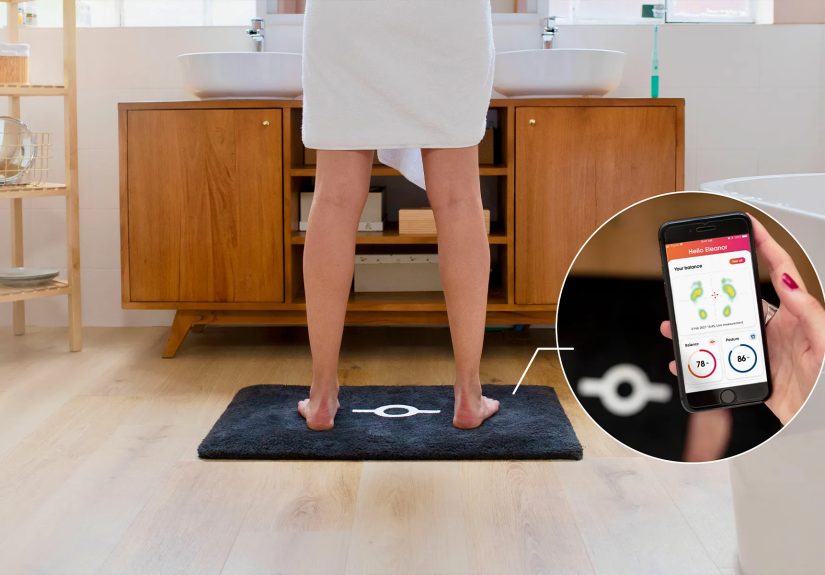
Connected scales and “longevity stations”
Bathrooms also commonly house another modern health gadget: the connected scale. Today’s high-end scales can measure
body composition estimates, sometimes integrate ECG features, and increasingly position themselves as broader health
assessment hubs. Tech coverage from CES 2026, for example, highlights how companies are pitching smart scales as
“longevity” tools that track multiple noninvasive markersand also how some advanced features may require FDA
clearance if they cross into medical-claim territory.
Translation: your scale may stop being the object you avoid after the holidays and become the device that helps you
notice long-term trendsif it’s accurate, responsibly designed, and not emotionally weaponized by your own inner
monologue.
From Self-Tracking to Real Care: How Bathroom Data Could Reach Your Clinician
Telehealth made the “home clinic” feel normal
One reason bathroom health tech feels suddenly plausible is that care has already moved closer to home. Telehealth
normalized the idea that you can have a clinically meaningful interaction without being physically inside a clinic.
Once you accept that the “visit” can happen virtually, the next question becomes: what data can you collect at home
that actually helps the clinician make good decisions?
Remote patient monitoring (RPM) is the bridge
Remote patient monitoring programs already exist for conditions like hypertension and other chronic or acute health
needs, using devices that transmit readings over time. In the U.S., RPM has a real operational footprint, including
reimbursement frameworks that encourage clinicians to review patient-generated data. A major physician organization
notes, for example, that certain RPM billing requires collecting data over a minimum number of days in a 30-day
period.
Bathroom devices fit naturally into RPM because they can collect data frequently and with low effort. A blood
pressure cuff is helpful, but it still asks you to sit down, wrap it correctly, and take a measurement. Bathroom
monitoring can be more passive: you don’t “remember” to use the toilet or look in the mirror. You just… exist.
AI summaries: less data dump, more “what matters”
Clinicians don’t need 800 bathroom datapoints; they need a clear trend summary. This is where softwareespecially
clinical decision support toolsenters the picture. The FDA has extensive guidance around software functions that may
or may not be considered medical devices, including guidance for clinical decision support software and its scope.
The FDA also describes “Software as a Medical Device” (SaMD) and has ongoing work related to AI-enabled device
software lifecycle management.
In plain English: if your bathroom device starts making claims like “you have disease X,” that’s a different world
than “your hydration has been trending low for 10 days.” The regulatory boundaries matter because they shape what
companies can safely claimand what you should trust.
At-Home Diagnostics Are Already Here (The Bathroom Tech Is Just Catching Up)
Before the idea of a doctor’s-office bathroom sounds too futuristic, remember what happened in the last few years:
at-home testing became mainstream. The FDA maintains lists of at-home OTC COVID-19 diagnostic tests authorized for
self-testing. The agency has also authorized at-home combination tests for flu and COVID outside emergency usea big
signal that the home is now part of the diagnostic landscape.
Once consumers get comfortable with testing at home, it’s not a huge leap to accept passive monitoring at homeso
long as it’s private, accurate enough for its purpose, and paired with appropriate follow-up care.
What the Bathroom Can (and Can’t) Tell You
What it can do well: trend spotting and early nudges
- Hydration patterns: catching chronic under-hydration that may contribute to fatigue, headaches, or kidney stone risk for some people.
- Nutrition-related signals: some urine markers (like ketones) can reflect dietary patterns and energy metabolism.
- Digestive consistency tracking: noticing changes in stool form and frequency that persist over time.
- Routine-friendly check-ins: pairing passive monitoring with telehealth follow-ups when needed.
What it cannot do: replace clinical judgment
Bathroom monitoring is not a diagnosis machine. A “flag” is not a medical conclusion. Many factors can affect urine
concentration, color, and markers; stool changes can be caused by diet shifts, stress, travel, medications, or
temporary illness. The right mental model is: signal → context → conversation → confirmation.
If a device is truly intended to diagnose or treat, it enters medical device territoryand should be held to higher
standards of validation, transparency, and oversight. If it’s a wellness tool, it can still be useful, but you
should treat it as guidance, not gospel.
The Big Three Challenges: Accuracy, Privacy, and “Please Don’t Text Me About My Poop”
1) Accuracy and the “wellness vs. medical” line
A product can be helpful without being medical-grade, but the distinction matters. Recent reporting has highlighted
how regulators may clarify or adjust oversight for low-risk wellness tools, while maintaining scrutiny when devices
make medical claims. In the U.S., the FDA’s digital health framework (including SaMD and AI-enabled device guidance)
shapes what companies can market, how they validate, and what they can promise.
For you as a consumer, the practical takeaway is simple: the bigger the claim, the stronger the evidence you should
demand. “Helps you understand hydration trends” is very different from “diagnoses kidney disease.”
2) Privacy: HIPAA doesn’t automatically cover your bathroom gadgets
Here’s the part that deserves a serious tone, even in a fun article: consumer health data privacy is complicated.
The U.S. Department of Health and Human Services explains that HIPAA generally does not apply to health information
you enter into many mobile apps that aren’t offered by HIPAA-regulated entities. In other words, your health data
can be sensitive even when it isn’t protected by HIPAA.
The Federal Trade Commission has emphasized the Health Breach Notification Rule for certain vendors of personal
health records and related entities, and it has updated the rule in the Federal Register to reflect modern health
apps and connected devices. If your bathroom device syncs to an app, you should care about how it stores data, how it
shares data, and what happens if it gets breached.
A good privacy checklist looks like this:
- Can you use the device without creating an account?
- Can you delete your data (not just “hide” it)?
- Can you control whether data is shared with third parties?
- Is data encrypted in transit and at rest (and do they say so clearly)?
- Is the privacy policy readable by humans, or only by lawyers and caffeinated robots?
3) Human factors: the bathroom is emotionally loaded
Health tracking can help, but it can also stress people out. The bathroom is already a place where many people feel
self-conscious (hello, scale anxiety). Adding more metrics can either empower youor create a new hobby called
“panic-refreshing your dashboard.”
The best future bathroom tech won’t just measure more. It will communicate better: fewer red-alert pop-ups, more
context, and a clear handoff to care when something truly needs follow-up.
How to Get Ready Without Turning Your Bathroom Into a NASA Control Room
Start with your real goal
Don’t buy a device because it’s shiny. Buy it because it answers a real question. Examples:
- “I forget to drink water” → hydration trend nudges could help.
- “My doctor wants more home readings” → choose devices designed for sharing clinically useful summaries.
- “I have recurring kidney stones” → focus on hydration habits and discuss appropriate testing and prevention strategies with your clinician.
- “My digestion is unpredictable” → tracking stool form/frequency may help you identify patterns worth discussing.
Prefer evidence, not vibes
Look for devices that separate “wellness insights” from “medical claims,” and be wary of anything that promises to
diagnose conditions without clear validation. If something is presented as medical, it should have more rigorous
evidence and appropriate regulatory positioning.
Use data as a conversation starter
The smartest way to use bathroom health monitoring is as a structured note to bring to a clinician. “Over the last
30 days, hydration markers suggest I’ve been low most weekdays” is more actionable than “I feel off.”
Data shouldn’t replace care; it should sharpen it.
What’s Next: A Bathroom That Triage-Checks You Before You Brush
The next wave is likely to look less like “a gadget” and more like ambient infrastructuredevices that fade into the
background. Instead of “open app, push button, take test,” it becomes “use bathroom, live life, get helpful nudges
only when patterns shift.”
Expect three big moves:
- More passive sensing: fewer actions required, more trend-based insights.
- Better handoff to care: integration with telehealth and clinician dashboards, especially through RPM-style workflows.
- Stronger privacy expectations: clearer rules, stronger enforcement, and consumers demanding control.
The bathroom may never feel like a clinicand that’s the point. The future doctor’s office might not be the bathroom
because it looks medical. It might be the bathroom because it feels normal.
Bathroom-Clinic Diaries: 5 Near-Future Experiences (About )
1) Monday: The Hydration Nudge That Actually Works
You wake up groggy, shuffle to the bathroom, and do the usual. Ten minutes later, your phone gently pings:
“Hydration trend is lower than your usual baseline for the third day.” No sirens. No skull emoji. Just a calm
suggestion and a quick visual showing how your weekdays dip compared to weekends. You don’t feel judgedyou feel
informed. You drink a glass of water while your coffee brews, mostly because the message was annoying in the best
way: specific, polite, and hard to argue with.
2) Tuesday: The Mirror That Notices You’re Not Sleeping
While you brush your teeth, the mirror’s dashboard quietly updates. It doesn’t say, “You look terrible,” because
it’s not a monster. Instead, it highlights that your morning resting heart rate has been slightly elevated versus
your normal range, and it pairs that with a question: “Did you sleep less than usual?” You tap “Yes.” It suggests a
simple plan: earlier wind-down, fewer late-night doom scrolls, andif the trend persistsconsider checking in with
your clinician. It’s not diagnosing anything. It’s doing what a good coach does: noticing patterns you keep
ignoring.
3) Wednesday: The “Digestive Trend” Conversation You’re Finally Ready to Have
You’ve been telling yourself your stomach is “just sensitive” for months. But the bathroom tracker has been logging
stool form and frequency in a way that’s surprisingly non-creepy (you never see photos; you see categories and
trends). The weekly summary shows frequent swingsconstipation patterns followed by loose stools. It suggests
possible triggers to consider: travel days, late dinners, certain foods, stress spikes. You realize your “sensitive
stomach” lines up perfectly with deadline weeks. The best part? When you book a telehealth visit, you have a
structured, respectful summary instead of trying to describe your digestion like a confused poet.
4) Thursday: A Kidney Stone Scare That Turns Into Prevention
The urine-monitoring device flags a shift: you’ve been trending toward more concentrated urine, and your hydration
has been consistently low. You’ve had kidney stones before, so you take it seriously. You don’t panic-Google.
You do the boring, effective thing: more water, lower sodium meals for a few days, and a message to your clinician
asking if additional testing makes sense. The device didn’t “diagnose” anything. It simply caught the early pattern
that tends to show up before you’re curled into a ball bargaining with the universe.
5) Friday: The Clinician Doesn’t Drown in Data
During your virtual check-in, your clinician sees a one-page summary: hydration trend, a couple of flagged weeks,
and a short note about digestive variability. No 900-chart spaghetti. No confusing graphs that look like a stock
market crash. Together, you decide what’s worth investigating and what’s best handled with habit changes. You leave
the call feeling calmer, not because technology “fixed” you, but because it made your health story clearer. And then
you celebrate the most futuristic outcome of all: a care plan you’ll actually follow because it fits your life.
Conclusion: The Bathroom Won’t Replace Your DoctorBut It Might Help You See One Sooner
“Your bathroom may be the future doctor’s office” doesn’t mean your toilet will start writing prescriptions. It
means healthcare is moving toward earlier signals, trend-based prevention, and more care that happens where you
already live. The bathroom is a natural place for that shift because routines happen there, biology shows up there,
and the datahandled responsiblycan help you have better conversations with clinicians.
The future depends on getting the basics right: accuracy that matches the claim, privacy that respects how intimate
this data is, and design that helps people feel empowered instead of watched. If we do that well, the bathroom won’t
feel like a clinic. It’ll feel like what it’s always beenjust with a little extra insight, and a lot fewer “Wait,
how long has this been going on?” moments.