Table of Contents >> Show >> Hide
- What Is Phage Therapy, Exactly?
- Why Scientists Are Looking Beyond Traditional Antibiotics
- What Makes Bacteriophages So Different?
- How Phage Therapy Is Being Used in the United States Right Now
- Real Examples That Made Researchers Pay Attention
- Where Current Clinical Trials Are Headed
- The Big Advantages of Phage Therapy
- Why Phage Therapy Is Not Mainstream Yet
- So, Will a Virus Replace Your Antibiotic?
- Experiences From the Front Lines of Phage Therapy
- Conclusion
For most of modern medicine, antibiotics have been the headliners. They swept onto the stage, crushed bacterial infections, and made doctors look like magicians with prescription pads. But bacteria, being annoyingly talented at survival, have been rewriting the script. As antibiotic resistance grows, researchers are revisiting an old idea that sounds like science fiction and works like precision biology: using viruses to kill bacteria.
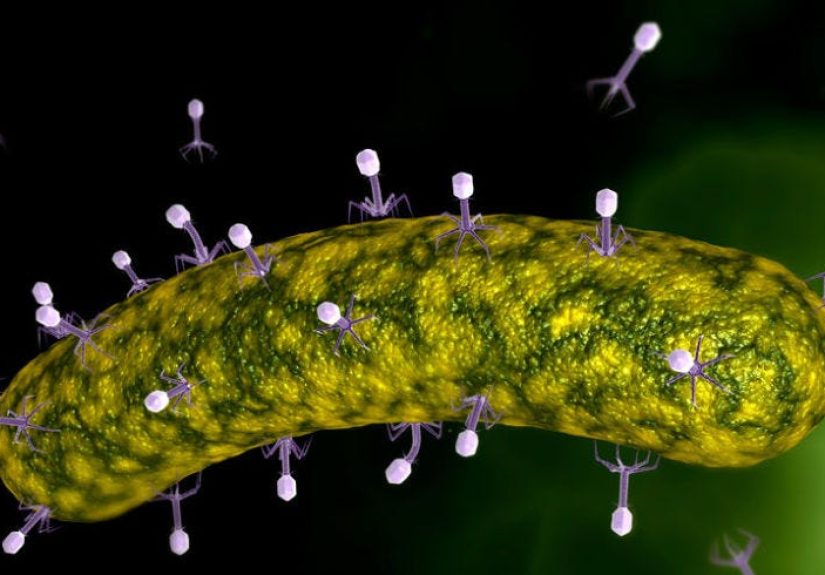
These viruses are called bacteriophages, or simply phages. Unlike the viruses that give humans colds or the flu, phages infect bacteria. That makes them a fascinating candidate for treating stubborn infections, especially the kind that laugh in the face of standard antibiotics. So yes, your next “antibiotic” might not be a chemical at all. It might be a virus with a very particular grudge.
What Is Phage Therapy, Exactly?
Phage therapy is the use of bacteriophages to target and destroy harmful bacteria. Think of phages as microscopic bounty hunters. Each one is built to recognize certain bacterial targets, attach to them, inject genetic material, multiply inside them, and eventually burst the bacterial cell open. It is dramatic, effective, and deeply satisfying if you happen to dislike drug-resistant germs.
This idea is not new. Phages were discovered more than a century ago, and scientists explored them long before antibiotics became the undisputed kings of infection treatment. But once penicillin and other antibiotics arrived, phage therapy faded in much of the West. Antibiotics were easier to mass-produce, broader in action, and simpler to prescribe. Why painstakingly match a virus to a bacterium when you could hand out a pill that hit a wide range of bacteria at once?
That broad reach, however, is also part of the problem. Antibiotics can wipe out harmful bacteria, but they can also damage beneficial microbes in the body. That matters because the human microbiome is not decorative. It helps protect health. A more targeted tool that attacks the bad actor while leaving the innocent bystanders alone is very attractive in a world increasingly worried about resistance, recurrence, and collateral damage.
Why Scientists Are Looking Beyond Traditional Antibiotics
Antibiotic resistance happens when bacteria evolve ways to survive the drugs designed to kill them. The result is simple and terrifying: infections become harder to treat, treatment options shrink, hospital stays get longer, and routine medical care gets riskier. Procedures that depend on reliable infection control, from surgery to cancer treatment, become more complicated when bacteria stop responding to standard drugs.
That is why phage therapy has returned to the conversation with such force. It offers a different mechanism. Instead of relying on the same chemical pathways antibiotics use, phages exploit bacterial biology in another way. Some phages can even work alongside antibiotics, creating a one-two punch: the antibiotic weakens the bacteria, the phage attacks, and together they may outperform either tool alone.
Even more interesting, researchers have observed cases in which bacteria that evolve resistance to a phage become less virulent or become more sensitive to antibiotics again. In other words, the bacteria can dodge one threat only by making themselves more vulnerable to another. That is the microbial equivalent of escaping through a window and landing in a swimming pool.
What Makes Bacteriophages So Different?
1. They are precise
Most antibiotics are broad-spectrum weapons. Phages are more like custom tools. A phage often targets a specific bacterial species, and sometimes only certain strains within that species. That precision may help preserve beneficial bacteria in the gut or elsewhere in the body, which is one reason phage therapy is so appealing to researchers interested in precision medicine.
2. They multiply where the bacteria are
Unlike a standard drug that gradually gets metabolized and cleared, phages can replicate at the site of infection as long as susceptible bacteria are present. In theory, that means the treatment can expand where it is needed most. It is one of the reasons phages are sometimes nicknamed living antibiotics.
3. They can be personalized
In some cases, doctors and researchers isolate the patient’s bacteria, test those bacteria against a library of phages, and then select a matching phage or phage cocktail. This personalized approach is part of what makes phage therapy exciting. It is also part of what makes it complicated, because personalized medicine is wonderful right up until it meets paperwork, manufacturing, and time pressure.
How Phage Therapy Is Being Used in the United States Right Now
Here is the key reality check: phage therapy is not yet FDA-approved for routine clinical use in the United States. That does not mean it is imaginary. It means the field is still in the investigational stage. In the U.S., phages are currently used mainly through expanded access for very sick patients with few or no satisfactory alternatives, or through formal clinical trials.
That distinction matters. Phage therapy is not something a patient can casually request at a neighborhood urgent care clinic between a strep test and a lollipop. It is typically considered for severe, difficult, or antibiotic-resistant infections, often with support from specialized centers and research teams.
Several U.S. institutions are helping push the field forward. UC San Diego’s IPATH program became the first dedicated phage therapy center in North America and helped bring attention to the field through real-world rescue cases and structured research. Yale has built a major Center for Phage Biology and Therapy and has used “phage hunting” and matched phage selection for multidrug-resistant infections. Mayo Clinic is also collecting clinical data and biospecimens from patients receiving phage therapy to improve future treatment strategies.
Real Examples That Made Researchers Pay Attention
Phage therapy would still be stuck in the “interesting but niche” category if all it had were lab dishes and hopeful PowerPoints. What changed the tone of the conversation in the U.S. were the clinical cases.
One of the best-known examples came from UC San Diego, where an experimental intravenous phage therapy was used to treat a patient with a life-threatening multidrug-resistant infection. That case became a landmark moment because it showed phages could be used systemically in the United States in a carefully managed medical setting.
UC San Diego researchers later reported a larger case series involving complex antibiotic-resistant lung infections. More than half of the treated patients had favorable clinical outcomes, and there were no adverse reactions reported in that series. That is not the same as saying the therapy is proven for everyone. It is, however, exactly the kind of signal that convinces the scientific community to move from rescue medicine toward structured trials.
Yale has also reported promising findings in adults with cystic fibrosis, using nebulized phage therapy aimed at Pseudomonas aeruginosa. In that small group, researchers reported improved lung function, reduced bacterial burden in sputum, and evidence that surviving phage-resistant bacteria may have become less harmful. For a field trying to prove that phages can do more than generate headlines, that is a meaningful development.
Where Current Clinical Trials Are Headed
The next big question is no longer, “Can phage therapy work at all?” It is, “Can it work consistently, safely, and at scale?” That is where clinical trials come in.
U.S. trials have focused heavily on infections caused by Pseudomonas aeruginosa, especially in people with cystic fibrosis. This makes sense. Pseudomonas is notoriously difficult, often resistant to multiple antibiotics, and prone to forming chronic lung infections. If phages can make progress there, it is a strong proof of concept.
There are also ongoing studies involving prosthetic joint infections and other chronic, hard-to-treat bacterial problems. These are perfect testing grounds for phage therapy because they often involve biofilms, recurrent disease, limited antibiotic options, and patients who badly need something smarter than “let’s try the same medication again and hope the bacteria had a change of heart.”
At the same time, NIH and NIAID have continued funding phage-related research and clinical development, including support for cystic fibrosis studies and newer initiatives meant to close gaps in phage research, manufacturing, and therapeutic development. That kind of institutional backing is one of the clearest signs that phage therapy has moved beyond curiosity and into serious biomedical planning.
The Big Advantages of Phage Therapy
Precision targeting
Because many phages are highly specific, they may spare beneficial bacteria that broad-spectrum antibiotics often damage. That could matter for gut health, recurrence risk, and long-term resilience of the microbiome.
Activity against resistant bacteria
Phages do not care whether a bacterium ignores penicillin, shrugs at carbapenems, or rolls its membrane at last-resort antibiotics. If the phage can bind to the bacterium and successfully infect it, resistance to traditional drugs does not automatically protect the microbe.
Potential synergy with antibiotics
Rather than replacing antibiotics outright, phages may often work best beside them. This combined strategy could become especially important for complex infections, mixed infections, and biofilm-heavy conditions.
Flexible delivery methods
Depending on the infection, phages may be delivered by inhalation, intravenous infusion, ingestion, or local application. That flexibility opens the door for treating lung infections, wound infections, urinary infections, joint infections, and more.
Why Phage Therapy Is Not Mainstream Yet
If phages sound so promising, why are they not already sitting next to amoxicillin at the pharmacy? Because biology rarely lets a good idea become simple.
Matching is hard
A phage usually needs the right bacterial target. That means clinicians often need the patient’s bacterial isolate, lab testing, and access to an adequate phage library. In a fast-moving severe infection, time matters, and a treatment that requires custom fitting can be difficult to deploy quickly.
Bacteria can resist phages too
Bacteria evolve against phages just as they evolve against antibiotics. That is why researchers use cocktails, hunt for new phages, and study evolutionary trade-offs that may make phage resistance less advantageous for the bacteria.
The immune system may interfere
Because phages are biological agents, the body may recognize and neutralize them, especially with repeated exposure. Researchers still need better answers about dosing, timing, route of administration, and how the immune system changes phage effectiveness over time.
Manufacturing and regulation are tough
A pill is one thing. A living viral therapy is another. Phage products must be purified, characterized, stable, potent, and safe. Regulators also need consistent standards for how personalized or rapidly adaptable phage products should be reviewed. In short, phages are medically exciting and administratively exhausting.
So, Will a Virus Replace Your Antibiotic?
Probably not tomorrow, and probably not in every case. The future of infection treatment is unlikely to be a dramatic “antibiotics are out, viruses are in” swap. It is more likely to be a smarter toolbox. Antibiotics will still matter. Vaccines will still matter. Infection prevention will still matter. But phages may become a critical option for the patients who currently have too few good ones.
In that future, a doctor might identify the exact bacterium causing an infection, test it against available phages, pair the best viral match with an antibiotic, and treat the infection with far more precision than we can in many cases today. That would not just be clever science. It would be a major shift in how we think about bacterial disease.
And maybe that is the real story here. Phage therapy is not simply an emergency backup plan for the antibiotic era. It is a glimpse of a more individualized, ecology-aware, and evolution-conscious kind of medicine. The irony is delightful: after decades of fearing viruses, medicine may end up recruiting some of them to save us from bacteria.
Experiences From the Front Lines of Phage Therapy
When people first hear that viruses might be used to treat bacterial infections, the reaction is usually a mixture of curiosity and side-eye. That makes sense. “You want to put a virus in me on purpose?” is a very human response. But in hospitals and research centers working on phage therapy, the experience is often less sci-fi than people imagine. It is careful, methodical, and deeply personal.
For patients facing multidrug-resistant infections, the experience often starts after a long run of disappointment. They may have gone through multiple antibiotics, repeated hospital stays, draining side effects, and the quiet emotional fatigue that comes from hearing phrases like “limited options.” By the time phage therapy enters the conversation, it is rarely because someone wants to try something trendy. It is because the standard playbook is running out of pages.
Clinicians describe a very different kind of treatment workflow than ordinary prescribing. Instead of choosing from a familiar list of approved antibiotics, they may need to obtain a bacterial sample, coordinate with researchers, screen phage libraries, identify candidates that actually kill the patient’s strain, and work through regulatory pathways for investigational use. It is medicine with a lab coat, a microscope, and a lot of emails.
Patients who receive phage therapy often experience it not as a miracle switch but as part of a larger team effort. There may be antibiotics given alongside the phages. There may be inhaled doses, IV infusions, or local delivery at the infection site. There are follow-up cultures, monitoring, and constant adjustments. The emotional experience can be intense because the therapy represents both hope and uncertainty at the same time.
Families, too, go through their own version of the journey. In published and reported U.S. cases, phage therapy has often entered the picture when loved ones were critically ill or dealing with chronic, punishing infections. For them, the treatment is more than a scientific innovation. It is a crack of light in a room that had become very dark. Even when researchers are appropriately cautious, families often understand the stakes immediately: this is not about novelty; it is about a real chance.
Researchers working in the field describe another side of the experience: phage therapy is exciting precisely because it refuses to be simple. Every successful case teaches them something about bacterial evolution, delivery methods, immune responses, and how to build better phage cocktails. Every setback teaches them even more. In that way, phage therapy feels less like a finished product and more like a rapidly maturing discipline.
What ties all of these experiences together is a shift in mindset. Patients, doctors, and scientists are learning to see infection treatment less as a blunt-force war and more as a strategic match-up. Which bacterium is this? Which phage can hit it? What combination creates the best odds? It is personalized medicine in one of its most practical forms. And while the field still has hurdles, the lived experience around phage therapy already suggests something important: for some patients, this is not the medicine of the distant future. It is the medicine that showed up when almost everything else failed.
Conclusion
Your next antibiotic might be a virus is no longer a wild headline with no scientific legs. Bacteriophage therapy is emerging as one of the most intriguing answers to the antibiotic resistance crisis because it combines precision, adaptability, and the possibility of working with antibiotics rather than merely replacing them. It is still investigational in the United States, and serious hurdles remain around matching, manufacturing, immune response, and regulation. But the momentum is real, the clinical experiences are growing, and the research pipeline is getting stronger.
If the 20th century belonged to broad-spectrum antibiotics, the 21st may belong to smarter, more targeted anti-infective strategies. And among them, phages look less like a medical curiosity and more like a future mainstay. Tiny, strange, and surprisingly useful, they may help medicine do what it always hopes to do: kill the right enemy without wrecking the whole neighborhood.