Table of Contents >> Show >> Hide
- Why Everyone Is Talking Again
- What Zac Efron Himself Said Happened
- Why His Face May Look Different at Different Times
- What the Expert Commentary Really Means
- Why the Phrase “Back to Normal” Feels So Complicated
- The Bigger Lesson About Celebrity Faces
- Experiences Around the Zac Efron Face Debate: Why This Story Hits So Hard
- Final Thoughts
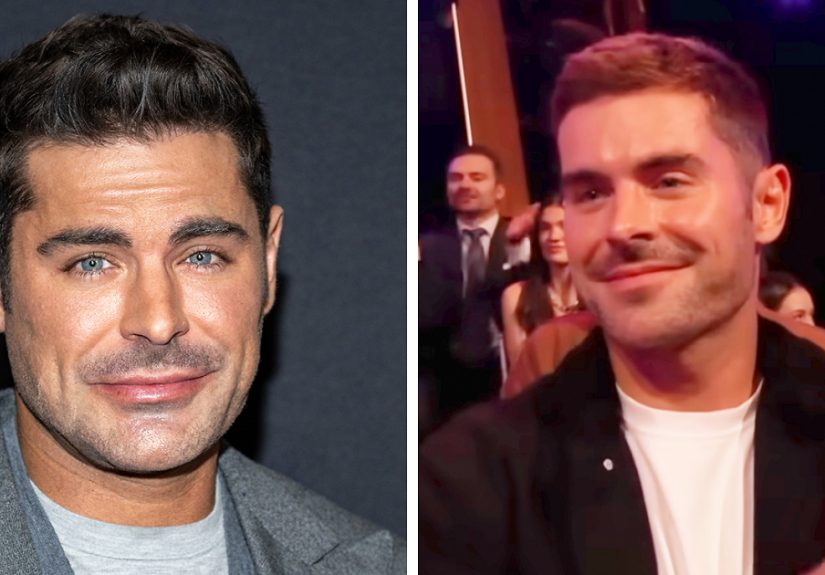
If the internet had a full-time hobby, it would probably be zooming in on celebrity faces and declaring itself board-certified after three side-by-side screenshots and half a latte. The latest target of that strange modern ritual is Zac Efron, whose recent appearance sparked a fresh round of chatter, compliments, hot takes, and the usual social-media medical degree theatrics. This time, the conversation centered on one big claim: that his face looks “back to normal.”
That phrase may sound simple, but the story behind it is not. Efron has spent years answering speculation about why his face changed, especially around his jawline. He has already addressed those rumors publicly, and his explanation has stayed remarkably steady: a serious jaw injury, a rough recovery, and facial muscles that overcompensated during healing. More recently, expert commentary has added another layer to the discussion, with some observers floating theories about filler, Botox, or other tweaks. But here is the important distinction: those claims are opinions, not confirmation.
So what actually happened, why are people talking again, and why does Zac Efron’s face keep turning into a cultural weather report? Let’s unpack the internet noise, the medical explanation, the expert speculation, and the larger reason this story keeps pulling people in like a magnet wearing lip balm.
Why Everyone Is Talking Again
Celebrity appearance stories usually follow a familiar pattern. A new photo surfaces. Fans compare it to an older one from a different angle, in different lighting, from a different haircut era, and preferably from a completely different decade. Then social media does what social media does best: it acts shocked that time, injury, stress, makeup, grooming, weight changes, and camera lenses exist.
In Efron’s case, the renewed buzz came after recent public photos made many fans say he looked more like the version of himself they remembered from earlier phases of his career. To some viewers, his features looked softer, more balanced, or simply less exaggerated than during previous appearances that sparked heavy online speculation. That led to the now-viral line that he looked “back to normal,” which is a loaded phrase for anyone, but especially for a celebrity whose face has been dissected by strangers for years.
Part of the fascination comes from how familiar Efron feels to audiences. Many people watched him grow up on-screen, from teen heartthrob to adult leading man. When the public sees a face it has mentally frozen in time, even a natural change can feel dramatic. Add a long Hollywood career, intense fitness transformations for roles, and a real injury that affected his jaw, and suddenly every new image becomes a mini internet symposium.
What Zac Efron Himself Said Happened
The most important piece of this story is not a fan theory or a plastic surgeon’s guess. It is Efron’s own account.
He has said that years ago he suffered a serious accident at home. According to his retelling, he slipped while running in socks, struck his chin on a granite fountain, lost consciousness, and badly injured his jaw. The injury was severe enough that he later described his chin bone as essentially hanging off his face. He has also said the accident was serious enough that he “almost died,” which is about as far from a casual cosmetic touch-up as a story can get.
During recovery, Efron said his jaw had to be wired shut and that he needed physical therapy. He explained that facial muscles work together like a coordinated system, and when some are weakened or not functioning normally, others compensate. In his case, he said the masseter muscles, the major chewing muscles near the sides of the jaw, grew larger as they overworked during recovery. That detail matters because enlarged masseters can visibly change the lower face, making the jaw appear broader, squarer, or heavier.
That explanation also lines up with basic anatomy. The masseter is one of the main muscles responsible for chewing and closing the jaw. If it becomes enlarged, whether from overuse, clenching, compensation, or other causes, it can alter facial contour in a very noticeable way. In plain English: yes, a jaw injury and recovery process really can change how someone’s face looks, especially on camera.
Why His Face May Look Different at Different Times
This is where the internet usually skips straight to chaos, but the more boring answer is often the smarter one: faces are not static. They change for all kinds of reasons, and public photos rarely give a complete picture.
1. Healing is not a straight line
Recovery from facial trauma is rarely neat and symmetrical. Swelling, muscle compensation, therapy, weight fluctuation, and plain old time can all affect appearance. A person may look noticeably different during one phase of healing and then look different again later.
2. Muscles can reshape the look of the jaw
If the masseter muscles are doing extra work, the lower face can appear bulkier or squarer. If that muscle activity eases over time, or if facial tension changes, the face may look less pronounced later. That does not require a conspiracy board and red string. It just requires muscles being muscles.
3. Movie roles change bodies and faces
Efron is no stranger to physically demanding parts. Extreme training, low body-fat phases, weight gain for roles, dehydration for filming, and the overall stress of performance prep can all affect the face. A person can look fuller, sharper, puffier, leaner, or older depending on the phase they are in. Hollywood loves a transformation montage, but real bodies do not always come with a neat “before” and “after” caption.
4. Styling does more than people think
Facial hair, haircuts, lighting, lens distortion, camera angle, and even expression can change how a face reads. A fuller beard can soften a jawline. A close camera lens can widen features. Harsh flash can flatten a face. One red carpet photo can make someone look like themselves, their cousin, and a wax statue of both at once.
What the Expert Commentary Really Means
The recent conversation heated up again after expert commentary entered the chat. A facial plastic surgeon quoted in entertainment coverage suggested Efron may have had some filler and possibly other minor cosmetic work, while also saying he did not believe cheek implants were likely. That kind of commentary gets attention because it sounds authoritative, but it is still speculation based on photos, not a medical chart or personal confirmation.
And that is the key point. There is a big difference between “an expert thinks maybe” and “this definitely happened.” Public-facing cosmetic analysis of celebrities is often built on visual comparison alone. It may be informed, but it is not proof. Efron himself has not confirmed cosmetic procedures as the reason for the major shift that made people talk in the first place. Instead, he has repeatedly pointed back to the injury and recovery process.
A balanced reading of the situation is pretty simple: an expert is free to speculate, fans are free to notice changes, but the strongest confirmed account still comes from Efron’s own explanation of trauma, treatment, and muscle compensation. Anything beyond that should be handled carefully, especially when the internet loves turning possibility into certainty at Olympic speed.
Why the Phrase “Back to Normal” Feels So Complicated
Let’s pause on that phrase for a second, because it says a lot. “Back to normal” sounds harmless, but it carries a quiet message: that one version of a person is acceptable, while another version invites judgment. That can be especially harsh when the change may be tied to a real injury.
It also says something about the audience. People are not only responding to what Efron looks like now. They are responding to the version of him they stored in their collective memory. For some, that means the Disney-era face. For others, it is the rom-com face, the action-hero face, or the ultra-jacked wrestling-drama face. In other words, “normal” often means “the version I personally miss.” That is nostalgia wearing a lab coat.
Celebrity culture has always been appearance-driven, but the internet made it more obsessive and more immediate. A face can trend for hours before anyone stops to ask whether the story underneath that face is actually serious, complicated, or deeply human. Efron’s case is a good reminder that surface-level gossip can flatten real experiences into meme material.
The Bigger Lesson About Celebrity Faces
This story keeps resurfacing because it sits at the intersection of three internet obsessions: celebrity beauty, body transformation, and amateur diagnosis. People are fascinated by famous faces because they feel familiar, even personal. But familiarity is not ownership, and recognition is not evidence.
There is also a weird cultural habit of treating appearance changes as public property. Gain weight? Public debate. Lose weight? Public debate. Look tired? Public debate. Look refreshed? Also somehow public debate. It is exhausting just reading the comments, let alone living under them.
What makes the Efron conversation especially revealing is how quickly compassion can disappear the moment a face looks different. Instead of starting with “Maybe something happened,” many corners of the internet begin with “What did he do?” That framing assumes vanity before vulnerability. It is a lousy reflex, and honestly, one that deserves retirement.
Experiences Around the Zac Efron Face Debate: Why This Story Hits So Hard
One reason this topic keeps generating such intense reactions is that people are not only talking about Zac Efron. They are also talking about their own relationship with change, memory, beauty, and public judgment. That is why the story feels oddly personal to so many fans. They remember a younger Efron from a specific season of life: middle school sleepovers, Disney Channel marathons, awkward first crushes, or a time when celebrity culture felt a little less forensic and a little more fun. So when his face changes, the reaction is not just, “He looks different.” It is, “Something from my memory feels different.”
That emotional layer explains why so many comments online sound less like analysis and more like startled nostalgia. People are really saying, “I remember this person one way, and now I have to update the file in my brain.” That may sound silly, but it is actually a real part of parasocial culture. Audiences build long-term familiarity with stars, especially ones who grow up in public. When those stars age, bulk up, slim down, recover from injuries, or simply appear under different circumstances, the audience often treats it like a glitch instead of a normal human process.
There is also the experience of seeing how harsh internet culture has become. Plenty of people following the story have expressed discomfort with how quickly online discussion jumps from curiosity to cruelty. It is one thing to notice that someone looks different. It is another thing entirely to turn that observation into mockery, certainty, or invasive diagnosis. That shift says less about the celebrity and more about the digital environment we have built, one where strangers feel entitled to narrate someone else’s body in real time.
For many readers, the Efron discussion also connects to something more universal: the strange feeling of seeing your own face change over time. Most people do not go through it under a global spotlight, thankfully, but they still know what it is like to compare old photos, notice a different jawline, a fuller face, a sharper cheek, a tired eye, or a scar that changed how they look. Injury, stress, age, medication, fitness, sleep, grief, hormones, and recovery all leave fingerprints on a face. That is one reason the story resonates beyond celebrity gossip. It taps into the ordinary human experience of not always looking like the version of yourself that other people expect.
And then there is the recovery angle. Anyone who has ever dealt with a serious injury knows healing can be physically messy and emotionally frustrating. It can change how you move, how you feel, how you eat, how you train, and yes, how you look. People often expect recovery to end with a clean return to the “old you,” but real life is rarely that tidy. Sometimes healing creates a new baseline. Sometimes it takes longer than expected. Sometimes you look better some months and rougher in others. That is normal. That is human. That is not scandalous.
Maybe that is the most useful takeaway from the Zac Efron face conversation. It is not really a story about a face at all. It is a story about memory colliding with reality, speculation colliding with lived experience, and internet culture colliding with basic empathy. If readers walk away from this topic with anything, it should be this: public curiosity may be inevitable, but kindness is still a choice. And in a world that can turn one photo into a thousand opinions before lunch, choosing kindness is a pretty good look on everybody.
Final Thoughts
Zac Efron’s so-called “back to normal” face is only a headline if you ignore the actual context. The larger, better-supported story is that he experienced a serious jaw injury, went through recovery, and later found himself at the center of relentless speculation about how that recovery changed his appearance. Recent expert commentary added fuel to the conversation, but it did not erase the explanation Efron has already given.
In the end, the story says as much about us as it does about him. People love a familiar face, but they often struggle when that face reflects time, injury, or change. Efron’s experience is a reminder that public figures are still people, and that a face is not a static brand logo. It is part of a living body that gets hurt, heals, ages, adapts, and keeps going.
So yes, people are talking. But the smarter conversation is not “What did he have done?” It is “Why are we so quick to turn a human recovery story into a rumor factory?” Once you ask that question, the whole headline starts to look a little less juicy and a lot more revealing.