Table of Contents >> Show >> Hide
There are two kinds of people on the internet: people shopping for a home, and people who opened Zillow “just to peek” and somehow ended up emotionally invested in a castle with a bowling alley, a bunker, and at least one room that looks like it was decorated by a very wealthy raccoon. That second group is exactly why Zillow Gone Wild became such a phenomenon. America has discovered that weird real estate listings are not just listings. They are performance art with square footage.
The magic of a cursed listing is simple: it starts like any ordinary home search, then suddenly swerves into chaos. A tidy suburban exterior hides a medieval tavern basement. A tasteful ranch contains a dungeon. A luxury mansion reveals a fake underground town, as if the owner wanted both a home and a small, very confusing Main Street. These viral home listings don’t just ask buyers to imagine their future. They ask the internet to process someone else’s interior-design fever dream in real time.
That is what makes the best weird real estate listings so addictive. They are half aspiration, half horror, and fully impossible to scroll past. Below are 30 gloriously cursed ways real estate listings earn a second look, plus why unusual Zillow homes keep hijacking the American attention span.
Why “Cursed” Listings Keep Winning the Internet
Real estate used to be mostly local. Now it is content. A listing photo can travel farther than the home ever will, reaching millions of people who have no intention of buying but every intention of judging the wallpaper. That shift matters. In the age of social feeds, a property is no longer competing only with nearby listings. It is competing with memes, celebrity gossip, recession discourse, and videos of dogs wearing raincoats. To stand out, a home has to be memorable.
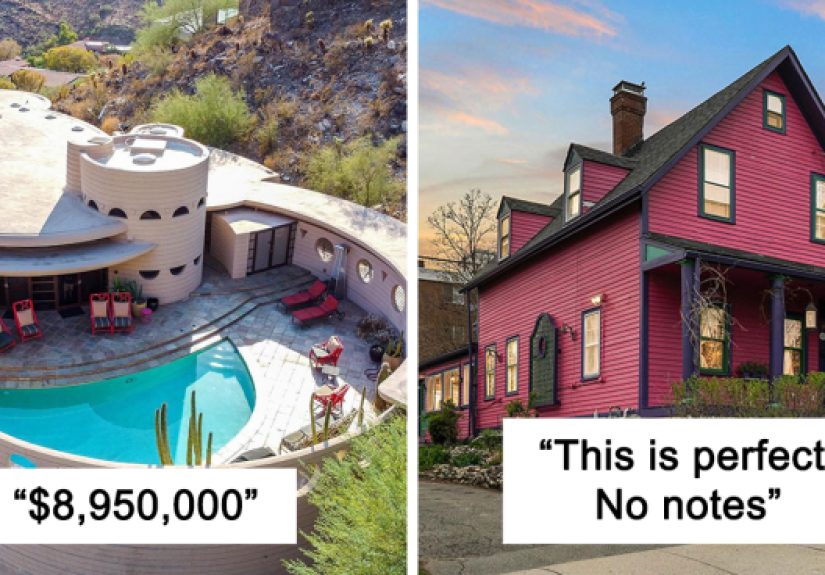
Sometimes memorable means beautiful. Sometimes it means a bright-pink time capsule with enough vintage flair to make the entire internet yell, “Don’t you dare renovate this.” And sometimes it means a home so deeply committed to one strange idea that the listing becomes a digital campfire story. That is the fuel behind viral home listings: shock, curiosity, envy, disbelief, and the quiet comfort of knowing someone, somewhere, willingly installed that indoor faux saloon.
30 Times Real Estate Listings Were So Cursed, They Deserved A Second Look
When the Outside Looked Normal but the Inside Chose Violence
1. The innocent exterior with a hidden dungeon.
The front yard says “family movie night.” The basement says “absolutely not.” Few things embody cursed-home energy better than a normal-looking house hiding a room that feels one lighting adjustment away from becoming a true-crime documentary.
2. The basement village nobody asked for.
A basement is usually for storage, laundry, or regret. But some listings reveal a full mini-town underground, complete with storefront vibes and uncanny atmosphere. Charming? Maybe. Disturbing? Also yes. Unforgettable? Completely.
3. The fake office from a workplace nightmare.
Every so often, a house appears to contain a fully realized office suite in the basement, giving off the exact energy of corporate fluorescent despair. You are not just buying a home. You are buying a Tuesday at 2:17 p.m.
4. The jail-cell surprise.
One of the most enduring flavors of cursed listing is the home that casually includes bars, cells, or some kind of carceral décor choice. It is always presented like a bonus feature, as if buyers regularly say, “Needs more detention-center chic.”
5. The hidden bunker flex.
Missile silos and underground survival compounds sit in the sweet spot between fascinating architecture and “I need to know everything immediately.” They are equal parts engineering marvel, apocalypse cosplay, and conversation starter nobody can top.
6. The house that looked like a starter home but contained a spaceship.
Some listings wait until photo eight or nine to reveal a room that looks designed for either intergalactic diplomacy or a laser-tag league. That delayed reveal is part of the thrill. Zillow becomes a jump scare with granite countertops.
When Décor Turned Into a Personality Test
7. The Barbie-pink time capsule.
Every now and then, the internet falls in love with a home that refuses beige respectability and goes full pink fantasy. These listings go viral because they are committed. No timid accent wall. No tasteful blush pillow. Just total rosy domination.
8. The maximalist house with zero indoor voice.
Maximalism can be joyful. It can also look like a craft store, antique mall, and theme restaurant collided during a thunderstorm. When every room has a different plot twist, the listing becomes less “open concept” and more “open emotional wound.”
9. The taxidermy jump scare.
Nothing derails a casual home tour like turning a corner and being stared down by a decorative moose, safari tableau, or enough mounted heads to suggest the seller also hosts very intense dinner parties.
10. The doll room nobody warned you about.
Not every cursed listing needs structural weirdness. Sometimes all it takes is one room filled wall-to-wall with antique dolls, each contributing exactly one teaspoon of nightmare fuel. Suddenly the primary suite matters a lot less.
11. The holiday décor that never left.
If a Christmas village is still fully operational in July, buyers have questions. Seasonal décor in listing photos can feel cozy, but there is a point where festive becomes forensic evidence that time has lost meaning inside this property.
12. The medieval banquet-hall kitchen.
There is a special genre of listing where the kitchen appears designed for a Renaissance fair caterer. Heavy wood, dramatic chandeliers, maybe a knight in the corner. You can practically hear the turkey leg hitting the plate.
When Luxury Homes Got Weird Instead of Elegant
13. The mansion with a go-kart track.
Some luxury listings do not believe in subtlety. If the average home offers a two-car garage, the cursed luxury home offers an activity campus. Go-kart track, batting cage, golf simulator, spa, maybe a room that exists purely to intimidate other rooms.
14. The subterranean pool from another dimension.
Indoor pools are already risky. Done wrong, they feel less like luxury and more like a climate problem. But the truly unforgettable ones look like secret lairs, retro-futurist temples, or places where a Bond villain would host brunch.
15. The house with its own fake town square energy.
Wealthy Americans sometimes decide a normal entertainment room is too emotionally reasonable. So instead, they build a lower level that feels like a streetscape, tavern, village, or private theme park with property taxes.
16. The castle commitment.
Turrets, moats, faux battlements, stone lions guarding the driveway: the internet cannot resist a listing where the owner clearly thought, “What if Home Depot carried monarchy?” These homes are absurd, theatrical, and impossible not to screenshot.
17. The mega–man cave that became a county.
Once a “man cave” includes enough square footage for sports, gaming, lounging, collecting, and perhaps regional air traffic control, it stops being a room and becomes a local government.
18. The hyper-themed hobby palace.
Some listings feel less like homes and more like museums dedicated to one person’s extremely specific interests. Cars, trains, tiki culture, hunting, arcade machines, old saloon signspick a fixation, then imagine building a mortgage around it.
When Architecture Itself Decided to Be the Main Character
19. The shoe-shaped house.
America loves a novelty building, and the shoe house may be the perfect example of why. It is whimsical, historic, slightly ridiculous, and exactly the kind of place people would never search for on purpose but happily spend an hour discussing.
20. The Earthship that looked like sci-fi and sustainability had a baby.
Eco-minded architecture can be beautiful, but it can also look like a desert moon base that accidentally achieved inner peace. These homes fascinate people because they are both practical experiments and visual curveballs.
21. The concrete bunker-beauty hybrid.
Brutalist and fortress-like homes divide the internet every single time. Half the comments call them genius. The other half say they look like an embassy preparing for impact. Both sides, however, keep clicking.
22. The storybook cottage with possible fairy-law violations.
Twisted woodwork, tiny doors, whimsical windows, and a roofline that seems personally opposed to geometrystorybook homes go viral because they feel like fantasy worlds dropped into normal ZIP codes.
23. The dome house from the alternate timeline.
Domes, bubbles, round rooms, and curves everywhere challenge what most buyers think a home should look like. The result is a listing that feels either visionary or impossible to furnish without emotional support beanbags.
24. The house built to survive the end of the world.
Homes designed around self-sufficiency, heavy concrete, unusual insulation, or underground protection carry that irresistible “Why was this built?” energy. They make buyers think about resilience, storage, and whether canned beans can be chic.
When Listing Photos Accidentally Became Comedy
25. The bathroom photo that revealed too much confidence.
There is always one listing that seems overly proud of an open bathroom concept, giant tub placement, or mirror angle that should have been workshopped. Privacy leaves the chat. The internet enters the chat.
26. The furniture that sabotaged the room.
A luxury dining room with office chairs. A grand living room arranged like an airport gate. Sometimes the house is fine; the staging just commits crimes against proportion, logic, and basic emotional stability.
27. The too-honest clutter listing.
Buyers do not mind lived-in homes. They do mind photos where every surface is crowded, every cord is visible, and one room appears to contain the entire unresolved plot of the owner’s life.
28. The aggressively edited image.
Real estate photography matters, but overcooked images can make a listing feel suspicious fast. If the lawn glows like a video game and the windows look copied from a stock photo, buyers start wondering what else is fictional.
29. The photo order that escalated too quickly.
Image one: normal porch. Image two: decent kitchen. Image three: pirate-themed basement chapel? The pacing of cursed listings is underrated. Great viral listings know how to reveal madness at exactly the right moment.
30. The room nobody could explain.
The final boss of strange Zillow listings is the space with no obvious function. Too plush for a gym, too mirrored for a library, too theatrical for a den. A room so specific that language itself pulls a hamstring.
What These Weird Real Estate Listings Actually Reveal
For all the jokes, cursed listings teach a real lesson about online house hunting. Buyers do not just browse for square footage. They browse for story. That story can be aspirational, nostalgic, chaotic, campy, or completely deranged, but it has to make people feel something. In a sea of polished kitchens and agreeable gray walls, the unforgettable listing wins attention because it dares to have a pulse.
That does not always mean the weirdest home sells fastest. Viral attention can bring gawkers, rubberneckers, and people who want to send the link to the group chat more than they want to schedule a showing. But attention still matters. A memorable listing can widen the audience, build lore around a property, and turn a local sale into a national event. In a market where photos, floor plans, and first impressions carry enormous weight, personality can be an assetright up until it starts looking like a liability.
The sweet spot is authenticity. Buyers can forgive unusual architecture. They can even celebrate bold décor. What they struggle with is confusion. A home can be delightfully strange, but the listing still has to help people understand what they are looking at. Otherwise the property stops feeling distinctive and starts feeling like a dare.
The Experience of Falling Into a Zillow Gone Wild Spiral
Spending time with unusual Zillow homes is a weirdly modern experience. You start with practical intentions. Maybe you want decorating ideas. Maybe you are casually checking prices in another state. Maybe you simply enjoy pretending that your future includes wraparound porches, six fireplaces, and enough acreage to avoid hearing a leaf blower ever again. Then one strange listing appears, and your brain immediately abandons all sensible goals.
First comes curiosity. You see a thumbnail that feels slightly off. Maybe the exterior is too ordinary for the caption. Maybe the house number is attached to a building that looks like a church, a spaceship, or a repurposed Cold War mood swing. So you click. Inside, the house gets louder. A conversation pit appears. Then a red room. Then a basement tavern. Suddenly you are no longer “browsing homes.” You are investigating choices.
Then comes the emotional roller coaster. Weird listings create a very specific cocktail of reactions: admiration, concern, envy, judgment, delight, and the occasional, “Honestly? I would live there.” That last feeling is the real trap. Because the cursed home is rarely boring. It may be impractical, wildly over-themed, or one textured ceiling away from a migraine, but it has character. In an era when so many listings blur together, character is catnip.
There is also something deeply communal about it. A bizarre listing is never just a home; it is a social event. You want to send it to a friend with the message, “Please explain slide 14.” These homes practically demand narration. Every image invites commentary. Why is there a barber chair in the kitchen? Why does the powder room look like a speakeasy submarine? Why does this suburban split-level contain what appears to be a haunted dentist office? Cursed listings turn ordinary people into unpaid architectural comedians.
At the same time, there is a softer reason we keep looking. Strange homes feel personal. Even when the taste is questionable, there is something almost tender about seeing a space that reflects a real obsession, a private fantasy, or years of unfiltered decision-making. The internet may laugh, but it also recognizes effort. Somebody loved that pink tile. Somebody believed in that indoor bridge. Somebody committed, with their whole chest, to castle windows in a cul-de-sac. In a strangely homogenized housing culture, that kind of conviction stands out.
And maybe that is the lasting appeal of Zillow Gone Wild. It reminds us that homes are not just investments or assets or data points on a search map. They are human habitats, and humans are gloriously weird. Give people enough money, enough time, or enough access to a basement, and eventually they will build something the internet cannot ignore. We laugh, we stare, we judge, and thenalmost against our willwe respect the audacity.
So yes, cursed listings deserve a second look. Not because every bizarre home is secretly a dream property, but because every one of them proves the same thing: the most unforgettable places are rarely the most polished. They are the ones bold enough to be specific, strange, and a little bit unhinged. In real estate, as in life, beige may be safe. But weird is what gets remembered.
Conclusion
Zillow Gone Wild did not invent weird houses. It simply gave America a front-row seat to the glorious chaos already lurking behind innocent facades and overconfident listing copy. From dungeon basements to pink time capsules, from missile silos to shoe-shaped homes, these properties prove that the best real estate content is never just about the sale. It is about the story, the shock, and the irresistible urge to forward the listing to someone else with, “You need to see this immediately.”
That is why cursed listings endure. They break the rhythm of generic home shopping. They remind buyers, dreamers, and doom-scrollers alike that architecture can still surprise us, décor can still derail us, and one truly bizarre room can do more for a home’s fame than a thousand sensible subway tiles. Not every viral listing is beautiful. Not every unusual house is practical. But the memorable ones all achieve the same impossible goal: they make real estate feel fun again.